Unpaved Roadway Under the Statute
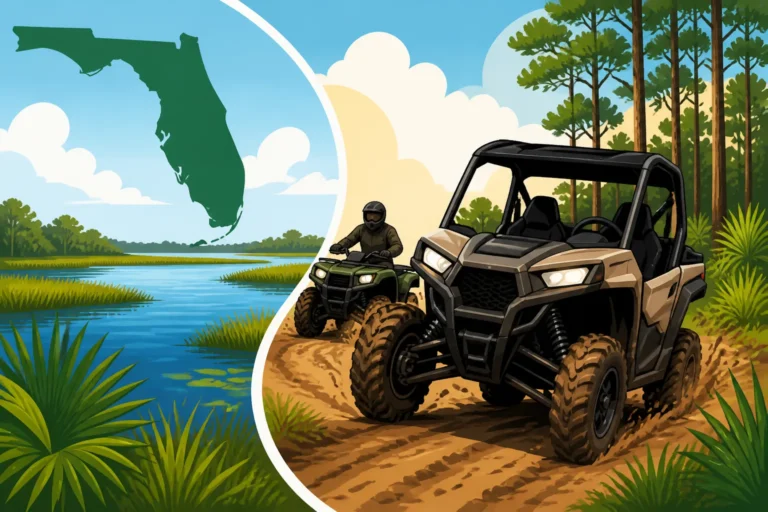
Ever felt that familiar mix of excitement and apprehension when you spot a tempting dirt path or gravel road, wondering if it's truly okay to ride your ATV or UTV on it in Florida? It’s a common frustration, a nagging doubt that can take the fun out of exploring. Florida's laws regarding off-highway vehicles (OHVs) and public roads can often feel like a maze, with specific definitions making all the difference between a legal ride and a potential citation. This guide is here to demystify what "unpaved roadway under the statute" truly means for Florida ATV and UTV owners, helping you understand where you can legally ride and why these definitions are so crucial.
Understanding Florida's "Unpaved Roadway" Definition
When we talk about riding ATVs and UTVs on Florida roads, the term "unpaved roadway" isn't just a casual description; it's a specific legal definition that dictates where these vehicles can and cannot operate. Florida Statute 316.2123 is the key here, laying out the rules for OHVs on public roads. The heart of the matter is that ATVs and UTVs are generally prohibited from operating on paved public roads and highways. However, there’s a critical exception: they can be operated on "unpaved roadways." But what exactly does the state consider "unpaved"?
The statute defines an "unpaved roadway" as a road, street, or highway that is not paved with asphalt, concrete, or other hard, compacted surface. This means we're talking about surfaces like dirt, gravel, shell rock, or sand. It's not about how well-maintained the road is, or how smooth it feels, but purely about the material it's made from. This distinction is paramount because it’s the legal gateway for most ATV and UTV enthusiasts to access trails, hunting grounds, or even just explore the beautiful Florida backcountry without breaking the law. Without this specific allowance for unpaved roads, your opportunities for legal riding outside of designated OHV parks would be severely limited.
What Constitutes an Unpaved Surface Under the Law?
Let's dig a little deeper into what specific types of surfaces typically qualify as "unpaved" according to Florida law. Imagine you’re driving your truck, trailer, and ATV through a rural Florida county. You see a road sign indicating a county road. If that road is made of packed dirt, loose sand, or crushed shells, it very likely falls under the "unpaved roadway" definition. These are the kinds of surfaces where the intent of the statute is to allow OHV operation, often because they lead to areas where off-road recreation is common or provide access for agricultural purposes.
Think about the countless miles of service roads and rural pathways crisscrossing Florida's agricultural lands or leading to remote fishing spots. Many of these are simple dirt tracks, maintained just enough for basic vehicle traffic but certainly not paved. These are prime examples of where your ATV or UTV might be welcome. It’s important to note that even if a dirt road has some gravel mixed in, or areas where the soil has been compacted over time by vehicle traffic, it generally still counts as unpaved as long as it isn't asphalt or concrete. Companies like SuperATV, known for their rugged accessories, often have gear specifically designed to handle the varied conditions found on these unpaved surfaces, from heavy-duty suspensions to more aggressive tire patterns, making them ideal for these types of roads.
Surfaces That Do NOT Qualify as Unpaved
Just as crucial as understanding what is unpaved is knowing what isn’t. The key exclusion here is any road, street, or highway that is "paved with asphalt, concrete, or other hard, compacted surface." This might seem obvious, but there are nuances that can trip up even experienced riders. For instance, a road that starts as asphalt but then transitions to a hard-packed shell rock surface, which might feel a bit like pavement, could still be legally "unpaved" if the shell rock itself isn't bound by a hard material like asphalt or concrete. However, a road that is packed dirt but has been treated with a chemical stabilizer to create a uniformly hard, impermeable surface might be considered "other hard, compacted surface," rendering it off-limits.
A good rule of thumb is to look for the raw, natural materials – dirt, sand, loose gravel, or shell. If it looks like something a road grader simply spread out without a binding agent, you’re likely on an unpaved surface. If it looks like something poured from a truck and smoothed with heavy machinery, chances are it’s paved. This includes even small sections of pavement, such as short strips at intersections or bridges on an otherwise unpaved road. Even if 99% of the road is dirt, that 1% of pavement makes the entire stretch subject to the "no paved road" rule for ATVs and UTVs. This level of detail highlights why understanding the specifics of [Florida's Off-Highway Vehicle Title Law Explained] is so important, as it governs not just ownership but also operational rules.
Here's a quick reference table to help clarify:
| Surface Type | Generally Considered Unpaved? | Notes |
|---|---|---|
| Dirt Road | Yes | Common in rural, agricultural, or forest areas. |
| Gravel Road | Yes | Loose aggregate, not bound by asphalt or concrete. |
| Sand Road | Yes | Often found near beaches, rural trails, or in scrubland. |
| Shell Rock Road | Yes | Crushed shell, common in coastal or limestone-rich areas. |
| Asphalt Road | No | Clearly paved, no ATV/UTV operation allowed. |
| Concrete Road | No | Clearly paved, no ATV/UTV operation allowed. |
| Chemically Treated | Varies, often No | If treatment creates a hard, compacted, impermeable surface. |
| Paved Shoulder | No | Even if adjacent to an unpaved section, it's considered paved. |
Why This Definition is Critical for ATV & UTV Riders
For anyone who owns an ATV or UTV in Florida, truly grasping the "unpaved roadway" definition isn't just about avoiding a ticket; it's about knowing where you can legally and safely enjoy your machine. Florida is a state with abundant natural beauty and many rural areas perfect for off-road exploration. Without this specific allowance for unpaved roads, most riders would be confined to private land or dedicated OHV parks like the Croom Motorcycle Area. The statutory definition opens up a much wider world of riding opportunities, enabling access to vast tracts of state and national forest lands, wildlife management areas, and countless backroads that crisscross the state.
Imagine planning a weekend trip to a remote camping spot in the Ocala National Forest, or heading out to hunt in a less-traveled wildlife management area. Often, the only way to reach these places, or to move between different sections of them, is via unpaved roads. Understanding the legal framework means you can confidently navigate these routes, knowing you're operating within the bounds of the law. It impacts everything from selecting your machine (do you need a wider UTV for certain access roads, or a narrower ATV?) to deciding what accessories, such as those from SuperATV, will best suit your typical riding environment. This clarity empowers riders to make informed choices about where and how they ride, preventing unnecessary legal headaches and ensuring a more enjoyable experience.
Legal Implications of Misinterpreting the Statute
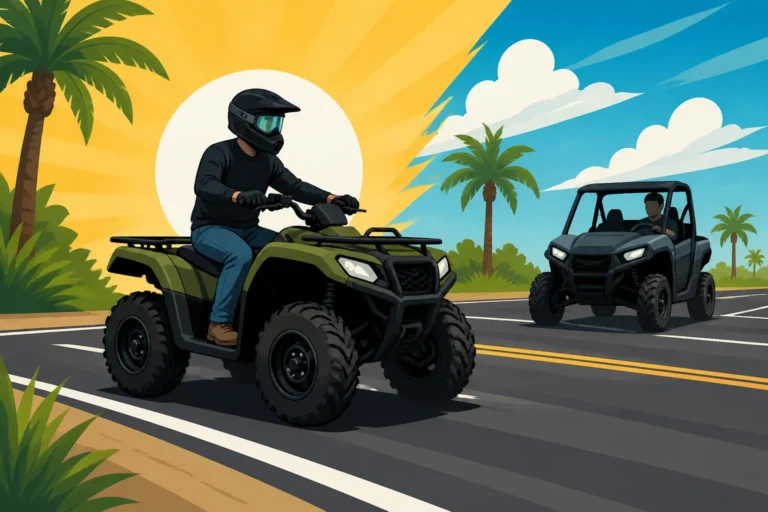
The consequences of misinterpreting what counts as an "unpaved roadway" can be significant and unpleasant. Operating an ATV or UTV on a paved public road, even for a short distance, can result in a citation. These aren't just minor warnings; they can carry fines and potentially other penalties, including the impoundment of your vehicle. Law enforcement, whether it's a Florida Highway Patrol officer, a county sheriff's deputy, or a park ranger, is well-versed in these distinctions. They are looking for violations that compromise public safety, and illegal operation of an OHV on a paved road is a clear one.
Beyond fines, there's the broader issue of safety. ATVs and UTVs are designed for off-road conditions, not for high-speed paved roads with regular vehicle traffic. Their suspension, tires, and steering are optimized for uneven terrain, not for tight handling on asphalt. Using them on paved roads increases the risk of accidents, not only for the rider but also for other motorists. This is why the law is so specific – it's designed to keep everyone safe. If you're caught riding illegally, you could also face additional charges if your vehicle isn't titled correctly, or if you're operating it without the proper safety equipment. This is where topics like [Florida ATV Road Rules: Where You Can Legally Ride] and [Can You Drive an ATV on the Road in Florida?] become incredibly pertinent.
Accessing Public Lands and Designated Areas
One of the primary reasons riders care so deeply about the "unpaved roadway" definition is its direct link to accessing public lands. Florida's vast state forests, wildlife management areas, and national forests offer incredible opportunities for riding, hunting, and general recreation. Many of these areas have extensive networks of dirt or gravel roads that are specifically designated for access. Without the "unpaved roadway" clause in the statute, much of this access would be impossible for ATV and UTV riders.
For example, areas within the Ocala National Forest have numerous unpaved roads that connect various trailheads and campgrounds. While you typically need a specific OHV pass to ride on the trails, getting to those trailheads often involves traversing these unpaved access roads. The statute essentially provides the legal framework for you to get your machine from point A to point B on public property, provided point B is accessible via an unpaved route. This allows riders to explore expansive wilderness areas, reach remote fishing spots, or access hunting leases without breaking the law. It’s a vital piece of the puzzle for anyone looking to make the most of Florida’s natural resources on their OHV, whether they are just passing through or plan on spending a weekend camping and riding. You might also want to check out [Florida ATV Road Rules by County] to see if there are any specific local ordinances you need to be aware of.
Navigating the Nuances: What Counts (and Doesn't Count) as Unpaved
The devil, as they say, is in the details, and the "unpaved roadway" definition is no exception. While the general rule of "dirt, gravel, sand, or shell good; asphalt or concrete bad" holds true, real-world situations can be a bit more complex. What about roads that are mostly unpaved but have small paved sections, like a culvert crossing or a brief paved approach to a bridge? What about unpaved roads that are incredibly well-maintained and compact, almost feeling like a hard surface? These are the scenarios that often lead to confusion and, unfortunately, citations if misunderstood.
The key phrase in the statute is "paved with asphalt, concrete, or other hard, compacted surface." That "other hard, compacted surface" is where the nuance lies. If a dirt road is so heavily trafficked and maintained that it becomes extremely hard, almost impenetrable, and resembles a low-grade paved surface, could it fall under that exclusion? Generally, no, if it's still fundamentally dirt or gravel without a binding agent. The intent is typically to distinguish between naturally occurring or loosely laid surfaces and those that have been deliberately hardened or sealed. However, local interpretation by law enforcement can sometimes vary, so always err on the side of caution.
The "Other Hard, Compacted Surface" Exception
This particular phrase, "other hard, compacted surface," is perhaps the trickiest part of the definition. It's meant to catch those roads that might not be traditional asphalt or concrete but have been engineered to perform similarly. For example, some industrial roads or access roads might be built with highly compressed aggregate and a stabilizing agent that makes them extremely hard and resistant to erosion, effectively creating a paved-like surface without using traditional asphalt. If a road has been chemically treated to bind the loose materials into a solid, impermeable layer, it might qualify under this "other hard, compacted surface" clause.
The critical distinction is whether the surface material itself has been transformed into a durable, rigid pavement, or if it's still just compacted natural earth or aggregate. A dirt road that's been graded and packed down by years of vehicle traffic is still a dirt road. But if that dirt road has had a material added that essentially "glues" the particles together to form a hard, solid crust, then it begins to resemble a paved surface in the eyes of the law. When in doubt, it’s always best to observe other vehicles. If only cars and trucks are using it, and you don’t see other OHVs, it might be a hint to proceed with caution or find an alternative route. This careful navigation is why you might see riders equipping their machines with durable components from a brand like SuperATV, designed to withstand varied road conditions, but always within legal bounds.
Intersections and Brief Paved Sections
One common source of confusion arises when an unpaved road briefly intersects with or contains a short segment of paved surface. What happens if your long, unpaved journey momentarily crosses a paved road or a small, paved bridge? The general rule is that an ATV or UTV cannot operate on a paved public road. This means that if an unpaved road becomes paved, even for a short stretch, that section is off-limits. If you encounter a paved intersection, you might be allowed to cross it directly if done safely and when otherwise legal, but you cannot travel down the paved road.
Think of it this way: the statute doesn't allow for "mostly unpaved" or "unpaved with a little bit of pavement." The prohibition is against operating on any paved public road. So, if your dirt road transitions to asphalt for 50 feet to go over a culvert, that 50 feet is still considered a paved road, and your ATV or UTV technically should not be on it. In such situations, many riders opt to find an alternative route, trailer their machine across the paved section, or simply avoid routes with these transitions. It’s a nuanced but important detail to remember to avoid unexpected legal issues. This situation often comes up when discussing [Florida's Unpaved Road Rule for ATVs Explained] and its practical application.
Beyond the Surface: How "Unpaved" Connects to Other ATV Laws
The definition of "unpaved roadway" isn't a standalone rule; it's a foundational element that ties into several other Florida statutes governing ATV and UTV operation. Understanding this interconnectedness is key to safe and legal riding. For instance, the very ability to ride your OHV on certain public lands often hinges on this definition, as designated trail systems are frequently accessed via unpaved roads. Furthermore, specific operational rules, such as speed limits, helmet requirements for minors, and daytime-only riding restrictions, all come into play when you are legally operating on these unpaved roadways.
It’s not enough to simply know where you can ride; you also need to know how to ride legally and responsibly on those surfaces. The state has an interest in ensuring public safety, and these additional regulations are designed to minimize risks for OHV riders and other users of unpaved roads. From ensuring your machine meets basic equipment requirements to understanding who needs to wear a helmet, these rules combine with the unpaved roadway definition to form a comprehensive legal framework for Florida's ATV and UTV community.
Related Operational Rules for Unpaved Roads
Once you've confirmed you're on a legal "unpaved roadway," other Florida statutes kick in that dictate how you must operate your ATV or UTV. For example, Florida Statute 316.2123 also mandates that ATVs and UTVs on unpaved roadways must only be operated during daytime hours. This means from sunrise to sunset. No night riding, even if your machine is equipped with brilliant LED lights. There’s a clear safety concern here, as unpaved roads can be unpredictable, and visibility for both riders and other potential users (pedestrians, cyclists, even slow-moving farm equipment) is crucial.
Furthermore, Florida law specifies that operators of ATVs and UTVs on unpaved roadways must possess a valid driver's license. This means a 15-year-old with a learner's permit cannot legally operate an ATV on a public unpaved road, even if they're usually allowed to ride on private land. This is a critical distinction that many young riders and their parents overlook. Additionally, any passenger rules, such as those related to single-rider ATVs or age limits for passengers, also apply when on these public unpaved roads. All of these rules collectively define the parameters of legal riding, and understanding them is just as vital as identifying the correct type of road. You can dive deeper into these specifics by reading [Florida's Daytime-Only ATV Road Rule] and [Do You Need a Driver's License for an ATV in Florida?].
County-Specific Regulations and Local Opt-Outs
While Florida Statute 316.2123 provides the overarching framework, it also grants counties the power to further regulate or even prohibit ATV and UTV use on unpaved roadways within their jurisdiction. This is known as a local "opt-out" or "designation" power. Some counties might choose to ban OHVs entirely from all unpaved public roads, while others might designate specific unpaved roads where OHVs are permitted, often with additional local restrictions like lower speed limits or specific hours of operation.
This means that simply finding an unpaved road isn't always enough; you must also be aware of the local county ordinances. A road that is legal in one county might be illegal just across the county line. The best practice is always to check with the local county sheriff's office or the county government website for any specific ordinances regarding OHV use on unpaved roads before you ride in an unfamiliar area. This proactive research can save you a lot of hassle and potential fines. This is a common point of confusion that makes it so difficult to ride across county lines. Understanding [Florida County ATV Opt-Outs: Why Rules Change at the Line] is therefore essential for any rider planning to explore different parts of the state.
Disclaimer
This article is for general informational purposes only and does not constitute professional advice. Laws, prices and regulations vary by location and change over time. Consult a qualified professional for guidance on your specific situation.