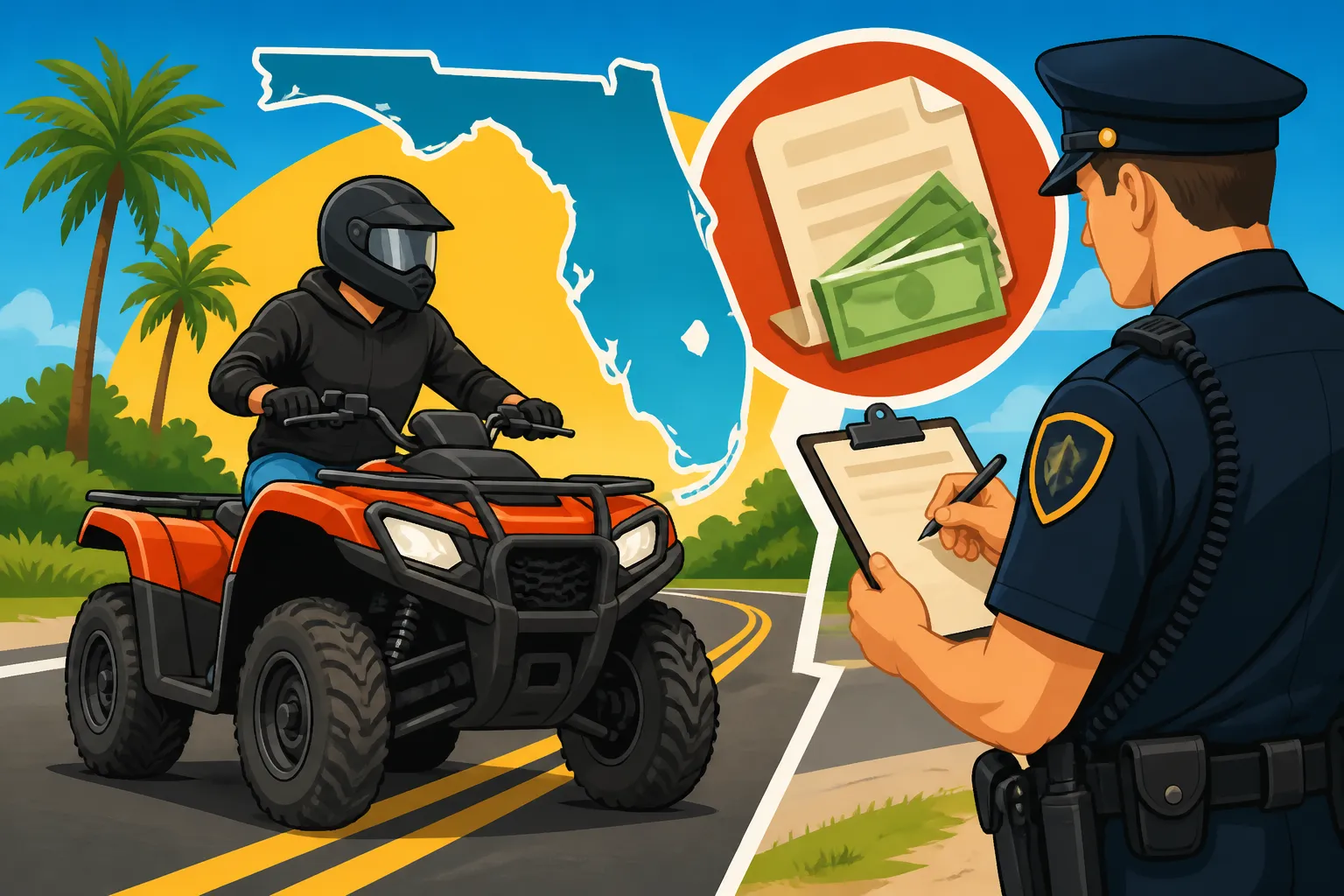
Florida ATV Ticket Cost for Illegal Road Riding
Picture this: you're out enjoying a beautiful Florida day on your ATV, maybe just trying to get from one private property to another, or perhaps you made a quick dash to the corner store. Suddenly, flashing lights in your rearview mirror, and next thing you know, you're looking at a ticket for riding your quad where you absolutely shouldn't have been. It's a frustrating, often confusing situation, and many riders underestimate the true financial bite of such a citation. This guide is here to unravel the real costs and consequences of getting a Florida ATV ticket for illegal road riding, helping you understand not just the fine, but all the other hidden fees and headaches that come along with it.
The Tricky Line: What Counts as Illegal Road Riding in Florida?
Before we even get to the cost, it's vital to understand why you might get a ticket in the first place. Florida's laws regarding ATVs on public roads are pretty clear, but they can feel restrictive and sometimes downright confusing for folks who just want to enjoy their machines. The core issue is that ATVs are generally considered off-highway vehicles, designed for unpaved terrain, not the asphalt and concrete of public streets.
Where Your ATV Absolutely Cannot Go
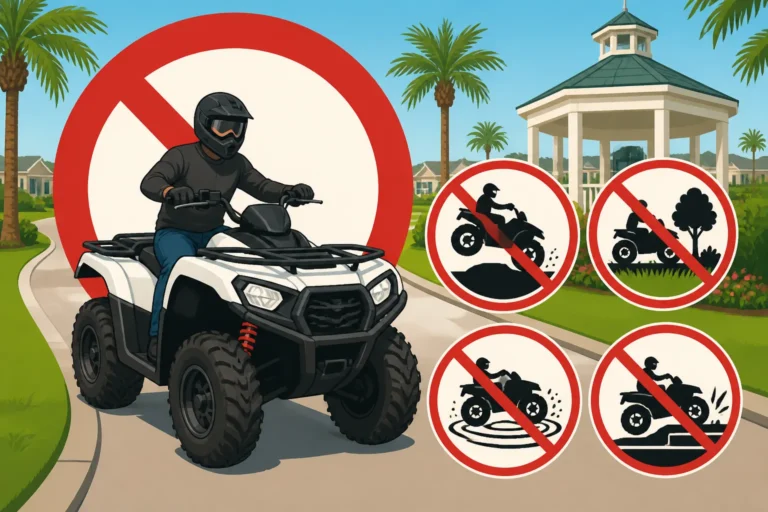
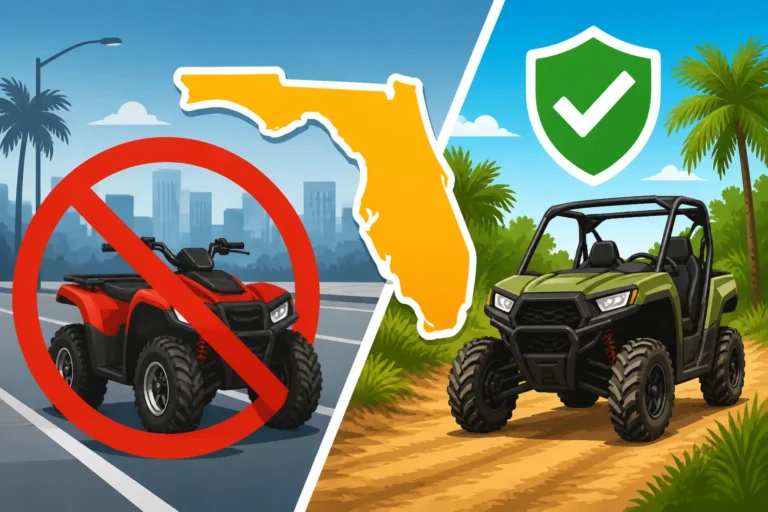
Let's be blunt: most paved public roads in Florida are off-limits for ATVs. This includes state highways, county roads, and municipal streets. It's not just the main thoroughfares either; it extends to sidewalks, bike paths, and any area primarily designated for conventional vehicle traffic. Many riders feel frustrated by this, especially when they just need to cross a short stretch of pavement or move between two fields. You might think, "It's just a quick hop, what's the harm?" But to law enforcement, it's a violation of the statute, plain and simple. Even if your ATV is decked out with turn signals and headlights – perhaps you've been browsing some of the awesome lighting kits at SuperATV – it doesn't magically make it street legal in Florida.
The rationale behind these rules is safety, both for ATV riders and other motorists. ATVs handle differently on pavement than they do on dirt, and they lack many of the safety features of street-legal vehicles. This is a common pain point for riders, especially those in rural areas where "the quickest way" might involve a paved road. It’s important to remember that the law doesn't care about convenience; it cares about public safety and legal definitions. For more details on what’s allowed, check out [Florida ATV Road Rules: Where You Can Legally Ride].
The Few, Limited Exceptions to the Rule
Now, there are a few very specific instances where an ATV might legally touch a public road, but these are exceptions, not the norm, and they come with strict conditions. One of the most common exceptions allows for crossing a paved road, but you must do so at a 90-degree angle, come to a complete stop, and yield to all traffic. You can't just drive down the middle of the road for a block before crossing; it's literally just a direct, perpendicular crossing.
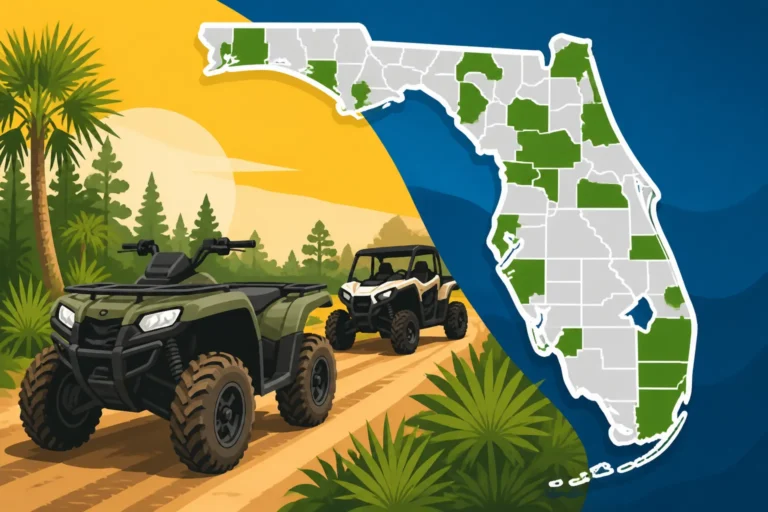
Another significant exception involves unpaved public roads. Florida Statute 316.2123 allows ATVs on unpaved roads within certain counties, if those counties have passed specific ordinances designating them for ATV use. This is a huge "if," and it's why you absolutely must know the local county rules. Just because one county has an unpaved road open doesn't mean the next one over does. On these designated unpaved roads, there are also rules about daytime-only operation, a maximum speed limit, and for riders under 16, direct supervision by a licensed driver. It's a patchwork of regulations that demands you do your homework before you ride. If you're unsure about your county, looking into [Florida Counties That Designated ATV Roads] can be a great first step.
The Direct Financial Hit: Breaking Down the Florida ATV Ticket Cost
So, you got pulled over. What's that piece of paper going to cost you? It’s rarely just the single number printed on the ticket. Florida ATV tickets for illegal road riding, like many traffic infractions, involve a combination of base fines, court costs, and various surcharges that can add up faster than you might expect.
The Base Fine: Where It All Begins
The initial fine amount for operating an ATV illegally on a public road in Florida is typically treated like a non-criminal traffic infraction. This base fine is usually set by state statute. While I can't give you an exact dollar figure, think of it as comparable to a speeding ticket or another minor moving violation. It's the starting point, the foundation of the financial penalty. For many riders, this initial number might seem manageable, but trust me, it's only the tip of the iceberg. You might find similar discussions when looking into [Florida ATV Ticket Cost for Illegal Road Riding].
It's important to remember that this base fine isn't uniform across the board for all violations. Depending on the specifics of how you were riding illegally (e.g., reckless operation, endangering others), the base fine could be higher. Law enforcement officers have some discretion in how they cite you, and serious offenses could lead to more severe penalties than a simple "operating an OHV on a public road."
The Multipliers: Court Costs and Surcharges
Here’s where the real surprise often comes in for unsuspecting riders. Florida, like many states, levies a host of additional fees, surcharges, and court costs on top of the base fine for any traffic infraction. These aren't optional; they're mandated by law to fund various state and local programs, from courthouse operations to victim compensation funds. These can include:
- Court Costs: A flat fee that helps fund the administrative operations of the court system.
- Surcharges for Specific Funds: You might see surcharges for things like the Law Enforcement Training Fund, Clerk of Court operations, or even the state's brain and spinal cord injury program. Each one adds a few dollars or a percentage to your total.
- Administrative Fees: Sometimes additional fees are added for processing the ticket itself.
These costs are tacked on for every traffic citation, regardless of whether you choose to pay the ticket or contest it in court. They can easily double, or even triple, the initial base fine. Many a rider has been shocked when they go to pay their "small" ATV ticket online only to see the total amount due is significantly higher than they anticipated. This is a frustrating reality, and it's why understanding these hidden layers of cost is so important.
Here’s a general idea of how these costs add up (without specific numbers, of course):
| Cost Type | Description |
|---|---|
| Base Fine | The initial statutory penalty for the violation. |
| Court Costs | Fees for processing the case through the judicial system. |
| Clerk's Surcharge | Funds the operations of the Clerk of Court. |
| Law Enforcement Surcharge | Supports law enforcement training and programs. |
| Crimes Compensation | Contributes to a state fund for victims of crimes. |
| Additional Surcharges | Various other state and local fees (e.g., for specific trust funds or programs). |
County-Specific Variations: A Local Twist on State Law
While the underlying state statutes govern what's legal and illegal for ATVs on roads, the specific county where you receive your ticket can influence the final cost. Each county's Clerk of Court office might have slightly different administrative fees or interpretations of how certain state-mandated surcharges are applied. This means that a ticket for the same offense might have a slightly different total cost if issued in, say, Polk County versus Marion County.
It’s not usually a dramatic difference, but it’s enough to catch you off guard if you're comparing notes with a friend who got a similar ticket in a different part of the state. This highlights the importance of checking with the specific county's Clerk of Court website or office to get the precise amount due for your particular citation. For instance, the process at the [Marion County ATV Title Office Hours] or [Polk County ATV Title Walk-In Wait] might involve slightly different administrative steps, even if related to a different ATV-related issue.
Beyond the Fine: Hidden Costs and Consequences
The financial pain of an ATV ticket for illegal road riding doesn't stop at the fine and surcharges. There are several other significant, often overlooked, costs and consequences that can turn a simple citation into a much bigger headache.
Impoundment Fees: When Your ATV Gets Towed
One of the most immediate and frustrating consequences of an illegal road riding ticket can be the impoundment of your ATV. Law enforcement often has the authority to tow and impound your machine if it's being operated illegally on a public roadway. This isn't just an inconvenience; it's a major financial burden.
Think about it:
- Towing Fees: These can be substantial, especially if your ATV is in a remote location or requires specialized equipment to move. You're paying for the tow truck and the service.
- Storage Fees: Once impounded, your ATV will be stored at a designated facility, and they charge daily storage fees. These can accumulate quickly, turning a few days into hundreds of dollars.
- Administrative Release Fees: The impound lot or the local law enforcement agency might also charge an administrative fee just to release your vehicle back to you, on top of the towing and storage.
You'll need to pay all these fees in full before you can even get your ATV back, often requiring cash or a certified check. It's a tough pill to swallow, especially when you're already facing the ticket itself. This scenario is a real possibility, and understanding [Florida ATV Impound After a Road Violation] can help you prepare, or better yet, avoid it entirely.
Insurance Impact and Legal Battles
While an ATV isn't typically required to have insurance for off-road use in Florida, a citation for illegal road riding can still have repercussions. If the violation is tied to your driver's license (which it often is, as it's treated as a moving violation), it could show up on your driving record. This could potentially affect your auto insurance rates, even if it wasn't a car involved. Insurance companies view any driving infraction as a potential indicator of risk, and even an ATV ticket can contribute to that picture.
Furthermore, if you decide to contest the ticket in court, you're looking at additional costs:
- Legal Fees: Hiring an attorney to represent you can be very expensive. While it might be worth it in some cases, especially if you believe you were wrongly cited or if the consequences are severe, it's a significant financial commitment.
- Time Off Work: Court appearances, even for minor infractions, mean taking time away from your job, which is another form of financial loss.
These are the hidden layers that many people don't consider when they first receive a ticket. The base fine is just the entry price to a potentially much more costly experience.
Potential for Vehicle Forfeiture (Rare but Possible)
In extreme and repeat cases of illegal ATV operation, particularly if combined with other serious offenses like reckless endangerment, fleeing and eluding, or if the ATV is used in the commission of a crime, there's a rare but real possibility of vehicle forfeiture. This means the state could seize your ATV permanently. This is certainly not the outcome for a first-time, simple illegal road riding ticket, but it's a powerful reminder of the severity with which continued disregard for these laws can be treated. It underscores the importance of understanding [Florida Penalties for Illegal ATV Road Riding] in full.
Steering Clear of Trouble: Staying Legal and Riding Smart in Florida
The best way to avoid the financial and emotional toll of an ATV ticket is to simply not get one. This means understanding and respecting Florida's laws and making smart choices about where and how you ride.
Know Your Local Ordinances Inside and Out
Florida's ATV road laws have a unique provision that allows individual counties to designate unpaved roads for ATV use. This is a game-changer, but it also means the rules aren't uniform across the state. What's legal in Putnam County might be strictly forbidden in Collier County. You must check the local ordinances for the county you plan to ride in. Don't rely on word-of-mouth or assume that because you saw someone else doing it, it's okay. A quick call to the county sheriff's office or checking the county's official website can save you a world of trouble. This is an example of why understanding [Florida County ATV Opt-Outs: Why Rules Change at the Line] is so important.
If a road isn't explicitly designated, assume it's off-limits. This is especially true for any paved roads. The risk simply isn't worth the potential fine, impoundment, and hassle.
Stick to Designated Trails and Private Property
The safest and most enjoyable way to ride your ATV in Florida is on designated trails or on private property with permission. Florida boasts some fantastic off-road riding areas, from state forests like Ocala National Forest and Blackwater River State Forest to popular private mud parks like Hog Waller and Redneck Mud Park. These places are designed for ATVs, offer diverse terrain, and are where you can truly let loose without worrying about breaking the law.
When you're out on these trails, you can fully embrace the off-road experience. You can invest in quality upgrades from companies like SuperATV – maybe a new winch for those tricky mud holes or some heavy-duty axles for rough terrain – and know you're using them where they're meant to be used. Explore resources like [Florida ATV Trails: Every Public Riding Area] to find legal and exciting places to ride.
Titling, Registration, and Safety Courses for Peace of Mind
While an ATV title is now required for certain uses in Florida, it does not grant you permission to ride on public roads. However, having your machine properly titled, as explained in [Florida Off-Highway Vehicle Title Rules Explained], is crucial for proving ownership and avoiding issues down the line, especially if your machine is ever stolen or impounded.
For young riders under 16, Florida law requires completion of an approved ATV safety course to ride on public lands (including designated unpaved roads). Even if it's not legally mandated for your specific situation, taking a safety course is always a good idea. It promotes safe riding habits and makes you a more responsible rider, which can only help you avoid accidents and, by extension, tickets. Understanding [Florida ATV Safety Course Requirements for Riders Under 16] is essential for families.
By being informed, responsible, and sticking to legal riding areas, you can ensure your Florida ATV adventures are filled with fun, not fines. The upfront effort to learn the rules is a small price to pay compared to the cost of an illegal road riding ticket.
Disclaimer
This article is for general informational purposes only and does not constitute professional advice. Laws, prices and regulations vary by location and change over time. Consult a qualified professional for guidance on your specific situation.