Minors Riding Roads Under Supervision in Florida
It’s a common scenario across Florida: you’ve got an eager young rider, a shiny new quad, and the vast, beautiful, but often confusing landscape of trails, fields, and dirt roads. Parents often grapple with the anxiety of letting their children experience the freedom of an ATV, especially when it comes to navigating the grey areas of where they can and cannot ride, and what “supervision” really means near public roads. This guide aims to demystify Florida’s specific laws and practical realities regarding minors riding ATVs on or near roadways, under adult supervision. We’ll break down the rules, explain the nuances, and help you ensure your young rider stays safe and legal.
Florida's General Stance on Minors and ATVs Near Roads
Florida is a state that generally embraces outdoor recreation, but it also has clear rules to protect young riders, especially concerning their interaction with public thoroughfares. It’s a delicate balance, and the laws reflect the intent to allow responsible riding while preventing dangerous situations involving traffic. Many parents assume if they're right there, it's fine anywhere, but the law has very specific boundaries that aren't always intuitive.
The Underlying Principle: Safety First
At the heart of Florida’s ATV regulations for minors is a deep concern for safety. This isn't just about preventing accidents; it's about minimizing the risk of a young, less experienced rider encountering the unpredictable elements of public roads. Unlike cars, ATVs are not designed for pavement, lack many standard safety features, and their operators often aren't licensed drivers. When you throw a minor into that mix, the potential for mishap increases significantly. The state's approach tries to draw a bright line around scenarios where this risk is simply too high.
Consider a typical neighborhood in rural Florida: winding dirt roads connect homes, leading to paved highways. It’s tempting to let a child ride their ATV a short distance to a friend’s house on the same dirt road, or just across a quiet paved street. While seemingly harmless, the law looks at the inherent risks. What if a car comes around a blind corner? What if the child loses control? These are the real-world concerns that shape Florida's statutes, making it crucial for every parent to understand that their good intentions might not align with legal requirements.
Where State Law Draws the Line for Road Use
Florida Statute 316.2123 is the core of what governs ATVs and UTVs on public roads. For minors, the rules are even stricter. Generally speaking, ATVs are off-highway vehicles, meaning they're not intended for paved public roads. However, Florida does allow limited access to certain unpaved public roads under specific conditions. For minors, this permission comes with an even tighter leash.
A minor, specifically someone under 16 years of age, is generally prohibited from operating an ATV on any public road, whether paved or unpaved, unless they are under "direct supervision" and meet specific criteria. This means that simply riding alongside your child on a paved residential street, even if it's a quiet one, is almost certainly illegal. The law primarily carves out exceptions for unpaved roads, and even then, it's not a free-for-all. The frustration many parents feel is understandable, as the lines can blur, especially on those less-traveled county roads that feel more like trails than actual streets. But the legal definition makes a significant difference, and misunderstanding it can lead to citations, or worse, accidents. You can find more details on this in [Florida ATV Road Rules: Where You Can Legally Ride].
Defining "Supervision" Under Florida Law
When the law talks about a minor riding an ATV under supervision, it's not just a casual suggestion. Florida has very specific criteria for what constitutes "direct supervision," and it's far more rigorous than simply being in the vicinity. Misinterpreting this can lead to legal trouble, even if you, as a parent, feel you were doing everything right.
What "Direct Supervision" Actually Entails
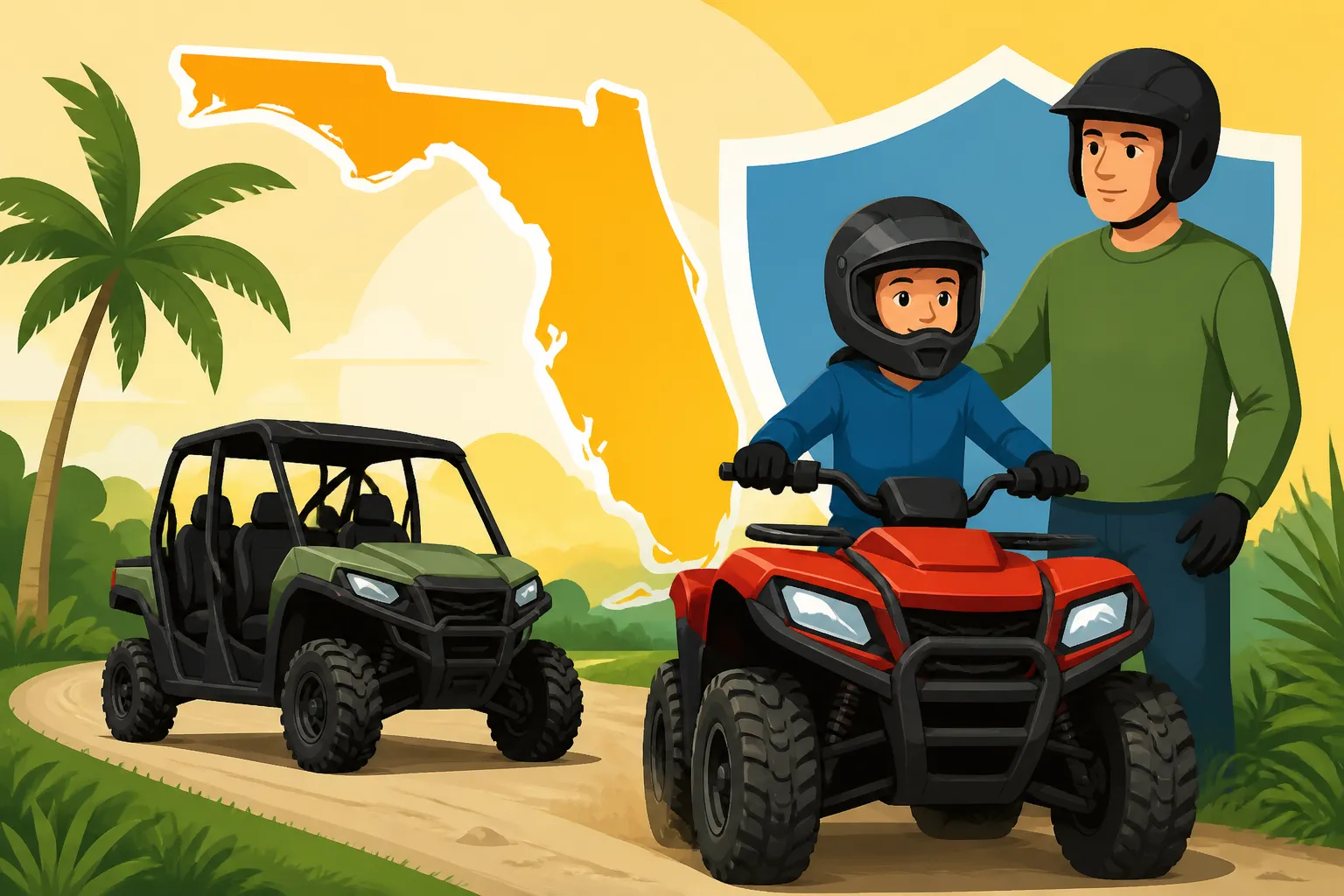
Florida Statute 316.2074 defines "direct supervision" as meaning the minor is "being supervised by an adult, who is at least 18 years of age, and is within sight and no more than 100 feet away from the operator." Let that sink in: within sight and no more than 100 feet away. This isn't about being on the same property, or even in the same field. It means the supervising adult needs to be incredibly close, maintaining constant visual contact, and able to intervene immediately if needed.
Imagine your child is riding their quad on an approved unpaved road. You, the supervising adult, can’t be casually following in a car a quarter-mile behind, or even watching from your porch if the road curves out of sight. You need to be right there, perhaps on another ATV, or even walking or riding a bicycle, maintaining that close proximity. This can be a challenge, especially if the terrain is varied or the minor is riding at a decent speed. The intent is clear: to ensure the adult can physically respond to any emergency, be it a loss of control, an unexpected obstacle, or an approaching vehicle. This strict definition often catches parents off guard, as their natural inclination might be to give their child a bit more space. For further reading, check out [Direct Supervision by a Licensed Driver].
Who Qualifies as a Supervisor
The statute explicitly states that the supervising adult must be at least 18 years of age. It doesn't necessarily have to be a parent, but it must be an adult who understands their responsibility and is capable of providing that direct, immediate oversight. This is important for families where, say, an older sibling (18+) might be supervising a younger one, or perhaps a grandparent or guardian.
However, beyond the age requirement, there's an implicit expectation of competence and responsibility. A supervisor should ideally be experienced with ATVs themselves, understand the local riding conditions, and be fully aware of the minor's skill level. They need to be proactive, not just reactive. Handing over the keys to a 10-year-old and telling an 18-year-old cousin to "keep an eye on them" from the front porch isn't just irresponsible; it potentially falls short of the legal definition of supervision if that 18-year-old isn't actively and closely engaged. The supervisor bears a significant responsibility, and it's not one to be taken lightly.
Specific Scenarios: Where Minors Can (and Cannot) Ride with Supervision
Florida’s ATV laws for minors are all about context. The same ATV and the same minor can be perfectly legal in one setting and completely illegal in another, even with supervision. Understanding these distinctions is crucial for staying out of trouble and, more importantly, keeping your child safe.
Riding on Unpaved Public Roads (The "Permitted" Exception)
This is where most of the confusion arises. Florida Statute 316.2123 allows for a very specific type of road use for ATVs: "on an unpaved road that is not a part of the state highway system, at a speed of no more than 35 miles per hour, by a person 16 years of age or older, or by a person 14 or 15 years of age under the direct supervision of a licensed driver." This is the key phrase for minors.
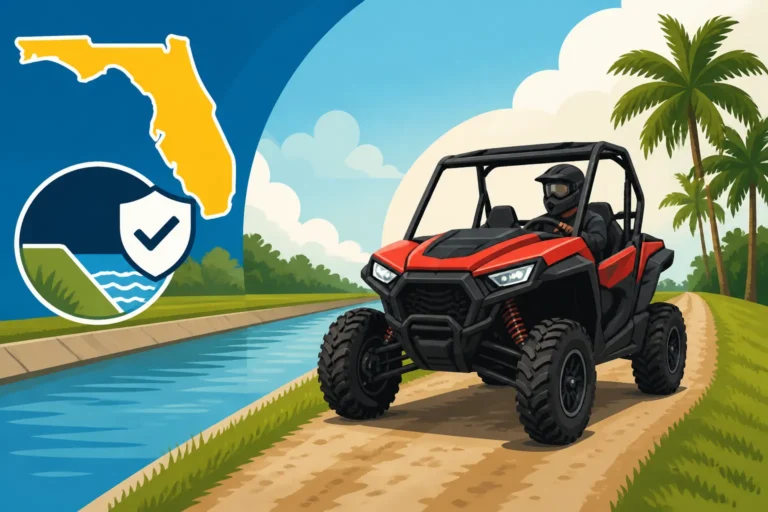
So, if your child is 14 or 15, they can operate an ATV on an unpaved public road (that's not a state highway) if they are under the direct supervision of a licensed driver (who is at least 18 years old and within 100 feet/sight). The speed limit is a hard cap at 35 mph, regardless of the posted limit for other vehicles. It's a very narrow window, and it requires both the age of the minor and the licensure of the supervisor. This applies to those dirt, gravel, or shell roads that crisscross many rural Florida counties, connecting homes and fields. These roads often feel like extensions of private property, but they are indeed public, making the rules apply. Remember, "unpaved" is a critical distinction here; a paved road, no matter how quiet, is typically off-limits. For more detail on what constitutes an unpaved road, see [Unpaved Roadway: How the Statute Defines It].
Crossing a Paved Highway
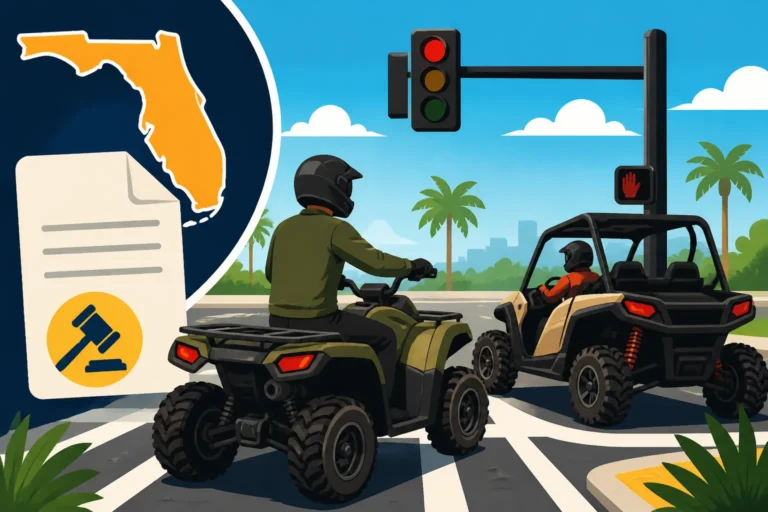
This is another area where many people make assumptions. Florida law does allow an ATV to cross a paved public highway if the crossing is made at a right angle to the highway, the operator comes to a complete stop before crossing, yields to all traffic, and the crossing itself is not made on an interstate highway. While the statute primarily refers to "a person" without specifying age for crossings, it's generally understood that a minor, especially one under 16, should only attempt this under the most stringent direct supervision, if at all.
Practically speaking, even for an experienced adult, crossing a busy paved road on an ATV can be risky. For a minor, it's exponentially more so. While the letter of the law might permit a crossing under ideal conditions, the spirit of the law, combined with common sense, suggests extreme caution. If your child needs to cross a paved highway to get to another section of trail or private property, it's often safer to trailer the ATV across. Think about it: an ATV doesn't have turn signals, it's harder to see than a car, and its acceleration isn't designed for quick sprints across traffic. It’s a moment of high vulnerability that even direct supervision can’t entirely negate. [Florida ATV Crossing a Paved Highway] covers this in more detail.
Riding on Private Property vs. Public Land
The biggest distinction, and perhaps the most important for parents, is the difference between private property and public land. On private property that you own or have explicit permission to ride on, the state's road-use restrictions for ATVs generally don't apply. This means your child can ride their ATV in your backyard, your acreage, or a friend's farm without needing to worry about the specific "unpaved road" and "direct supervision" clauses of the road statute. However, this doesn't mean a complete lack of rules.
Even on private land, common sense and local ordinances often dictate safe operation, especially regarding noise or nuisance. Moreover, if a child is riding on private property and needs to cross a public road to get to another piece of private property, then the rules for crossing a highway or riding on an unpaved road immediately kick in. This is a critical point that many overlook. The moment an ATV's tires touch public right-of-way, even for a second, it's subject to state laws. So, while your child might spend all day tearing it up on your 50 acres, that quick hop across the county road to the neighbor's field means the supervision rules suddenly apply. The safest bet is often to keep minors off public roads entirely unless absolutely necessary and legally compliant.
Age and Equipment Requirements for Young Riders
Beyond where and under whose watch they can ride, Florida also has specific requirements regarding the age of the minor and the safety equipment they must use. These are non-negotiable and are in place to directly protect the rider. Ignoring these can not only lead to fines but significantly increase the risk of serious injury.
Minimum Age for Road Access
Let's clarify the age aspect. For operating an ATV on those permitted unpaved public roads, Florida law specifically allows "a person 14 or 15 years of age under the direct supervision of a licensed driver." This means children under 14 are generally not permitted to operate an ATV on any public road, even unpaved ones and even with direct supervision. This is a crucial distinction that often gets missed.
For riders 16 years of age or older, the "direct supervision" requirement by a licensed driver is lifted for those unpaved public roads, but they must still adhere to the 35 mph speed limit and other vehicle operation rules. So, while a 16-year-old can ride solo on an unpaved county road, a 13-year-old cannot, no matter how skilled they are or how close their parent is. This age cutoff simplifies enforcement and provides a clear boundary for parents. This topic is explored further in [Florida ATV Law for 14-Year-Old Riders].
Mandatory Safety Gear: Helmets and Eye Protection
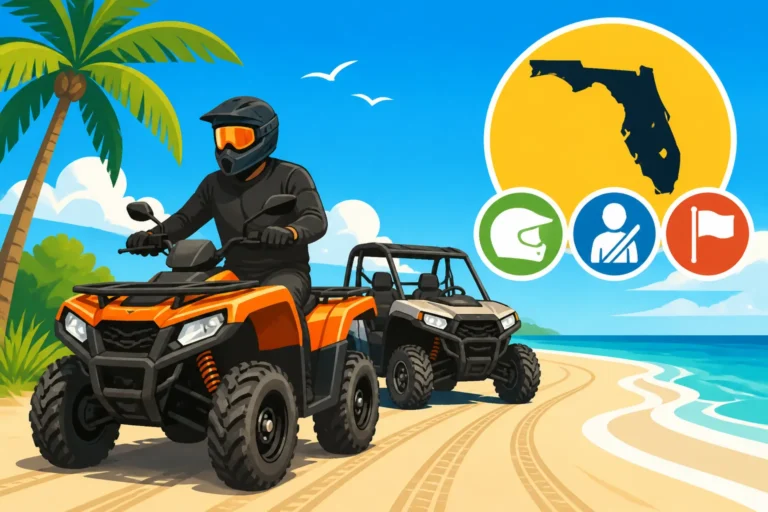
This one is absolute, no matter where in Florida you are riding. For anyone operating an ATV or UTV in Florida under the age of 16, a U.S. Department of Transportation (DOT) approved safety helmet is mandatory. Period. This isn't just a suggestion; it's the law. This rule applies whether they are riding on private land, an approved public trail, or an unpaved public road. The helmet must be properly fitted and securely fastened. It's the single most effective piece of safety gear for preventing severe head injuries in the event of an accident.
In addition to helmets, all riders under 16 must also wear eye protection. This means goggles or a face shield. Regular sunglasses are not considered sufficient. Eye protection guards against dust, debris, insects, and low-hanging branches that can cause serious eye injuries or distract a rider, leading to a loss of control. Investing in high-quality gear is not just about compliance; it's about genuine protection. Companies like SuperATV offer a wide range of DOT-approved helmets and sturdy goggles designed for the rigors of ATV riding, ensuring your young rider is as protected as possible. Don't skimp on this. [Florida ATV Helmet Law for Riders Under 16] provides comprehensive information on this topic.
ATV Safety Course Requirement for Minors
Florida also mandates that any person under 16 years of age operating an ATV on public land (which would include the unpaved public roads we're discussing) must have successfully completed an approved ATV safety course. They must carry proof of this completion while riding. This course teaches essential riding skills, hazard awareness, and responsible operation, helping young riders develop good habits before they face real-world challenges.
The course is typically a mix of online modules and hands-on training, covering everything from proper riding posture to emergency braking and terrain navigation. This requirement highlights Florida's proactive approach to rider safety, recognizing that skill and knowledge are just as important as physical protection. If your child is going to ride on public land, this course is not optional; it’s a prerequisite to legal operation. For more on this, consult [Florida ATV Safety Course Requirements for Riders Under 16].
Navigating the Nuances: County-Specific Rules and Exceptions
While Florida state law provides the overarching framework, it's crucial to understand that local jurisdictions can, and often do, add their own layers of regulation. This can create a patchwork of rules that sometimes seem to contradict each other, leading to frustration for riders and parents trying to stay compliant.
How County Ordinances Can Impact State Law
Florida Statute 316.2123 allows counties and municipalities to further regulate or prohibit the operation of ATVs on roads within their jurisdiction. This means that while state law might permit a 14-year-old to ride an ATV on an unpaved county road under supervision, a specific county or city ordinance could completely ban all ATV road use, even on unpaved roads, or impose even stricter age or supervision requirements.
This is why you absolutely cannot rely solely on the state statutes when planning a ride. You need to check the local ordinances for the specific county or city where you intend to ride. What’s perfectly legal in rural Osceola County might be strictly forbidden in a more urbanized part of Marion County, even if the roads look similar. These local variations are often driven by population density, traffic volume, and community concerns about noise or safety. It's a prime example of why you might see a "No ATVs on Roads" sign in one area but not another. The phrase "check local laws" isn't just a disclaimer; it's a critical piece of advice that can save you a headache (and a fine). Learn more in [Florida County ATV Opt-Outs: Why Rules Change at the Line].
Designated ATV Roads and Managed Trail Systems
On the flip side, some counties or state land management agencies might designate specific unpaved roads or trail systems where ATV use, including by minors, is explicitly allowed and managed. These are often within state forests, national forests, or purpose-built OHV parks. In these areas, the rules are typically well-posted and enforced, outlining permitted ages, supervision requirements, and specific safety gear.
For example, places like the Croom Motorcycle Area or parts of the Ocala National Forest have designated OHV trails and some forest roads where ATVs can operate. While these might still require minors to adhere to state helmet and safety course laws, the local management might have additional rules regarding permits, hours of operation, or even specific age restrictions for certain trails. It's vital to research these areas thoroughly before you go. These are often the best and safest places for minors to ride, as they are designed for off-road recreation and minimize interaction with general road traffic. When riding on these managed trails, ensuring your machine is well-equipped with durable parts from a company like SuperATV can give you extra peace of mind, knowing your ATV can handle the terrain.
Agricultural Exemptions and Private Farm Use
There's a significant exception often misunderstood: agricultural and farm use. Florida law provides specific exemptions for the operation of ATVs on public roads when used for agricultural or silvicultural (forestry) purposes. This typically applies to operators who are moving from one field to another, or performing tasks directly related to farming or ranching.
While the primary intent is for adults engaged in these activities, a minor assisting on a family farm might occasionally need to operate an ATV on a public road for these specific purposes. Even in these cases, common sense and best safety practices dictate extreme caution. The spirit of the law implies that such operations should be limited to the minimum necessary travel, at slow speeds, and ideally with accompanying adult supervision, even if the direct supervision mandate of 100 feet might not be strictly enforced for a 16-year-old working the farm. This exemption is not a loophole for recreational riding; it's a specific carve-out for genuine agricultural work.
Best Practices for Parents and Guardians
Navigating the legalities is one thing, but as a parent or guardian, your primary role is to ensure your child's safety and foster responsible riding habits. The law sets minimum standards, but best practices go above and beyond to create a truly safe and enjoyable experience for young ATV riders.
Comprehensive Safety Training and Ongoing Education
Beyond the mandatory safety course, ongoing education is key. Riding an ATV is a skill, and like any skill, it improves with practice and instruction. Regularly review safety principles with your child. Discuss potential hazards, responsible riding techniques, and the importance of respecting both the machine and the environment. Consider enrolling them in advanced riding clinics if available.
Start small, in a controlled environment. Don't immediately let them loose on a challenging trail or an unpaved road with hidden dangers. Teach them about shifting their weight, proper braking, throttle control, and how to handle various terrains like sand, mud, and inclines. Talk about the importance of riding within their limits, and never pushing themselves or their machine too hard. Reinforce that helmets and eye protection are non-negotiable every single time they ride. A well-trained rider is a safer rider, regardless of the legal environment.
Equipping for Success: The Right Machine and Gear
Make sure your child is on an ATV that is appropriate for their age and size. This often means youth-sized machines with smaller engines and lower top speeds. Overpowering a young rider with a machine too large or powerful for them is a recipe for disaster. Manufacturers typically provide age guidelines for their ATV models; adhere to these strictly.
Beyond the machine, ensure they have all the required safety gear: a DOT-approved helmet that fits snugly, eye protection (goggles are often better than face shields for youth riders as they stay put better), gloves for grip and protection, long sleeves and pants to protect against scrapes and sun, and sturdy over-the-ankle boots. This isn't just about meeting legal requirements; it's about minimizing injury in an inevitable fall. Regularly inspect their gear for wear and tear, and replace anything that’s compromised. Durable tires and protective chassis components, like those from SuperATV, can also enhance the safety and longevity of their machine, especially when riding on varied terrains.
Leading by Example and Setting Clear Rules
Children learn by observing. If you, as the supervising adult, don't wear a helmet, ride recklessly, or ignore speed limits, your child will likely adopt those habits. Lead by example. Always wear your own safety gear, adhere to all rules, and demonstrate responsible riding. Show them how to conduct a pre-ride inspection of their ATV, checking tires, brakes, and fluids.
Establish clear, non-negotiable rules before any ride:
- Always wear all safety gear.
- Never ride alone.
- Stick to designated areas.
- No stunts or reckless behavior.
- Respect the land and other riders.
- Communicate any issues with the machine or the ride.
Make sure your child understands the "why" behind the rules. Explain that these aren't arbitrary restrictions but measures designed to keep them safe and ensure they can continue to enjoy ATV riding for years to come. Consistency and clear communication are vital for instilling a strong safety culture. This holistic approach, blending legal compliance with practical safety wisdom, is the surest way to foster a lifelong love of ATV riding in your children, safely and responsibly.
Disclaimer
This article is for general informational purposes only and does not constitute professional advice. Laws, prices and regulations vary by location and change over time. Consult a qualified professional for guidance on your specific situation.