Can You Drive an ATV on the Road in Florida?
That feeling of wanting to just hop on your ATV and cruise down the road to a friend's house, the local store, or even just to the next trail — it's totally understandable. We all wish our quads and side-by-sides could be as versatile as our cars, especially here in Florida where the weather often beckons us outside. But the reality of Florida's laws for off-highway vehicles (OHVs) can be a bit of a buzzkill. This guide is here to clear up the confusion about whether you can legally drive your ATV on Florida roads and what the rules really are.
The Short Answer: Generally, No, But There Are Specific Exceptions
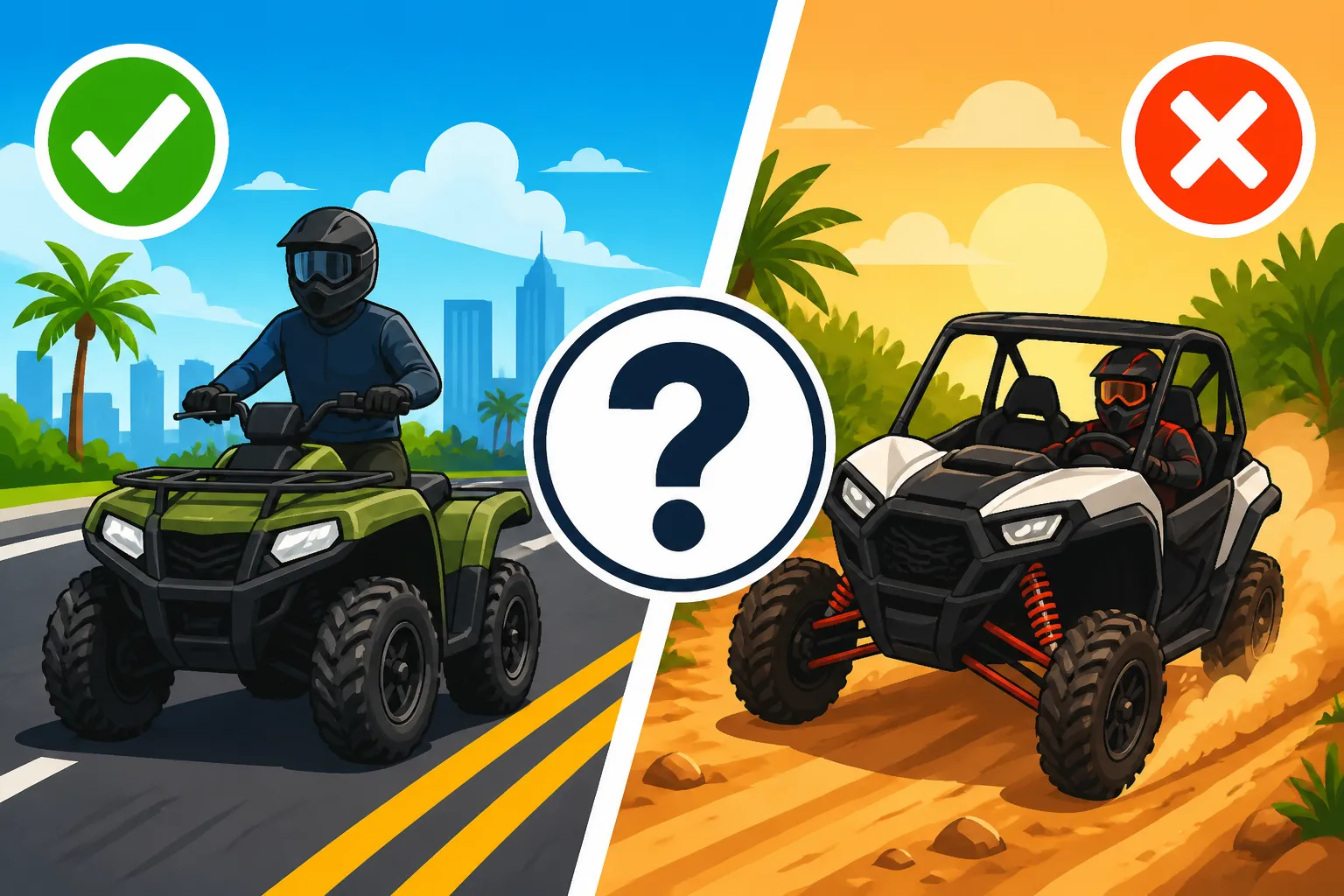
Let's cut right to it, because nobody likes beating around the bush when they just want to ride. For the most part, driving your ATV or UTV on paved public roads in Florida is a big no-go. These machines are built for dirt, sand, and trails, not for sharing asphalt with cars and trucks. However, like many laws, there are specific, limited exceptions that every rider needs to understand if they want to avoid trouble.
The General Rule Against ATV Road Use
Imagine taking your dirt bike or a dedicated race car onto a busy highway. It just doesn't fit, right? That's largely how the state of Florida views ATVs and UTVs on public roads. These vehicles lack many of the safety features required for street-legal vehicles, like full turn signals, brake lights, mirrors designed for road visibility, and often don't have vehicle identification numbers (VINs) that meet federal highway safety standards. They're designed with aggressive tires for traction on soft surfaces, not smooth pavement, which can make handling unpredictable and even dangerous at road speeds.
The frustration this causes is real. You've invested in a fantastic machine, and you just want to enjoy it, perhaps get from one trail section to another without having to load it onto a trailer. But the law, unfortunately, prioritizes public safety on the roads. Florida statutes are pretty clear: an ATV is an off-highway vehicle, and its use is generally restricted to off-highway terrain. Trying to force it into a street-legal role often leads to fines, impoundment, and even accidents.
Florida's Specific Statutory Exemptions
While the general rule is "no," Florida Statute 316.2123 carves out a few specific scenarios where an off-highway vehicle might be allowed on a public road. It's not a free pass to drive wherever you want, but it does offer some narrow avenues for legal road use. Think of these as very specific gates, not wide-open highways. Understanding these exemptions is key to staying on the right side of the law.
The most common exceptions generally revolve around unpaved roads, certain agricultural uses, and the necessity of crossing paved roadways to get to an otherwise legal riding area. It's important to remember that even when one of these exceptions applies, you're still bound by a set of rules and requirements for safe operation, which we'll dive into next. This isn't about transforming your quad into a daily driver; it's about navigating very particular circumstances. You can learn more about [Florida's Off-Highway Vehicle Title Law Explained] to understand the foundational rules for these machines.
Understanding Florida's ATV Road Use Rules
Navigating the nuances of Florida's ATV road rules requires a careful look at the specifics. It's not enough to know there might be an exception; you need to understand exactly when and how those exceptions apply. Misinterpreting these rules can lead to significant headaches, from costly tickets to having your machine impounded.
Unpaved Roads and Designated Roadways
This is perhaps the biggest and most commonly misunderstood exception. Florida allows ATVs to be operated on "unpaved roadways." But what exactly constitutes an "unpaved roadway" in the eyes of the law? It's not just any dirt track you find in the woods or a sandy path through a field. The statute refers to roads that are part of the maintained public road system but simply lack a paved surface.
Here's the kicker: even on these unpaved roads, there are strict conditions. Riders must be at least 16 years old and possess a valid driver's license. You cannot exceed 35 miles per hour, and you can only operate the ATV during daylight hours. Furthermore, some counties have gone a step further, specifically designating certain unpaved roads for ATV use or, conversely, enacting ordinances to prohibit ATV use on any county road, paved or unpaved. This means the rules can vary from one county line to the next. What's legal in [Hernando County Roads Open to Riders] might not be in Polk County. It’s crucial to check with the local county sheriff's office or highway patrol for specific regulations in the area you plan to ride.
Crossing Paved Roads and Emergency Situations
There are times when you simply must cross a paved road to get from one legal riding area to another, or from your private property to a designated unpaved road. Florida law does allow for this, but under very specific conditions. You must cross the paved road at a right angle, meaning you go straight across the shortest distance possible. You also have to yield the right-of-way to all other traffic on the paved road, essentially treating it like you're entering a major highway from a side street. It's a quick, direct movement, not a cruise down the shoulder.
It's absolutely forbidden to ride along a paved road, even if it's just for a short distance to reach your crossing point. If you need to travel parallel to a paved road, your ATV needs to be trailered.
What about emergencies? While the statute doesn't explicitly list "emergency" as a blanket exception, common sense and local law enforcement discretion often apply. For instance, in a post-hurricane scenario, during recovery efforts, there might be temporary allowances for ATVs to access damaged areas. However, this is usually under specific directives from emergency services and isn't something to rely on for routine travel. It's a rare and situational exception, not a right. You can find more specific guidance on topics like [Hurricane Cleanup and Florida ATV Road Access] when those situations arise.
Agricultural and Hunting Exceptions
Florida, with its vast farmlands and hunting preserves, recognizes the practical necessity of using ATVs for agricultural and hunting purposes. This creates another set of exceptions for road use. If you're operating an ATV for legitimate agricultural purposes, such as tending crops, checking fences, or moving livestock on land classified as agricultural, you may be allowed to use certain public roads adjacent to or within that agricultural property. This is generally for necessary travel related to the farm's operation, not for recreational joyrides.
Similarly, there are exceptions for accessing hunting land. Riders may be able to use ATVs on designated [Hunting Access Roads in Florida and Quad Use] within wildlife management areas or state and national forests during hunting season. However, these are often unpaved roads within the management area itself, not public highways leading to the area. Always check with the Florida Fish and Wildlife Conservation Commission (FWC) or the specific land management agency for the rules pertaining to the property you plan to use, as regulations can be very strict and change frequently. It's important to understand [Florida Agricultural Property ATV Exceptions] fully to avoid any misunderstandings with law enforcement.
Requirements and Restrictions for Legal Road Use
Even if your specific situation falls under one of Florida's narrow exceptions for ATV road use, you're not entirely off the hook. There are still crucial requirements you, your machine, and your passengers must meet to comply with the law. Failing to adhere to these can quickly negate any exception and land you in hot water.
Rider Requirements and Equipment
First and foremost, if you're operating an ATV on any public road in Florida, even an unpaved one, you need to be a licensed driver. This means holding a valid Florida driver's license, or an out-of-state license that is recognized by Florida. This is a point of confusion for many, as you don't always need a license to ride an ATV on private property or designated trails. But the moment you touch a public roadway, even an unpaved one, the rules change. For more details on this, check out [Do You Need a Driver's License for an ATV in Florida?].
Age is another significant factor. While there are rules for minors riding ATVs off-road, if you're on a public road, you generally need to be at least 16 years old and have that driver's license. [Florida ATV Law for 14-Year-Old Riders] covers rules for younger riders, but road use is a different ballgame. Furthermore, anyone under 16 years old operating or riding on an ATV must wear a DOT-approved helmet. Even if you're over 16, a helmet is always a smart choice, but it's legally mandated for the younger crowd. Don't forget eye protection either, as it's required for all riders, regardless of age, to prevent debris from impairing vision. You can find more specifics on [Florida ATV Helmet Law for Riders Under 16].
For the ATV itself, remember the "daylight hours only" rule for unpaved roads. This means no riding from dusk to dawn. While some ATVs come with basic headlights and taillights, it's a good idea to ensure they are fully functional and visible if you're ever on a public road, even under an exception. For those who want to ensure their machine is visible, aftermarket accessories like LED light bars, mirrors, and even turn signal kits (though these don't make an ATV street legal) can be found from brands like SuperATV. These can enhance safety, even if they don't change the legal classification of your machine.
Passenger Rules and Vehicle Modifications
ATVs are typically designed for one rider only. If your ATV is explicitly designed by the manufacturer for a single rider, then carrying a passenger on any public road is illegal and extremely dangerous. Some UTVs (side-by-sides) are built with multiple seats and roll cages, making them safer for passengers. Always adhere to the manufacturer's recommendations for passenger capacity. The rules around [Florida ATV Passenger Rules] are important to review, as violations can lead to citations and increase the risk of injury.
The idea of modifying an ATV to make it "street legal" often comes up. While it's possible to add lights, horns, and mirrors, transforming a true ATV into a Low-Speed Vehicle (LSV) or a Street Legal UTV is generally not feasible under Florida law. LSVs have very specific requirements, including a top speed limit (typically 20-25 mph), and are usually purpose-built vehicles. They also have different titling, registration, and insurance requirements. An ATV, by its very nature and design (like engine size, tire type, and suspension), generally cannot meet these standards without essentially rebuilding the entire machine. For context, you might want to compare this to [Florida Low-Speed Vehicle Rules for Side-by-Sides], which are quite distinct from ATV regulations.
Penalties and Enforcement
Ignoring Florida's ATV road rules can lead to more than just a stern talking-to. The penalties can be significant, ranging from fines and citations to the impoundment of your ATV. Local law enforcement, including sheriff's deputies and Florida Highway Patrol troopers, are empowered to enforce these rules. If you're caught operating an ATV illegally on a public road, you could face charges for reckless driving, operating an unregistered vehicle (if it's not properly titled even for off-road use), or other traffic infractions. The cost of a ticket can vary, but it's never a pleasant surprise. Learn more about potential costs in [Florida ATV Ticket Cost for Illegal Road Riding].
Furthermore, if your ATV is impounded, the fees for towing, storage, and retrieving your vehicle can quickly add up, easily exceeding the cost of the original fine. It's a costly lesson to learn. The role of [Florida Sheriff Enforcement of ATV Road Rules] is to keep everyone safe, and they take these regulations seriously. It's always best to be informed and comply than to face these consequences. The state views ATVs differently than golf carts, for example, which have their own set of specific—and recently updated—rules for road use. Understanding [Florida Golf Cart Laws vs ATV Laws] can help highlight these distinctions.
Alternatives to Road Riding: Enjoying Florida Off-Road
Given the strict limitations on road riding, the best and safest way to enjoy your ATV or UTV in Florida is to embrace its true purpose: off-road adventure! Florida is actually home to some incredible public and private riding areas where you can unleash the full potential of your machine without worrying about traffic laws.
Public Trails and OHV Parks
Florida boasts several fantastic public off-highway vehicle (OHV) parks and trail systems. These areas are specifically designed for ATVs, UTVs, and dirt bikes, offering everything from challenging mud holes to winding sand trails.
Two of the biggest and most popular are:
- Croom Motorcycle Area (CMA): Located within the Withlacoochee State Forest near Brooksville, Croom is a massive 2,600-acre park offering diverse terrain. From tight woods trails to open sand pits, there's something for every skill level. It's a fantastic place to spend a day or a weekend, and is often considered [Croom Motorcycle Area: Florida's Biggest OHV Park].
- Ocala National Forest: This vast forest in Central Florida offers multiple OHV trail systems, including the popular Ocala Centennial OHV Trail. Here you'll find miles of sandy trails winding through the unique Florida scrub habitat. It's a truly beautiful place to ride, and you can explore more about [Ocala National Forest ATV Trails in Florida].
Remember that these public lands usually require a permit or day-use fee. You'll need to purchase an OHV pass, either daily or annually, to legally ride. There are also specific rules about helmets, spark arrestors, and sometimes even vehicle width, particularly for side-by-sides. Make sure you check all the requirements before you go. Having your [Florida OHV Permits: What You Need Before You Ride] in hand is essential.
Private Property and Designated Riding Areas
Beyond the state and national forests, Florida also has a thriving scene of private mud parks and off-road resorts. These venues often host events, offer camping, and provide extensive riding areas tailored to various types of off-road vehicles. Places like Hog Waller ATV Resort near Palatka or Redneck Mud Park near Punta Gorda are prime examples of where you can truly push your machine's limits in a fun, controlled environment. These [Florida Mud Parks: Where Riders Actually Go] are built for serious off-roading, with amenities that make for a full weekend of fun. Always check their specific rules, entry fees, and safety requirements before visiting.
If you're lucky enough to own private land or have permission from a landowner, that's another excellent option for legal ATV riding. Just ensure you respect property boundaries and local noise ordinances, and always prioritize safety.
Trailering Your ATV to the Fun
The most practical and legally compliant way to get your ATV to these amazing riding spots is by trailering it. Investing in a good trailer and proper tie-downs not only keeps you on the right side of the law but also protects your valuable machine from potential road hazards and wear and tear it wasn't designed for.
Trailering allows you to safely transport your ATV across paved roads and highways to reach the entrances of OHV parks, trailheads, or private riding areas. It eliminates the temptation to ride illegally on public roads and saves you the stress and potential cost of fines or accidents. There are specific rules for [Trailering a Quad on Florida Highways], including proper lighting and securing your load, but these are generally straightforward and easy to comply with. So, hitch up, load up, and head out to where the real adventure begins – off-road!
Disclaimer
This article is for general informational purposes only and does not constitute professional advice. Laws, prices and regulations vary by location and change over time. Consult a qualified professional for guidance on your specific situation.