Everglades Access Rules for Machines
Oh, the allure of the Everglades! It calls to so many of us with its wild, untamed beauty, and it's completely natural to wonder if you can experience its unique landscapes from the seat of your trusty ATV or UTV. But let's be real, the Everglades isn't just any old riding spot, and trying to figure out where you can and can't go with your machine can feel like navigating a cypress swamp blindfolded. This guide is here to cut through the confusion and explain the real-world rules for machine access in Florida's famous River of Grass.
The Complexities of Everglades Access for Off-Road Machines
When you first think about riding your ATV or UTV in Florida, your mind might jump to expansive state forests or lively mud parks. But the Everglades? That's a whole different beast, and understanding why it's so tightly regulated is the first step in figuring out if you can even get your tires wet there.
Why the Everglades Isn't Your Typical Riding Park
Imagine a vast, slow-moving river of sawgrass, interspersed with cypress domes, pine lands, and mangrove forests, teeming with an incredible array of wildlife – from alligators and panthers to countless bird species. This isn't just a pretty picture; it's a globally significant wetland ecosystem, federally protected and managed by a complex web of agencies, including the National Park Service (NPS), the South Florida Water Management District (SFWMD), and the Florida Fish and Wildlife Conservation Commission (FWC). Each of these entities has a say in what happens on the land they manage, and their primary goal is conservation, not recreation for motorized vehicles.
This multi-layered protection means the rules are far more stringent than what you'd find at, say, Croom Motorcycle Area or Ocala National Forest. You can't just show up with your quad and expect to find open trails. The fragility of the ecosystem demands a very cautious approach to any activity that could disturb the natural balance. [Florida ATV Trails: Every Public Riding Area] goes into more detail about typical riding spots, but the Everglades stands apart.
General Prohibitions vs. Designated Access
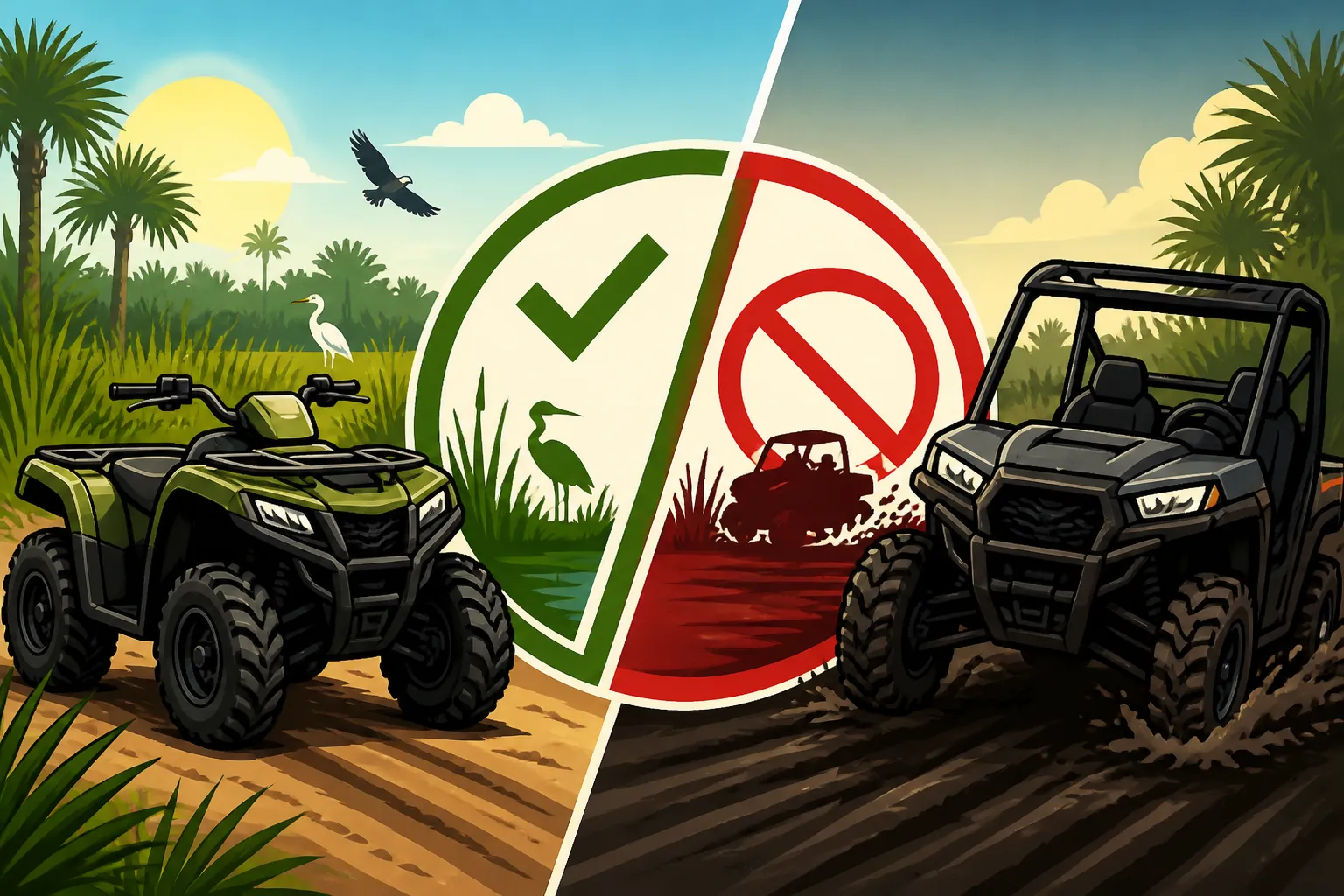
Let's get this straight upfront: the vast majority of the Everglades is completely off-limits to ATVs and UTVs. Randomly driving into unmarked areas, especially in places like Everglades National Park, is a definite no-go and can lead to hefty fines and serious legal trouble. The ecosystem is simply too vulnerable to unmanaged motorized traffic.
However, this doesn't mean all hope is lost for every inch of the greater Everglades region. There are a few, very specific, and highly regulated areas where off-road vehicle (ORV) access is permitted under strict conditions. These designated access points are exceptions, not the rule, and they come with their own unique sets of permits, regulations, and often, highly specialized machine requirements. The key is to understand that you're looking for a needle in a haystack, and that needle has very specific entry requirements.
Specific Areas and Permit Requirements
Navigating the Everglades with your machine means knowing exactly where to go and, more importantly, having the right paperwork. This isn't a place for casual, impromptu rides; it requires planning and adherence to very specific guidelines set by the land managers.
Big Cypress National Preserve ORV Permit Rules
If there's one place in the greater Everglades ecosystem where recreational machine riding is intentionally permitted and managed, it's Big Cypress National Preserve. This isn't part of Everglades National Park itself, but rather a neighboring preserve managed by the National Park Service, specifically set aside for the protection of its natural resources while also allowing traditional uses like hunting and, yes, off-road vehicle recreation on designated trails.
To ride in Big Cypress, you absolutely need an ORV permit. This isn't the same as the OHV passes you might buy for state forests or national forest lands. The Big Cypress ORV permit is unique to the preserve and is issued after a thorough application and inspection process. You can't just buy it online and print it; your machine often needs to be physically inspected to ensure it meets the preserve's strict standards for size, safety equipment, and environmental compliance. This inspection includes checking things like tire types (no aggressive mud tires that tear up the ground), spark arrestors, and ensuring your machine isn't leaking any fluids. The park rangers take this seriously because they are balancing recreation with preservation. [Florida Big Cypress ORV Permit Rules] delves deeper into what's involved in this process.
Once you have your permit, you're restricted to a network of designated ORV trails and access routes, primarily within the preserve's Addition Lands. These are often old logging roads or established routes that have been deemed suitable for managed use. Straying from these marked trails is a serious offense and can result in your permit being revoked, along with fines. Many riders who take their machines into Big Cypress will invest in aftermarket parts for durability and reliability in challenging swamp conditions. Think heavy-duty axles, skid plates, or even a winch – these aren't just for show out here. For instance, something from SuperATV might offer the enhanced protection or recovery gear you'd need if you're seriously considering tackling these unique trails.
Water Management Districts and Their Restrictions
Beyond Big Cypress, other significant landholdings in the Everglades region are managed by various Water Management Districts, most notably the South Florida Water Management District (SFWMD). These lands are crucial for flood control, water supply, and ecosystem restoration, and their primary purpose is not recreational riding.
Generally speaking, SFWMD lands are not open to public ATV or UTV recreation. Access, if granted at all, is usually highly restricted and specific. Sometimes, these districts will issue permits for very specific activities like hunting access on certain wildlife management areas (WMAs), where an ATV or UTV might be allowed as a means of transport to a designated hunting area, but not for general recreational trail riding. Even then, the rules are often about point-to-point travel on established dikes or service roads, not tearing up the landscape.
It's crucial to understand that even if you see a dike or service road that looks inviting, it doesn't mean it's legal for you to ride on. These areas are often actively used by SFWMD staff for maintenance, and unauthorized access is trespassing. Always check with the specific Water Management District for any public access opportunities, but be prepared for very limited, if any, machine access. When access is granted, it's often for specific purposes and not general joyriding. [Florida Water Management District Riding Permits] explores these nuanced regulations in more detail.
Machine Requirements and Environmental Compliance
Taking your machine into the sensitive Everglades environment isn't like heading to a local motocross track. The rules are designed to protect the fragile ecosystem, and that means your ATV or UTV must meet specific standards. This often means more than just having a working engine.
Equipment and Vehicle Specifications
The types of machines allowed in Big Cypress National Preserve, for example, are very specific. They need to be in excellent mechanical condition to prevent any leaks of fuel, oil, or other fluids that could contaminate the water and soil. This isn't just a suggestion; it's part of the permit inspection. Your tires are also scrutinized – extremely aggressive mud tires that rip up the ground are generally not permitted, as they can cause excessive erosion and damage to the unique Big Cypress marl prairies. The preserve aims for low-impact riding.
Spark arrestors are absolutely mandatory on any machine operating in Big Cypress or other similar protected areas to prevent wildfires. [Florida Spark Arrestor Requirements] highlights why this is so critical across Florida's wildlands. Your machine's width might also come into play; for instance, some trails have restrictions, and a machine wider than 55 inches could be classified differently, or even restricted from certain routes. This isn't just about fitting on the trail; it's about minimizing impact on the surrounding vegetation. If you're going to outfit your machine for the Everglades, look for durable, environmentally conscious upgrades. For example, SuperATV offers axle upgrades and skid plates that enhance performance and protect your machine, which can be crucial when navigating the preserve's rugged, watery terrain without damaging the environment or your quad.
Protecting the Fragile Ecosystem
Beyond the physical attributes of your machine, your behavior as a rider is paramount. The "Leave No Trace" principles are amplified in the Everglades. This means packing out everything you pack in – absolutely no litter, no matter how small. It also means avoiding sensitive areas, such as areas with nesting birds or designated wildlife habitats, even if they appear to be near a trail. Mudding, in the sense of intentionally churning up deep mud holes for fun, is often explicitly forbidden or severely restricted due to the damage it causes to the unique soil structure and aquatic habitats.
Riding in the Everglades is about appreciating the environment, not conquering it. Enforcement by park rangers and law enforcement is robust, and penalties for violating environmental rules can be severe. This could include significant fines, impoundment of your vehicle, and even criminal charges, depending on the nature and extent of the damage. This isn't a place to push boundaries or disregard rules; it's a place to respect and protect.
Planning Your Everglades Machine Adventure
Successfully navigating the rules and regulations for machine access in the Everglades boils down to one thing: meticulous planning. This isn't a spontaneous day trip; it's an expedition into one of Florida's most sensitive and unique landscapes.
Researching and Staying Informed
The rules and conditions in protected areas like Big Cypress National Preserve can change. Water levels fluctuate dramatically with the seasons, and high water can close trails or make them impassable. Hunting seasons often dictate access for ORVs, as some trails might be shared or temporarily closed. It is absolutely essential to check the official websites of the National Park Service (specifically for Big Cypress) and the Florida Fish and Wildlife Conservation Commission (for WMAs) immediately before your trip. These sites will have the most up-to-date information on trail closures, water levels, permit requirements, and any emergency advisories.
Don't rely on old blog posts or second-hand information; go straight to the source. You might even consider calling the ranger station at Big Cypress directly if you have specific questions. Being informed isn't just about staying legal; it's about staying safe. [Florida Trail Closures You Should Check First] offers good advice that applies even more strictly here.
What to Bring and Safety Considerations
Riding in the Everglades, even on designated trails, presents unique challenges. The heat and humidity, especially during Florida's long summer, can be intense. Always carry plenty of water – far more than you think you'll need – and wear appropriate clothing for sun protection. Navigation is crucial; cell service is spotty to nonexistent in many parts of the Everglades. A reliable GPS unit with pre-loaded maps of the designated ORV trails is a must. Consider a durable, waterproof GPS mount for your machine, perhaps from SuperATV, to keep your navigation secure and accessible.
Inform someone of your itinerary, including your planned route and expected return time. This is standard backcountry safety advice, but it's particularly important here due to the remote nature of the trails and the potential for getting lost or encountering mechanical trouble far from assistance. Emergency supplies, a first-aid kit, and even a satellite communication device can be lifesavers. Remember that Florida's wildlife is abundant here, and while typically shy, you should always be aware of your surroundings and respect the native inhabitants. [Florida Trail Riding in Summer Heat] provides excellent tips for preparing for the challenging climate.
| Area / District | Primary Use for Machines | Permit Required? | Typical Machine Restrictions | Key Considerations |
|---|---|---|---|---|
| Big Cypress National Preserve | Recreational riding, hunting | Yes (ORV Permit) | Specific tire types, spark arrestor, width limits, no leaks | Physical inspection, designated trails only, seasonal closures, remote |
| SFWMD Lands (General) | Administrative, specific hunting access | Highly restricted, specific | Usually limited to utility vehicles, no recreational riding | Mostly off-limits to public recreation, check specific WMA rules |
| Everglades National Park | No machine access | No | Prohibited | Strictly protected, no ATVs/UTVs allowed |
Disclaimer
This article is for general informational purposes only and does not constitute professional advice. Laws, prices and regulations vary by location and change over time. Consult a qualified professional for guidance on your specific situation.