Getting to Croom Without Touching Pavement
It's a familiar dilemma for Florida ATV and UTV enthusiasts: you're itching to hit the trails at a fantastic spot like Croom Motorcycle Area, but the thought of riding your machine illegally on public roads, even for a short stretch, sends a shiver down your spine. Navigating the legalities and logistics of getting your off-highway vehicle (OHV) to a designated riding area without ever touching pavement can feel like solving a complex puzzle, but with the right planning and knowledge, it's entirely achievable. This guide is here to walk you through the ins and outs, offering practical advice and dispelling some common misconceptions about off-road transport in the Sunshine State.
Why Avoiding Pavement for Your ATV or UTV is Critical
For many riders, the temptation to just "hop on and go" for a quick jaunt down a county road to the trailhead is strong. After all, it's just a mile or two, right? However, Florida's laws are quite specific about where ATVs and UTVs can operate, and ignoring them can lead to costly fines, impoundment, or worse. Beyond the legal ramifications, there are very real safety and mechanical reasons to keep your knobby tires off the asphalt.
Understanding Florida's Road Laws for ATVs
Florida law is pretty clear: ATVs and UTVs are primarily designed for off-road use, and that's where they belong. The statute, specifically 316.2123, defines the limited circumstances under which these machines can even touch a public road. Generally, unless it's a specifically designated unpaved county road, crossing a paved road at a 90-degree angle, or an emergency, you're not allowed to operate your ATV or UTV on paved public streets. Even on unpaved roads, there are restrictions, like [Florida's Daytime-Only ATV Road Rule] and [The 35 mph Posted Limit and Where It Applies]. These rules are in place for a reason – the design of these machines simply isn't suited for typical road conditions or traffic.
Trying to sneak a ride down a paved road to reach a public trail can land you in serious trouble. Law enforcement officers are often aware of the popular riding areas and may patrol access points. A citation for illegal road use can come with significant fines, and if you're found to be operating unsafely or without proper supervision (especially if you're a minor), the consequences can escalate. It's not just about avoiding a ticket; it's about respecting the law and ensuring everyone's safety. Remember, public lands like state forests and national forests have their own rules, and they often align with or even stricter than state road laws.
Safety Concerns and Machine Wear
Beyond legal issues, there are practical reasons why street riding an ATV or UTV is a bad idea. These machines have different braking characteristics, suspension, and tire designs than on-road vehicles. Knobby tires, while fantastic for gripping dirt, mud, and sand, offer poor traction on hard, paved surfaces, especially when wet. This can lead to longer stopping distances and unpredictable handling. Imagine trying to make an emergency stop on a busy road with tires designed for loose terrain – it’s a recipe for disaster.
Moreover, riding on pavement accelerates wear and tear on components that aren't designed for it. Your aggressive off-road tires will wear down much faster, costing you money and reducing their effectiveness where it counts – on the trails. The constant vibration and impact on the suspension system from hard pavement can also prematurely wear out bushings, bearings, and shocks. Keeping your machine off the pavement prolongs its life and ensures it performs optimally when you're truly off-roading. Many enthusiasts invest in high-quality aftermarket parts from companies like SuperATV to enhance their machine's off-road performance; subjecting these upgrades to unnecessary pavement wear just doesn't make sense.
Planning Your Pavement-Free Route to Croom
Getting your ATV or UTV to Croom without touching pavement primarily involves careful planning of your transport. This usually means trailering your machine, but there are nuances to consider, from choosing the right access points to understanding how different transport options might affect your experience.
Scouting for Off-Road Access Points
Croom Motorcycle Area, located within the Withlacoochee State Forest, is specifically designed for off-highway vehicle use. This means there are designated entrances and parking areas where you can unload your machine. When planning your trip, it's crucial to identify the primary staging areas. For Croom, the main entry point is typically off Croom Road in Brooksville. This road is paved, so you'll be trailering your machine to the entrance, not riding it to the entrance. Once you turn off the main highway, you'll still be on paved roads for a short stretch to get to the parking lots. The goal isn't to never see pavement from your tow vehicle, but to ensure your ATV or UTV never actually rides on it.
Before you go, check the official Florida Forest Service website or call the Croom gatehouse directly to confirm current access points and any temporary closures. Sometimes, specific trails or areas might be closed for maintenance, logging, or hunting season, which could affect your preferred unloading spot. Understanding the layout of [Croom's 2,600 Acres and What They Hold] will help you choose the best staging area for the type of riding you plan to do. For example, some areas are more suited for beginner riders, while [Croom's Technical Riding Area Day Pass] is for advanced users.
Loading, Trailering, and Transport Options
The most common and legally compliant way to get your ATV or UTV to Croom is by loading it onto a trailer and towing it with a street-legal vehicle. This ensures your OHV stays off public roads until you're within the designated riding area.
Types of Trailers:
- Utility Trailers: These are general-purpose trailers, often open, with ramps for easy loading. They come in various sizes and can typically accommodate one or more ATVs or a side-by-side. Make sure the trailer's weight capacity and dimensions are suitable for your machine(s).
- Dedicated ATV/UTV Trailers: Some trailers are specifically designed for OHVs, featuring multiple tie-down points, enclosed storage, and specialized ramp systems.
- Toy Haulers: For those who like to combine riding with camping, a toy hauler RV allows you to transport your machines and have living quarters all in one unit.
Regardless of the trailer type, ensuring your machine is securely loaded and tied down is paramount. Use appropriate tie-down straps, crossing them to prevent shifting during transit. A loose machine on a trailer is a serious hazard, especially on Florida's highways. Many riders also invest in specialized parts, like heavy-duty tie-down anchors or even full cargo management systems from vendors like SuperATV, to ensure their machines are rock-solid during transport. Don't forget to check your trailer lights and tires before every trip – safety first! You can learn more about [Trailer Lights That Keep You Out of Trouble] and [Strapping a Quad Down for a Highway Tow] to ensure you're compliant and safe.
Mapping Your Approach: Technology and Tools
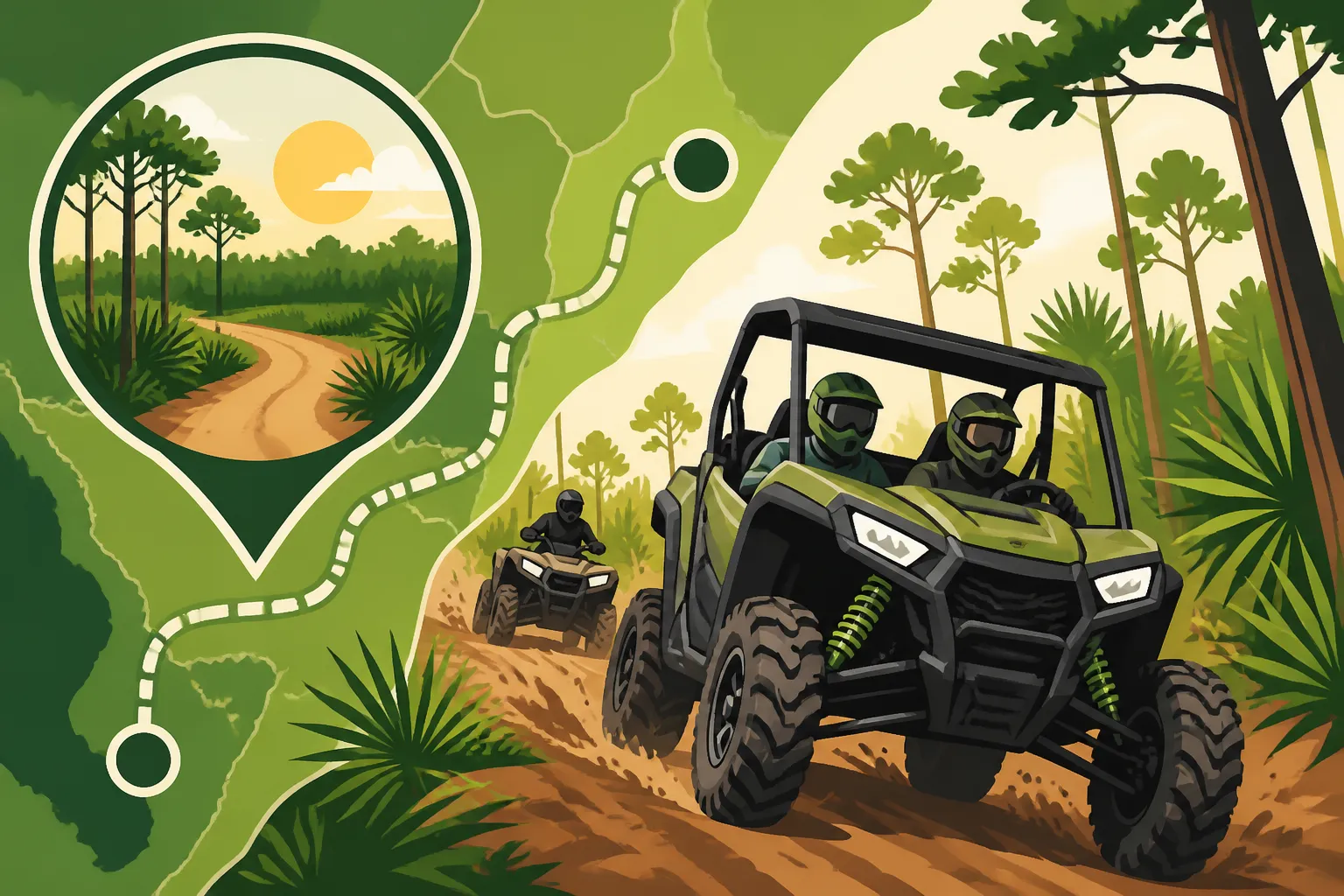
While Croom is a well-known destination, using technology to map your route from your home to the specific Croom entrance you intend to use can save a lot of headaches. Google Maps or other GPS apps can show you the quickest route for your tow vehicle, ensuring you stick to paved roads until you reach the OHV park's entrance.
Once you're at Croom, having a map of the trails is essential. The Florida Forest Service often provides trail maps online or at the entrance booth. Many riders also use GPS devices or smartphone apps (like OnX Offroad or Gaia GPS) that have pre-loaded OHV trail maps. These tools are invaluable for navigation within the sprawling [Withlacoochee State Forest Beyond the Motorcycle Area], helping you stay on marked trails and avoid getting lost. Furthermore, they can help you gauge distances, track your speed, and even mark points of interest or potential hazards. Always download maps for offline use, as cell service can be spotty in remote areas of the forest.
What to Expect and Do When You Arrive at Croom
You've successfully trailered your machine, navigated the Florida highways, and arrived at the Croom Motorcycle Area entrance. Now what? The process from parking to hitting the trails is straightforward, but knowing the steps and understanding the rules will make your day much smoother.
Navigating the Croom Entrance
When you pull into Croom, you'll typically encounter a gatehouse or an honor pay station. This is where you'll need to purchase your day-use pass or show your annual pass. [Croom Motorcycle Area Hours and Florida Day Use Fees] are usually posted prominently. Be prepared to show your permit or purchase one on the spot. For many riders, the cost is a small investment for a full day of fun on incredible trails.
It's also at this point that staff might perform a quick inspection, particularly for width. Croom has specific rules about machine size, especially for side-by-sides. [Croom's 55-Inch Width Check at the Gate] is a common procedure, as machines wider than this are generally not permitted on the ATV trails. This rule is in place to protect the integrity of the trails and ensure safety. If your UTV is wider than 55 inches, you might find yourself turned away, so always check your machine's specifications beforehand. They'll also check for required safety gear like helmets, as [Helmets Required for Everyone at Croom] is a strict rule.
Unloading and Pre-Ride Checks
Once you've cleared the gate, you'll proceed to the designated parking and staging areas. Croom offers ample space for trucks with trailers. Carefully back into a spot, ensuring you have enough room to safely unload your ATV or UTV. Remember to use wheel chocks if needed and proceed with caution as other riders will also be moving around.
After unloading, it's always a good idea to perform a quick pre-ride check. This includes:
- Tire Pressure: Ensure your tires are at the appropriate pressure for off-road riding, which is typically lower than road pressure.
- Fluids: Check oil, coolant, and brake fluid levels.
- Brakes: Test both front and rear brakes for proper function.
- Chain/Drive Belt: Inspect for proper tension and condition.
- Lights: Confirm headlights and taillights are working.
- Spark Arrestor: Make sure your machine is equipped with a USFS-approved spark arrestor, which is mandatory in all national and state forests to prevent wildfires. Many aftermarket exhausts from companies like SuperATV come with spark arrestors, but it's always good to verify.
- Helmet and Gear: Double-check that your helmet is securely fastened and that you have all your essential riding gear, including eye protection.
These quick checks can prevent mechanical issues on the trail and ensure a safer, more enjoyable ride. It’s better to find a loose bolt in the parking lot than in the middle of a challenging trail section.
The Croom Riding Experience
With your machine ready and your gear on, it’s time to explore [Florida's Biggest OHV Park]. Croom offers a diverse riding experience with trails ranging from wide, sandy paths perfect for beginners and family rides to more challenging, narrow, and technical routes with roots and mud for experienced riders. You'll find a mix of open areas, wooded sections, and elevation changes unique to central Florida.
Remember to follow all posted signs and trail markers. Stay on marked trails to protect the environment and avoid trespassing. [Florida OHV Trail Etiquette Locals Expect] includes yielding to oncoming traffic, especially on narrower trails, and being mindful of dust and noise, particularly around camping areas. While Croom offers a fantastic opportunity for extensive riding, remember that it's a shared resource. Respect other riders, keep your speed appropriate for conditions, and pack out everything you pack in. Enjoy the freedom and thrill of riding one of Florida's premier off-highway destinations, knowing you got there the right way.
Alternative Solutions for Accessing Croom
Even with the best intentions, trailering might not always be an option for every rider. Perhaps you don't own a truck and trailer, or you're visiting Florida and don't want to haul your own machine. Thankfully, there are several convenient alternatives to ensure you can still enjoy Croom's trails without illegally riding on pavement.
Considering Off-Road Specific Transport Vehicles
If you're a frequent rider but don't own a pickup truck and trailer, it might be worth looking into dedicated utility vehicles or vans that can safely transport your ATV or UTV without a separate trailer. Some larger vans or box trucks, especially those with custom ramps or lift gates, can be adapted to carry smaller ATVs internally. This eliminates the need to hitch up a trailer and can sometimes be easier to maneuver in traffic and parking lots.
For those who enjoy combining their riding with other outdoor activities, a suitable RV or a small, dedicated enclosed cargo trailer (that you can pull with a larger SUV, for example) can be a viable long-term solution. The key is to ensure any transport method is capable of safely handling the weight and dimensions of your machine and that you have proper tie-downs, possibly including those reinforced accessories from SuperATV, to prevent shifting. This method keeps your OHV completely off the public road network until you're ready to unload at the trailhead.
Renting a Machine On-Site or Nearby
One of the simplest and most hassle-free ways to experience Croom without worrying about transport is to rent an ATV or UTV. Several rental companies operate in the vicinity of Croom, offering machines for daily or multi-day use. Some even offer guided tours within the Croom area, which can be fantastic for first-time visitors or those less familiar with the trails.
When considering rentals, look for operators with a good reputation and clearly outlined rental terms. Inquire about [Florida ATV Rental Age Requirements] as these can vary, and understand the [Florida ATV Rental Insurance and Deposits] policies. Many rental companies will provide the necessary safety gear, like helmets and goggles, and sometimes even include the park pass in the rental fee. For example, [Croom Florida ATV Rentals and Its $125 Start] is a well-known option that provides everything you need. This allows you to show up, hop on a machine, and enjoy the trails without any of the logistical headaches of hauling your own. It's an excellent solution for tourists, new riders, or anyone who simply wants a convenient, pavement-free Croom experience. Remember to book in advance, especially during peak seasons, to ensure machine availability.
Disclaimer
This article is for general informational purposes only and does not constitute professional advice. Laws, prices and regulations vary by location and change over time. Consult a qualified professional for guidance on your specific situation.