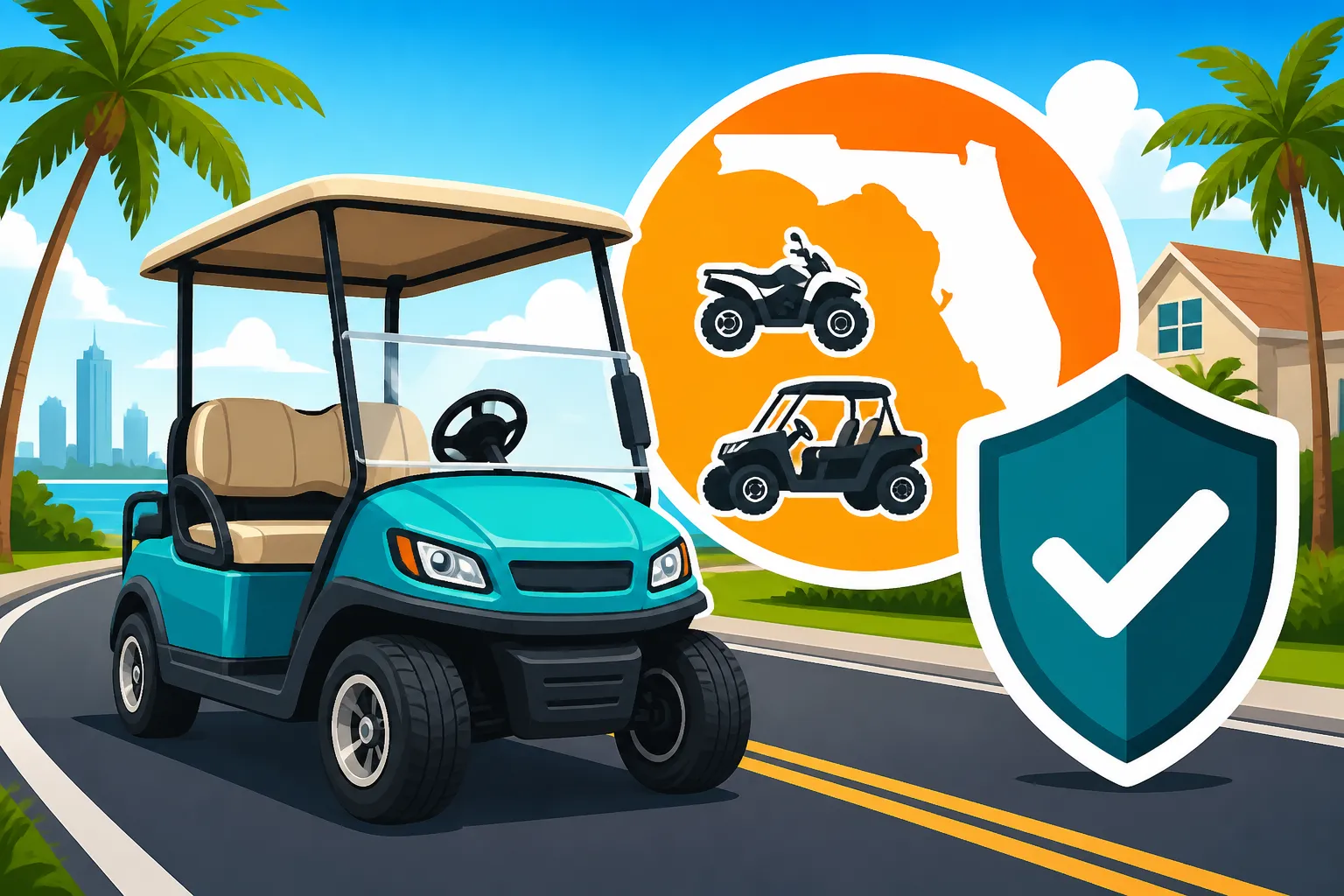
Florida Golf Cart Rules on a Paved Street
Riding your golf cart around the neighborhood seems like the quintessential Florida experience, right? Cruising to the community pool, grabbing groceries, or heading over to a friend’s house without firing up the car feels like freedom. But if you’ve ever wondered exactly where you can legally take that golf cart on a paved street in Florida, you’re not alone. This guide is here to clear up the confusion, lay out the rules, and help you understand the nuances of Florida's golf cart laws, especially when it comes to paved roadways.
Understanding Florida's Golf Cart vs. LSV Distinction
Before we dive into which paved streets are fair game, it’s absolutely crucial to understand the difference between a standard golf cart and a Low-Speed Vehicle (LSV) in the eyes of Florida law. Many people use these terms interchangeably, but legally, they are worlds apart, and that distinction dictates everything about where and how you can ride on public roads.
What Defines a Golf Cart in Florida?
By Florida statute, a "golf cart" is a motor vehicle that has at least three wheels, weighs less than 1,300 pounds, and is designed to transport people and equipment over short distances at speeds of no more than 20 miles per hour. Think about the carts you see on a golf course – simple, generally lacking advanced safety features, and built for leisurely movement within a contained area. They're typically battery-powered, though some gas models exist, and their primary design isn't for navigating traffic.
These vehicles are designed with a very specific, limited use in mind. They don't have turn signals, rearview mirrors, seatbelts, or robust headlights as standard equipment because they weren't originally intended for roads shared with cars and trucks. This fundamental definition is the starting point for all the rules that follow, and it's why you can't just hop on a major road with your average golf cart. Florida takes these classifications seriously to ensure public safety.
When Does a Golf Cart Become a Low-Speed Vehicle LSV?
Now, here's where things get interesting for those who want a bit more road access. A Low-Speed Vehicle (LSV) is, essentially, a golf cart that has been upgraded to meet specific federal and state safety standards, allowing it to operate on a broader range of public roads. For a vehicle to be classified as an LSV in Florida, it must be capable of reaching speeds greater than 20 miles per hour but not exceeding 25 miles per hour. More importantly, it must be equipped with a whole host of safety features that a standard golf cart lacks.
These features include headlamps, stop lamps, turn signals, tail lamps, reflex reflectors, a parking brake, a rearview mirror (or mirrors, like those available from companies such as SuperATV that offer universal mirror kits), a windshield, seat belts, and a vehicle identification number (VIN). [Florida Low-Speed Vehicle Rules for Side-by-Sides] delves into this in more detail, but the key takeaway is that an LSV is a road-legal machine, complete with a title, registration, and insurance, much like a car, whereas a golf cart typically has none of those. This conversion process isn't just about speed; it's about meeting a comprehensive set of safety requirements to operate safely alongside other vehicles.
The Critical Difference for Paved Street Use
The distinction between a golf cart and an LSV is the linchpin for understanding what paved streets you can legally use. A standard golf cart, limited to 20 mph, has very restricted access to paved public roads. Generally, it's confined to specific designated golf cart paths, private property, or public roads where the posted speed limit is 25 mph or less, and only if the local government (county or municipality) has expressly permitted golf cart operation on those roads. This isn't a statewide blanket permission; it's decided at the local level.
An LSV, on the other hand, due to its enhanced safety features and higher speed capability, enjoys much broader access. An LSV can generally be operated on any public road where the posted speed limit is 35 mph or less. This significantly opens up options for commuters in golf cart-friendly communities. The critical difference is that an LSV is treated much more like a conventional vehicle, requiring all the same legal formalities such as a valid driver's license, registration, and insurance. Ignoring this difference can lead to fines, citations, or even more serious legal trouble, so knowing which category your vehicle falls into is absolutely vital. [Why a Cart Needs No Title but an LSV Does] explains more about the legal documentation involved.
Navigating Paved Streets with Your Golf Cart: The Core Rules
So, you've got your golf cart (or perhaps your shiny new LSV conversion). Now, let's talk about the nitty-gritty of actually getting it on those paved streets without running afoul of the law. Florida's regulations are designed to keep everyone safe, which means there are some strict guidelines to follow.
Where Can You Legally Ride Your Golf Cart?
For a standard golf cart (under 20 mph), the rules are quite specific. You're generally allowed to operate on:
- Designated Golf Cart Paths: Many planned communities, like The Villages, have extensive networks of golf cart paths specifically built for these vehicles. These are your safest and most common legal routes.
- Private Roads: If you live in a gated community with private roads, the homeowner's association (HOA) typically sets the rules for golf cart use within its boundaries. Always check your HOA's specific bylaws.
- Public Roads with a Posted Speed Limit of 25 MPH or Less: This is the big "but." Even if a road has a 25 mph limit, you can only operate a golf cart on it if the county or municipality has passed an ordinance explicitly permitting golf cart use on that specific road or network of roads. This isn't automatic! What's allowed in one town might be forbidden just across the county line. [Florida Neighborhood Streets and Golf Cart Communities] often highlight these variations.
- Crossing a Street: You can cross a street at an intersection where the two roads meet, provided the road you are crossing has a speed limit of 45 mph or less. However, this is for crossing, not for driving down the road itself.
For an LSV (20-25 mph capable, with full safety equipment), your options expand significantly:
- Public Roads with a Posted Speed Limit of 35 MPH or Less: LSVs can generally operate on any public road with a speed limit of 35 mph or below, regardless of local ordinances, as long as they are properly titled, registered, and insured. This offers much greater flexibility for commuting within many Florida towns and neighborhoods.
The Importance of Age and Driver's License Requirements
This is another critical area where many riders get confused, especially with recent changes in Florida law. As of October 2023, the rules for operating golf carts on public streets became stricter for younger drivers. Previously, a 14-year-old could technically operate a golf cart in some areas. Now, the law specifies:
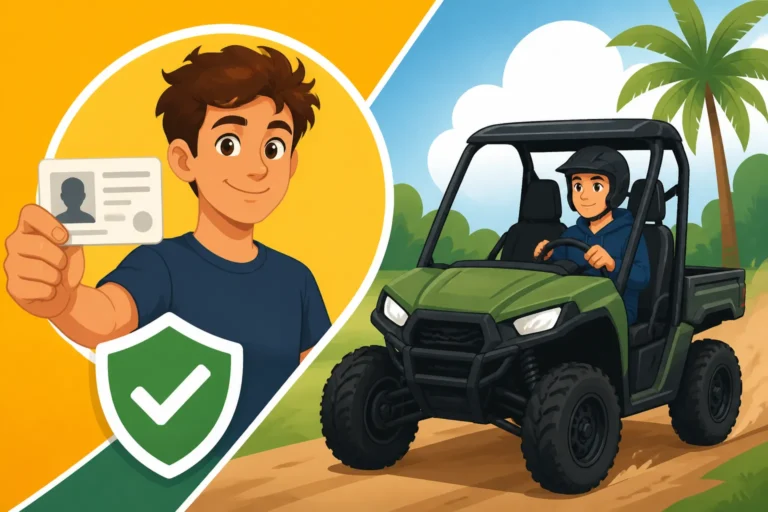
- For Golf Carts: To operate a golf cart on public roads where permitted by local ordinance, a person must be 18 years of age or older and possess a valid government-issued identification. Alternatively, if between 15 and 17 years old, they must possess a valid learner’s permit or driver’s license. This means the days of younger teens cruising around unsupervised are largely over for golf carts on public streets. [Florida Golf Cart Age Law Since October 2023] and [The New Minimum Age for a Florida Golf Cart] explain these changes in detail. [Why a 14-Year-Old Lost Golf Cart Privileges] also provides important context.
- For Low-Speed Vehicles (LSVs): The rules here are clearer and more stringent, aligning with conventional vehicles. Anyone operating an LSV on a public road must possess a valid Florida driver's license (or an equivalent out-of-state license). There is no "learner's permit" exception for unaccompanied LSV driving. This makes sense, as LSVs are legally treated more like cars, and therefore require the same level of driving privilege.
These age and license requirements are not suggestions; they are strictly enforced for safety reasons. Always ensure the driver meets the legal criteria before heading out, as ignoring these can result in citations or worse. [Adults Carrying Photo ID on a Cart] is always a good idea.
Essential Equipment for Street-Legal Golf Carts
While standard golf carts don't require the same level of equipment as an LSV, any golf cart operating on public roads, even where permitted, should ideally have basic safety features. For LSVs, however, the equipment list is mandatory and extensive.
For LSVs (Mandatory Equipment):
To be street-legal as an LSV, your vehicle must have:
- Headlamps
- Stop lamps (brake lights)
- Turn signals (front and rear)
- Tail lamps
- Reflex reflectors (on the sides and rear)
- A parking brake
- A rearview mirror (at least one, though many opt for two for better visibility)
- A windshield
- Seat belts (for all seating positions)
- A Vehicle Identification Number (VIN)
Many owners seeking to convert their golf cart into an LSV turn to aftermarket suppliers like SuperATV for high-quality upgrade kits. They offer everything from full lighting packages to seatbelt installations and rearview mirrors, making the conversion process much more straightforward. Ensuring your vehicle meets these specific requirements is not just about avoiding a ticket; it's about making sure you're visible and can react safely in traffic. Without these items, your LSV conversion simply isn't complete, and you're not legal to ride on public roads.
Common Misconceptions and Local Variations
Florida is a big state with diverse communities, and what's allowed in one town might be strictly prohibited in another. This patchwork of rules can be incredibly confusing for golf cart owners. Let's tackle some common misunderstandings and shine a light on why checking local ordinances is always your best bet.
"My Town Lets Me Ride Anywhere": Local Opt-Outs and Designated Zones
This is perhaps the most prevalent misconception: assuming that if you see golf carts on streets in one Florida community, it's universally permitted statewide. Florida law allows counties and municipalities to designate specific roads or zones where golf carts may operate, even if the state's default rules would otherwise prohibit it. This means your friend in The Villages might be able to crisscross their entire community on a golf cart, while you, living in a different county, are strictly confined to private property or golf courses.
These local ordinances are critical. A county might decide that certain roads within a planned development, where the speed limit is 25 mph or less, are safe for golf cart traffic. They might also establish special signage to mark these areas. Conversely, a county could also choose to ban golf carts from certain areas entirely, even if state law might permit it under specific conditions. This flexibility means that relying on what you "see" or "hear" can be dangerous. Always check the official ordinances for your specific city or county tax collector's website or local government office. Ignorance of the law is no excuse, and a friendly chat with a local law enforcement officer can quickly turn into a costly citation if you're in the wrong zone.
Crossing Major Roads and Signalized Intersections
While golf carts have limited access to paved public roads, the law does make provisions for crossing more significant roadways. A standard golf cart is permitted to cross a street or highway where the posted speed limit is 45 mph or less. However, this is strictly for crossing at an intersection – not for driving down the road itself for any appreciable distance. Think of it as crossing a busy street on foot; you get from one side to the other, but you don't walk down the middle of the road.
When crossing, you must yield to all other traffic and proceed directly across the roadway. You should only cross when it's safe to do so and when you have a clear path. For LSVs, because they can operate on roads up to 35 mph, crossing a road with a 45 mph limit is also generally permitted. However, the intent is still to cross safely, not to extend your journey onto higher-speed thoroughfares. This rule is designed to allow residents in golf cart communities to access different parts of their neighborhoods or amenities without having to trailer their cart. Always exercise extreme caution when crossing, as golf carts offer little protection in a collision with a full-sized vehicle. [A Florida Bill on Signalized Intersections] discusses how even the state looks at improving safety for these crossings.
When is Your Golf Cart Definitely Not Allowed on a Paved Street?
This section is perhaps the most straightforward: there are some places where neither a golf cart nor even an LSV is permitted on a paved street. Understanding these absolute prohibitions can save you a lot of trouble.
- State Roads and Highways: With very rare and specific exceptions (usually involving temporary local permits for parades or special events, which are not general riding permissions), golf carts and LSVs are prohibited from operating on state roads, federal highways, or any road with a posted speed limit exceeding 35 mph. This includes multi-lane highways, interstates, and many arterial roads that connect towns. These roads are designed for higher-speed traffic, and a golf cart, even an LSV, simply isn't equipped to handle those conditions safely.
- Sidewalks and Bike Paths (Generally): While some communities may integrate golf cart paths that resemble wide sidewalks, golf carts are generally not permitted on pedestrian sidewalks or bike paths. These areas are usually reserved for foot traffic, bicycles, and sometimes specific low-power mobility devices. Always assume sidewalks are off-limits unless explicitly signed otherwise by local ordinance. [Florida Sidewalk and Bike Path Rules for Quads] (which applies to ATVs but similar logic holds for golf carts) is a good reference.
- Unapproved Local Roads: As mentioned, even if a road has a 25 mph speed limit, if your local municipality or county hasn't specifically approved golf cart use on that particular paved street, it's illegal. This is why checking local ordinances is so vital. You cannot assume permission based on speed limit alone.
The bottom line is that golf carts and LSVs are fantastic for short-distance, low-speed travel within communities. But they are not replacements for cars on higher-speed or major roadways. Respecting these boundaries is key to enjoying your ride safely and legally. [Florida Golf Cart Laws vs ATV Laws] also highlights how different classifications dictate road use.
Making Your Golf Cart Street-Ready: Practical Tips and Upgrades
If you're looking to maximize your golf cart's utility and safety on paved streets, there are practical steps you can take. Whether you're aiming for full LSV conversion or just want to enhance a standard cart for permitted local use, smart upgrades and staying informed are key.
Key Upgrades for Safety and Compliance
Even if you're not going for a full LSV conversion, adding certain safety features to your golf cart can significantly improve your visibility and ability to interact with other traffic on designated paved roads. For those pursuing LSV status, these upgrades are not optional; they are mandatory for compliance.
- Lighting Kits: A basic golf cart might only have rudimentary headlights. For street use, you'll need brighter headlights, tail lights, brake lights, and turn signals. These are essential for being seen by other drivers, especially at dawn, dusk, or in inclement weather. Many aftermarket companies, including SuperATV, offer complete LED lighting kits specifically designed for golf carts, making it easier to integrate these vital components. These kits are often plug-and-play, providing a much-needed boost in visibility.
- Mirrors: A single rearview mirror is the minimum for an LSV, but adding side mirrors greatly enhances your situational awareness. Being able to see traffic approaching from behind or in adjacent lanes is critical for safe maneuvering and turning. Again, companies like SuperATV provide universal mirror options that can be easily installed on most golf cart models, allowing you to clearly see what's happening around you.
- Seat Belts: While not always required for standard golf carts, seat belts are a non-negotiable for LSVs. They provide crucial occupant protection in the event of a sudden stop or low-speed collision. If your golf cart doesn't have them, consider adding them for any passengers, especially if you plan to use it on public roads.
- Windshield: An automotive-grade windshield offers protection from wind, insects, and road debris. For LSVs, it's a mandatory item. Make sure it's clear and provides an unobstructed view.
- Horn: A working horn is a simple yet effective safety device for alerting pedestrians or other drivers to your presence.
- Tires: While not a "safety device" in the same way as lights, ensuring your golf cart has appropriate tires for paved road use is important. Off-road knobby tires can make for a rough and noisy ride on asphalt and may wear out faster. Smooth, street-friendly tires offer better handling and comfort.
Investing in these upgrades, especially quality ones like those available from SuperATV, isn't just about meeting legal requirements; it's about protecting yourself and your passengers every time you venture onto a paved street.
The Role of Insurance and Registration
This is where the golf cart vs. LSV distinction becomes even more financially significant.
- Standard Golf Carts: Generally, standard golf carts in Florida do not require state registration, titling, or mandatory insurance to operate on designated paths or private property. However, if you plan to operate your golf cart on any public road, even those where it's permitted by local ordinance, it is highly advisable to carry liability insurance. Your homeowner's policy might offer some limited coverage, but it's often insufficient for a road incident. Check with your insurance provider about specific golf cart endorsements or standalone policies that can protect you in case of an accident. Without it, you could be personally liable for damages if you cause an incident.
- Low-Speed Vehicles (LSVs): This is a completely different ballgame. LSVs are treated much like automobiles in Florida. They must be titled and registered with the Florida Department of Highway Safety and Motor Vehicles (FLHSMV), and they must carry personal injury protection (PIP) and property damage liability (PDL) insurance, just like a car. [Florida LSV Registration and Insurance Rules] covers these requirements in depth. This means higher upfront costs and ongoing expenses compared to a standard golf cart, but it grants you the broader access to public roads up to 35 mph. The registration process ensures the vehicle meets all safety standards and provides proof of ownership, which is crucial for legal operation.
Staying Informed About Local Ordinances
As we've emphasized, local rules are paramount. What's true for Miami-Dade County might be completely different from what's allowed in Collier County or Sarasota County. The only way to truly know the exact rules for your area is to check with your local government.
- Visit Your County or City Website: Most local governments publish their ordinances online. Look for sections related to traffic, vehicles, or golf carts.
- Contact Your Local Law Enforcement: A quick, polite call to your local police department or sheriff's office can often clarify specific questions about golf cart use on public roads in your jurisdiction.
- Join Local Community Groups: Many Florida communities have active golf cart enthusiast groups, either online or in person. While not a substitute for official sources, these groups can often share practical knowledge about local riding zones and recent rule changes.
- Look for Signage: In areas where golf carts are permitted on public roads, you will often see specific signage indicating "Golf Cart Crossing" or "Golf Carts Permitted on Roadway." Pay attention to these signs, as they are direct indicators of local permission.
Remember, the responsibility to know and follow the rules falls squarely on the operator. Staying informed protects you, your passengers, and others on the road, ensuring that your Florida golf cart experience remains enjoyable and hassle-free.
Disclaimer
This article is for general informational purposes only and does not constitute professional advice. Laws, prices and regulations vary by location and change over time. Consult a qualified professional for guidance on your specific situation.