Florida LSV Top Speed Limit
There's a good deal of confusion out there among Floridians, whether you're a long-time resident or a new arrival, about what exactly qualifies as a Low-Speed Vehicle (LSV) and, more importantly, how fast you can actually drive one on public roads. Many people mistakenly believe their souped-up golf cart or UTV is an LSV, only to find themselves in a bind. This guide is here to clear up the rules around Florida's LSV top speed limit and what it means for you.
Understanding the LSV in Florida
Before we dive into how fast these vehicles can go, it's absolutely crucial to understand what a Low-Speed Vehicle, or LSV, actually is in the eyes of Florida law. This isn't just a fancy name for a golf cart; it's a distinct class of street-legal vehicle with very specific requirements. Trying to navigate Florida's roads without knowing these distinctions can lead to fines, accidents, and a whole lot of unnecessary headaches.
What Exactly is a Low-Speed Vehicle (LSV)?
In Florida, a Low-Speed Vehicle (LSV) is defined by its design and intended use. It's a four-wheeled electric vehicle that can reach speeds greater than 20 miles per hour but not greater than 25 miles per hour. That "electric vehicle" part is key here – LSVs are not typically gasoline-powered, unlike many ATVs or UTVs you might encounter off-road. The whole point of the LSV classification is to provide a safe, environmentally friendly option for short-distance travel on certain public roads.
Think of it as a middle ground: more substantial and street-legal than a typical golf cart, but less powerful and slower than a traditional car. It's designed to integrate with lower-speed traffic, making it ideal for cruising through neighborhoods, planned communities, or getting to the local grocery store without needing a full-sized automobile. People often get frustrated when their seemingly street-legal golf cart doesn't quite measure up to the LSV definition, and that's because the requirements are much stricter than just adding a few lights.
Key Equipment Requirements for an LSV
This is where the rubber meets the road, so to speak, in defining an LSV. To be legally considered an LSV in Florida and allowed on public streets, the vehicle must be equipped with a very specific set of safety features. These aren't optional extras; they are fundamental to its street legality. If your vehicle is missing even one of these, it simply isn't a legal LSV, regardless of its speed capabilities.
Here's the rundown of what your LSV needs to have:
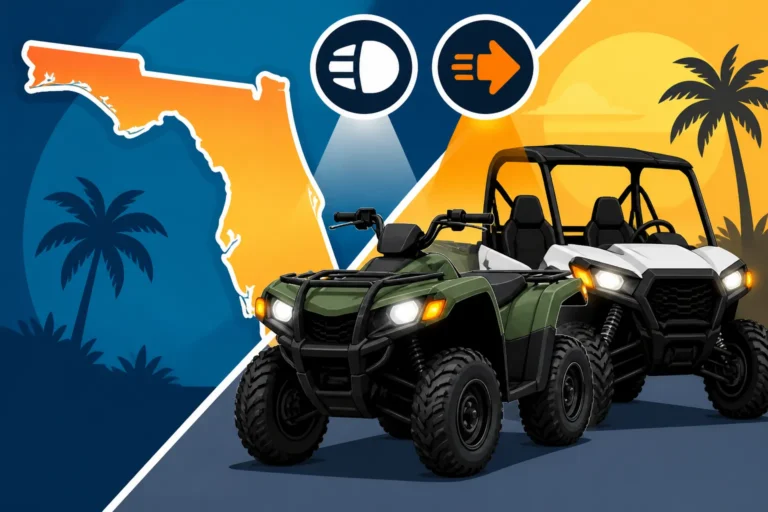
- Headlights: Must be sufficient for nighttime driving.
- Taillights: Clearly visible from the rear.
- Stop Lights: To indicate when the vehicle is braking.
- Turn Signals: Both front and rear, for safe lane changes and turns.
- Reflex Reflectors: Strategically placed to enhance visibility.
- Parking Brake: A must-have for securing the vehicle when stopped.
- Rearview Mirrors: Typically one on the driver's side and an interior mirror, or two exterior mirrors.
- Windshield: Made of safety glass.
- Seat Belts: For all designated seating positions.
- Vehicle Identification Number (VIN): A standard requirement for all road-legal vehicles.
These requirements exist for a good reason: safety. An LSV is sharing the road with cars, trucks, and other vehicles, so it needs to be visible, signal its intentions, and provide a basic level of protection for its occupants. Trying to operate a vehicle that lacks these critical components as an LSV is not only illegal but incredibly dangerous. You can learn more about what's required to get your vehicle on the road by checking out [Florida ATV Lights and Equipment for Road Use], though an LSV's requirements are even more extensive.
The Official Florida LSV Top Speed Limit
Now for the burning question: how fast can an LSV actually go? This is often the biggest point of confusion and frustration for those who are used to faster off-road vehicles or modified golf carts. Florida law is very clear on this, and there's a specific reason for the limit.
The 20-25 MPH Rule Explained
Florida Statutes clearly state that a Low-Speed Vehicle is a vehicle capable of reaching speeds greater than 20 miles per hour but not greater than 25 miles per hour. This isn't a suggestion; it's a hard legal limit. If your vehicle can go faster than 25 mph under its own power, it is not an LSV in Florida. Conversely, if it can't reach at least 20 mph, it also doesn't fit the LSV definition (though it might be a golf cart, which has different rules).
This specific speed range is intentionally designed to allow LSVs to operate safely on certain types of public roads without becoming a major impediment to traffic, yet also without being fast enough to require the same extensive safety features and crash-worthiness as a full-sized automobile. It strikes a balance. Many people express frustration when they've purchased what they thought was an LSV, only to find out its top speed exceeds 25 mph, making it illegal on Florida's low-speed roads as an LSV. Always verify the manufacturer's stated top speed or have your vehicle professionally checked if you're unsure.
Why the Speed Limit Matters for Road Use
The 25 mph top speed limit isn't just an arbitrary number; it dictates where and how LSVs can be legally operated on Florida roads. This is a critical distinction that many riders overlook, leading to potential citations and dangerous situations. The rules are in place for everyone's safety, and ignoring them can have serious consequences.
Here's why this speed limit is so important for road use:
- Roads with Posted Speed Limits of 35 MPH or Less: An LSV is primarily intended for use on public roads where the posted speed limit is 35 miles per hour or less. This means you can cruise through most neighborhoods, local streets, and designated golf cart paths in many planned communities. This allows LSVs to blend in with slower traffic, reducing speed differentials and improving safety for all.
- Prohibition on Faster Roads: Critically, LSVs are prohibited from operating on any road where the posted speed limit is over 35 miles per hour. This includes most main arteries, county roads, and certainly state highways. Attempting to drive a 25 mph LSV on a 45 mph road is not only illegal but incredibly hazardous, putting both the LSV occupants and other drivers at severe risk. The speed differential is simply too great.
- Integration with Traffic Flow: The 25 mph limit ensures that LSVs can maintain a relatively consistent speed with other vehicles in low-speed zones. It's designed for local travel, not for commuting across town on busy thoroughfares. Understanding this limitation is key to responsible LSV ownership.
This clear delineation helps law enforcement ensure that LSVs are used appropriately, minimizing risks on Florida's diverse road network. If you're wondering about riding rules for other vehicles, you can check out [Florida ATV Road Rules: Where You Can Legally Ride], but remember, LSVs have their own distinct set of regulations.
Distinguishing LSVs from Other Off-Road Vehicles
The world of small, motorized vehicles can be a real alphabet soup: ATVs, UTVs, golf carts, LSVs. It's no wonder people get them confused, especially when some look very similar or are modified to try and mimic a different class. However, in Florida, these distinctions are legally significant, impacting everything from where you can ride to what kind of safety gear you need.
LSVs vs. Golf Carts: The Critical Differences
While they might look similar at first glance, especially if a golf cart has been spruced up with some accessories, LSVs and golf carts are distinct categories under Florida law. The differences are absolutely critical when it comes to legal road use.
Here's a breakdown:
- Speed Capability: This is a major differentiator. As we've discussed, an LSV must be capable of speeds greater than 20 mph but not exceeding 25 mph. A golf cart, on the other hand, is defined as a motor vehicle designed and manufactured for operation on a golf course for sporting or recreational purposes, and which is not capable of exceeding 20 miles per hour. That 5 mph difference at the top end is a legal chasm.
- Equipment Requirements: LSVs have a much more extensive list of mandatory safety equipment (headlights, taillights, turn signals, seat belts, VIN, etc.) because they are designed for more general public road use. Golf carts, in their basic form, do not require all of these items to operate on golf courses or within designated communities. While many golf cart owners add lights, it doesn't automatically transform it into an LSV.
- Road Legality: Because LSVs meet stricter safety and speed criteria, they are legally permitted on a wider range of public roads (those with posted speed limits 35 mph or less). Golf carts generally have more restricted access, often limited to golf courses, private property, or specific local streets within a designated golf cart community, often with local ordinances dictating their use. For more on golf cart specifics, you might find [Florida Golf Cart Rules on a Paved Street] helpful.
The frustration often comes when someone tries to treat their golf cart like an LSV, unaware of these fundamental legal differences. It’s not just about what it looks like; it's about how it's legally defined and equipped. [Why a Cart Needs No Title but an LSV Does] is another great read on this topic, highlighting a key difference in their legal standing.
Why Your UTV Isn't an LSV (Unless Converted)
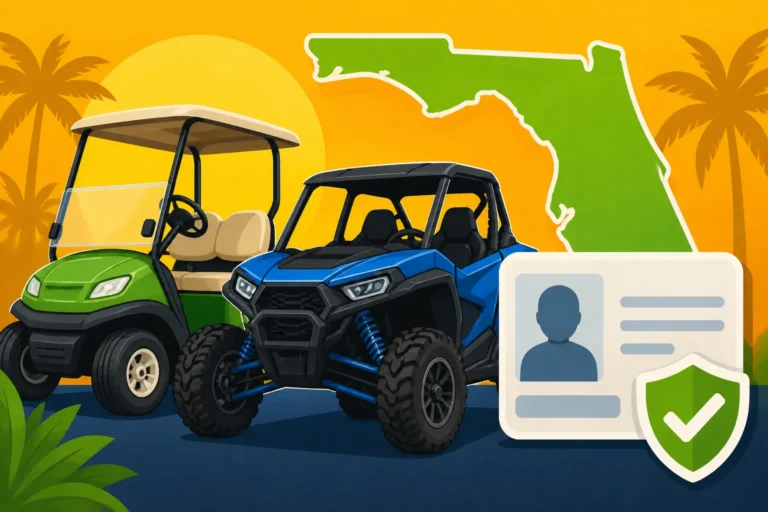
Many UTV (Utility Terrain Vehicle) owners dream of making their machines street legal, envisioning a nimble vehicle that can tackle trails and then zip down to the local diner. While the idea of [Turning a Side-by-Side Into a Florida LSV] is appealing, it's a significant undertaking, and simply slapping a license plate on your UTV won't cut it. Most stock UTVs are not LSVs and cannot be treated as such without extensive and often costly modifications.
Here's why your UTV probably isn't an LSV:
- Original Design Intent: UTVs are primarily designed for off-road recreation, utility work, or agricultural purposes. They're built for rugged terrain, not for smoothly integrating with street traffic. This means their suspension, tire type, and overall construction are different.
- Speed Capability: Many UTVs, even in their stock form, can easily exceed the 25 mph top speed limit for an LSV. If your UTV can go 40, 50, or even 60+ mph, it immediately fails the LSV speed definition.
- Lack of Required Equipment: A stock UTV will almost certainly be missing several, if not all, of the mandatory LSV safety features: proper headlights (they might have them but not street-legal ones), turn signals, proper rearview mirrors, a safety glass windshield, and DOT-approved seat belts for all passengers.
- Emissions and Safety Standards: LSVs are typically electric. While some UTVs are electric, most are gasoline-powered, and converting them to meet the stricter emissions and safety standards for an LSV is not usually practical or cost-effective.
The process of converting a UTV to an LSV is intricate and requires diligent attention to detail. It involves adding all the necessary street-legal equipment, ensuring the vehicle's speed is capped at 25 mph, and then having it inspected and properly registered. Companies like SuperATV offer a vast array of aftermarket parts and accessories that can help equip your UTV, but it's crucial to understand that simply buying a few lights won't make your UTV an LSV. You'd need a comprehensive kit and possibly professional installation and certification to meet all Florida standards. You can explore this further by looking into [Florida Side-by-Side Street Legal Conversion Cost] and [Is a UTV Street Legal in Florida?].
Practical Considerations for Florida LSV Owners
Owning and operating an LSV in Florida comes with specific responsibilities and practical considerations. It's not just about having the right vehicle; it's about knowing the rules and operating it safely and legally. These insights can save you from costly mistakes and ensure you get the most enjoyment out of your low-speed vehicle.
Driving on Roads with Higher Speed Limits
We've touched on this, but it bears repeating with emphasis: LSVs are strictly prohibited on roads where the posted speed limit is over 35 miles per hour. This is a non-negotiable rule designed for your safety and the safety of everyone else on the road. It's easy to accidentally veer onto a road with a higher speed limit, especially in unfamiliar areas, so vigilance is key.
Imagine you're cruising along a residential street at 25 mph, and suddenly it transitions into a county road where the speed limit jumps to 45 mph. Your LSV is now dangerously slow compared to the flow of traffic. This creates a high risk of rear-end collisions and other accidents. Law enforcement takes this rule seriously, and for good reason. Violating it can result in traffic citations, and in the event of an accident, you could face severe liability issues. Always plan your routes to stay on appropriate roads, and if you accidentally find yourself on a road with a speed limit over 35 mph, look for the safest, quickest way to exit it.
Licensing, Registration, and Insurance for LSVs
Unlike a basic golf cart, an LSV is treated much like any other motor vehicle when it comes to administrative requirements. This means you can't just buy one and start driving; you need to go through the proper channels to ensure it's legally recognized and covered. Many new LSV owners are surprised by this, especially if they're coming from a golf cart background where rules can be more relaxed.
To legally operate an LSV on Florida's public roads, you must have:
- Valid Driver's License: The operator of an LSV must hold a valid driver's license. A learner's permit is not sufficient.
- Registration: Your LSV must be registered with the Florida Department of Highway Safety and Motor Vehicles (FLHSMV). This process is similar to registering a car.
- License Plate: Once registered, your LSV will be issued a standard Florida license plate, which must be properly displayed.
- Insurance: You are required to carry personal injury protection (PIP) and property damage liability (PDL) insurance on your LSV, just like with a car. This is a crucial layer of protection in case of an accident.
These requirements underscore the fact that an LSV is a bona fide street-legal vehicle, not just a recreational toy. Skipping any of these steps can lead to significant legal trouble and financial exposure. For more detailed information, be sure to read [Florida LSV Registration and Insurance Rules].
Enhancing Your LSV: Performance vs. Legal Limits
The aftermarket world for small vehicles is massive, and it's tempting to want to customize and enhance your LSV. From comfortable seats to improved lighting, there are many ways to make your LSV more enjoyable and practical. However, when it comes to performance, especially speed, you must remain acutely aware of Florida's legal limits.
While you can certainly add accessories for comfort, utility, or aesthetics – such as upgraded wheels, better sound systems, or cargo racks – any modification that increases your LSV's top speed beyond 25 mph will automatically strip it of its LSV classification. This means it would no longer be legal to operate on public roads as an LSV. If you install a more powerful motor or alter the gearing to achieve higher speeds, you're essentially creating a vehicle that doesn't fit any legal category for street use.
Many companies, including SuperATV, offer a wide range of accessories for UTVs that could potentially be adapted for LSVs, focusing on things like enhanced lighting, storage solutions, or protective gear. These types of modifications are generally fine, provided they don't compromise the LSV's essential safety features or push it over the 25 mph speed limit. Always prioritize legality and safety over pushing performance boundaries that violate the law. Remember, the goal of an LSV is low-speed, localized travel, not high-speed thrills.
Here's a quick comparison of vehicle types in Florida:
| Feature | Low-Speed Vehicle (LSV) | Golf Cart | Utility Terrain Vehicle (UTV) (Stock) |
|---|---|---|---|
| Top Speed | 20-25 MPH | Max 20 MPH | Typically 30-70+ MPH |
| Road Legality | Roads 35 MPH & Under | Specific areas/local ordinances | Off-road only (unless converted/titled) |
| Power Type | Electric (typically) | Electric or Gas | Gas (typically) |
| Equipment | Headlights, Taillights, Turn Signals, | Varies, often basic lights (some local | Basic lights, no turn signals/street |
| Stop Lights, Mirrors, Windshield, Seatbelts, VIN | requirements for community use) | mirrors, no safety glass windshield | |
| Registration | Required, with license plate | Not typically required, no license plate | Varies by state for off-road use, FL OHV Title |
| Insurance | Required (PIP/PDL) | Not required statewide | Not required for off-road use |
| Driver's Lic. | Required | Varies by local ordinance (often not) | Varies by state for off-road use, FL OHV Title |
Disclaimer
This article is for general informational purposes only and does not constitute professional advice. Laws, prices and regulations vary by location and change over time. Consult a qualified professional for guidance on your specific situation.