Marion County Roads Near the Big Scrub
Riders in Florida often face a perplexing challenge: where can you actually ride your ATV or UTV legally, especially when you're looking to explore scenic areas like those around the Big Scrub in Marion County? It's easy to assume that a vast network of unpaved roads means open season for off-road vehicles, but the reality is far more complex and often frustrating. This guide will cut through the confusion, helping you understand the specific rules governing ATV and UTV use on roads in Marion County, particularly those adjacent to the beautiful Ocala National Forest.
The Nuances of Florida and Marion County ATV Road Laws
Navigating the legal landscape for ATVs and UTVs in Florida can feel like a maze, particularly when you’re eyeing those tempting backroads near pristine natural areas like the Big Scrub. Many riders move to Florida or buy a new machine, hoping to explore, only to find the rules are far stricter than they anticipated. It’s a common misconception that if a road isn't paved, it's fair game for any off-highway vehicle, but that's simply not the case in the Sunshine State.
The Statewide Ban on Paved Roads
Let's get this fundamental point out of the way first: in Florida, the general rule is that ATVs and UTVs are not permitted on public paved roads or highways. This isn't just a suggestion; it's enshrined in state law. Imagine you’ve just loaded up your quad, excited to head out, and you think taking that short stretch of county blacktop to get to the dirt road will be fine. It most likely won't be. This blanket prohibition is largely due to safety concerns; these machines aren't designed for road-going traffic, lack many safety features of conventional vehicles, and can be unpredictable in mixed traffic environments.
There are very narrow exceptions to this rule, primarily for agricultural purposes or crossing a road at a 90-degree angle if it's safe to do so. But these exceptions are not an invitation for recreational riding on paved surfaces. Many riders get caught off guard, ending up with tickets and fines simply because they didn't realize the extent of this statewide restriction. It’s a real headache for those who just want to get to the nearest trail. For a deeper dive into the overall regulations, you might want to read [Can You Drive an ATV on the Road in Florida?].
Unraveling Marion County's Specific Road Designations
While the statewide rule largely bans ATVs from paved roads, the situation gets a bit more nuanced when it comes to unpaved roads, especially in counties like Marion that boast vast stretches of rural and forest lands. Florida law does allow counties to designate certain unpaved roads for ATV and UTV use, but this isn't automatic. A county has to take proactive steps, often through a county commission meeting and public hearings, to specifically open these roads. Without such an explicit designation, an unpaved county road is generally still off-limits for recreational ATV use.
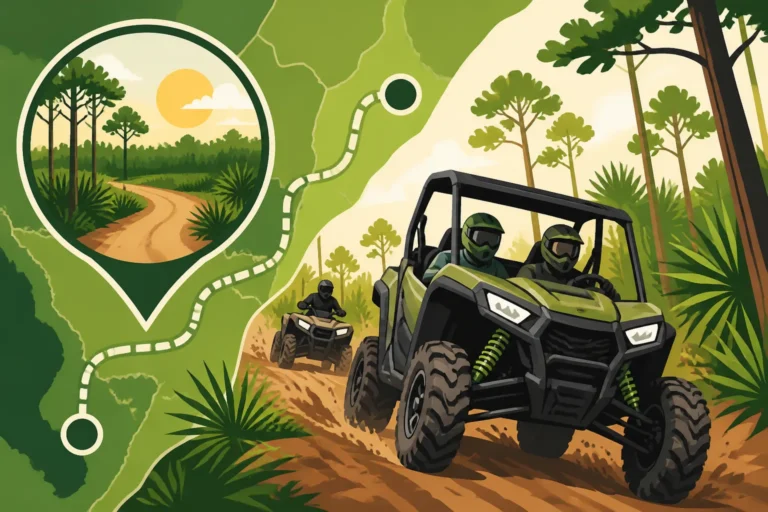
So, what does this mean for Marion County and the areas surrounding the Big Scrub, a significant part of the Ocala National Forest? Unfortunately, Marion County has not widely designated its unpaved county roads for general ATV or UTV use. This means those picturesque dirt roads leading deeper into the scrub, while unpaved, are typically not legal for your quad or side-by-side unless they are within a designated OHV riding area like those found in the National Forest itself. It's a critical distinction: just because a road looks like a trail doesn't make it one. You can learn more about this by checking out [Florida's Unpaved Road Rule for ATVs Explained]. Always look for official signage; if there isn't a sign explicitly stating "ATV Permitted," assume it's not. This is where many riders run into trouble, mistaking a beautiful forest service road for a legal riding track.
Accessing the Big Scrub: Trails vs. Roads
The allure of the Big Scrub, with its unique sand pine scrub ecosystem and winding paths, is undeniable for off-road enthusiasts. However, getting there and riding within it legally requires a clear understanding of what constitutes a "road" versus a "trail" and where your machine is actually allowed. It's a delicate balance between enjoying nature and respecting the law and the environment.
Distinguishing Forest Service Roads from County Roads
Within and around the Ocala National Forest, which encompasses the Big Scrub, you'll encounter a complex network of roads. These can broadly be categorized into U.S. Forest Service roads and Marion County roads. Forest Service roads are maintained by the National Forest Service and are primarily for administrative access, logging, and visitor access to certain points. Many of these are unpaved, but they are generally not designated for recreational ATV or UTV riding. Think of them as service roads, not recreational trails.
Designated OHV trails, such as those within the Ocala National Forest, are specifically marked and maintained for off-highway vehicles. These are your go-to spots. Examples include sections of the Ocala Centennial OHV Trail system. The key is the designation. You'll usually see clear signage indicating you're entering a permitted OHV trail area, and often, these areas require a special permit, such as a [Florida National Forest OHV Pass Prices]. Simply following an unpaved road that appears to lead into the forest without checking for official trail markers or current maps can quickly lead to trespassing or illegal riding charges. It's crucial to understand that even if you're on a powerful UTV from a brand like SuperATV, designed for rugged terrain, its capabilities don't automatically grant you access to undesignated roads.
Gearing Up for Permitted Road Sections (If Any)
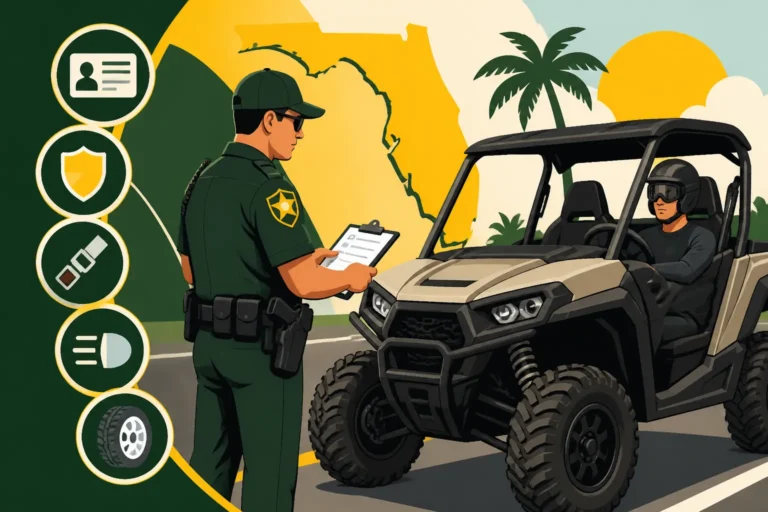
Let's consider a hypothetical scenario: if Marion County or the Forest Service were to designate a specific unpaved road section for ATVs or UTVs to connect two trail systems, what would you need? While such explicit designations are rare for general public roads, any legal road-sharing scenario, even on unpaved surfaces, typically comes with equipment requirements. For instance, your ATV or UTV would likely need working headlights, taillights, brake lights, a horn, and possibly turn signals. These are standard features for street-legal vehicles, which ATVs generally are not.
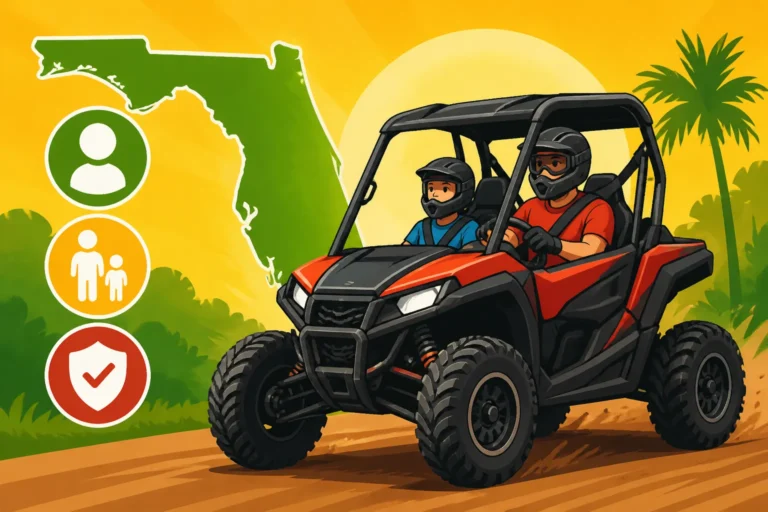
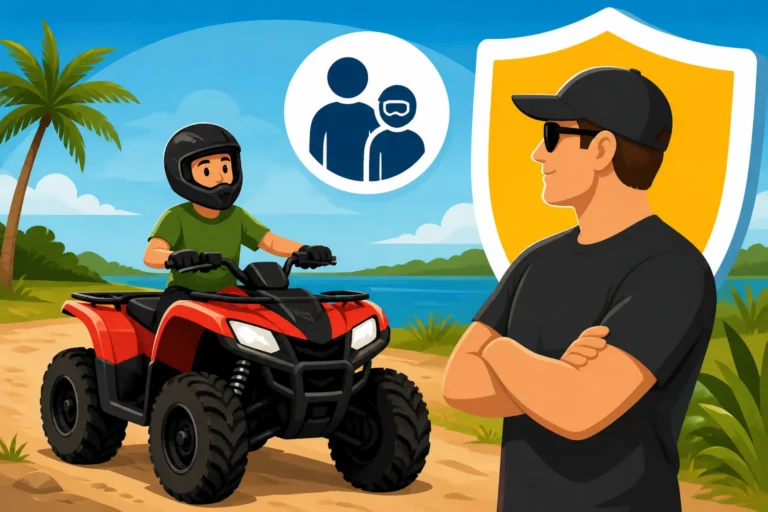
Furthermore, if you are riding on any road, even a designated unpaved one, you would likely need a valid driver's license. The age restrictions and supervision rules that apply to off-road riding on private property or designated trails often don't translate to public roads, even unpaved ones. For minors, the rules regarding [Minors Riding Roads Under Supervision in Florida] would be critical. It's not just about having the right machine; it's about making sure the machine is equipped correctly for the environment you're in and that the operator meets all legal requirements. This includes ensuring your vehicle meets any width or weight restrictions specified for that particular classification, such as [Florida's ROV Width Rule Explained]. Always consult the most current regulations from both Marion County and the U.S. Forest Service before venturing out.
Responsible Riding and Staying Out of Trouble
Riding an ATV or UTV in Florida's beautiful natural areas, especially near the Big Scrub, offers an incredible experience. However, to ensure it remains enjoyable and legal, responsible planning and adherence to regulations are paramount. The frustration of getting a ticket or inadvertently damaging sensitive ecosystems can quickly ruin an otherwise perfect day.
Essential Trip Planning and Information Gathering
Before you even load your machine onto the trailer, thorough planning is your best friend. Start by consulting official maps of the Ocala National Forest. The Forest Service provides detailed OHV trail maps that clearly mark designated riding areas. Don't rely solely on general navigation apps, as they often don't distinguish between legal OHV trails and service roads or private property. A great resource is to look into [Ocala National Forest ATV Trails in Florida] for up-to-date information. It’s also wise to check the Forest Service website for any temporary closures, special conditions, or updated permit requirements.
Another proactive step is to contact the local Marion County Sheriff's office or the Ocala National Forest Ranger Station directly. They are the authoritative sources for current regulations and can clarify any ambiguities regarding road access. Remember, ignorance of the law is not a defense, and a quick phone call can save you a lot of grief. Make sure you understand where permits are needed and how to obtain them, such as the [Florida National Forest OHV Pass Prices]. Always carry physical copies of your permits and any other required documentation while riding. Some riders even print out maps and highlight their planned route to avoid any confusion once they're out in the scrub.
Avoiding Common Pitfalls and Penalties
The consequences of illegal ATV or UTV road riding in Florida can range from significant fines to vehicle impoundment. Florida deputies, especially those patrolling areas adjacent to state and national forests, are often very familiar with these regulations and are trained to spot violations. They'll be looking for signs of illegal road use, and a machine on an undesignated road is a clear red flag. If you're pulled over, they'll check for proper titling, like what's covered in [Florida Off-Highway Vehicle Title Rules Explained], and whether your vehicle is where it should be.
Beyond legal penalties, riding illegally can also lead to environmental damage. The Big Scrub is a sensitive ecosystem, home to unique plant and animal species. Going off-trail or using undesignated roads can disrupt habitats, erode soil, and contribute to the spread of invasive species. As responsible riders, we all have a part to play in preserving these natural treasures. This also includes respecting private property boundaries, which are often not clearly fenced, especially in rural areas. A powerful machine, perhaps customized with performance parts from SuperATV, is meant for designated trails, not for testing the limits on public or private roads where you don't have permission. Always ride within the designated areas, obey speed limits (if applicable), and practice proper [Florida OHV Trail Etiquette Locals Expect] to ensure these beautiful areas remain open for generations of riders to come.
Here's a quick overview of common road types and ATV/UTV legality in Marion County:
| Road Type | General Legality for Recreational ATVs/UTVs | Key Considerations |
|---|---|---|
| Paved State Highways (e.g., US-19, SR-40) | Illegal | Generally banned statewide. |
| Paved County Roads | Illegal | Generally banned statewide. |
| Unpaved Marion County Roads | Generally Illegal | Unless specifically designated by Marion County ordinance, which is rare for general recreational use. Do not assume dirt = legal. |
| U.S. Forest Service Roads (within Ocala National Forest) | Generally Illegal | Primarily for administrative, logging, and access purposes. Not designated for recreational ATV/UTV riding unless they are part of a marked OHV trail system. |
| Designated OHV Trails (e.g., within Ocala National Forest) | Legal | This is where you should ride! Requires a valid OHV pass and adherence to specific trail rules. Look for official signage. Examples include the [Ocala Centennial OHV Trail: 47 Miles in Florida]. |
Disclaimer
This article is for general informational purposes only and does not constitute professional advice. Laws, prices and regulations vary by location and change over time. Consult a qualified professional for guidance on your specific situation.