Florida ATV Title When You Buy From a Dealer Out of State
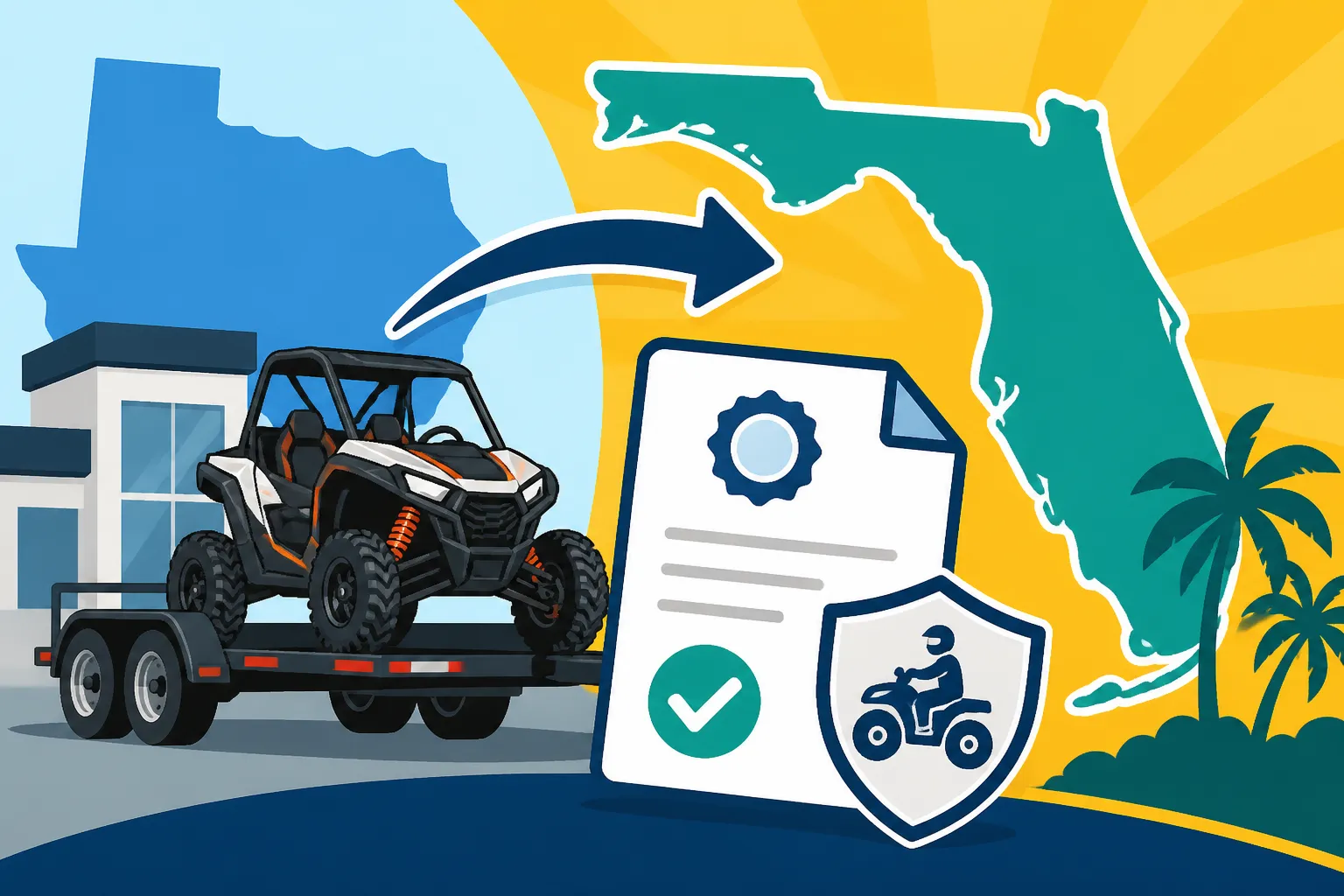
So you’ve found the perfect ATV, maybe even snagged a great deal, but it’s sitting in a dealership across the state line. Now what? Bringing that shiny new (or new-to-you) machine home to Florida brings up a whole new set of questions about how to make it officially yours in the Sunshine State. This guide is here to walk you through the sometimes confusing process of getting a Florida ATV title when you’ve purchased your quad from an out-of-state dealer.
Understanding Florida's ATV Titling Mandate for Out-of-State Purchases
It’s easy to think that if you bought your ATV out of state, Florida’s rules might not apply, especially if you paid sales tax where you bought it. However, that's not quite how it works in Florida. The state has specific requirements for titling off-highway vehicles (OHVs), which include ATVs and certain UTVs, particularly if you plan to ride them anywhere beyond your own private property.
The biggest trigger for needing a Florida title for your ATV, regardless of where you bought it, is the intention to ride it on public lands. This includes all the fantastic state forests, national forests, and designated OHV parks that Florida has to offer. If you want to legally enjoy trails like those at Croom Motorcycle Area or Ocala National Forest, your ATV absolutely needs a Florida title. It's not just about proving ownership; it's about the state officially recognizing your machine so it can be tracked and regulated, contributing to safety and land management efforts. You might be surprised to learn that many Floridians assume they can just ride if they have a bill of sale, but that's a common misconception that can lead to fines or impoundment. For a deeper dive into who needs to title, check out [Who Must Title an ATV in Florida].
The "public land" aspect is critical here. If you're buying an ATV solely for use on private land you own, like a ranch or a large agricultural property, and you never, ever intend for it to touch a public trail or road, then the titling requirement might not apply in the same way. However, most riders eventually want to explore what Florida's beautiful natural landscapes have to offer, making a title a near-necessity for most ATV owners. Even if you only trailer your quad to a public riding area, you still need that official piece of paper. This isn't just about sales tax; it's about registering your machine with the state so they know it exists and who owns it. This process helps prevent theft and ensures that you can prove legal ownership if, for example, your ATV is involved in an accident or recovered after being stolen. Don't fall into the trap of thinking a valid out-of-state registration (if such a thing even exists for an ATV where you bought it) will suffice; Florida has its own system.
Essential Documents from Your Out-of-State Dealer
Getting your ATV titled in Florida after buying it out of state hinges significantly on having the correct paperwork from the dealer. This isn't just a formality; it's the legal chain of custody for your new machine. Without these documents, or if they're incomplete, you'll hit a major roadblock at the Florida Tax Collector's office.
The Manufacturer's Certificate of Origin (MSO)
The Manufacturer's Certificate of Origin, often abbreviated as MSO, is the absolute bedrock of your ATV's ownership journey. Think of it as the birth certificate for your ATV. It's issued by the manufacturer and indicates the initial transfer of ownership from the factory to the dealer. When you buy a brand-new ATV, even from an out-of-state dealer, they should provide you with the MSO. This document proves that the ATV hasn't been titled in any state before, making you the first retail owner.
It is critically important that the dealer correctly signs over the MSO to you. This includes filling in your name, address, the date of sale, and having an authorized representative from the dealership sign and date it. Any missing information or errors can cause delays or outright rejection when you try to title your ATV in Florida. Before you leave the dealership, no matter how excited you are to hit the road (or the trail!), take a moment to meticulously review the MSO for accuracy. Ensure your name is spelled correctly, the VIN matches your ATV exactly, and all the dealer's information is present. In some cases, the MSO might be held by a lienholder if you financed the purchase, so be clear with your dealer about how and when you will receive this vital document. For more information on how important this document is, you can read [When an MSO Beats a Bill of Sale].
Your Bill of Sale or Purchase Agreement
While the MSO is the ATV's "birth certificate," the bill of sale or purchase agreement is the legal document proving your specific transaction with the dealer. This document details the terms of your purchase, including the ATV's make, model, VIN, purchase price, and the names and addresses of both the buyer (you) and the seller (the dealership). For Florida's titling purposes, a comprehensive bill of sale is essential. It validates the purchase price, which is crucial for calculating any remaining Florida sales tax you might owe.
Make sure the bill of sale explicitly states the full purchase price and any sales tax already collected by the out-of-state dealer. This is vital for Florida to determine if you're eligible for a sales tax credit. Without clear documentation of sales tax paid elsewhere, Florida may charge you the full sales tax amount, even if you already paid it. It’s also a good practice to ensure the bill of sale clearly lists any trade-in value if you traded another machine, as this can affect the taxable amount. If you're ever in a situation where you need a robust, legally sound bill of sale, resources like LawDepot can provide templates and guidance to create comprehensive legal documents, ensuring all necessary details are covered for both your protection and the titling process. This attention to detail on the bill of sale protects you from unexpected tax obligations and streamlines your titling experience.
Proof of Identity and Florida Residency
When you head to the Florida Tax Collector's office to title your out-of-state ATV, you'll need to prove who you are and that you are indeed a Florida resident. This might seem obvious, but forgetting these items can send you home without your title. Typically, a valid Florida driver's license or ID card will serve as your primary form of identification. However, if your license doesn't reflect your current Florida address, or if you're a new resident, you might need additional documentation to establish your residency.
Common examples of proof of Florida residency include utility bills in your name, a Florida vehicle registration for another vehicle, a Florida voter registration card, or a lease agreement. The goal is to show the state that you genuinely live in Florida and are therefore subject to its titling laws and eligible for a Florida title. This step helps the Tax Collector's office accurately process your application and link your new ATV to your official Florida records. Having multiple forms of proof is always a good idea, just in case one isn't deemed sufficient. This verification ensures that the title is issued to the correct individual and prevents fraud.
The Step-by-Step Titling Process in Florida
Once you have all your ducks in a row with the dealer paperwork and your own identification, it's time to actually get that Florida title. The process involves a few specific forms and steps, which are crucial to follow accurately to avoid delays.
Completing the Florida Title Application (Form HSMV 82040)
The journey to your Florida ATV title officially begins with Form HSMV 82040, the Application for Certificate of Title With/Without Registration. This is the main document you'll submit to the Florida Department of Highway Safety and Motor Vehicles (FLHSMV) through your local County Tax Collector's office. You can usually find this form online on the FLHSMV website or pick up a physical copy at the Tax Collector's office.
Filling out this form accurately is paramount. You'll need to provide details about yourself as the applicant, information about the ATV (including its VIN, make, model, and year), and specifics about the purchase, such as the date and price. Pay close attention to sections that ask about the "initial owner" – since you're buying a new ATV from a dealer, you will be considered the initial retail owner, even if the dealer is out of state. If you made a trade-in, there's a section for that as well. Double-checking every field for accuracy, especially the VIN, can save you a world of trouble. Mistakes here can cause your application to be rejected, leading to frustrating delays. For comprehensive instructions on filling out this form, refer to [Florida's ATV Title Application Explained].
VIN Verification Requirements
For ATVs purchased out of state, Florida almost always requires a Vehicle Identification Number (VIN) verification. This step is a safeguard to ensure that the ATV you are titling is indeed the one described on your paperwork and that its VIN hasn't been tampered with. It's essentially an inspection to confirm the physical VIN on the machine matches the VIN on your MSO and bill of sale.
A VIN verification can be performed by several authorized parties. You can typically get it done at any Florida County Tax Collector's office by their staff, by a law enforcement officer, or by a Florida licensed dealer. In some cases, a notary public or even a correctional officer might be authorized, though the Tax Collector's office or law enforcement are the most common and straightforward options. The person performing the verification will fill out and sign Form HSMV 84060, "Vehicle Identification Number and Odometer Verification." Make sure you bring this form with you when you get the verification done. Without this completed and signed form, your title application for an out-of-state ATV will not be processed. This step adds an extra layer of confidence that the machine you're bringing into Florida's system is legitimate. To find out more about who can verify your VIN, read [Who Can Verify an ATV VIN in Florida?].
Calculating and Paying Fees and Sales Tax
This is often the part that gives people the most pause – figuring out what you owe! When titling an ATV purchased out of state in Florida, you'll encounter a few different fees and, very likely, sales tax. The basic Florida ATV title fee is generally a flat rate for the initial title application. On top of this, there's typically a service charge collected by the county tax collector for processing the paperwork. You can find a detailed breakdown of these costs in [Florida ATV Title Fee Breakdown: $29 Plus Service Charges].
The sales tax component can be tricky, especially if you paid sales tax in the state where you purchased the ATV. Florida's sales tax laws dictate that if you paid sales tax in another state at a rate lower than Florida's, you will owe the difference to Florida. If you paid sales tax at an equal or higher rate, you generally won't owe Florida any additional sales tax. However, you must have proof of the sales tax paid to the out-of-state dealer, usually on your bill of sale, to receive credit. Without that clear documentation, Florida will assume no sales tax was paid and will charge you the full amount. Payment methods for these fees and taxes vary by county tax collector's office, but most accept cash, checks, and major credit cards (though credit card payments may incur an additional processing fee). Always check with your specific county's Tax Collector's office for their accepted payment methods and current fee schedules before you go. For a deeper look at this, see [Florida Sales Tax When You Title an ATV].
Common Challenges and Troubleshooting for Out-of-State Purchases
Bringing an ATV from another state to Florida can introduce a few unique hurdles. Knowing what to watch out for and how to address common issues can save you a lot of time and frustration.
Dealer Mistakes and Paperwork Gaps
One of the most common snags encountered when titling an out-of-state ATV in Florida is incomplete or incorrect paperwork from the selling dealership. This could be anything from a missing signature on the MSO, an incorrect VIN entered on the bill of sale, or even an entirely missing document. For example, if the MSO isn't properly assigned to you, or if the dealer didn't fill in the odometer reading (if applicable to your ATV model), the Florida Tax Collector will reject your application.
The best defense against these issues is a good offense: meticulously review all documents provided by the dealer before you leave their premises. Don't be shy about asking the dealer to correct any errors on the spot. If you've already left and discover an issue, you'll need to contact the out-of-state dealer and request corrected paperwork. This can be a time-consuming process, especially if they are far away, so clear and persistent communication is key. Having a well-documented purchase agreement, perhaps one created using a service like LawDepot, can help ensure all the necessary information is captured upfront, reducing the chances of errors down the line. It’s far easier to fix something when you’re still at the counter than it is weeks later.
Sales Tax Credits and Avoiding Double Payment
No one wants to pay sales tax twice! As mentioned earlier, Florida offers a credit for sales tax paid in another state, but proving you paid it is entirely your responsibility. If the sales tax rate in the state where you bought the ATV was less than Florida's (currently 6% state sales tax, plus any applicable county discretionary sales surtax), you will owe Florida the difference. If you paid an equal or higher rate, you generally won't owe Florida anything, provided you have adequate proof.
The key here is crystal-clear documentation on your bill of sale or purchase agreement that explicitly states the amount of sales tax you paid to the out-of-state dealer. A simple line item, "Sales Tax Paid: $XXX.XX," is usually sufficient. Without this, even if you recall paying tax, the Florida Tax Collector has no way to verify it and will charge you Florida sales tax on the full purchase price. It’s always wise to keep your original receipts and any other documentation showing the tax payment. This is why a detailed bill of sale is so important; it acts as your official record for these credits.
When Your ATV is Too Wide or Heavy for an ATV Title
Florida has specific definitions for what constitutes an "All-Terrain Vehicle" (ATV) for titling purposes, and these definitions are primarily based on width and dry weight. Many buyers, especially those new to powersports, mistakenly refer to all quads and side-by-sides as "ATVs." However, if your machine is wider than 55 inches or has a dry weight exceeding 1,500 pounds, Florida will classify it as a Recreational Off-Highway Vehicle (ROV), which includes most UTVs or side-by-sides.
Why does this matter? Because the titling process, and even the application form, can differ slightly for ROVs. Trying to title an ROV as an ATV will lead to rejection of your application. The Florida Tax Collector will measure or verify the specifications of your machine to ensure it fits the ATV classification. If it's over 55 inches, you'll need to apply for an ROV title instead. For a full explanation of these distinctions, you should read [Florida's 55-Inch ATV Definition and Why It Matters] and [Florida UTV Titling for Side-by-Sides Over 55 Inches]. It's crucial to understand your machine's actual classification before you even start the titling process to ensure you're using the correct forms and following the right procedures. Getting this wrong upfront will only delay your ability to legally ride your machine on Florida's public lands.
| Required Document | Out-of-State Dealer Purchase | In-State Dealer Purchase |
|---|---|---|
| Completed Form HSMV 82040 | Yes | Yes |
| Manufacturer's Certificate (MSO) | Yes | Yes |
| Bill of Sale / Purchase Agr. | Yes | Yes |
| Proof of Identity (FL DL/ID) | Yes | Yes |
| Proof of FL Residency | Yes (if address on DL not current) | Yes (if address on DL not current) |
| VIN Verification (Form HSMV 84060) | Required | Not usually required (dealer handles) |
| Sales Tax Payment Proof | Yes (for credit) | N/A (paid at dealer) |
| Payment for FL Title & Fees | Yes | Yes |
Disclaimer
This article is for general informational purposes only and does not constitute professional advice. Laws, prices and regulations vary by location and change over time. Consult a qualified professional for guidance on your specific situation.