How Long You Have to Transfer a Florida Quad Title
So, you just bought a shiny new-to-you quad, or maybe you're thinking about selling one, and a common question pops up: "How long do I actually have to transfer this Florida ATV title?" It's a question that often causes a little flutter of anxiety, especially when you're caught up in the excitement of a new machine or the details of a sale. No one wants to deal with legal headaches or unexpected fees down the road. This guide is here to walk you through the specific timeline Florida sets for transferring an off-highway vehicle (OHV) title and, more importantly, explain why sticking to that schedule is absolutely crucial for your peace of mind and your wallet.
The Official Timeline for Title Transfer in Florida
When it comes to transferring ownership of an off-highway vehicle in Florida, the state isn't just suggesting a timeline; they've put it into law. It's a pretty clear-cut rule designed to keep everything orderly and ensure that ownership changes are recorded promptly. This might seem like just another bureaucratic hurdle, but it's actually there to protect both buyers and sellers.
The 30-Day Rule Explained
In Florida, the general rule of thumb for transferring an ATV or UTV title after a sale is 30 calendar days. This means that once you've completed the transaction – the money has changed hands and the machine is yours – you have a month to get that title formally transferred into your name. This 30-day window starts from the date of purchase, which should be clearly marked on your bill of sale and the title certificate itself. It's not 30 business days; it's 30 calendar days, so weekends and holidays count. Missing this window, even by a day or two, can lead to some financial penalties that no one wants to encounter.
Understanding the Penalties for Lateness
Florida takes its title transfer deadlines seriously, and there's a specific penalty for those who don't complete the transfer within the allotted 30 days. If you go past that deadline, you'll generally be assessed a late transfer penalty. This penalty is an additional fee that gets tacked onto your regular title transfer costs. While I can't give you exact figures, know that this fee can add a noticeable chunk to your overall expenses, and it's entirely avoidable by simply acting promptly. It's designed to encourage timely action and ensure the state's records are accurate. Imagine you're already factoring in the cost of the machine, maybe some new gear, and the basic titling fees – then suddenly, an extra charge pops up just because you procrastinated a little. It's definitely a "d'oh!" moment.
Why the Clock Starts Ticking
The 30-day clock begins the moment the sale is finalized. This is typically the date recorded on the bill of sale and when the seller signs over the existing title certificate to you. It's crucial that both you and the seller accurately date these documents. Why is this so important? Because an undated title, or one with an incorrect date, can cause confusion and complications down the road. The Florida Department of Highway Safety and Motor Vehicles (FLHSMV) and your local county tax collector's office rely on these dates to accurately track ownership and apply rules, including those related to late fees. It's all about establishing a clear chain of ownership from one person to the next.
The Real-World Impact of Delayed Title Transfers
Beyond the official penalties, dragging your feet on a title transfer can lead to a whole host of real-world headaches. It's not just about avoiding a late fee; it's about protecting yourself as the owner and ensuring you have full legal rights to your machine. I've heard stories from countless riders who put off the transfer, only to run into significant problems later.
The Hassle of Unrecorded Ownership
When the title isn't in your name, you're not officially the owner in the eyes of the state. This might seem like a minor detail if you're just riding on private land, but it can create enormous complications. What if the previous owner gets into legal trouble, and somehow, your quad is mistakenly linked to them? What if you need to prove ownership for a warranty claim, or if the machine is unfortunately stolen? Without a title in your name, you'll face an uphill battle to assert your rights. You won't be able to easily resolve issues like [Florida ATV Title Lost or Damaged: Getting a Duplicate] because you aren't the registered owner. It’s like owning a house but having the deed still in the previous owner's name—it just opens the door to potential disputes and legal uncertainty.
Insurance Headaches and Liability Risks
Securing proper insurance for your ATV or UTV can become a maze if the title isn't officially in your name. Many insurance companies require proof of ownership, and a title that hasn't been transferred can be a major red flag. If you get into an accident and the title isn't transferred, your insurer might deny your claim, arguing that you weren't the legal owner at the time of the incident. Even worse, if you cause damage to property or injure someone while riding, and the title hasn't been transferred, you could face significant personal liability. The original owner might still technically be liable for actions involving the machine, or you could find yourself in a very murky legal situation, trying to prove you're the rightful owner without proper documentation. This is where the legal aspect of [Florida's Off-Highway Vehicle Title Law Explained] truly comes into play for your protection.
Selling an Untitled Machine Later On
Imagine this scenario: you bought a quad, enjoyed it for a year, and now you want to sell it. But you never got around to transferring the title into your name. Now, you have a problem often referred to as "title jumping." You're not the titled owner, so you can't legitimately sign over a title to a new buyer. This immediately makes you look suspicious and can deter potential buyers who are savvy enough to know the rules. It also forces the new buyer into a difficult position, as they'll have to figure out how to title a machine from a seller who isn't officially on the paperwork. This can drastically reduce your machine's resale value and make it incredibly hard to find a buyer, wasting your time and potentially costing you money in a lost sale. Always aim for a clean transfer, as outlined in guides like [Buying a Used ATV in Florida: Transferring the Title].
Step-by-Step: Transferring Your Florida Quad Title
So, you understand the urgency and the importance. Now, let's talk about the practical steps involved in transferring your Florida quad title. It's a straightforward process if you gather all your ducks in a row beforehand, but missing a single piece of paperwork can lead to frustrating delays.
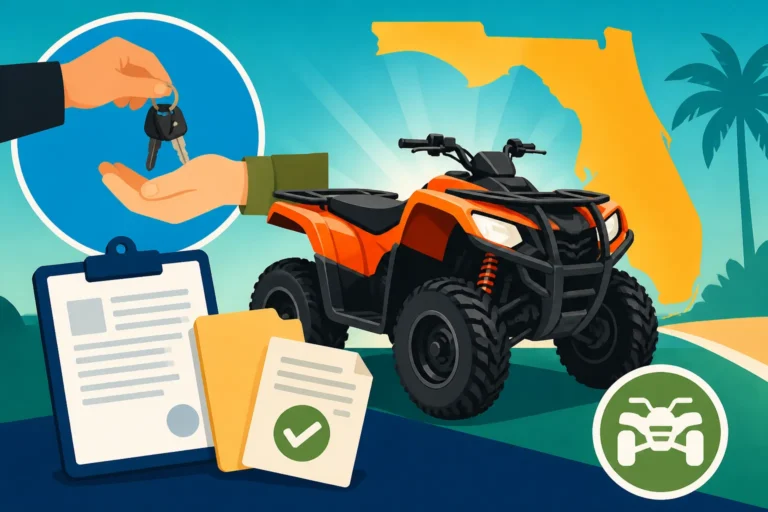
Gathering Your Essential Paperwork
Before you even think about heading to your local tax collector's office, make sure you have everything you need. This preparation will save you immense time and potential re-trips.
- The Original Title Certificate: This is paramount. The seller must provide you with the original paper title, properly signed over to you. Make sure there are no erasures, alterations, or obvious mistakes, as these can invalidate the title. The seller should sign in the designated "seller" section and fill in your name and address as the buyer, along with the date of sale and the selling price.
- Bill of Sale: While the signed-over title is crucial, a separate bill of sale is highly recommended, especially for private sales. This document clearly details the transaction, including the buyer and seller's information, the vehicle identification number (VIN), the make, model, year, and most importantly, the purchase price and date. This helps immensely when the tax collector calculates [Florida Sales Tax When You Title an ATV]. You can find templates online through services like LawDepot, which offers customizable legal documents, or create your own. Just be sure it contains all the necessary details.
- Proof of Identification: You'll need a valid government-issued photo ID, such as a Florida driver's license or state ID card.
- Proof of Florida Residency: If your ID isn't a Florida one, or if you're a new resident, you might need additional documents like utility bills, a lease agreement, or a Florida voter registration card to prove residency.
- Application for Title: You'll typically fill out a Florida application for title, often Form HSMV 82040, which is a multi-purpose form for title and/or registration. You can often download this form online or get one at the tax collector's office.
Here's a quick look at essential documents:
| Document | Purpose | Notes |
|---|---|---|
| Original Title Certificate | Proof of prior ownership, signed over to you | Ensure seller's signature, date, and your information are correctly entered. |
| Bill of Sale | Details of the transaction (price, date, parties, VIN) | Crucial for sales tax calculation and proving purchase date. Consider LawDepot for templates. |
| Valid Photo ID | Confirms your identity | Florida Driver's License or State ID preferred. |
| Proof of Florida Residency | Establishes you as a Florida resident for titling purposes | Utility bill, lease, voter registration (if ID not Florida). |
| Application for Title (HSMV 82040) | Official form to request title transfer | Available online or at tax collector's office. |
The Role of a Bill of Sale and How to Draft One
A bill of sale might seem like just a formality, but it's a powerful document that protects both you and the seller. For instance, if you buy a quad from a private seller, the bill of sale acts as a legal receipt and a record of the transaction. It should clearly state that the machine is sold "as is" if that's the agreement, limiting the seller's liability after the sale. It also specifies the purchase price, which is vital for the tax collector to calculate [Sales Tax on a Private Quad Sale in Florida].
When drafting one, or using a template from a service like LawDepot, ensure it includes:
- The full legal names and addresses of both buyer and seller.
- The date of the sale.
- The make, model, year, and color of the ATV/UTV.
- The Vehicle Identification Number (VIN) – double-check this for accuracy.
- The agreed-upon purchase price.
- A statement that the vehicle is free of liens (if applicable, and the seller should guarantee this).
- Signatures of both buyer and seller.
- Optionally, contact information for both parties.
Having this document can prevent a lot of headaches, especially if there are any discrepancies or disputes later on.
Visiting Your Local Tax Collector's Office
Once your paperwork is complete, it's time to visit your local county tax collector's office. This is the only place you can legally transfer your ATV or UTV title in Florida. While some larger counties might have dedicated service centers, for most, the county tax collector handles all vehicle titling. You can't just send it in the mail and hope for the best; a physical visit is almost always required for initial title transfers. Check their website for hours of operation and any specific requirements for OHV titling. Be prepared for potential wait times, especially if you go during peak hours. You can often find specific information, like [What a Florida Tax Collector Asks For], on their county websites.
Paying Fees and Sales Tax
At the tax collector's office, you'll pay a few different fees. These typically include:
- The Initial Title Application Fee: This is the standard fee for processing a new title.
- Sales Tax: Florida requires sales tax to be paid on the purchase price of the ATV/UTV, unless an exemption applies. This is why an accurate bill of sale is so important.
- Service Charges: There's usually a small service charge collected by the tax collector's office for processing the transaction, often referred to as [The $4.25 Service Charge on an OHV Title].
- Late Transfer Penalty: If you missed the 30-day deadline, this additional fee will be assessed here.
- Expedited Title Fee (Optional): If you need your paper title faster than the standard processing time, you can opt for a "Fast Title" for an additional fee, as detailed in [Florida Fast Title for an ATV: The $7 Expedited Option].
The staff will review all your documents, process the payments, and issue you a temporary receipt or registration. Your official title will then be mailed to you, or if you opted for an electronic title, it will be recorded digitally. For more details on the costs, check out [Florida ATV Title Fee Breakdown: $29 Plus Service Charges].
What Happens If You Miss the Deadline (and how to fix it)
Life happens, and sometimes, despite your best intentions, that 30-day window can slip by. Maybe you were busy, or perhaps the seller didn't get you the paperwork in time. While it's best to avoid it, missing the deadline isn't the end of the world, but it does require some extra steps and costs.
The Late Fee Reality
As mentioned, the most immediate consequence of missing the 30-day title transfer deadline is the late fee. This isn't a negotiable charge; it's statutory. It will be added to your total at the tax collector's office. Think of it as a penalty for administrative delay. While it might sting a little, it's generally a one-time fee, and once paid, you're back on track to getting your title. The important thing is to pay it, get the title transferred, and avoid any further complications that could arise from continued delays. Don't let the existence of a late fee discourage you from completing the transfer; it's much better to pay it than to continue riding around with an untitled machine.
Overcoming Seller Issues
Sometimes, the delay isn't your fault. Perhaps the seller was slow to provide the signed title, or maybe there's a discrepancy on the paperwork they gave you. This is where a clear and detailed bill of sale comes in handy. If the seller has become unresponsive, or if there's a legitimate dispute, the bill of sale can serve as proof of your purchase and the date. You might need to contact the FLHSMV or your local tax collector's office for guidance on how to proceed if the seller isn't cooperating. In extreme cases, and if the title is truly missing or never existed, you might even have to explore options like a bonded title, though that's a much more complex process. This highlights the importance of making sure you have all necessary documents from the seller at the time of sale, including the properly signed-over title.
Proof of Ownership When Paperwork is Sparse
In some unfortunate scenarios, you might find yourself with a quad you bought, but the original paperwork from the seller is missing or insufficient, especially if the 30 days have long passed. Maybe the seller never titled it themselves, or perhaps they simply lost the Manufacturer's Certificate of Origin (MSO) for a new machine. This is a tough spot, but not always insurmountable. Your best bet is to gather any evidence of ownership you do have: the bill of sale, any receipts, photographs of the transaction, or even statements from witnesses. Present this information to your local tax collector's office and explain the situation. They can sometimes guide you through alternative methods to establish ownership, though it might require more time and additional forms. The key is to be proactive and persistent, as the state wants to ensure proper ownership is eventually recorded. Remember, resources like [Florida's ATV Title Application Explained] and [Florida ATV Title Application Processing Time] can provide more context on the general process, even in tricky situations.
Getting your Florida quad title transferred within the 30-day window is truly in your best interest. It protects you legally, financially, and provides the peace of mind that comes with being the rightful, recognized owner of your off-highway vehicle. So, once that sale is done, don't delay – get that title transferred!
Disclaimer
This article is for general informational purposes only and does not constitute professional advice. Laws, prices and regulations vary by location and change over time. Consult a qualified professional for guidance on your specific situation.