Florida Mud Bogs Held Every Spring
Spring mud-bog weekends can look like an easy way to turn a quiet Florida weekend into a full-on off-road adventure. But event dates, riding rules, machine requirements, and trail conditions vary by venue, and a machine that handles a wet trail may not be ready for deep mud. This guide explains how to find a suitable event, prepare your ATV or UTV, and ride responsibly.
What to expect at a Florida spring mud bog
A mud bog is not necessarily the same thing as a regular trail-riding day. Some events center on muddy obstacle courses and spectator areas; others include broader riding opportunities, camping, or organized activities. The setup depends on the venue and the event, so check the details before hauling your machine across the state.
Florida spring weather can also change the experience from one weekend to the next. Rain may make low spots deeper and routes harder to pass, while a stretch of dry weather can leave some areas firmer than expected. Recent conditions matter, but so do the park’s rules and the route you choose.
How mud-bog events differ from ordinary trail rides
At a conventional trail area, riders generally follow designated routes and pay attention to trail markings, closures, and permitted vehicle types. A mud-bog event may have specific obstacle zones, staged activities, spectator areas, or event-only restrictions. Never assume that an open-looking pit or side route is available for riding; it may be reserved, closed, or unsafe.
You may also find a wider mix of machines and experience levels at an event. A beginner on a standard ATV could be riding near modified machines built for mud, while spectators may be close to the action. Follow staff instructions, maintain space around other riders, and use only the areas identified for your machine and riding ability.
If you are comparing an event weekend with a regular trail trip, start with the venue rather than social-media clips. A popular event may be a poor fit if the main draw is deep mud and your machine is mostly stock, or if you would rather spend the day on marked trails. For a broader look at places to ride, see [Florida Mud Parks: Where Riders Actually Go] and [Florida ATV Trails: Every Public Riding Area].
Why conditions and event rules can change
“Spring mud bog” does not describe one consistent riding surface. A shallow, firm pit and a deep, water-filled hole can look similar from the parking area. Water can conceal ruts, debris, uneven ground, and abrupt changes in depth. Even a familiar venue can feel different after heavy rain or repeated traffic.
Event organizers may adjust access or activities based on weather, ground conditions, staffing, or safety concerns. A posted event listing may describe the general plan, but riders should check directly with the venue for the latest rules before departing. Ask whether your machine type is allowed, whether riding areas are open, and whether there are restrictions on passengers, modified vehicles, or recovery equipment.
For example, a family planning a weekend around a smaller youth ATV needs different information from a group bringing lifted side-by-sides. Review machine suitability and family considerations in [Florida ATV Trails for Kids on 90cc Machines] and [Florida ATV Trails That Allow Side-by-Sides]. Do not rely on a general event advertisement to answer a specific fit or access question.
Finding an event and choosing the right venue
Florida has several kinds of off-road destinations, from private mud parks to public forest riding areas. They are not interchangeable. Private venues set their own event rules and access conditions, while public land has separate rules about where and when off-highway vehicles can ride. An event announcement should make the location and access arrangement clear.
Before planning around a particular spring weekend, confirm the event dates and whether the venue is operating as usual. A venue may host a special event, but that does not automatically mean every riding area is open or every vehicle class is welcome.
Compare the event style with your group
Think about what your group actually wants from the day. Some riders want to test their machine in mud; others want a manageable route, a place to watch, or a first off-road experience without committing to a difficult obstacle. A large group with mixed experience levels should agree in advance on where to ride and how to regroup if people choose different activities.
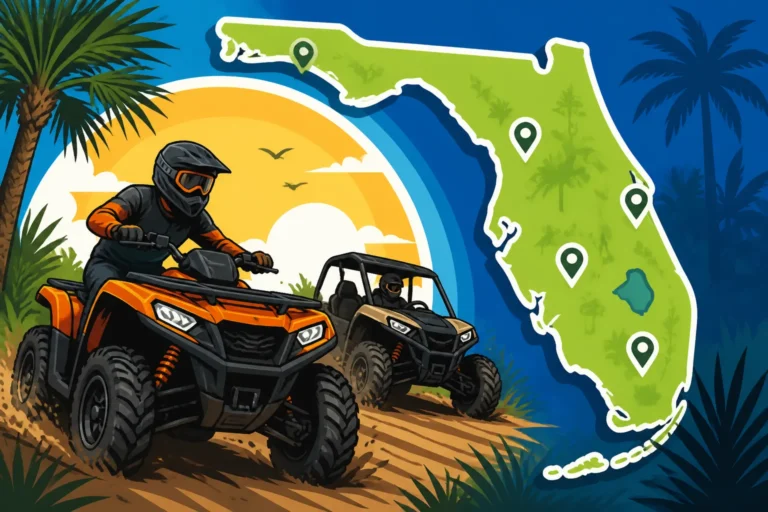
Florida venues such as Redneck Mud Park near Punta Gorda and Hog Waller near Palatka are names riders may encounter when researching off-road recreation. Their event schedules, access conditions, and rules can differ, so treat them as starting points for research rather than assuming that a particular activity is available on a given weekend. Check the venue’s own event information before setting out.
| What to compare | Why it matters | What to confirm before leaving |
|---|---|---|
| Venue type | Private parks and public lands follow different access rules | Whether the event is at a private venue or on public land |
| Machine classes | Width, weight, and vehicle type may affect access | Whether your ATV or UTV is allowed in the intended area |
| Riding format | An event may focus on obstacles, trails, viewing, or a mix | Which activities are open to participants |
| Ground conditions | Mud depth and hidden hazards can change quickly | Whether rain has changed access or closed an area |
| Group needs | Children, new riders, and passengers need suitable options | Age, supervision, passenger, and safety requirements |
| Overnight plans | Camping may be separate from riding access | Whether camping is available and what rules apply |
If your group would rather ride marked routes than spend the day around a mud pit, consider comparing the event with established riding areas. [Florida ATV Trails That Allow Camping Overnight] can help you think through a trail-and-camping trip, while [Florida ATV Trails With Mud Holes] is relevant if mud is the main draw but you still want to investigate trail access. Check the specific land manager or venue for current conditions and permissions.
Use maps to plan, not to assume access
A mapping tool can help you understand the route to a venue, keep track of your staging point, and organize a group ride. Riders may use onX Offroad to review mapped routes and plan where they intend to travel. Before relying on any map, check the legend, route details, and the venue’s rules; a line on a map is not proof that a route is currently open or that your machine is permitted there.
This distinction matters especially in Florida, where private property, public conservation land, forest roads, and designated OHV areas can sit close together. A route that appears to connect two places may cross land where riding is not allowed. Keep your plan within the area the venue has authorized, and follow signed closures even if a digital map appears to show a continuous route.
For a group, agree on a meeting point before entering the riding area. Save the venue address and relevant directions, and make sure everyone knows what to do if the group gets separated. onX Offroad can support route planning, but it should complement—not replace—official venue information, posted signs, and good judgment.
Prepare your ATV or UTV for mud
Mud riding puts extra stress on a machine and can make small maintenance problems harder to notice. A loose battery connection, weak belt, damaged boot, or clogged cooling area may become a much bigger headache when you are far from the parking area. A careful inspection before the trip is more useful than hoping a problem will wait until you get home.
Preparation should match the type of riding you expect. A light trail ride does not call for the same setup as repeated deep-water or deep-mud attempts. Avoid modifying a machine based on assumptions or copying another rider’s build without understanding the tradeoffs.
Check the machine before the event
Start with the basics. Inspect tires for damage and appropriate pressure, check that controls and brakes work as expected, and look for loose or worn parts. Confirm that the battery is secure and that the machine’s cooling area is clear of debris. If you have not serviced the ATV or UTV recently, consult its owner’s manual or a qualified technician rather than guessing at maintenance requirements.
Pay particular attention to components that can suffer when packed with mud or exposed to water. After a ride, clean the machine carefully and inspect it again. Mud can hide damage, and a rushed wash may leave grit in places that need attention. If the machine becomes submerged or behaves differently afterward, stop using it until it has been checked.
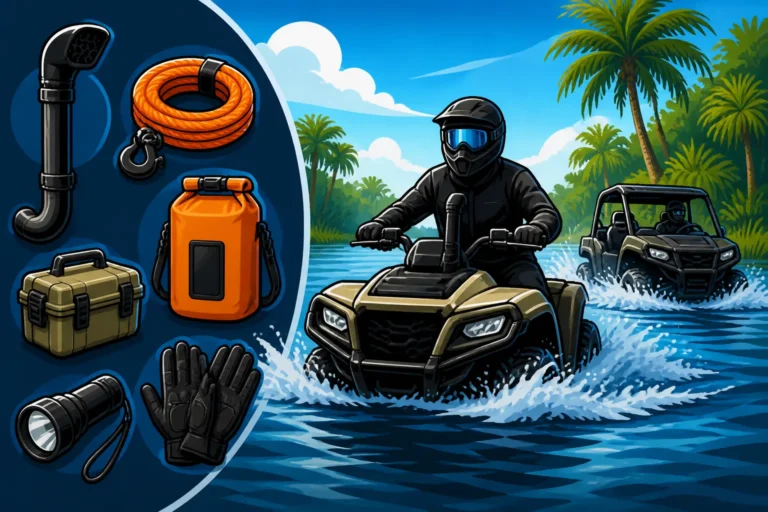
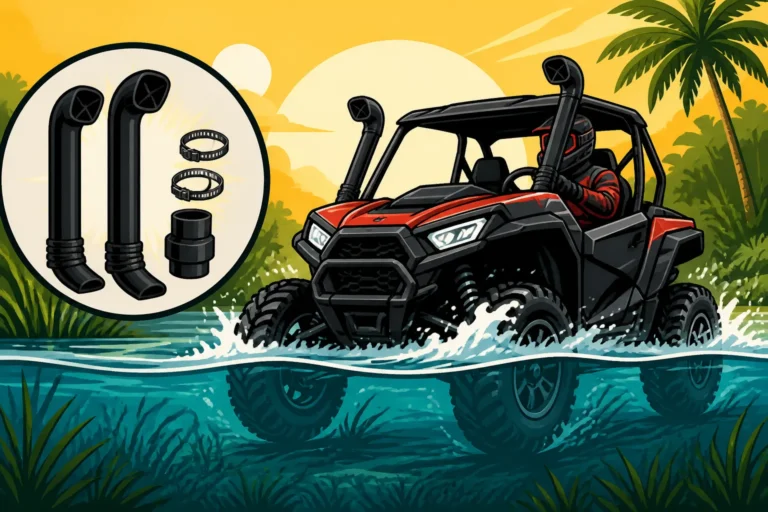
It is also worth being realistic about capability. A stock machine may be fine for moderate conditions, but that does not make every pit appropriate. A snorkel, mud tires, or other modifications do not remove the risks of water, hidden obstacles, overheating, or getting stuck. For background on common equipment choices, see [Mud Tires for a Weekend at a Mud Park] and [Snorkel Kits and Water Crossings].
Carry practical recovery and personal gear
Bring equipment that suits the vehicle and the venue, and know how to use it before you need it. A recovery strap, suitable attachment points, basic tools, and a communication plan can help with minor problems. Do not improvise a recovery by attaching a strap to an unsuitable part of a machine, and do not stand in the path of a tensioned strap or cable.
Pack for Florida conditions as well as the mud. Water, eye protection, gloves, sturdy closed-toe footwear, and clothing that can get dirty are sensible basics. Keep a dry change of clothes in the tow vehicle, and protect phones and other essentials from water and grit. If you are riding with children or newer riders, make sure their equipment fits properly and that they understand the group’s stopping and regrouping plan.
Use a buddy system, particularly if you are unfamiliar with the venue. Tell someone at the staging area where you plan to ride, and do not follow another machine into a feature just because it made the crossing look easy. A rider may know the route, have a modified machine, or have chosen a line that is unsuitable for your vehicle.
Ride safely and leave the area in good shape
The most memorable part of a mud-bog weekend should be the ride, not a preventable injury or a damaged machine. Take your time, obey venue staff, and be willing to turn around. There is no shame in deciding that a hole is too deep or that conditions exceed your group’s ability.
Responsible riding also helps keep access open. Staying within authorized areas, respecting property boundaries, and following cleanup rules matter at both private venues and public lands. Never treat an informal gathering or an unmarked track as permission to ride wherever you choose.
Set limits before you enter the mud
Agree on basic limits before anyone starts riding: which areas are appropriate for each machine, what conditions mean the group will stop, and how riders will communicate. A simple rule such as “no solo attempts in water or deep mud” can prevent a bad situation from becoming worse. If a rider gets stuck, pause and assess the conditions instead of immediately adding more machines to the same hole.
Keep a safe distance from other riders, especially where visibility is poor or machines may emerge suddenly from mud. Spectators should stay in designated viewing areas and keep children well back from active riding zones. Follow posted speed limits and event instructions; mud does not make a crowded area safe for fast riding.
If your plans include a public trail or forest after the event, check that trip separately. A private mud-park pass does not automatically authorize riding on nearby public land. For public-land preparation, review [Florida OHV Permits: What You Need Before You Ride] and [Florida Public Land Riding: Permits and Proof]. Rules and permit requirements depend on the specific land and riding area.
Clean up and check the machine after riding
Before leaving, follow the venue’s instructions for washing or removing mud. Do not wash mud into a storm drain, wetland, or unauthorized area. If the venue provides a washdown location, use it as directed and keep the area clear for other riders.
Once the machine is back on the trailer or at home, inspect it before the next ride. Look for packed mud around the wheels, brakes, cooling system, and moving components, and check for damage that might have been hidden during the event. Clean equipment, clothing, and recovery gear so mud and debris are not carried onto a different trail system.
A spring mud bog can be a great day out when the venue, machine, and conditions fit your group. Plan around confirmed event details, ride within your ability, and treat every map and route as a planning aid—not permission to enter land or trails that are not open to you.
Disclaimer
This article is for general informational purposes only and does not constitute professional advice. Laws, prices and regulations vary by location and change over time. Consult a qualified professional for guidance on your specific situation.