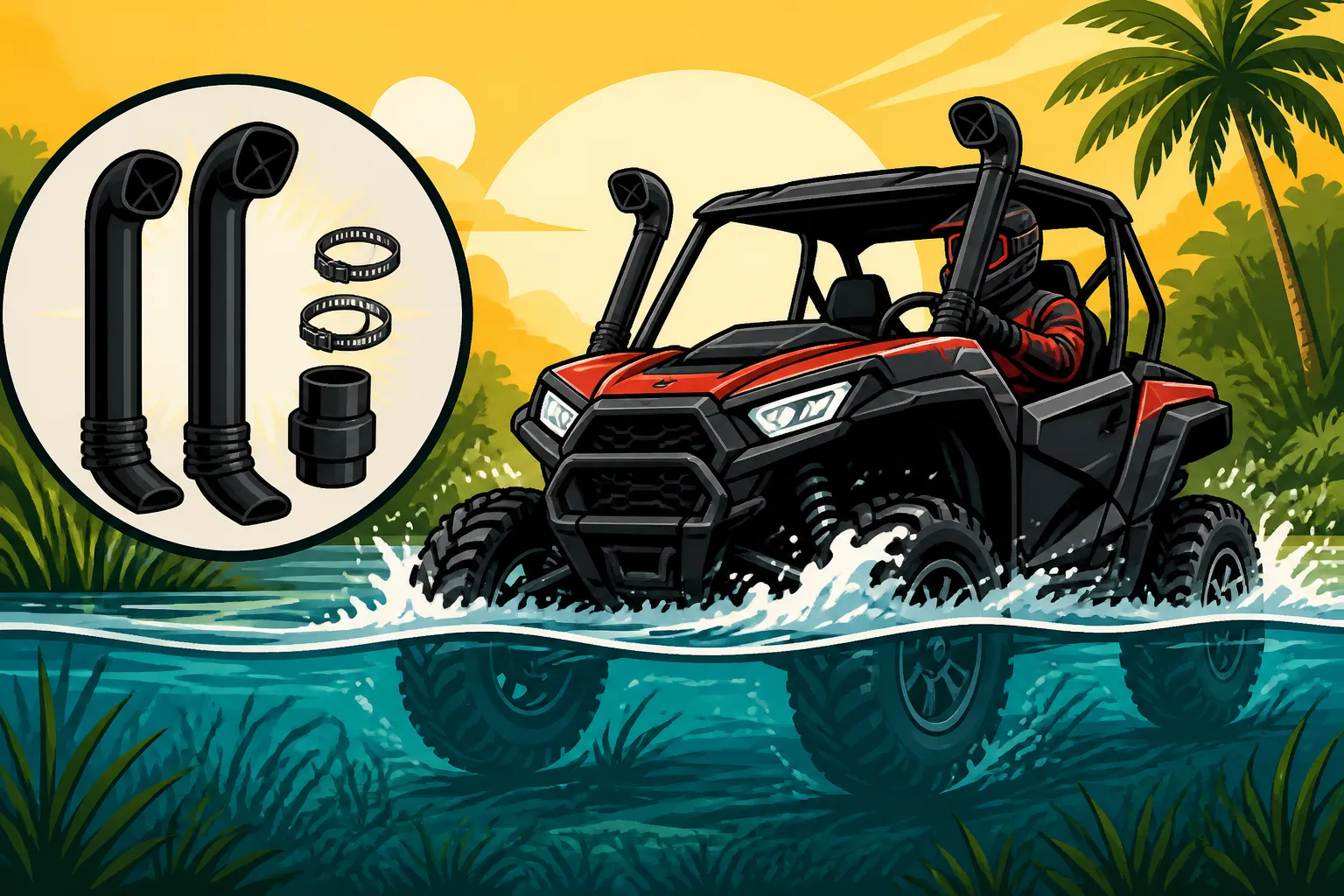
Snorkel Kits and Water Crossings
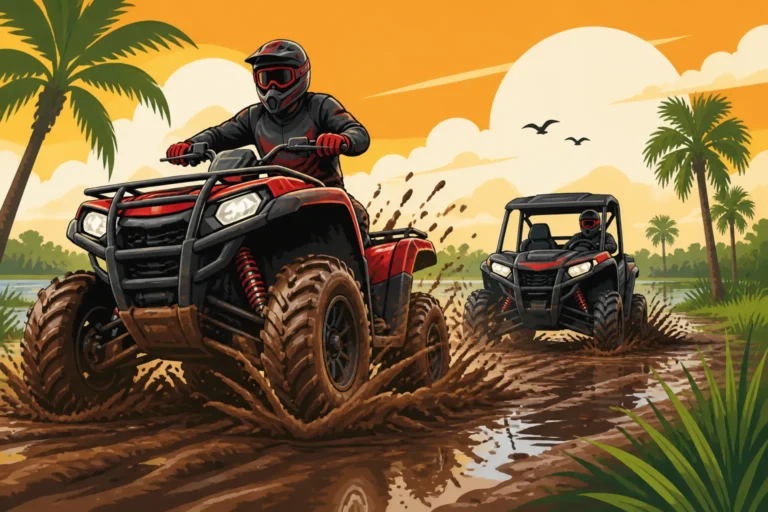
A Florida water crossing can look harmless from the trail: a shallow-looking puddle, a sandy rut, or a low spot after rain. But hidden depth, soft bottoms, and water entering the engine or belt housing can turn a short ride into an expensive recovery. This guide explains what snorkel kits protect, how to assess crossings, and when the safest choice is to turn around.
What an ATV or UTV snorkel kit does
Engine intake protection is only one part of the system
A snorkel kit raises the engine’s air intake so it can draw air from a higher point than the stock intake. That can help reduce the chance of water being sucked into the engine during a crossing. If water enters the engine through the intake, it can cause hydrolock, a serious condition that may damage internal parts.
However, “snorkeled” does not mean waterproof. A kit does not make every electrical connection, engine opening, vent, or accessory safe to submerge. It also cannot keep water out if the machine goes deeper than the kit’s design allows, tips over, or takes on water through another opening. The snorkel’s height is not a promise that the ATV or UTV can safely cross water up to that level.
The full system matters. Depending on the machine and kit, components may include raised engine intake plumbing, exhaust extensions, and relocated vents for the transmission or differential. Some machines have a belt-driven continuously variable transmission, often called a CVT. Its housing and vents need attention too: a wet or contaminated belt system may slip, overheat, or stop transferring power properly.
A useful way to think about a snorkel kit is as one part of a water-risk plan—not permission to ride into deeper water. Read the kit and machine manufacturers’ instructions, and have installation checked by someone familiar with that specific model if you are unsure about routing, sealing, or clearance.
What a snorkel kit does not protect
A snorkel does not tell you how deep a crossing is, whether the bottom is firm, or how quickly the water is moving. It cannot reveal a washed-out edge or a hole hidden beneath brown water. Nor does it eliminate the risk of water entering through a damaged seal, a loose connection, or a low vent.
It also does not make riding through wetlands or closed areas acceptable. A route that is physically passable may still be prohibited or environmentally damaging. Before a ride, check the rules for the specific public land or private riding area, including any closures and permit requirements. Wetland Protection and Florida Quad Riders explains why avoiding sensitive ground matters, while Florida OHV Permits: What You Need Before You Ride is a useful starting point for checking access requirements.
If a machine has been submerged, don’t assume it is ready to ride just because it starts. Water may be in the engine oil, transmission, differentials, electrical connectors, or airbox. Shut it down if you suspect water intrusion and follow the manufacturer’s recovery and inspection guidance. If the engine stops in water, avoid repeatedly trying to restart it; that can worsen damage if water has reached the intake or cylinders.
How to assess a water crossing before entering
Stop and inspect from a safe place
Approach slowly and stop well before the water’s edge. Look for posted signs, barriers, trail markers, and evidence that the route is open. At a managed riding area, follow staff instructions and designated routes. A trail that was passable during an earlier visit may be different after heavy rain, maintenance work, or a closure.
Assess the crossing from dry ground if you can do so without walking into an unstable bank or entering the water. Look for the far side, the visible route through the crossing, and signs of current. If you cannot see the full path, the bottom, or a safe way out, you do not have enough information to make a reliable assessment. A snorkel kit does not change that.
Pay attention to what the water is doing. Moving water can push a machine off line or make it difficult to regain traction. Even water that appears calm can conceal a soft bottom, submerged debris, or a sudden drop. Do not use another rider’s successful crossing as proof that conditions are safe for your machine; the other rider may have crossed at a different spot, at a different time, or with different equipment.
Florida rain can change trail conditions quickly, especially where low areas collect runoff. Before heading out, check the riding area’s notices and recent conditions where available. Florida Trail Closures You Should Check First and Florida ATV Trail Conditions After Heavy Rain can help you build that pre-ride habit.
Know when to turn around
Turn around if the water is moving, the crossing’s depth or bottom is unclear, the exit is steep or unstable, or you cannot see a safe route across. Also stop if the route is marked closed, requires riding through a protected area, or would mean leaving the designated trail. If you are riding with others, agree that any rider can call off a crossing without being pressured to continue.
Here is a simple comparison to use during a trail-side decision:
| What you observe | What it may mean | Safer response |
|---|---|---|
| You cannot see the bottom or far exit | Depth, obstacles, and route are uncertain | Do not enter; find another route |
| Water is moving or carrying debris | The current may affect stability and control | Turn around |
| The bank is steep, soft, or undercut | Entry or exit may be difficult or unstable | Do not attempt the crossing |
| The crossing is posted closed or off-route | Access is restricted, regardless of depth | Follow the closure and reroute |
| Water has risen after rain | Conditions may differ from earlier reports | Reassess from a safe area or leave |
| A machine has stalled or taken on water | There may be damage or water intrusion | Avoid repeated starts and arrange recovery |
If another route is not available, the ride may need to end there. That can feel frustrating when you have driven a long way to reach a trail, but avoiding one uncertain crossing is far less costly than risking a rollover, engine damage, injury, or an environmental violation. For practical preparation, What Florida Riders Carry for Deep Water Crossings covers equipment and planning considerations, but carrying recovery gear does not make a hazardous crossing safe.
Preparing and maintaining a snorkeled machine
Check the installation and machine before riding
Before a ride, inspect the snorkel plumbing for loose clamps, cracks, disconnected sections, and worn seals. Check that openings and connections are configured as the manufacturer specifies. Confirm that raised vents remain routed correctly and that hoses have not been kinked, pinched, or pulled loose during recent maintenance.
A practical pre-ride check can include:
- Inspect the intake and snorkel connections for damage or looseness.
- Check the airbox and filter condition according to the owner’s manual.
- Look over vent lines and confirm they are not blocked or disconnected.
- Check the exhaust and transmission system for signs of damage or poor fit.
- Confirm that required recovery equipment is secured and accessible.
- Tell your riding group the route plan and agree on a turnaround point.
After a water crossing—even one that appeared uneventful—pay attention to changes in engine sound, power, belt behavior, warning lights, or electrical function. Follow the machine’s manual for post-ride inspection, especially if water reached the footwells or covered any part of the vehicle that is normally kept dry. Do not rely on a quick rinse to remove mud or water from areas that require inspection.
Choose modifications for the way you actually ride
A snorkel kit may make sense for riders who regularly use designated riding areas where water exposure is part of the permitted route and who understand the system’s limits. For riders who encounter occasional puddles or shallow trail ruts, careful route choices and avoiding questionable crossings may be more appropriate than modifying the machine.
Think about your specific ATV or UTV, not just a generic kit description. Different models have different intake layouts, vent locations, belt housings, electrical components, and manufacturer guidance. A kit that fits one model may not be suitable for another. Ask a qualified installer what components are included, which parts of the machine remain vulnerable, and what maintenance is required after exposure to water.
Be cautious about relying on online trail maps or satellite views to judge a crossing. A mapping tool such as onX Offroad can help with route planning and orientation, but a map cannot confirm current water depth, bottom firmness, closures, or whether a route is legally open. Check local land-manager notices as well as the map, and respect signs on the ground. For broader route planning, Florida ATV Trails: Every Public Riding Area can help you identify riding areas to research before setting out.
Riding responsibly around water in Florida
Protect trails, land, and other riders
Water and wet ground can make it tempting to ride around a muddy spot by widening the trail. Avoid doing that unless the land manager specifically directs riders to an alternate route. Creating a new path can damage vegetation, widen erosion, or disturb areas that are meant to remain undisturbed. Stay on designated routes and obey barriers and closures.
Give other riders room, especially around narrow crossings and muddy trail sections. Wait until the route is clear before moving through an area, and do not crowd someone who is assessing a crossing. If a rider is stuck, agree on a recovery plan before pulling or winching. Keep bystanders away from tensioned straps and cables, and follow equipment instructions. A recovery attempt should not put another machine or person into the same hazard.
Pack out trash and avoid washing mud or fuel residue into waterways. At managed facilities, use the designated wash areas if available and follow their instructions. Florida OHV Trail Etiquette Locals Expect offers broader guidance on sharing trails and leaving riding areas in good condition.
Make the conservative choice part of the plan
A good ride plan includes more than a destination. Check access rules, closures, weather, and the route’s suitability for your machine. Tell someone where you are going, ride with a group when practical, and carry basic communication and recovery equipment suited to the outing. Do not let a snorkel kit, a long drive, or a group’s enthusiasm turn an uncertain crossing into a test of courage.
If conditions change, adjust the plan. Heavy rain, rising water, a stalled machine, or a route that is more difficult than expected are all valid reasons to turn back. The goal is not to prove that a machine can get through every patch of water. It is to finish the ride with the machine, riders, and riding area in good shape.
Disclaimer
This article is for general informational purposes only and does not constitute professional advice. Laws, prices and regulations vary by location and change over time. Consult a qualified professional for guidance on your specific situation.