Gear Reduction for Heavy Mud
Florida’s sugar sand, sticky clay, and deep mud can make an ATV or UTV feel underpowered even when the engine is running well. Gear reduction can help a machine turn oversized tires and crawl through demanding terrain, but it also changes how the drivetrain behaves. This guide explains what reduction does, when it helps in Florida mud, and what to check before making changes.
What gear reduction does in an ATV or UTV
The basic idea behind lower gearing
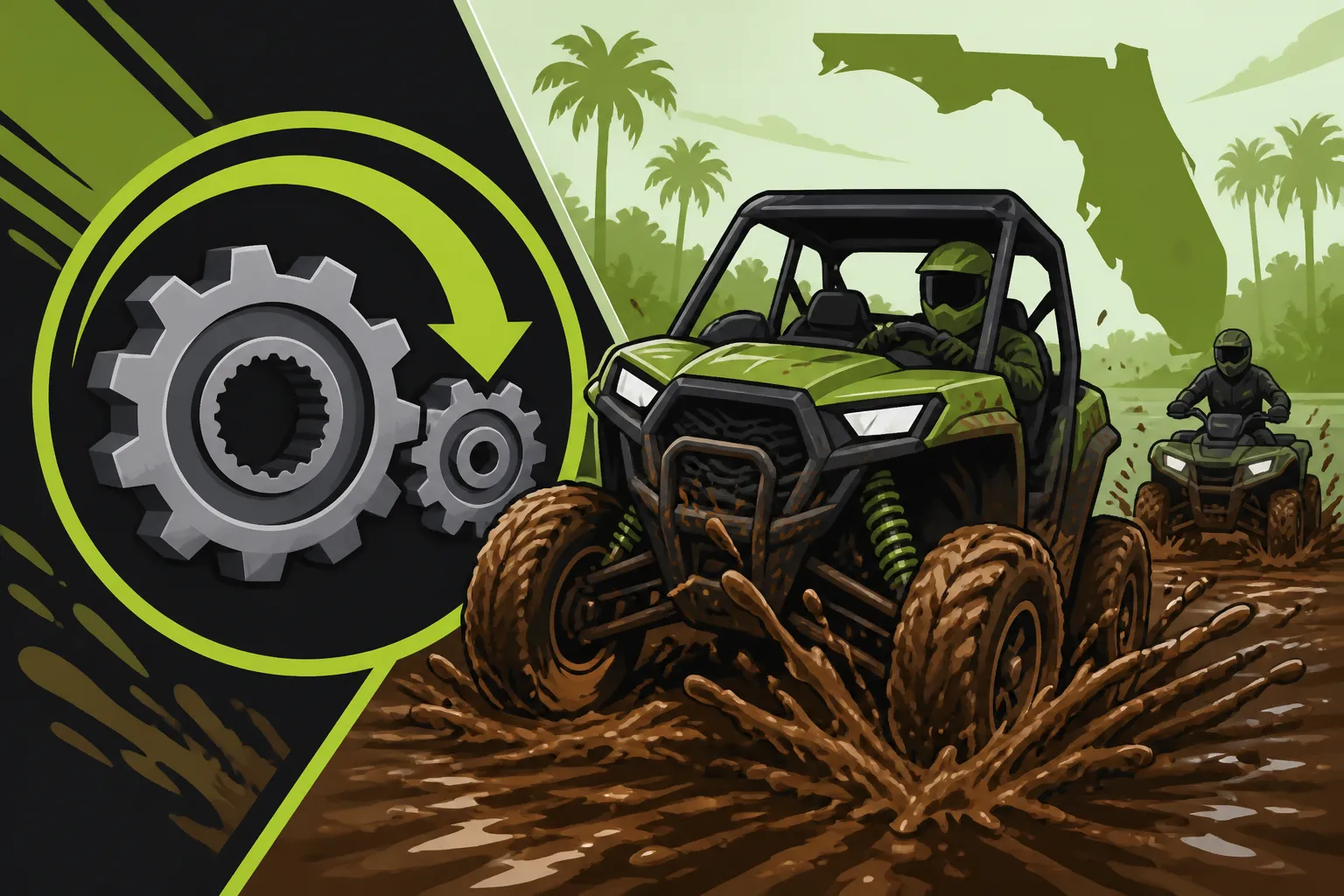
Gear reduction changes the relationship between engine speed and wheel speed. With a lower overall gear ratio, the wheels turn more slowly for a given engine speed, while the drivetrain gains mechanical leverage. That extra leverage can help a machine move at a controlled pace through thick mud or pull heavier tires without relying on as much throttle.
The trade-off is speed. A machine geared lower may feel more deliberate when crawling, but it may reach its practical top speed sooner or spend more time at higher engine RPM during faster riding. It is not a way to add engine power. It changes how the available power reaches the wheels.
The exact result depends on the ATV or UTV, its transmission, tire size, and the reduction parts being considered. Two kits described as gear reduction may not change the same part of the drivetrain or produce the same riding feel. Check the kit’s fitment information and installation instructions for your specific machine rather than assuming a setup that works on a friend’s side-by-side will work on yours.
How low range and aftermarket reduction differ
Many UTVs have a selectable low range. Low range is meant for slower, demanding work such as crawling, climbing, or moving carefully over rough ground. It can reduce the temptation to feather the throttle constantly, but it does not necessarily change the machine’s internal gearing in the same way as an aftermarket reduction kit.
An aftermarket gear-reduction kit changes gearing within a particular part of the drivetrain. Depending on the machine and kit, that may provide a more substantial change than selecting factory low range alone. Riders often consider it when they have installed larger, heavier tires or routinely ride conditions that put high demands on the clutch and drivetrain.
Before buying anything, confirm what problem you are trying to solve. If the machine is bogging down because the tires are packed with mud, a gearing change may not fix the underlying issue. If the belt is slipping, the clutch is poorly matched to the tire setup, or the radiator is overheating, those problems need their own diagnosis.
Why tire size matters
Larger or heavier tires can change the load the engine and drivetrain have to move. A tire with more diameter can also affect the effective gearing at the wheels, making the machine feel taller-geared than it did with stock tires. That can show up as sluggish takeoff, more belt heat, or a need for extra throttle in slow, sticky conditions.
A change in tire size also affects clearance, steering feel, braking, and how the machine fits on a trail. Before jumping to a reduction kit, consider whether the tires are appropriate for the riding you actually do. Mud Tires for a Weekend at a Mud Park can help you think through tread choice and terrain, while Why 1,500 Pounds Dry Weight Is the ATV Ceiling is useful background if you are comparing machine classes.
When gear reduction helps in Florida mud
Deep, sticky mud and slow technical riding
Florida mud is not one uniform surface. One ride might include loose sand, shallow water, and firm trail; another might involve thick, sticky mud that clings to tires and makes the machine work harder. Gear reduction is most relevant when you repeatedly need controlled, low-speed pulling power rather than fast travel.
For example, a rider on oversized tires who spends weekends in deep mud may find the machine needs more throttle to get moving and feels strained at low speed. A properly selected reduction setup can improve leverage and help the machine crawl more steadily. It can also make controlled movement easier when you are trying to ease through a difficult section instead of charging into it.
But reduction is not a substitute for judgment. If the mud is deeper than the machine can safely handle, adding leverage may encourage you to keep pushing when turning around would be safer. Mud can hide ruts, stumps, fences, and sudden drops. Use a spotter when conditions call for one, and avoid entering water or mud when you cannot judge its depth and bottom.
Larger tires and heavy accessories
A reduction kit is often discussed after a tire upgrade because the tires may make the machine feel less responsive. That does not mean every larger tire requires a gear change. Tire weight, tread design, wheel choice, clutch setup, and the machine’s intended use all matter.
Think about the whole setup. A UTV carrying a winch, tools, passengers, and recovery gear will behave differently from a lightly loaded machine. If your rides involve both muddy sections and long stretches of faster trail, gearing that is helpful in one setting may feel inconvenient in another. Write down the symptoms you notice: slow acceleration, belt smell, unusually high engine speed, or difficulty maintaining a crawl. Those details help a qualified mechanic or parts specialist assess the setup.
If the machine’s main challenge is heat rather than pulling power, address cooling and maintenance too. Mud and grass can block airflow through a radiator, especially during slow riding. Keeping a Radiator Clean in Palmetto Country covers an issue that can be easy to overlook when diagnosing a machine that struggles in wet, hot conditions.
When reduction is unlikely to solve the problem
Gear reduction may not help much if the machine is losing traction because the tires are poorly suited to the ground, the rider is spinning the tires aggressively, or the route is beyond the machine’s limits. Spinning can dig a machine deeper and build heat without moving it forward. Smooth throttle, careful line choice, and knowing when to back out can matter as much as hardware.
It also will not repair a worn belt, damaged clutch components, a fuel or engine problem, or a drivetrain fault. If performance has changed suddenly, inspect the machine before modifying it. A new noise, burning smell, warning light, or worsening overheating deserves attention rather than a gearing experiment.
| Riding situation | What you may notice | First things to assess |
|---|---|---|
| Deep mud at low speed | Machine needs heavy throttle to keep moving | Tire condition, clutch behavior, route depth, and gearing |
| Larger tires installed | Slower response or increased drivetrain strain | Tire size and weight, clutch setup, and kit compatibility |
| Engine temperature rises in mud | Heat warning or reduced performance | Radiator airflow, mud buildup, coolant system, and riding pace |
| Tires spin without progress | Machine digs in or slides sideways | Throttle control, tire choice, line selection, and recovery plan |
| Mixed trails and mud | Slow crawling feels good but faster riding feels busy | Whether the setup matches the majority of your riding |
Choosing and fitting a reduction setup
Start with the machine and the riding pattern
Before comparing kits, identify the exact make, model, year, engine configuration, and current tire size. Fitment can vary between machines that look nearly identical. Record any clutch changes, aftermarket wheels, lift components, or other drivetrain modifications too.
Then be honest about where you ride. A machine used mostly for slow mud riding has different priorities from one that sees hard-packed trails, sand, and occasional muddy sections. Ask yourself how often you use low range, whether the tires are larger than stock, and whether the problem occurs only in mud or across all terrain. This helps distinguish a gearing mismatch from a maintenance issue or a riding technique problem.
For route planning, onX Offroad can be one way to review mapped riding areas and organize a ride, but a map does not grant permission to ride on land. Confirm current access rules with the land manager or property owner before heading out. Florida Mud Parks: Where Riders Actually Go offers context on the kinds of designated places riders seek out, and Florida OHV Permit Rules for Out-of-State Riders is relevant if you are visiting from elsewhere.
Compare the full drivetrain impact
Ask what part of the drivetrain the kit changes, what tire size it is intended to support, and whether it affects factory low range. Confirm whether the manufacturer requires or recommends clutch adjustments, special tools, or changes to other components. Do not assume that a “mud” label alone means a kit is suitable for every machine or tire combination.
Consider the downsides as carefully as the benefits. Lower gearing may make slow work easier, but it can change cruising behavior and put the engine at a different RPM for a given ground speed. Installation may require opening drivetrain components, and improper installation can cause damage. If the process is outside your experience, use a technician familiar with your machine rather than treating the job as a simple bolt-on accessory.
Also check that the tires, wheels, and any lift components are compatible with the machine’s suspension and steering. A setup that adds leverage but places excessive strain on other parts can create new repair costs. Keep receipts and installation information, and ask how the change may affect warranty coverage before proceeding.
Make the rest of the setup work with the gearing
Gearing is only one part of a reliable mud setup. Choose tires for the ground you ride, keep the belt and clutch in good condition, and clean mud from the radiator and suspension after rides. Follow the manufacturer’s maintenance schedule, and inspect for packed debris that can hide damaged boots, loose connections, or worn components.
Carry recovery equipment appropriate to your machine and ride with people who know how to use it. A winch can be useful, but it should not be an invitation to enter uncertain terrain. Avoid attaching recovery straps to unsuitable points, and keep bystanders clear of tensioned lines. For deeper-water riding, understand the machine’s limits and the risks of water entering the intake, electrical system, or drivetrain. Snorkel Kits and Water Crossings explores why water protection is a separate consideration from lower gearing.
Riding and maintaining a reduced-gearing machine
Use deliberate throttle and choose a line
A lower-geared machine can respond differently at low speeds. Ease into the throttle and learn how the machine behaves on a familiar, legal route before attempting difficult mud. Sudden throttle can break traction, while excessive wheelspin can bury the tires and increase heat.
Look ahead for a firm edge, a shallow route, or a way around a deep hole. If you cannot see the bottom, do not assume the mud is shallow. When riding with others, agree on spacing and recovery signals before entering a challenging area. If someone becomes stuck, stop in a safe place rather than crowding the machine or standing near moving wheels and recovery lines.
onX Offroad may help you prepare by checking a mapped route and saving ride information, but conditions can change after rain, maintenance, or land-management closures. Use official sources for access decisions and respect posted signs. Florida Trail Closures You Should Check First is a useful reminder that a route shown on a map is not necessarily open on the day you arrive.
Watch for heat, belt stress, and unusual behavior
Slow, demanding riding can put a sustained load on the drivetrain. Pay attention to warning lights, temperature changes, belt odor, slipping, unusual vibration, or a sudden change in how the machine accelerates. Stop and inspect when something feels wrong; pushing through can turn a small issue into a larger repair.
Mud can also build up in places that are easy to miss. After a ride, remove debris from the radiator area, check the underside and suspension, and look for damage around the wheels and axles. Follow the owner’s manual for washing and service. Avoid directing high-pressure water at seals, electrical connections, or bearings unless the manufacturer’s guidance allows it.
Keep a simple record of tire changes, maintenance, and the conditions where problems occur. If the machine struggles only with a particular tire setup or in a particular kind of mud, those notes can make troubleshooting more accurate. They also help you judge whether a gearing change actually improved the ride or simply shifted the symptoms elsewhere.
Respect access rules and know when to turn around
Florida riding opportunities range from designated OHV areas to private properties with specific permission requirements. A machine that is titled, equipped, or modified for off-road use is not automatically permitted on every trail, road, or parcel. Check the land manager’s rules, required passes, seasonal restrictions, and machine-width limits before riding.
Plan for the route you can safely complete, not the most difficult section you hope to conquer. Rain can change the depth and consistency of mud, and a route that felt manageable on the way in may be harder on the way out. If a section looks unsafe, turn around while you still can. OnX Offroad can be part of trip organization, but permission, closures, and local rules should be confirmed directly with the relevant land manager.
Gear reduction can be a sensible option for a machine that regularly works hard in slow, heavy mud, especially when larger tires have changed how it pulls. It is not a cure-all. Start with the symptoms, check the whole drivetrain, choose equipment that fits your exact machine, and ride within the terrain and access rules that apply.
Disclaimer
This article is for general informational purposes only and does not constitute professional advice. Laws, prices and regulations vary by location and change over time. Consult a qualified professional for guidance on your specific situation.