Florida’s 55-Inch ATV Definition and Why It Matters
Many Florida riders find themselves scratching their heads when it comes to the specific legal definitions for off-highway vehicles, especially the often-overlooked "55-inch rule" for ATVs. This measurement isn't just a random number; it's a critical distinction that can profoundly impact how your machine is titled, where you can legally ride it, and the paperwork you'll need to keep everything above board. This comprehensive guide will illuminate Florida's 55-inch ATV definition, meticulously explain its crucial importance for both titling and accessing riding areas, and help you expertly navigate the sometimes complex landscape of state regulations.
The Core of the Matter: Florida's 55-Inch ATV Definition
Florida's legal framework for off-highway vehicles (OHVs) is built on specific definitions that dictate everything from titling requirements to where you can actually operate your machine. Among these, the 55-inch width limit for what constitutes an "all-terrain vehicle" is one of the most fundamental, yet frequently misunderstood, rules. It’s not just a suggestion; it's a hard line drawn in the sand that separates one class of vehicle from another, with significant consequences for riders.
What Constitutes an "All-Terrain Vehicle" in Florida's Eyes?
When the state of Florida refers to an "all-terrain vehicle," it’s not just talking about anything with four wheels and an engine that goes off-road. There’s a very precise definition outlined in state statutes, designed to classify these machines for regulatory purposes, safety, and taxation. At its heart, an ATV is typically a motorized, off-highway vehicle designed to travel on four low-pressure tires, having a seat designed to be straddled by the operator, and handlebars for steering control. Beyond these physical characteristics, there are also weight limits that apply. An ATV, as defined by Florida law, generally has a dry weight of 1,500 pounds or less.
This classification isn't arbitrary; it serves a crucial purpose. By having clear definitions, the state can create specific rules for operation, safety gear, and titling procedures that are appropriate for the design and intended use of these vehicles. Without these classifications, it would be a free-for-all, making enforcement and responsible riding incredibly difficult. So, while you might casually call any quad an ATV, the state's definition is much narrower and includes that critical width component.
The Significance of the 55-Inch Measurement
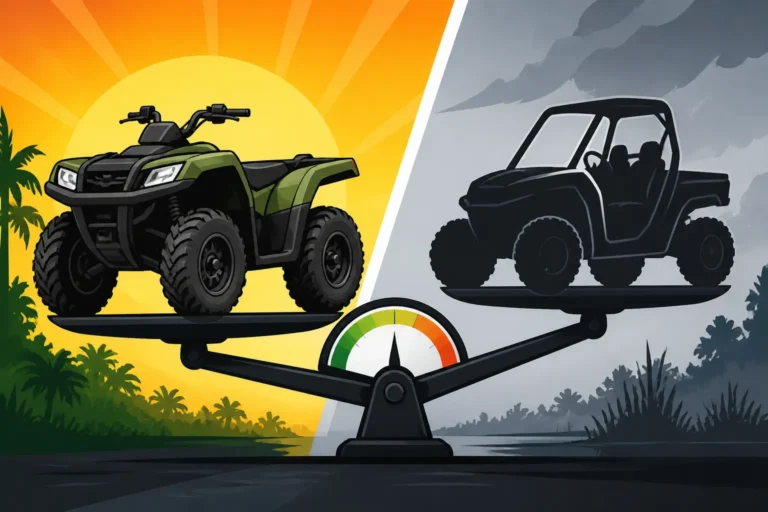
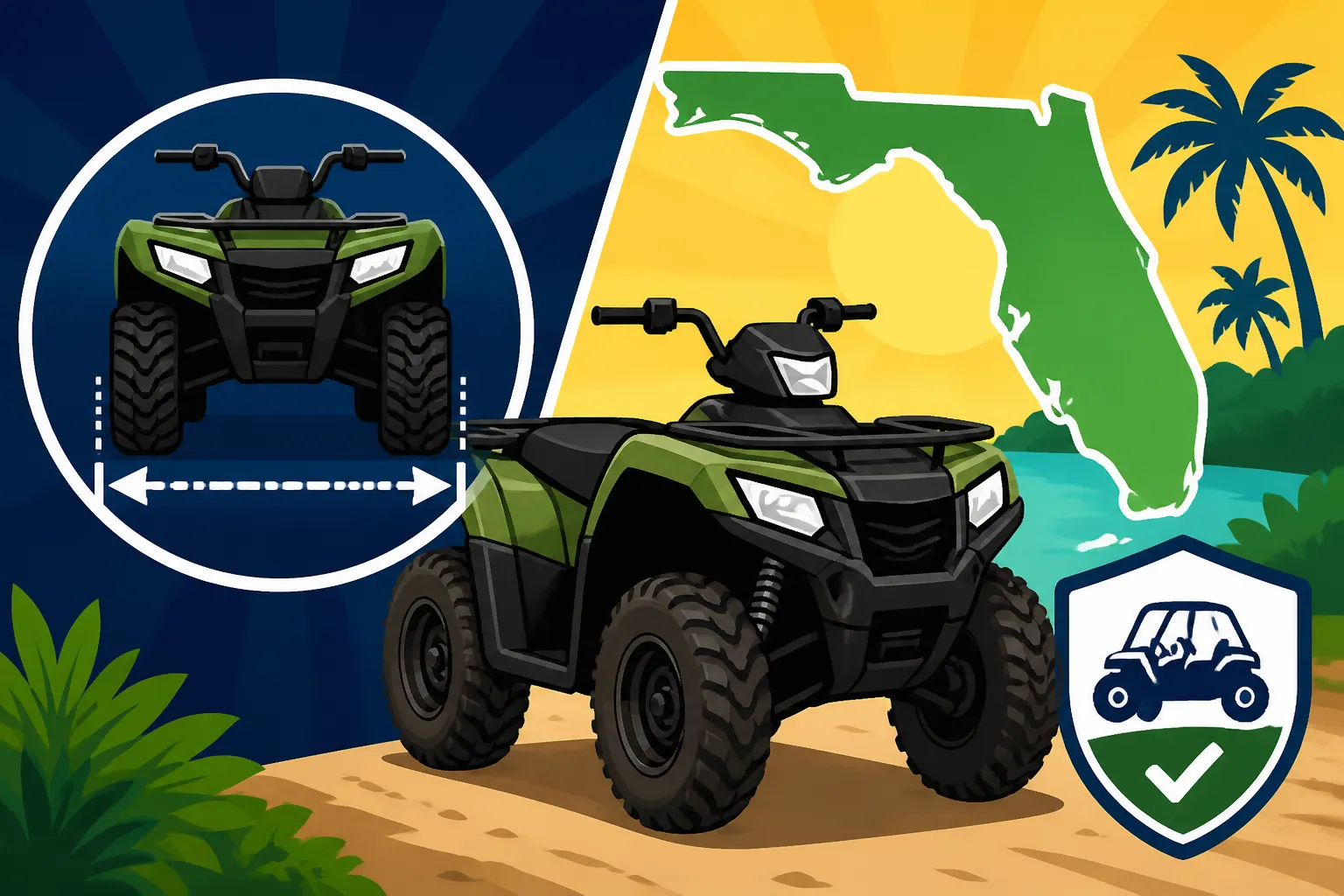
Now, let's get to the star of the show: the 55-inch measurement. For a machine to legally be classified as an "all-terrain vehicle" in Florida, it must be 55 inches or less in width. If your machine measures even an inch over this, it immediately falls into a different category, most commonly a Recreational Off-Highway Vehicle (ROV), which many riders refer to as a UTV or side-by-side. This isn't just a technicality; it’s a foundational element of Florida's OHV laws.
Why this specific number? The 55-inch limit is primarily linked to safety and the design of established off-road trails. Many older trails and gate systems in state and national forests were designed with traditional, narrower ATVs in mind. A machine wider than 55 inches might not fit through gates, could damage trail edges, or pose a greater risk of rollover on trails not designed for its width and weight. It's about maintaining trail integrity, ensuring rider safety on specific types of terrain, and managing the impact on public lands. This rule helps maintain the delicate balance between recreational access and environmental preservation.
Distinguishing ATVs from Other Off-Highway Vehicles (OHVs)
The 55-inch width limit is one of the primary differentiators that Florida uses to distinguish ATVs from other types of OHVs. While dirt bikes (or off-highway motorcycles) are easily identifiable by their two wheels and different operating style, the line between an ATV and a UTV can sometimes feel blurry, especially to a new rider or someone looking at a highly customized machine. The width is the key factor here. If it's over 55 inches, it's not an ATV by Florida's legal definition, even if it has handlebars, which some early UTVs did.
This distinction is not just academic; it has practical implications for titling, insurance, and trail access. For example, if you're trying to title a machine you bought, and it's over 55 inches wide, the county tax collector's office won't process it as an "ATV." Instead, it will be classified and titled as an "ROV," which follows slightly different procedures and might have different forms. Understanding [Florida UTV Titling for Side-by-Sides Over 55 Inches] is crucial if you own a wider machine. This legal differentiation allows the state to apply appropriate regulations to each class of vehicle, recognizing their distinct operational characteristics and potential impacts.
Why the 55-Inch Rule Exists: Safety, Control, and Infrastructure
The 55-inch width rule isn't some arbitrary restriction designed to make your life harder. Instead, it's rooted deeply in practical considerations concerning safety, the design of riding environments, and the long-term sustainability of Florida's natural resources and recreational infrastructure. Understanding these underlying reasons can help riders appreciate the logic behind the regulations and ensure they're making informed choices about their machines and where they ride them.
Navigating Trails and Public Lands
One of the primary reasons for the 55-inch limit relates directly to the design and accessibility of many established off-road trails and public riding areas across Florida. Historically, many trails, especially in state forests and national parks, were developed with the dimensions of traditional, narrower ATVs in mind. This means gates might be set at a specific width, turns might be tighter, and the trail itself might be engineered to handle a particular footprint. A wider machine can struggle to fit through these access points, leading to frustration for riders and potential damage to the trail infrastructure.
Consider, for example, the entry gates at popular riding spots like the Croom Motorcycle Area in the Withlacoochee State Forest. These gates are intentionally designed to prevent vehicles exceeding the ATV width limit from entering, ensuring that the trails are used as intended and protected from erosion or widening beyond their designed specifications. [Croom's 55-Inch Width Check at the Gate] is a clear example of how this rule is enforced on the ground. Allowing wider machines on these trails could lead to widening of the trails, erosion, and damage to natural habitats, which the land managers are mandated to protect.
Operational Stability and Rider Safety
The width of an OHV plays a significant role in its operational stability and, consequently, rider safety. Traditional ATVs, with their straddle seating and handlebar steering, are designed to be ridden actively by shifting the rider's weight to influence turns and maintain balance, especially on uneven terrain or side slopes. A narrower wheelbase often works in conjunction with this active riding style. When a machine becomes significantly wider, its center of gravity changes, and its handling characteristics shift dramatically.
Wider machines, especially those designed with side-by-side seating (UTVs/ROVs), operate more like cars with a steering wheel and often have a higher center of gravity relative to their track width compared to a narrower ATV. While UTVs offer different safety benefits, putting an oversized "ATV" on trails meant for narrower quads can increase the risk of rollovers, especially when navigating tight turns, off-camber sections, or steep inclines that were not designed for a wider, potentially heavier vehicle. The 55-inch rule helps ensure that machines operating under the "ATV" classification possess a certain inherent stability profile consistent with the expectations of the trails they're allowed on.
Preventing Damage to Infrastructure and Environment
Beyond rider safety, the 55-inch width rule serves a vital purpose in preventing undue damage to both natural environments and established infrastructure. Imagine a trail designed to be 4 feet wide. If vehicles consistently wider than this traverse it, they inevitably widen the trail, leading to erosion, habitat fragmentation, and greater environmental impact. This is particularly critical in Florida’s sensitive ecosystems, which include vast wetlands, fragile scrub, and protected wildlife areas.
Wider and heavier vehicles can also cause more significant rutting, especially in sandy or muddy conditions, making trails impassable for smaller machines and increasing maintenance costs for land managers. Bridges, culverts, and other trail-side infrastructure might also have weight and width limitations that wider vehicles could exceed, leading to structural damage. The state has a vested interest in protecting these natural resources and the investment in recreational infrastructure. By maintaining the 55-inch ATV definition, Florida aims to manage the footprint of OHVs, ensuring that riding opportunities remain sustainable for future generations without causing irreversible harm to the environment.
Measuring Your Machine: Ensuring You're in Compliance
Understanding the 55-inch rule is one thing, but knowing how to accurately measure your ATV or UTV is another entirely. This seemingly simple task can be fraught with potential pitfalls, and an incorrect measurement could lead to issues with titling, fines on the trail, or even denial of access to public riding areas. Taking the time to measure your machine correctly from the outset can save you a lot of headaches down the road.
The Proper Way to Measure ATV Width
To ensure compliance with Florida's 55-inch rule, you need to measure your machine from its outermost points. This isn't just the width of your tires, but the absolute widest part of the vehicle, which often includes the bulging sidewalls of your tires, fender flares, or any factory-installed accessories that extend beyond the main body. Mirrors are typically excluded, as they are often flexible or detachable, but anything fixed and rigid that adds to the overall width must be included.
Here’s a practical approach:
- Park on a level surface: This ensures an accurate, flat measurement.
- Use a rigid tape measure or yardstick: A flexible cloth tape measure can sag and give an inaccurate reading.
- Measure the front and rear: Take the measurement from the widest point on the front axle/tires and the widest point on the rear axle/tires. Whichever measurement is greater is your machine's official width.
- Go from outside edge to outside edge: This means the outermost part of the tire sidewall or fender, not just the tread. Imagine two perfectly vertical lines touching the outermost edges of your vehicle; you're measuring the distance between those lines.
For instance, if your tire's tread is 50 inches wide, but the sidewalls bulge out to 56 inches, your machine's width is 56 inches. This makes a huge difference in classification. You might think you have an ATV, but you actually have an ROV.
Common Mistakes When Taking Measurements
Riders often make a few common mistakes that can lead to misclassifying their machines:
- Measuring only the tire tread: As mentioned, the widest point is crucial. Tires often have a significant bulge at the sidewall, or mud guards and fender flares can add an extra inch or two on each side, pushing a machine over the 55-inch limit.
- Ignoring aftermarket modifications: Lift kits, wider wheels, or different offset rims can drastically change your machine's width. What started as a 50-inch wide ATV could easily become a 58-inch wide UTV after a few upgrades. Always re-measure after modifications.
- Assuming manufacturer specifications are always final: While owner's manuals are a great starting point, they sometimes list "nominal" widths or measurements that don't account for every possible factory variant or tire choice. Plus, if you've changed anything, those specs are no longer valid.
- Measuring at an angle: If your tape measure isn't perfectly perpendicular to the side of your machine and parallel to the ground, your measurement will be inaccurate. It might be shorter or longer than the true width, leading to errors.
The consequences of incorrect measurement can range from minor inconveniences to serious legal issues. You could be denied access at a trailhead, have your machine impounded if illegally ridden in a restricted area, or face fines. Worse, if your machine is technically a UTV but titled as an ATV due to an incorrect measurement, you could run into insurance problems after an accident.
When in Doubt: Consulting Your Owner's Manual or Dealer
If you've measured your machine and are still unsure, or if your machine is close to the 55-inch cutoff, there are a few reliable resources. Your owner's manual typically contains detailed specifications, including the overall width of the machine as it left the factory. This is an excellent starting point for understanding your vehicle’s original classification. However, remember to account for any modifications you've made since purchase.
Another excellent resource is an authorized dealer for your machine's brand. They can often look up specifications using your Vehicle Identification Number (VIN) and provide guidance on how Florida law would classify your specific model. For highly customized machines, or if you're buying a used OHV, a professional measurement or consultation with a dealer can offer peace of mind. Some larger OHV parks might even have a gauge or a set of measuring poles at the entrance where you can verify your width before proceeding to avoid disappointment. When drafting legal documents like a bill of sale or an affidavit of ownership, ensuring the correct classification of your OHV is paramount. Resources like LawDepot can provide accurate templates, but the responsibility to correctly identify your machine's class falls on you, the owner.
Titling and Registration Implications of the 55-Inch Rule
The 55-inch width rule isn't just about trail access; it has direct and significant implications for how your off-highway vehicle is titled and registered in Florida. The classification that your machine falls into—ATV or ROV (UTV)—dictates the specific forms you'll use, the fees you'll pay, and ultimately, the legal identity of your machine in the eyes of the state. Getting this right is crucial for avoiding future legal snags.
The Direct Link to Your OHV Title Classification
When you go to title your off-highway vehicle at a Florida county tax collector's office, one of the key pieces of information they will verify is its classification. This classification hinges heavily on the vehicle's width. If your machine meets all the criteria for an ATV, including being 55 inches or less in width and within the specified dry weight limits, it will receive an "ATV Title." This title is distinct from titles issued for cars, trucks, or even off-highway motorcycles. The purpose of an OHV title is primarily to establish ownership, not to grant road-legal status.
However, if your machine exceeds that 55-inch width, even if it has handlebars or a straddle seat (which is rare for wider machines), it will not be titled as an ATV. Instead, it will fall under the "Recreational Off-Highway Vehicle" (ROV) classification, requiring an "ROV Title." This is a fundamental difference. The tax collector's office relies on the information you provide, often backed by the Manufacturer's Certificate of Origin (MSO) for new machines, or a prior title and a bill of sale for used ones. If the documentation or your declaration misrepresents the vehicle's width, you could end up with an incorrectly titled machine, creating headaches later on.
What Happens if Your "ATV" Is Over 55 Inches Wide?
Let's be clear: if your machine, which you might colloquially call an "ATV," measures over 55 inches wide, Florida law does not consider it an ATV. It is, by definition, a Recreational Off-Highway Vehicle (ROV). This isn't a problem, just a different classification that comes with its own set of rules. The most immediate impact will be on the titling process. You will need to apply for an ROV title, not an ATV title.
This means you'll likely use different forms, and there might be slight variations in the required supporting documentation. While the basic process of presenting proof of ownership (like an MSO or a properly assigned previous title) remains the same, the classification on the application form will be different. Failing to correctly identify your vehicle as an ROV rather than an ATV could lead to delays, rejection of your application, or even having to re-file with the correct paperwork. It’s always best to be upfront and accurate about your vehicle’s specifications. You can find more specific guidance on [Florida UTV Titling for Side-by-Sides Over 55 Inches] if this describes your situation.
Understanding "ROV" and "UTV" in Florida Law
It's common for riders to use terms like "UTV" (Utility Terrain Vehicle) or "side-by-side" interchangeably. In Florida law, the official classification that encompasses these wider vehicles is "Recreational Off-Highway Vehicle," or ROV. This term is defined by specific characteristics that differentiate it from an ATV. Beyond the width (greater than 55 inches but typically not exceeding 80 inches), ROVs also have a dry weight limit (usually 3,500 pounds or less), non-straddle seating, and a steering wheel, much like a car. They are designed to carry multiple passengers side-by-side, hence the popular term.
The legal distinctions for ROVs extend beyond just width and seating. They often come with different requirements regarding safety equipment (like seatbelts and roll-over protection structures) that are typically not found on traditional ATVs. When you title an ROV, these distinctions are formally recognized on the title document. This legal classification is not just for bureaucracy; it informs everything from insurance policy definitions to permissible riding locations. For a deeper dive into these classifications, particularly regarding weight, you might want to read [Florida ROV Definition: 80 Inches and 3,500 Pounds]. Knowing these definitions helps you choose the correct title application form, avoid misunderstandings with authorities, and ensure your machine is legally compliant in Florida.
Where You Can Legally Ride: Public vs. Private Lands
The 55-inch ATV definition isn't confined to paperwork and titling; it profoundly influences where you can actually take your off-highway vehicle for a ride in Florida. Different types of land – public forests, private parks, and even roadways – have distinct rules, and your machine's width is often a determining factor in access. Understanding these rules is paramount to enjoying Florida's diverse riding opportunities without encountering legal trouble or frustrating setbacks.
Florida's Public Land Riding Areas and Width Restrictions
Florida offers a variety of public lands where OHV enthusiasts can hit the trails, including state forests and national forests. However, these areas often have specific rules regarding vehicle dimensions, and the 55-inch limit for ATVs is a prime example. The Croom Motorcycle Area, part of the Withlacoochee State Forest, is perhaps the most well-known example of a public riding area with a strict 55-inch width restriction. At Croom, any machine measuring over 55 inches wide will simply not be allowed past the gate. This policy is in place to protect the integrity of the trails, which were designed for narrower ATVs, and to ensure rider safety on the terrain found there.
Other state forests and national forests, such as the Ocala National Forest, may have different rules. While some sections or designated trails within Ocala might accommodate wider UTVs, specific ATV-only trails may still have width restrictions, even if not physically enforced by a gate. It is absolutely crucial to check the specific regulations for any public land riding area before you load up your machine and head out. These rules are usually available on the managing agency's website (e.g., Florida Forest Service, US Forest Service) or posted at the trailhead. Ignoring these rules can lead to fines, having your machine turned away, or even impounded. For details on Croom, you can check [Croom's 55-Inch Width Check at the Gate].
Private Parks and Trail Systems: Their Own Rules
In contrast to public lands, private OHV parks and trail systems in Florida often have more flexible or different rules regarding vehicle width. Places like Hog Waller ATV Resort in Palatka or Redneck Mud Park near Punta Gorda are designed specifically to accommodate a wider range of vehicles, including large UTVs and even custom mud trucks. These parks typically own the land and can set their own internal rules for vehicle dimensions, often allowing machines well over the 55-inch ATV limit.
While private parks offer more freedom in terms of vehicle width, it's still essential to check their specific regulations before visiting. They might have rules regarding vehicle modifications, noise levels, or specific areas designated for certain types of machines. Most private parks will clearly state their vehicle restrictions on their websites or at the entrance. The advantage of these parks is that they cater to a broader spectrum of OHV enthusiasts who might own wider side-by-sides that are restricted from many public trails.
Road Use and the Width Rule: A Different Ballgame
When it comes to using your OHV on public roads in Florida, the 55-inch rule takes on a different, but equally restrictive, dimension. Generally speaking, ATVs and ROVs (including UTVs that are wider than 55 inches) are not street legal in Florida. This means you cannot legally operate them on paved public roads, streets, or highways, regardless of their width. There are very limited exceptions, such as crossing a highway (at a 90-degree angle, after stopping, and only if allowed), or riding on unpaved county roads in counties that have explicitly opted to permit such use.
For the vast majority of riders, neither a 55-inch ATV nor a wider UTV is permitted for general road use. The only potential path for a wider UTV to gain some limited road legality is through conversion to a Low-Speed Vehicle (LSV), which requires specific safety equipment (headlights, taillights, turn signals, seatbelts, windshield, VIN, etc.), registration, and insurance. However, this is a complex and often costly process, and even an LSV has speed and road restrictions. The 55-inch distinction primarily impacts trail access and titling, not road legality. For a more comprehensive look at road rules, see [Florida ATV Road Rules: Where You Can Legally Ride].
Common Misconceptions and Avoiding Pitfalls
The 55-inch ATV definition can be a source of confusion for many riders, leading to common misconceptions that can result in unexpected legal issues or wasted trips to the trailhead. Dispel these myths early on, and you'll save yourself a lot of frustration and potential penalties. Understanding the nuances of Florida's OHV laws is key to responsible and enjoyable riding.
"It's an ATV because I call it an ATV"
One of the most prevalent misconceptions is that what you call your machine privately or what the manufacturer markets it as (e.g., a "sport quad" or "utility ATV") aligns perfectly with Florida's legal definition. Unfortunately, this isn't always the case. Many modern utility quads and some older sport quads actually exceed the 55-inch width, even if they have handlebars and a straddle seat. Just because you've always referred to it as an "ATV" doesn't mean the state of Florida, a county tax collector, or a park ranger will agree.
Law enforcement and state park personnel operate strictly by the legal definitions. If their measurement tool shows your machine is 56 inches wide, it is an ROV in their eyes, regardless of what you or your friends call it. This distinction can lead to being turned away at a trail entrance with a 55-inch width limit, or worse, facing a citation for operating an improperly classified vehicle in an unauthorized area. Always verify your machine's dimensions against the state's definition, not just common parlance.
Modifications That Change Your Machine's Classification
Another significant pitfall involves aftermarket modifications. Many riders customize their machines for performance, aesthetics, or specific riding conditions. However, changes like installing wider tires, adding wheel spacers, or even certain suspension lift kits can unintentionally push your machine beyond the 55-inch width limit, effectively changing its legal classification from an ATV to an ROV.
Imagine you bought a brand-new ATV that measured a perfect 54 inches wide. You then decide to upgrade to some aggressive mud tires on new rims with a slightly different offset, or you add 1-inch wheel spacers for better stability. These seemingly minor changes can easily add 2-4 inches to your overall width, making your machine 56-58 inches wide. Now, your legally classified "ATV" is, by Florida's definition, an "ROV." This can create discrepancies between your title and your actual vehicle, potentially causing issues when you attempt to [Florida's ATV Title Application Explained] or if you're stopped by authorities. Always re-measure your machine after any modifications that might affect its width.
The Importance of Accurate Documentation from the Start
Accurate documentation is the bedrock of hassle-free OHV ownership. This begins with the Manufacturer's Certificate of Origin (MSO) for new machines, which states the factory specifications, including width. When you purchase a used machine, a complete and accurate bill of sale is critical, especially if you plan to get a title. This document should correctly identify the vehicle by its VIN and, ideally, its classification (ATV or ROV). Services like LawDepot can provide robust and legally sound templates for bills of sale, ensuring that all necessary information is included.
If you mistakenly title your ROV as an ATV (or vice-versa) due to an incorrect measurement or oversight, you could face difficulties when trying to sell it, insure it, or even if it's involved in an accident. The discrepancy between the physical machine and its legal title can lead to delays, denials, or even accusations of misrepresentation. It's far easier to get the classification right during the initial titling process than to try and correct it later. Always double-check all paperwork for accuracy, especially when dealing with dimensions that determine legal classification. For information on what makes a valid bill of sale, you can refer to [Florida ATV Bill of Sale: What It Needs to Say].
What to Do If Your Machine Exceeds 55 Inches
Discovering that your beloved "quad" actually measures over 55 inches wide and is legally an ROV (Recreational Off-Highway Vehicle) in Florida can be a bit of a surprise. However, it's not a dead end for your off-road adventures. It simply means you need to adjust your approach to titling and riding in accordance with Florida's specific regulations for this class of vehicle. Embracing this classification opens up a different, but equally exciting, world of OHV possibilities.
Embrace the UTV (ROV) Classification
The first and most important step is to acknowledge and embrace the fact that your machine is an ROV, not an ATV, in Florida's legal framework. This acceptance simplifies the entire process. Instead of trying to force a square peg into a round hole, you'll simply follow the appropriate procedures for titling and operating an ROV. This means that when you head to the county tax collector's office, you'll be applying for an "ROV Title."
The titling process for an ROV is very similar to that of an ATV, but it uses specific forms and acknowledges the vehicle's unique characteristics. You'll still need your Manufacturer's Certificate of Origin (MSO) for new vehicles, or a properly assigned previous title and a bill of sale for used machines. However, the designation on your application and ultimately on your title document will clearly state ROV. While fees for initial titling are generally the same regardless of classification, understanding [Florida UTV Title for a Machine Over 1,500 Pounds] will provide you with specific guidance on weight limits within the ROV category, ensuring you complete your paperwork accurately.
Research Riding Areas Specifically for UTVs
While the 55-inch width restriction might limit your access to certain ATV-specific trails on public lands like Croom, it doesn't mean you're out of luck for riding. In fact, many public and private riding areas in Florida are perfectly suited for UTVs, and some even cater specifically to them. You'll simply need to shift your focus during your research for riding spots.
Look for areas that explicitly state they allow "side-by-sides," "UTVs," or "ROVs." Many state forests and national forests have wider multi-use trails or designated ROV areas where your machine will be perfectly welcome. Private mud parks are almost universally UTV-friendly, as their design often accommodates much larger and wider vehicles. Websites for public land managers and private parks will typically have clear information about which vehicle types are permitted and any specific width or weight restrictions. For some great places to start your search, check out [Florida ATV Trails That Allow Side-by-Sides], as many of these are designed to accommodate wider machines.
Consider Future Modifications Wisely
Just like with ATVs, UTVs are often subject to modifications. However, if your machine is already close to or over the 55-inch mark, you need to be particularly mindful of how any future modifications might affect its dimensions. Adding wider tires, changing wheel offsets, or installing accessories that protrude significantly could push your UTV beyond even the ROV's typical 80-inch width limit, or perhaps impact its dry weight, potentially creating new classification issues down the line.
Before making any significant changes, always measure your machine again to understand its current width and dry weight. Then, research how your proposed modifications will impact those figures. Staying within the defined parameters for ROVs ensures that your machine remains legally compliant and retains its proper titling classification. It's all about proactive planning and understanding the legal implications of your customization choices.
The Broader Legal Landscape: Why Accuracy Matters
Beyond the immediate concerns of titling and trail access, the accurate classification of your off-highway vehicle within Florida's legal framework has far-reaching implications. It touches upon issues of liability, legal recourse, and simply navigating the bureaucracy with peace of mind. Getting it right ensures that your investment is protected and your riding experiences are free from avoidable legal complications.
Consequences of Misclassifying Your OHV
The repercussions of misclassifying your OHV can be varied and impactful. On the less severe end, you might experience minor inconveniences like having your title application rejected, requiring you to refile with the correct classification. You could also be denied access to a public riding area with specific width limits, leading to a wasted trip. For example, if you show up to Croom with a machine you think is an ATV but measures 56 inches, you'll be turned away.
More serious consequences can include fines if you're operating a misclassified vehicle in an area where it's not permitted. For instance, if you're riding a UTV that's titled as an ATV on a trail strictly for narrower ATVs and you're caught, you could face penalties. Perhaps most critically, misclassification can create significant problems with insurance claims. If an accident occurs and your insurance company discovers your vehicle was incorrectly titled or misrepresented as an ATV when it was legally an ROV, they could deny your claim, leaving you personally liable for damages and injuries. This is why precision matters so much.
Legal Documents and the Role of Precision
Every interaction with official entities regarding your OHV—from purchase to sale, and every step in between—involves legal documents. These include the Manufacturer's Certificate of Origin (MSO), the bill of sale, the title application, and any lien agreements. The accuracy and completeness of these documents are paramount. When it comes to the 55-inch rule, ensuring that the vehicle's classification (ATV or ROV) is correctly stated on all paperwork is a critical detail.
When buying or selling a machine, using a comprehensive bill of sale is essential. A well-drafted bill of sale, perhaps using a template from a service like LawDepot, will explicitly identify the vehicle by its VIN, year, make, model, and crucially, its type (ATV or ROV). This protects both the buyer and the seller from misunderstandings down the road. If you're transferring a title, the information on the existing title should ideally match the actual vehicle. Any discrepancies can flag your application and lead to additional scrutiny or delays. For specific details on crafting a bill of sale, consider [Florida ATV Bill of Sale: What It Needs to Say].
Staying Informed with Florida's Ever-Evolving OHV Laws
Florida's laws and regulations regarding off-highway vehicles are not static; they can evolve over time, sometimes with subtle changes that have significant impacts. What was permissible last year might have new restrictions this year, or vice-versa. Therefore, as an OHV owner and rider, it's incumbent upon you to stay informed about the current statutes and rules.
Regularly checking the official websites of the Florida Department of Highway Safety and Motor Vehicles (FLHSMV) for titling updates, the Florida Forest Service (FFS) for state forest regulations, and the Florida Fish and Wildlife Conservation Commission (FWC) for other public land rules is a wise practice. Joining local ATV or UTV riding clubs can also be an invaluable resource. These communities often share real-time updates on trail closures, regulation changes, and insights into local enforcement practices. By remaining proactive and informed, you can ensure your OHV adventures in the Sunshine State are always safe, enjoyable, and fully compliant with the law.
| Feature | All-Terrain Vehicle (ATV) | Recreational Off-Highway Vehicle (ROV/UTV) |
|---|---|---|
| Width Limit | 55 inches or less | Greater than 55 inches up to 80 inches |
| Dry Weight | 1,500 pounds or less | 3,500 pounds or less |
| Seating | Straddle seat (single or two-rider) | Non-straddle seats, side-by-side |
| Steering | Handlebars | Steering wheel |
| Titling | ATV Title | ROV Title (often called UTV title) |
| Road Use | Generally prohibited | Generally prohibited (unless LSV converted) |
| Common Use | Recreational, utility, farm | Recreational, utility, farm |
Disclaimer
This article is for general informational purposes only and does not constitute professional advice. Laws, prices and regulations vary by location and change over time. Consult a qualified professional for guidance on your specific situation.