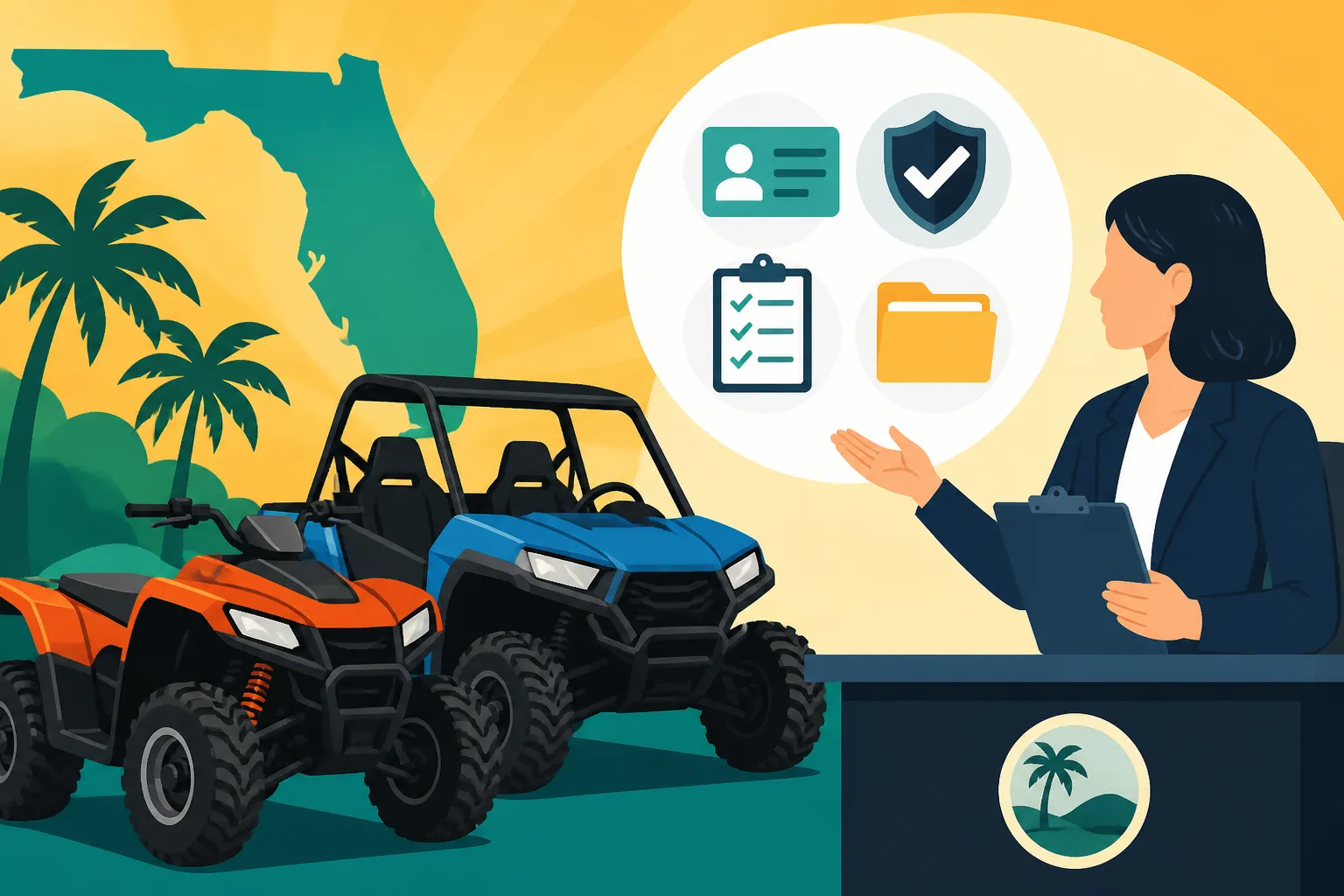
What a Florida Tax Collector Asks For
Trying to figure out exactly what papers you need to bring to the Florida Tax Collector to title your ATV can feel like a scavenger hunt, often leaving you frustrated and confused. You show up, wait in line, only to find you’re missing one crucial document and have to start all over again. This guide will meticulously break down every piece of paperwork, identification, and information the Florida Tax Collector's office typically asks for, ensuring you're fully prepared for a smooth ATV titling experience.
Navigating the Essentials: Your Core Documents for ATV Titling in Florida
When you walk into a Florida Tax Collector’s office, whether it’s in Hernando County or Marion County, the staff isn't just looking to stamp a form and send you on your way. They're tasked with ensuring that you are the rightful owner of the ATV, that all necessary information is accurate, and that you meet Florida’s specific requirements for titling an off-highway vehicle (OHV). Skipping even one small detail can lead to delays, extra trips, and unnecessary headaches. It’s not about making things difficult; it’s about maintaining a clear, legal chain of ownership for every machine operating in the state. So, let’s dive into the absolute must-haves for nearly every titling scenario.
Proof of Ownership: The Foundation of Your Application
This is arguably the most critical piece of the puzzle. Without irrefutable proof that you legitimately own the ATV you’re trying to title, the Tax Collector can’t move forward. The type of proof needed depends heavily on how you acquired the machine.
If you’ve purchased a new ATV from a licensed dealer in Florida, they will typically handle most of the initial paperwork for you. They’ll usually provide you with a Manufacturer’s Certificate of Origin (MSO) or Manufacturer’s Statement of Origin, sometimes referred to as an MCO. This document is essentially the birth certificate of your ATV and certifies that it’s never been titled before. The dealer will also usually complete the necessary title application forms and submit them, often collecting the [Florida ATV Title Application Fee vs Duplicate Fee] and other charges at the time of sale. You might just need to sign a few papers and then wait for your title to arrive in the mail. However, if you're doing it yourself, you absolutely need that MSO. This is vital for understanding [What a Dealer Files on Your Behalf After a Sale] and ensuring you have everything in order.
For a used ATV purchased from a private seller, the process shifts to you. The primary proof of ownership here is the existing Florida Certificate of Title, properly signed over to you by the previous owner. This means the seller needs to complete the transfer section on the back of the physical title, including their signature, printed name, the date of sale, and the selling price. If the ATV was titled in another state and you’re bringing it into Florida, you'll need that out-of-state title. Sometimes, a bill of sale can act as supplementary proof, especially if there are questions about the purchase price for sales tax purposes. Services like LawDepot can help you generate a clear, comprehensive bill of sale that includes all the necessary details, protecting both buyer and seller. Remember, clarity on these documents prevents issues when you're [Buying a Used ATV in Florida: Transferring the Title].
What if the seller lost the title? This is a common, frustrating scenario. The Tax Collector cannot simply take your word for it. The previous owner would typically need to apply for a [Florida ATV Title Lost or Damaged: Getting a Duplicate] before they can sign it over to you. Alternatively, in certain rare circumstances, if the original title or MSO is truly lost and cannot be replaced, you might need to pursue a bonded title, which involves a more complex process and a surety bond to protect against claims of prior ownership. The Tax Collector will usually require specific affidavits and proof of a diligent search for the original documents.
The Application Form Itself: Filling Out the Details
While proof of ownership tells the state who owns the ATV, the application form tells them everything else. The primary form you'll be dealing with is the Florida Department of Highway Safety and Motor Vehicles (FLHSMV) Form HSMV 82040, titled "Application for Certificate of Title With/Without Registration." Even though ATVs don't get a registration or license plate like cars do, this is still the form used for titling them. You can usually download this form from the FLHSMV website or pick one up at your local Tax Collector’s office.
This form requires a surprising amount of detail. You'll need to accurately fill in your full legal name, current address, and contact information. For the ATV itself, you'll need the Vehicle Identification Number (VIN), make, model, year, and often the odometer reading (though for ATVs, odometer readings aren't always applicable or verified in the same way as cars). You'll also declare the purchase price, which is crucial for calculating [Florida Sales Tax When You Title an ATV]. Any liens on the vehicle, such as from a financing company, must also be clearly noted on this application. This is especially important for understanding [Florida ATV Title With a Lien Recorded]. If you are listing two owners, you'll need to specify the ownership structure, such as "and" or "or," which affects how the title can be transferred in the future. Accuracy here is key to avoiding issues with [Fixing a Misspelled Name on a Florida Title]. Take your time and double-check every box; a simple typo can send you home empty-handed.
Identification and Residency: Proving Who You Are and Where You Live
The Tax Collector needs to verify your identity and confirm that you are a bona fide Florida resident, especially if you're claiming residency benefits or just trying to title a vehicle here for the first time.
For identification, a valid, government-issued photo ID is essential. This usually means a current Florida Driver's License or Florida Identification Card. If you're a new resident and haven't yet obtained a Florida-issued ID, they might accept an out-of-state driver's license along with proof of Florida residency, but it's always best to check with your specific county's Tax Collector's office beforehand. They are quite particular about [Proving Florida Residency at the Counter].
Proof of residency usually means two separate documents showing your current Florida residential address. Examples include utility bills (power, water, gas), a rental or lease agreement, a mortgage statement, a Florida vehicle registration certificate, a voter registration card, or even a recent bank statement. PO Boxes are generally not accepted as proof of residency, as they need to establish a physical address. This verification ensures that you genuinely reside in the state and are eligible for a Florida title. If you're a minor, special rules apply, and usually a parent or legal guardian must be present and provide their identification and sign on behalf of the minor. Understanding [Florida ATV Title Rules for a Minor Owner] is crucial in these situations.
Special Circumstances: What Else the Tax Collector Might Need
Not every ATV titling situation is straightforward. Sometimes, you're buying a used machine from across state lines, or perhaps the vehicle has seen better days and been rebuilt. These scenarios come with their own unique set of requirements from the Tax Collector's office. Being aware of these additional demands upfront can save you significant time and prevent multiple trips.
Used ATVs: When the Title is Changing Hands
When you're dealing with a used ATV, the transfer of ownership is the primary concern, and the Tax Collector will scrutinize the existing title. As mentioned, the seller must properly complete the transfer section on the original paper title. This includes the buyer's name, address, the sale date, and the purchase price. Crucially, the seller must sign the title in the designated area. An unsigned title is essentially worthless for transfer purposes. Make sure their signature matches the name printed on the front of the title, or be prepared to provide additional proof if there's been a name change. If the seller has a lien recorded on the title, they must also provide a lien satisfaction form or a release of lien from the financial institution before the title can be transferred free and clear to you. This is a common hurdle, so make sure to confirm the lien status before finalizing the purchase. If you’re coming from out of state, the process for [Titling an Out-of-State ATV After Moving to Florida] will require your original title from the previous state, and you'll still fill out the Florida application.
Another document that can be extremely helpful, though not always strictly required for private sales, is a clear, detailed bill of sale. Even if you have the signed-over title, a bill of sale provides a concrete record of the transaction, detailing the ATV's VIN, make, model, year, the purchase price, and the names and signatures of both buyer and seller. This becomes particularly important if there's any dispute later on, or if the sale price on the title isn't perfectly clear. You can find reliable templates for these legal documents through services like LawDepot, which help ensure all essential information is captured. This thoroughness is particularly valuable when you are [Selling an Untitled ATV in Florida] and need to establish a clear chain of ownership before a new title can be issued. Without it, you might be facing the complicated process of [Buying a Quad With No Title From a Neighbor].
New ATVs: Dealer Sales and Manufacturer Certificates
While most new ATV purchases through a dealer mean they handle the paperwork, understanding what they submit on your behalf is important. The cornerstone for a new ATV title is the Manufacturer’s Certificate of Origin (MSO) or Manufacturer’s Statement of Origin. This is the official document from the manufacturer, attesting to the vehicle's unique VIN and proving it's never been titled before. The dealer will endorse this MSO over to you, acting as the first retail purchaser. They'll also complete the Florida title application (Form HSMV 82040) with all your details, the ATV's information, and the sale price.
They will also collect the sales tax, which is based on the purchase price of the ATV, and the various titling fees. These usually include the initial title application fee, sometimes an electronic lien fee if you financed the purchase, and a service charge. Make sure you get copies of all the paperwork you sign, including the bill of sale from the dealer. This allows you to verify that everything was submitted correctly. For a new purchase, the dealer is usually your best resource for questions, as they deal with these transactions daily. However, knowing [When an MSO Beats a Bill of Sale] can prevent confusion if you are ever questioning your proof of ownership directly from the manufacturer.
Addressing Liens and Missing Paperwork
Liens can add a layer of complexity. If you financed your ATV purchase, the lender (bank, credit union, etc.) will have a lien recorded against the title. This means they are an interested party and will be listed on the title. When you apply for a title with a lien, the Tax Collector will usually issue an electronic title, and the lienholder will be notified. Only once the lien is fully satisfied (paid off) will the lienholder send a release, allowing you to request a paper title free and clear. Knowing [Electronic Liens on a Florida Quad] helps you understand this process.
If you bought a used ATV and the seller informed you there was a lien, but couldn't provide a release, the Tax Collector will require official documentation from the lienholder stating the loan is satisfied. A simple verbal assurance won't cut it. Similarly, if the original MSO is missing for a new ATV that was never titled, or if an old title is lost and the previous owner isn't cooperative, you may face significant challenges. In some extreme cases, particularly for very old machines or those with unclear histories, you might have to explore options like a bonded title, where a surety bond is purchased to guarantee ownership for a certain period, protecting the state and any potential previous owners. This process is involved and requires submitting specific affidavits and often a VIN verification by law enforcement. It can be a lengthy process to follow [Proof of Ownership When the MSO Is Missing].
Beyond Paperwork: Fees, Inspections, and the Final Steps
Once you've gathered all your documents, it's easy to think you're home free. But the Florida Tax Collector’s office isn't just a document processing center; it's also where you settle up financially and, in some cases, ensure your ATV meets basic identification standards. Understanding these final hurdles will help you prepare for a seamless visit and avoid any last-minute surprises.
Understanding the Costs: Title Fees and Sales Tax
Be prepared to open your wallet. There are several fees associated with titling an ATV in Florida. The most significant is usually the sales tax. Florida imposes a 6% sales tax on the purchase price of the ATV. If you bought it from a private seller, you’ll declare the purchase price on your title application, and that’s what the tax will be based on. If you bought it from a dealer, they will have already collected the sales tax. This is covered in more detail when discussing [Florida Sales Tax When You Title an ATV].
Beyond sales tax, you'll encounter specific titling fees. The initial application for a Florida ATV title typically carries a fee, which can include the base title fee and a service charge. For example, you might see a [The $29 Initial Title Application Fee Explained] and a separate [The $4.25 Service Charge on an OHV Title]. If you want your title expedited, Florida offers a "Fast Title" option for an additional charge, which can be useful if you need the paper title quickly for a sale or other purpose. This is the [Florida Fast Title for an ATV: The $7 Expedited Option]. These fees are subject to change, so it’s always wise to check the current fee schedule on your local Tax Collector’s website or the FLHSMV site before your visit. Having a clear understanding of [Florida ATV Title Fee Breakdown: $29 Plus Service Charges] can help you budget accurately. Payment methods usually include cash, check, and major credit/debit cards, though some offices might charge a small convenience fee for card payments.
VIN Verification: An Important Step for Many Machines
For some ATV titling scenarios, particularly for vehicles coming from out of state, or if there's any question about the VIN, the Tax Collector will require a VIN verification. This step ensures that the Vehicle Identification Number on your ATV matches the documentation and hasn't been altered. This is critical for preventing theft and maintaining accurate vehicle records.
Who can perform a VIN verification? In Florida, this task can often be handled by law enforcement officers (police, sheriff, FHP), a licensed Florida motor vehicle dealer, or a notary public who has been specifically authorized to perform VIN verifications. You might need to bring your ATV to one of these parties, or in some cases, a law enforcement officer might come to your location. The results are recorded on a specific form (Form HSMV 82042), which you then bring to the Tax Collector’s office. This is crucial for new residents when [Titling an Out-of-State ATV After Moving to Florida]. The Tax Collector’s office itself generally does not perform VIN verifications, so don't show up with your ATV expecting them to check it on the spot unless it's an authorized dealer. For more information on who can do this, check out [Who Can Verify an ATV VIN in Florida?].
What Happens After You Submit: The Waiting Game
Once you’ve successfully presented all your documents, paid your fees, and completed any required VIN verification, the Tax Collector's office will process your application. They will give you a receipt, which serves as temporary proof that you've applied for a title. This receipt is important to keep.
The actual paper title won't be issued on the spot unless you opted for the expedited "Fast Title" service. Typically, the FLHSMV processes the title application and mails the official paper title to the address you provided. The processing time can vary, but it usually takes a few weeks for the title to arrive in the mail. During peak seasons or for complex cases, it might take a bit longer. If you have a lien on your ATV, the title will often be held electronically by the state, and the lienholder will be recorded. You won’t receive a physical title until the lien is satisfied. This is covered in [How Long a Florida ATV Title Takes to Arrive]. You can usually check the status of your application online through the FLHSMV website using your VIN or application number. This allows you to track its progress rather than wondering if it got lost in the mail.
| Document Type | New ATV (Dealer Purchase) | Used ATV (Private Sale) | Out-of-State ATV (New Resident) |
|---|---|---|---|
| Proof of Ownership | Manufacturer's Certificate of Origin (MSO) | Previous Owner's Signed-Over Title | Out-of-State Title (or MSO if never titled) |
| Application Form | Form HSMV 82040 (often filled by dealer) | Form HSMV 82040 (filled by buyer) | Form HSMV 82040 (filled by new resident) |
| Photo ID | Valid Florida Driver's License/ID | Valid Florida Driver's License/ID | Valid FL DL/ID OR Out-of-State DL + Proof of FL Residency |
| Proof of Residency | Not always required if FL DL/ID current | Not always required if FL DL/ID current | Two documents showing FL physical address |
| Bill of Sale | Dealer bill of sale (for records/sales tax) | Recommended, especially for private sales (e.g., LawDepot template) | Recommended, if applicable for purchase |
| Lien Release | N/A (unless trade-in with existing lien) | Required if lien recorded on previous title | Required if lien recorded on previous title |
| VIN Verification | Generally not needed if from FL dealer | May be required in certain cases | Usually required (Form HSMV 82042) |
| Payment | Sales tax & fees (often collected by dealer) | Sales tax & fees | Sales tax & fees |
Disclaimer
This article is for general informational purposes only and does not constitute professional advice. Laws, prices and regulations vary by location and change over time. Consult a qualified professional for guidance on your specific situation.