Florida Helmet Rules at a Private Park
A helmet rule at a Florida riding park can be stricter than the state minimum, and a helmet that looks suitable may not meet the park’s standard. The safest plan is to check the facility’s current rules before you load up, especially when children, passengers or side-by-sides are involved.
Florida’s helmet requirements and what they cover
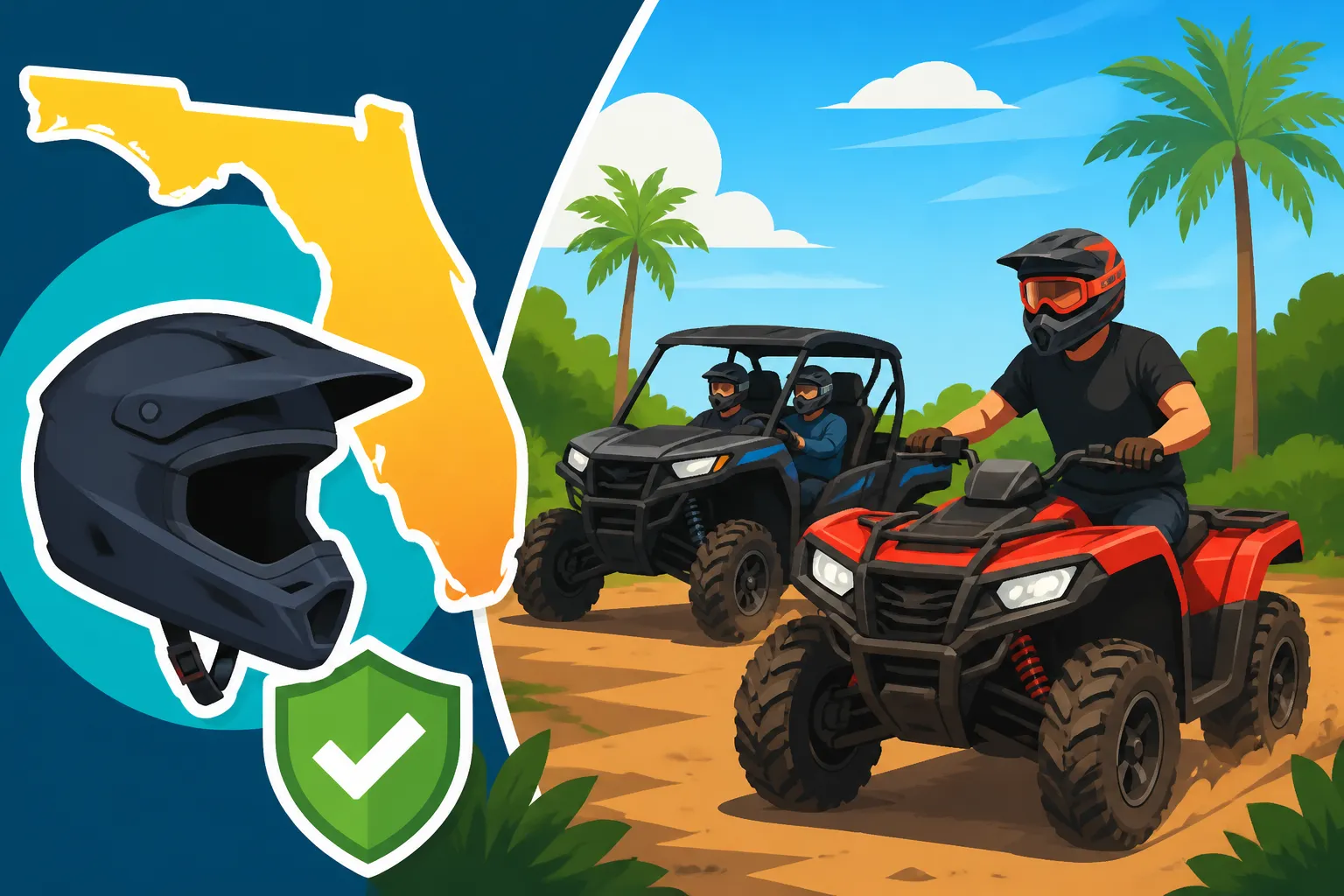
Florida’s rules for ATVs set a minimum protection requirement for riders under 16. The state rule calls for protective headgear and eye protection when a person under 16 operates or rides as a passenger on an ATV. A private park cannot make its own policy a substitute for a state requirement that applies to the machine and rider.
That does not mean every machine called an ATV, UTV or side-by-side is covered by the same statutory definition. Vehicle classification matters. A traditional quad and a side-by-side may be treated differently under a particular law, while a park’s own rules can cover both. If you are unsure how your machine is classified, ask the park and check the relevant state requirements rather than assuming that the word “ATV” on a reservation page settles it.
For a closer look at the age-specific rule, see Florida ATV Helmet Law for Riders Under 16. Young riders may also need eye protection; a helmet with a built-in shield is not automatically a substitute for the park’s stated eye-protection requirement. Florida Eye Protection Rules for Young Riders explains that issue separately.
Adults should not read a minimum legal requirement as a recommendation to ride without a helmet. A private facility can require helmets for adults even where a state rule does not set the same requirement for that rider and vehicle. Its policy may also require eye protection, long sleeves, closed-toe footwear or other protective equipment.
A useful starting point is to separate the three kinds of rules you may encounter:
| Rule source | What it determines | What to check |
|---|---|---|
| Florida law | Minimum requirements that apply to a rider or vehicle under state law | Rider’s age, vehicle classification and where it is operated |
| Park policy | Conditions the facility sets for admission and riding on its property | Helmet type, who must wear one, eye protection and enforcement |
| Event or tour rules | Extra conditions for a particular ride, rental or organized event | Whether the event adds equipment or age requirements |
A private park’s rules can be more demanding than the legal minimum. They can also vary from one facility to another, even when the parks are in the same county. Do not assume that a helmet accepted at one riding area will be accepted at another.
How private park rules can differ
Private riding parks control access to their property and can set safety conditions for visitors. A park might require every rider and passenger to wear a helmet, including adults and people riding in a UTV. Another may describe its policy in terms of vehicle type, age or activity. Requirements can also change between ordinary riding days, events, guided rides and rental bookings.
The park’s written rules are more useful than a general assumption about what private property allows. Look for a current safety page, visitor handbook, reservation email or posted rule sheet. If the helmet requirement is vague, contact the facility before travelling. Ask about the exact machine you plan to ride, not just “ATVs” in general.
Questions worth asking include:
- Does the helmet rule apply to every rider and passenger, or only to people under a certain age?
- Does it apply to both quads and side-by-sides?
- Must the helmet meet a named safety standard, such as a DOT standard?
- Are open-face helmets allowed, or must the helmet cover the full face?
- Are goggles or other eye protection required separately?
- Can riders bring their own equipment, or does the park provide or rent it?
- Are the rules different for a guided tour, rental machine or special event?
Do not treat a waiver as a helmet policy. A waiver may explain risks or release terms, but it does not tell you whether your helmet meets the facility’s entry rules. Check both documents if the park provides them. Florida Waivers Riders Sign at Private Parks covers what waivers generally address; it does not replace checking the park’s equipment requirements.
Age limits are another separate issue. A child may meet the helmet requirement and still be too young to ride a particular machine, ride as a passenger or enter a particular part of the property. Some parks set their own minimum ages or passenger rules, so check those before booking. See Florida Minimum Age at a Private Riding Park and Florida Passenger Rules at a Private Park when those questions apply to your group.
If you ride on public land as well as at a private park, remember that the permit and safety rules may differ too. A private park’s admission or day-use arrangement does not stand in for a public-land pass, and a forest pass does not guarantee entry to a private facility. For public-land permit context, see Florida National Forest OHV Pass: 3-Day, 7-Day or Annual and Florida OHV Permit Rules for Out-of-State Riders.
Choosing and preparing a helmet
Start with the park’s stated standard, then choose a helmet that fits the rider and suits the conditions. A helmet that meets a recognised standard but moves around on the head is not a good fit; neither is one that is damaged or difficult to secure. Check the label and the manufacturer’s instructions rather than relying on appearance alone.
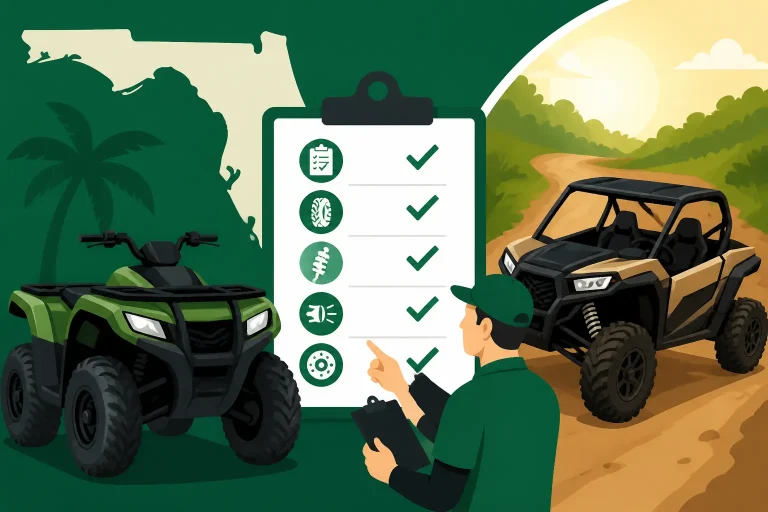
A practical pre-ride check:
- Confirm the required standard. If the park names a certification or marking, check that the helmet has it. If the policy only says “helmet,” ask what types it accepts.
- Match the helmet to the rider. The helmet should sit level, feel secure and stay in place when fastened. A child should not use an adult helmet that is too large just because the straps can be tightened.
- Inspect the shell and straps. Do not use a helmet with cracks, significant impact damage, a faulty buckle or worn straps. Follow the manufacturer’s guidance on replacement after a crash or other impact.
- Check eye protection separately. Confirm whether the park requires goggles, a face shield or other protection. Make sure the chosen option fits with the helmet and stays usable in dust and mud.
- Bring a backup plan. If the park rents equipment, ask about availability, sizing and whether visitors can reserve it. Do not assume that a rental helmet will fit every rider.
A full-face helmet may provide more coverage against flying debris and brush, while an open-face design may feel cooler or offer a wider field of airflow. Neither choice should override the park’s rules or the helmet’s intended use. A face shield can be convenient, but it may fog or collect mud; goggles can be easier to replace or clean but must fit securely. For a young rider, proper fit and reliable eye protection deserve particular attention.
If buying online, including through Amazon, use the manufacturer’s sizing guidance and check the seller’s return conditions before ordering. Listings can use broad descriptions that do not answer the park’s specific questions. Confirm the actual helmet’s safety markings and fit, rather than relying only on the product title or a photograph.
Helmets are only one part of preparation. Dust, branches, insects and mud can affect visibility, so bring clean eye protection and a way to secure it. For a long ride, consider carrying a spare lens or goggles in a protected bag. If the park requires particular clothing or footwear, include those items in the same checklist instead of treating the helmet as the only gear decision.
What to confirm before you leave
Check the rules close to your visit, particularly if you are attending an event or riding during a busy weekend. Facilities can update entry conditions, change rental arrangements or make event-specific requirements. A general social media post or an old review may not reflect the policy currently enforced at the gate.
Use this sequence to avoid a wasted trip:
- Identify the exact riding area. Confirm the facility name and the particular park or trail system. A nearby private park may have different rules.
- Read the current policy. Look for helmet requirements, age limits, passenger rules, vehicle restrictions and any limits on where guests may ride.
- Call or message if something is unclear. Give the rider’s age and the machine type. Ask whether the rule covers passengers and whether the helmet needs a particular standard.
- Check your equipment at home. Make sure each rider has a correctly fitting helmet, working fastening system and any separate eye protection the park requires.
- Recheck booking details. For a rental or guided ride, confirm what equipment is included and what you must bring yourself. Rules for a guided tour may differ from those for visitors bringing their own machines.
- Keep the answer handy. Save the park’s written reply or current policy with your reservation details in case you need to clarify a requirement at check-in.
If a park’s rules conflict with what you expected, do not rely on a last-minute argument at the gate. The facility can refuse access under its conditions, and a waiver or proof of a public-land permit will not necessarily change that decision. Contact the park before travelling, and choose equipment that meets the strictest applicable requirement for your group.
The simplest approach is to treat Florida law as the floor, not the complete checklist. State rules may set a minimum for particular riders and vehicles; private parks can add their own conditions for everyone who enters. Confirm both, and make the decision based on the machine and people you are actually bringing.
Disclaimer
This article is for general informational purposes only and does not constitute professional advice. Laws, prices and regulations vary by location and change over time. Consult a qualified professional for guidance on your specific situation.