Florida Eye Protection Rules for Young Riders
It's an absolutely gorgeous day, the sun is shining, and your young rider is practically buzzing with excitement to hit the trails on their ATV. You've got the machine prepped, the helmets out, but then you wonder: what about eye protection? In Florida, where sandy trails can kick up a storm and palmetto fronds seem to jump out of nowhere, keeping your child's eyes safe isn't just a good idea – it's often the law. This guide will walk you through Florida's specific rules regarding eye protection for young ATV riders, detailing what's required, what counts, and how to make sure your kids are both compliant and genuinely protected while enjoying the ride.
Understanding Florida's ATV Eye Protection Mandate for Young Riders
Riding an ATV in Florida offers an incredible sense of freedom, especially for young enthusiasts learning the ropes. But with that excitement comes a serious responsibility, particularly when it comes to safety gear. The state of Florida has clear regulations designed to protect riders, and a critical component of that safety net, especially for minors, involves proper eye protection. It’s not just about avoiding a ticket; it’s about preventing potentially life-altering injuries from the unpredictable nature of off-road riding.
Why Eye Protection is Non-Negotiable on Florida Trails and Roads
Imagine cruising down a sugar sand trail in Ocala National Forest. The air is warm, the scent of pine is in the air, and suddenly, a gust of wind kicks up a cloud of fine, gritty sand directly into your path. Or perhaps a low-hanging branch snaps back after the rider in front of you passes, flicking directly towards the eyes. These aren't just hypothetical scenarios; they are common occurrences for anyone who spends time on Florida's diverse ATV trails. Without adequate eye protection, these seemingly minor incidents can lead to scratched corneas, embedded debris, or even more severe trauma.
For young riders, the stakes are even higher. Their developing eyes are more vulnerable, and their reaction times might not be as sharp as an experienced adult's. Beyond physical debris, there's the relentless Florida sun, which can cause glare and impair vision, leading to accidents. Insects, dust, and even the sheer force of the wind at speed can make it impossible to see clearly and enjoy the ride. The law recognizes these inherent risks and mandates eye protection to create a safer environment for our youngest adventurers.
The Specific Age Group Affected by Eye Protection Laws
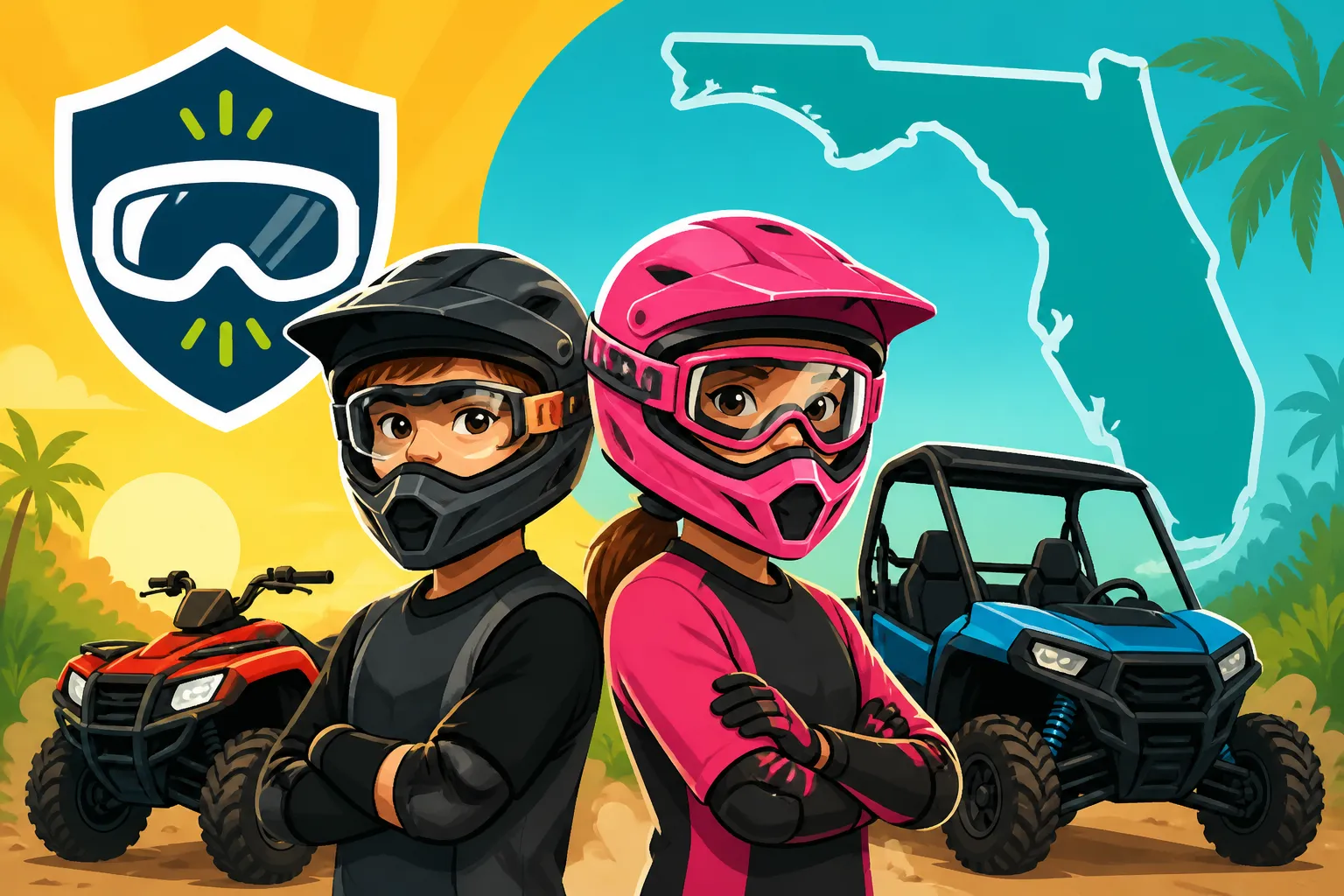
Florida's regulations are quite specific when it comes to the age of riders who must wear eye protection. Generally, if a rider is under 16 years of age and operating an ATV on public lands, public roads where ATVs are permitted, or any property accessible to the public, they are required to wear both a helmet and appropriate eye protection. This rule aligns with other youth-specific safety measures, such as the [Florida ATV Helmet Law for Riders Under 16]. It's a clear line drawn in the sand, ensuring that our youngest and most impressionable riders are shielded from harm.
Once a rider turns 16, the mandatory eye protection rule for public land use (when operating their own machine) might technically shift, but the recommendation for wearing it never goes away. Many adults continue to wear eye protection for the exact reasons mentioned above—it's just good common sense. For parents, this means that until your child reaches 16, you have a legal obligation to ensure they are wearing proper eye protection, in addition to guiding them on safe riding practices.
Differentiating Public Land vs. Private Property Rules
It’s crucial to understand where Florida's eye protection rules typically apply. The statutes primarily focus on the operation of ATVs on public lands, designated ATV trails within state forests or national forests, and unpaved county roads where ATV use is explicitly allowed. This is where law enforcement, such as Florida Fish and Wildlife Conservation Commission (FWC) officers or county deputies, will be enforcing the rules. If you're riding in Croom Motorcycle Area, Ocala National Forest, or any other public riding spot listed in [Florida ATV Trails: Every Public Riding Area], expect these rules to be strictly upheld.
However, the moment you step onto private property, such as your own ranch, a friend's farm, or a private mud park, the legal requirements often change. While state law may not mandate eye protection on private land, it would be incredibly negligent to allow a young rider to forgo it. Property owners often have their own safety rules, and common sense dictates that the dangers of flying debris, branches, and dust are just as real on private land as they are on public trails. Many private riding parks will still enforce helmet and eye protection rules, especially for minors, to protect themselves from liability and ensure a safe experience for everyone.
What Constitutes "Approved" Eye Protection in Florida for ATV Riders
When the law, or even just common sense, dictates that eye protection is necessary, it's not enough to just throw on any old pair of glasses. Florida's intent is clear: the protection must be effective. This means choosing gear that is specifically designed for the rigors of off-road riding, capable of withstanding impacts, and providing clear, unobstructed vision.
Goggles vs. Face Shields: What's the Difference and What's Allowed?
For ATV riders, the two primary forms of effective eye protection are dedicated riding goggles and integrated face shields found on full-face helmets. Both are generally acceptable under Florida law, provided they meet appropriate safety standards.
-
Riding Goggles: These are standalone pieces of equipment, worn directly over the eyes and secured with a strap around the head or helmet. High-quality ATV goggles feature impact-resistant lenses, often made from polycarbonate, to protect against flying rocks and debris. They usually have foam padding around the frame to create a seal against dust and sweat, and many come with anti-fog coatings or ventilation systems to maintain clear vision. Some even offer tear-offs or roll-offs for quick mud clearance, which is a lifesaver in Florida's wetter riding seasons. When you’re selecting goggles, ensure they offer a wide field of vision without distortion. Many aftermarket accessory providers, like SuperATV, offer a wide range of goggles and helmet visors designed specifically for the rigorous demands of off-road riding, ensuring durability and clear visibility in challenging conditions.
-
Integrated Face Shields: These are clear, protective visors built directly into a full-face or modular ATV helmet. They offer comprehensive face and eye protection, often extending down to the chin bar of the helmet. Like goggles, good face shields are made from impact-resistant materials, provide UV protection, and should be scratch-resistant. The main advantage is that they are always there, always attached, and offer a continuous barrier from the elements. However, they can sometimes be more prone to fogging than well-ventilated goggles, especially during slow, strenuous riding or in humid conditions common in Florida.
The Importance of a DOT-Approved Helmet for Integrated Eye Protection
While this article focuses on eye protection, it’s impossible to talk about face shields without mentioning helmets. For young riders under 16, a helmet is always required when riding on public land or roads open to ATVs. If your chosen eye protection is an integrated face shield, it must be part of a helmet that meets federal safety standards, specifically those set by the Department of Transportation (DOT). This is why choosing [Helmets That Meet the USDOT Standard] is so critical.
A DOT-approved helmet signifies that it has undergone rigorous testing to ensure it can protect the rider's head in an impact. When a face shield is part of that helmet, it’s usually designed to meet complementary safety criteria. Always look for the DOT sticker on the back of any helmet you purchase. This sticker is your assurance that the helmet, and by extension its integrated face shield, provides a baseline level of protection. While a helmet might technically be worn with separate goggles, if it has a face shield, ensure it's in good condition and provides clear vision.
What Doesn't Count as Eye Protection (And Why It's Risky)
This is where many well-intentioned parents and riders can inadvertently fall short of the law's intent and, more importantly, expose young riders to unnecessary risk. Simply put, everyday eyewear like sunglasses, regular prescription eyeglasses, or even cheap fashion goggles are not considered adequate eye protection for ATV riding under Florida law.
Why? The primary reason is impact resistance. Regular eyeglasses and sunglasses are designed for vision correction or sun glare, not to withstand a direct hit from a pebble kicked up at 30 mph or the impact of a low-hanging branch. Their lenses can shatter or pop out, potentially causing more harm than if nothing was worn at all. They also typically don't offer sufficient coverage, leaving large gaps around the eyes where dust, wind, or debris can still enter. Furthermore, they can easily slip, fog up, or become dislodged during dynamic riding, creating a dangerous distraction. Law enforcement officers, as outlined in [What Florida Deputies Check at a Roadside Stop], will be looking for proper, purpose-built eye protection, not just something covering the eyes.
Practical Steps for Ensuring Young Riders are Protected
Equipping young riders with the right eye protection goes beyond just buying a product; it involves understanding how to choose it, ensuring it's always used, and appreciating the very real consequences of neglecting this vital safety measure. It's about building a culture of safety from the ground up, making eye protection as automatic as buckling a seatbelt in a car.
Choosing the Right Gear: Fit, Features, and Comfort
The best eye protection is the one a rider will consistently wear. For young riders, comfort and fit are paramount. A helmet or goggle that pinches, fogs up constantly, or constantly slides down will be a source of frustration, potentially leading to the rider removing it—exactly what we want to avoid.
- Fit First: When selecting goggles, they should fit snugly against the face without any significant gaps around the edges, especially the temples and cheeks. The strap should be adjustable to secure them firmly around the helmet. For face shields, ensure the helmet itself fits correctly. There should be no pressure points, and the helmet shouldn't wobble when shaken gently.
- Essential Features: Look for impact-resistant polycarbonate lenses, which are standard in quality ATV goggles and face shields. Anti-fog coatings are a huge plus in Florida's humid climate, as is good ventilation. UV protection is also important for prolonged sun exposure. If your child wears prescription glasses, explore "Over-the-Glasses" (OTG) goggle designs or consider prescription inserts for their goggles.
- Comfort for Compliance: Let your child try on different options. A goggle that's too bulky or a face shield that scratches their nose will be a battle every time. Many manufacturers, including SuperATV, design youth-specific gear that caters to smaller faces and head sizes, which can make a big difference in comfort and compliance. Having the right gear, like a sturdy pair of goggles or a full-face helmet with an integrated shield from a brand like SuperATV, is an investment in safety that far outweighs any potential fines or, more critically, injuries.
Here’s a quick guide to help you choose:
| Feature/Type | Riding Goggles (Standalone) | Integrated Helmet Face Shield |
|---|---|---|
| Primary Advantage | Excellent seal against dust, good ventilation, modular lens options | Full face coverage, always attached to helmet, convenient |
| Fit | Snug against face, adjustable strap over helmet | Part of helmet fit, typically seals well at helmet opening |
| Material | Polycarbonate lens, flexible frame, foam padding | Polycarbonate or similar, integrated into helmet shell |
| Key Considerations | Anti-fog, UV protection, lens tints, tear-off/roll-off compatibility | Anti-fog coatings, scratch resistance, clear visibility |
| Prescription Use | Many OTG (Over-the-Glasses) options available, or inserts | Some helmets accommodate glasses, but less specialized |
| Maintenance | Lenses can be easily swapped, foam can degrade | More durable, but entire helmet may need replacement if shield fails |
| Common Issues | Can be misplaced if not attached to helmet | Can fog in high humidity/low speed, less ventilation than goggles |
Instilling Good Habits: Making Eye Protection a Routine
The law for [Florida ATV Law for 14-Year-Old Riders] and younger is clear, but compliance often comes down to parental guidance. Making eye protection a non-negotiable part of the pre-ride routine is essential. Start early, treat it with the same seriousness as wearing a helmet, and always lead by example. If you, as an adult rider, consistently wear eye protection, your child will be far more likely to adopt the habit without complaint.
Explain why it’s important in a way they can understand. Talk about preventing a rock from hurting their eye, or how the sun can make it hard to see the trail. Make it a checklist item: "Helmet? Check! Goggles? Check! Ready to ride!" This positive reinforcement, coupled with consistent expectations, will help ingrain the habit, making it second nature every time they swing a leg over their quad.
What Happens if You Don't Comply: Penalties and Risks
Ignoring Florida’s eye protection rules for young riders carries two significant types of consequences: legal penalties and, far more seriously, the risk of injury.
-
Legal Penalties: If a law enforcement officer, such as a state park ranger or a sheriff's deputy, encounters a young rider (under 16) operating an ATV on public land without proper eye protection, they can issue a citation. While the specific fine amounts can vary by county and are subject to change, expect a monetary penalty. More importantly, it can lead to a formal warning, require the child to stop riding until proper gear is acquired, or even result in the revocation of riding privileges on public land. These citations are not just a nuisance; they are a direct message that safety regulations are taken seriously.
-
Risk of Injury: Beyond fines, the physical risk is paramount. An eye injury can range from a minor irritation that ruins a day of riding to permanent vision impairment or even blindness. These aren't just statistics; they are real-life consequences that no parent wants their child to experience. The cost of a good pair of goggles or a quality helmet with a face shield is a tiny fraction of what a trip to the emergency room or long-term medical care for an eye injury would entail. This is why having appropriate gear, even from brands like SuperATV, is an investment in safety.
Beyond the Basics: Advanced Eye Safety Tips and Maintenance
Just like any other piece of critical safety equipment, eye protection requires ongoing attention. It's not a "set it and forget it" item; regular maintenance, proper storage, and awareness of riding conditions can significantly extend the life and effectiveness of your young rider's goggles or face shield.
Keeping Eye Protection Clean and Functional
A dirty or scratched lens is almost as bad as no eye protection at all because it obscures vision. Teach your young rider how to properly care for their gear:
- Cleaning: Use only mild soap and water, or specialized lens cleaning solutions designed for polycarbonate, along with a soft microfiber cloth. Never use abrasive cleaners, paper towels, or your shirt, as these can scratch anti-fog or anti-scratch coatings. For truly muddy situations, a gentle rinse with water to remove large particles before wiping is crucial.
- Storage: Store goggles in a dedicated goggle bag or case to prevent scratches. When not in use, keep helmets with integrated face shields protected from direct sunlight and extreme temperatures, which can degrade materials over time.
- Inspection: Before every ride, inspect the lenses for scratches, cracks, or chips. Check the goggle strap for elasticity and damage. Ensure the foam on goggles is intact and still provides a good seal. If a face shield is heavily scratched or damaged, it's time for a replacement. A severely compromised lens can impact vision and reduce impact resistance.
Prescription Eyewear Under Goggles
For young riders who wear prescription glasses, finding comfortable and effective eye protection requires a bit more thought. It's simply not safe to wear regular glasses alone. The best solutions include:
- Over-the-Glasses (OTG) Goggles: Many manufacturers design goggles specifically to fit comfortably over prescription glasses. These goggles are typically wider and have deeper channels to accommodate the frames of eyeglasses. When choosing OTG goggles, ensure they fit snugly against the face with the glasses on, without putting undue pressure on the temples or nose bridge.
- Prescription Inserts: Some high-end goggles offer prescription inserts that clip into the goggle frame, eliminating the need to wear glasses underneath. This can be a very comfortable and secure option, though it requires a separate investment in the prescription insert.
Always test the fit and comfort with your child's prescription glasses. Any discomfort can lead to distraction or, worse, the rider removing the goggles mid-ride.
Preparing for Florida's Unique Riding Conditions
Florida presents a unique set of challenges for ATV riders, and your eye protection strategy should reflect these:
- Sunlight: The Florida sun is intense year-round. Consider tinted or mirrored lenses for bright, sunny days to reduce glare and eye strain. Clear lenses are essential for overcast conditions or when riding through heavily canopied areas. Carrying a spare set of lenses or choosing goggles with easily swappable lenses can be highly beneficial.
- Rain and Humidity: Florida's afternoon thunderstorms are legendary. Anti-fog coatings become crucial during wet or humid rides. Some riders use anti-fog sprays on their face shields, but always ensure they are safe for the lens material. For face shields, a hydrophobic coating can help water bead off, improving visibility during rain.
- Dust and Sand: The vast stretches of sugar sand in areas like Ocala National Forest mean dust is an almost constant companion. Goggles with a good, tight foam seal around the face are critical to keep out fine particles. Keeping your radiator clean in palmetto country is important for your quad, and keeping your goggles clean is just as vital for your vision. From replacement lenses to specialized cleaning kits, many manufacturers, including SuperATV, offer accessories to help you maintain your eye protection in top condition for Florida's diverse riding environments.
By paying attention to these details, you're not just complying with the law; you're actively safeguarding your young rider's vision and ensuring they have a clear, safe, and enjoyable experience every time they hit the trails.
Disclaimer
This article is for general informational purposes only and does not constitute professional advice. Laws, prices and regulations vary by location and change over time. Consult a qualified professional for guidance on your specific situation.