Florida ORV Permit Inspection Requirements
A Florida ORV permit inspection can mean different things depending on where you plan to ride. The most important distinction is between the vehicle inspection associated with Big Cypress National Preserve access and the passes used at other public riding areas. Here’s what to prepare, what an inspection may cover, and how to avoid arriving with the wrong paperwork or an unready machine.
First, identify which permit and inspection apply
In Florida, “ORV permit” is not one statewide permit that grants access to every trail. Big Cypress National Preserve has its own off-road vehicle permit program, while national forests, state forests, and private parks have separate access rules. Their passes and checks are not interchangeable.
At Big Cypress, a permit is tied to access in designated ORV areas and is subject to the preserve’s current permit conditions. A vehicle inspection may be part of getting or maintaining that permit. The inspection is not permission to ride anywhere in the preserve: permitted routes, seasonal access, closures, and other rules still apply. Start with Florida Big Cypress ORV Permit Rules and confirm the current inspection process with the preserve before making the trip.
| Where you plan to ride | What to check | What the check does not replace |
|---|---|---|
| Big Cypress National Preserve | Current ORV permit instructions, inspection procedure, vehicle eligibility, and route rules | Florida title requirements or permission to use routes that are closed or not designated |
| A national forest OHV area | The forest’s pass, vehicle, and rider requirements | Big Cypress permit approval |
| A state forest OHV area | The state forest’s access pass and site-specific rules | A Big Cypress permit or a separate vehicle inspection if one is required |
| A private riding park | The park’s own entry, equipment, and rider rules | Public-land permits or government approvals |
Do not assume that “inspection” means the same thing everywhere. A Big Cypress vehicle check is different from an ownership or VIN verification for a title application. It is also different from showing a trail pass at a gate. For background on access requirements across public riding areas, see Florida Riding on Public Land: Permits and Proof.
A permit inspection generally serves the land manager’s access and compliance process. It may help confirm which vehicle is being permitted and whether it meets the applicable standards. It does not automatically establish legal ownership, act as a Florida title, or make a machine street legal. Those are separate questions covered by Florida ATV Title vs Registration: The Difference and Florida Off-Highway Vehicle Title Rules Explained.
The rules can also depend on the vehicle. An ATV, side-by-side, off-highway motorcycle, and other ORV may be treated differently under a particular permit program. Before booking an inspection or traveling to a permit location, check that the program accepts your machine’s type and configuration. If it is a side-by-side, confirm its dimensions and class rather than relying on a seller’s description.
What to prepare for the vehicle inspection
The official inspection checklist is the controlling source for pass or fail decisions. Because requirements can change and may be specific to the permit program, do not treat a general checklist as a substitute for the current instructions. Still, a careful pre-trip check can prevent common problems.
Make the vehicle easy to identify
Have the vehicle identification number or other required identifying number accessible and legible. Inspectors may need to confirm that the machine presented is the one associated with the permit paperwork. If a number is obscured by mud, a rack, a winch, or bodywork, clean the area before you arrive. Do not alter, restamp, or remove an identifying number.
Take clear photos of the machine and its identification markings before the appointment. This is useful for your records if a question comes up later, but it does not replace any required in-person inspection or official documentation.
Check basic operating condition
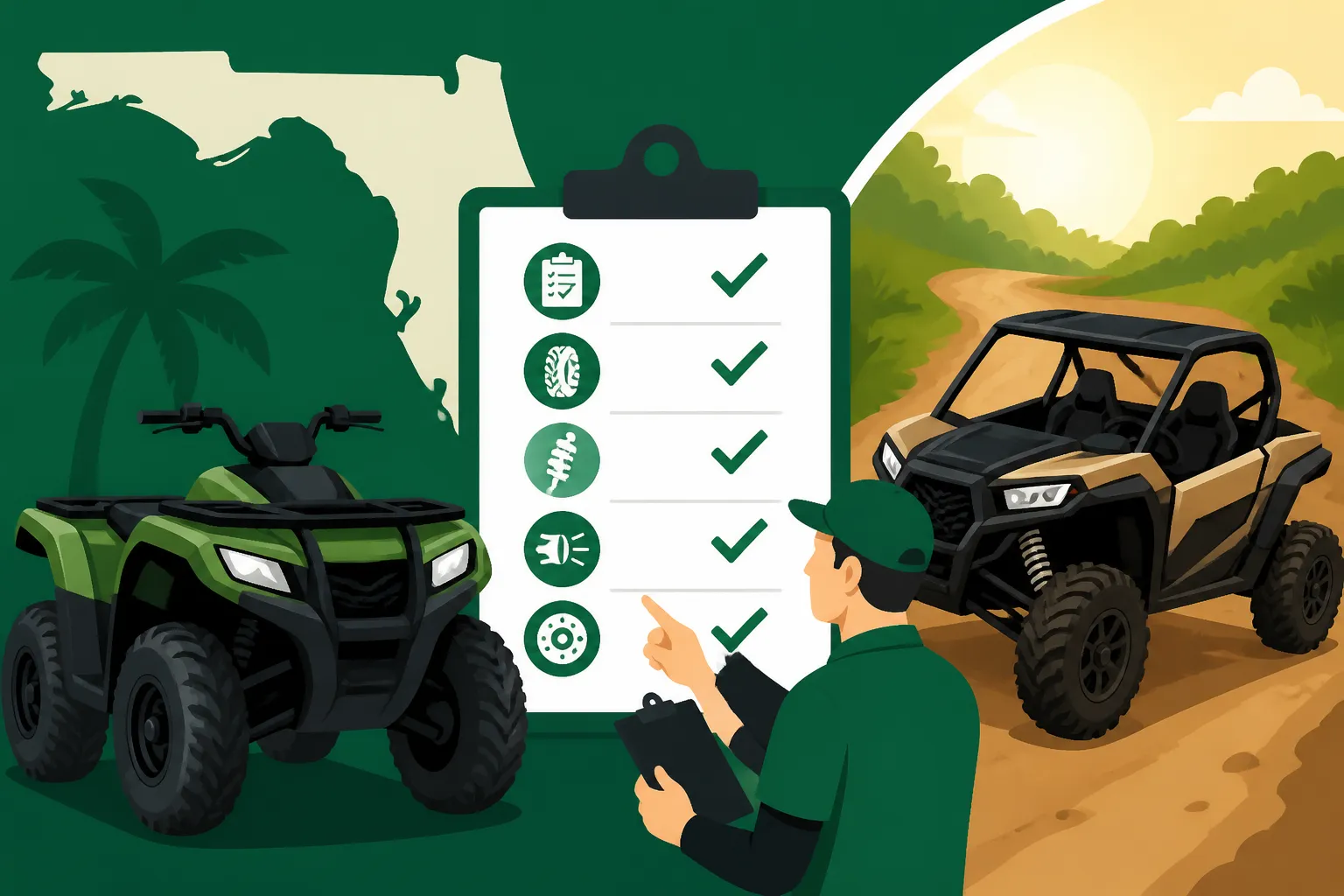
A machine that is difficult to start, has a stuck throttle, or leaks fluid is not a good candidate for an inspection day. Before you go, check the items below and compare them with the permit program’s current requirements.
- Brakes: Confirm that the controls work and the machine can stop reliably.
- Steering and suspension: Look for loose parts, binding, or damage that could affect control.
- Throttle and controls: Make sure the throttle returns properly and the controls are secure.
- Tires and wheels: Check tire condition, wheel security, and any size or type limits listed by the program.
- Exhaust and noise control: Check for damage or missing components. A spark arrestor or sound requirement may apply, so verify the exact standard.
- Lights and electrical equipment: If lights or other equipment are required for your vehicle or permit category, make sure they work.
- Leaks and visible damage: Repair fuel, oil, coolant, or brake-fluid leaks and address damage that could make the machine unsafe.
- Required safety equipment: Bring any equipment specified in the current rules, even if you usually keep it in a separate bag or trailer box.
These are sensible preparation checks, not a promise that every item is examined or that passing them guarantees approval. The official checklist may include additional standards or define particular equipment requirements more precisely.
Clean the machine before the appointment
Mud can hide identifying numbers, damage, and leaks. A quick wash makes the vehicle easier to inspect and helps you notice loose fasteners or worn parts. Pay particular attention to the VIN area, frame, controls, and underside. Let wet components dry enough that the inspector can see what is there.
Do not remove a component or make a last-minute modification just to get through an inspection unless the permit authority confirms the change is allowed. A modification can affect vehicle classification, noise, dimensions, or compliance. If you have fitted larger tires, a lift, a snorkel, an aftermarket exhaust, or other equipment, ask whether it affects eligibility before the inspection date.
Bring the requested records
The exact documents depend on the permit program and your situation. Read the current instructions and make a checklist before leaving home. You may need to have information about the vehicle, its ownership, and the permit applicant available. If the machine is financed, recently purchased, titled in another person’s name, or brought from another state, check whether additional documents are required.
A permit check should not be confused with a Florida title application. A title establishes ownership in the state system; an ORV permit governs access under the land manager’s rules. Florida’s title requirements for off-highway machines are explained in Florida’s Off-Highway Vehicle Title Rules Explained. If you are uncertain whether your machine has the correct ownership paperwork, resolve that question before relying on an inspection appointment.
How to plan the inspection and application
The safest approach is to verify the process before you load the machine. Do not assume that every permit office offers inspections, that inspections are available without an appointment, or that a pass can be issued immediately after the vehicle is checked.
- Choose the riding area first. Confirm that the area allows your type of ORV and that the routes you want to use are open to it.
- Read the current permit instructions. Look for the inspection location, scheduling requirements, required records, vehicle standards, and any rider training or permit conditions.
- Contact the land manager if anything is unclear. Ask specific questions about your vehicle’s type, modifications, identification number, or ownership documents. A general answer about “ATVs” may not settle a question about a particular side-by-side.
- Prepare the machine and paperwork. Clean the vehicle, check its operating condition, and put the required documents together in one place.
- Allow time for follow-up. If an inspector identifies a problem, you may need to repair the machine, provide more documentation, or arrange another check. Avoid planning a ride that depends on approval being completed at the last minute.
- Keep the permit and required proof accessible. Follow instructions for displaying a permit or decal and carrying supporting documents. Do not assume that a phone photo is accepted unless the current rules say so.
The inspection may be only one part of the access process. The land manager can also impose requirements related to the operator, permit holder, vehicle identification, safety course, or route use. For example, rider training rules are separate from a vehicle inspection; see Florida ATV Safety Course Requirements for Riders Under 16. A machine can be mechanically sound and still be ineligible if the rider or permit paperwork does not meet the program’s requirements.
The same distinction matters when comparing Big Cypress with other public areas. A forest pass may be issued under a different system and may not involve the same inspection steps. Review Florida National Forest OHV Pass: 3-Day, 7-Day or Annual or Florida State Forest OHV Day Use and Annual Passes for those separate access arrangements. Do not buy a pass for one area expecting it to satisfy another area’s entry rules.
If you are visiting from outside Florida, check both the land manager’s permit rules and any state title or documentation requirements that apply to your machine. Out-of-state registration or paperwork may not replace a local permit, and a permit does not necessarily resolve whether the vehicle must be titled. Does Florida Honor an Out-of-State ATV Registration? covers that separate issue.
Common inspection problems and how to avoid them
Many preventable delays come from treating the inspection as a formality. It is better to arrive with a clean, identifiable, functional machine and complete paperwork than to expect an inspector to sort out missing information on the spot.
The vehicle is too dirty to identify. If the VIN or other identifying details cannot be read, the inspector may not be able to complete the check. Clean the relevant areas before travel and make sure racks or accessories do not block access.
The machine does not match the paperwork. A different VIN, ownership name, machine type, or configuration can create questions. Compare the identifying information on the vehicle with the records and application before the appointment. If a seller gave you incomplete paperwork, address that in advance. For a newly purchased machine, Buying a Used ATV in Florida: Transferring the Title can help with the ownership side of the process.
A modification changes the vehicle’s configuration. Wider tires, a lift, a changed exhaust, or other alterations may affect a program’s vehicle standards. Do not rely on a verbal assurance from a previous owner. Ask the permit authority how the current rule applies to the machine as it is now configured.
The rider expects the permit to cover every route. Approval for a vehicle does not open closed routes or override area restrictions. Check maps, closures, operating conditions, and any route-specific limits on the day you ride. Public-land access rules can change independently of the vehicle inspection.
The rider confuses a title check with a permit inspection. A title or VIN process concerns vehicle records and ownership. A permit inspection concerns access under the relevant riding-area program. One process may require information useful to the other, but completing one does not automatically complete the other.
The rider arrives without confirming the current procedure. Inspection locations, appointment steps, eligible vehicle types, and required documents can change. Confirm them with the official program before traveling, especially if you are bringing a less common machine or have made substantial modifications.
A short call or careful review of official permit instructions can save a long tow, a missed riding day, or a second trip. Ask the land manager what must be present at the inspection, whether the vehicle must arrive under its own power, and what happens if a machine needs a repair or a document is missing. Also ask how the permit must be displayed and what proof the rider needs to carry afterward.
Keep a copy of your permit information and inspection records with the vehicle paperwork. Store originals securely and follow the program’s instructions about which documents must be carried on the ride. If the permit is lost, damaged, or attached to a machine that is later sold, contact the issuing program before assuming it transfers to another vehicle or rider.
The practical rule is simple: treat inspection, title, rider qualification, and trail access as separate checks. Confirm each one for the place you plan to ride. That way, a vehicle that passes inspection is not mistaken for a machine with unrestricted access, and a valid pass is not mistaken for proof that every other requirement has been met.
Disclaimer
This article is for general informational purposes only and does not constitute professional advice. Laws, prices and regulations vary by location and change over time. Consult a qualified professional for guidance on your specific situation.