Buying a Used ATV in Florida: Transferring the Title
There's nothing quite like the thrill of finding that perfect used ATV or UTV – maybe it’s a rugged workhorse for your property or a nimble machine for ripping up the trails. But the excitement can quickly turn into a headache if you don't know the ins and outs of transferring the title here in Florida. This comprehensive guide is designed to walk you through every step of the process, ensuring your new-to-you quad or side-by-side is legally yours and ready for adventure without any unwelcome surprises.
The Initial Hunt: Finding Your Dream Machine and What to Look For
So, you've been scanning the listings, maybe hitting up some local classifieds, or even chatting with a neighbor about their old quad. The Florida market for used ATVs and UTVs is bustling, and it's easy to get swept up in the chase for a great deal. But before you hand over any cash, there are some absolutely crucial steps you need to take to protect yourself and ensure a smooth title transfer. This isn't just about kicking the tires; it's about making sure the paperwork is as solid as the frame.
Why the Title is Your Golden Ticket (and What Happens Without It)
Let's be blunt: the title is everything. It's the legal document that proves ownership of your ATV or UTV. Think of it like the deed to a house, but for your off-road machine. Without a properly transferred title, you don't legally own that machine, no matter how much money you paid or how many hours you've put on it. This might sound overly dramatic, but I've seen countless riders get stuck in a bind because they overlooked this fundamental step.
Imagine you've just bought a sweet quad, brought it home, and are itching to hit the trails at Croom Motorcycle Area. You've cleaned it up, maybe added a few aftermarket goodies, and now you're ready to make it official at the local tax collector's office. You get there, paperwork in hand, only for them to tell you they can't title it because the seller didn't provide a valid, properly signed title. Now you're out the money, you have a machine you can't legally operate on public land, and you're left trying to track down a seller who might have vanished. This is why the title isn't just a piece of paper; it's your absolute golden ticket to hassle-free ownership and riding. Without it, you could face immense difficulties, including when it comes time for [Selling an Untitled ATV in Florida]. It’s a common scenario, and one that often leads to disappointment if you end up [Buying a Quad With No Title From a Neighbor] without understanding the implications.
Beyond the Shine: Checking the VIN and the Machine's History
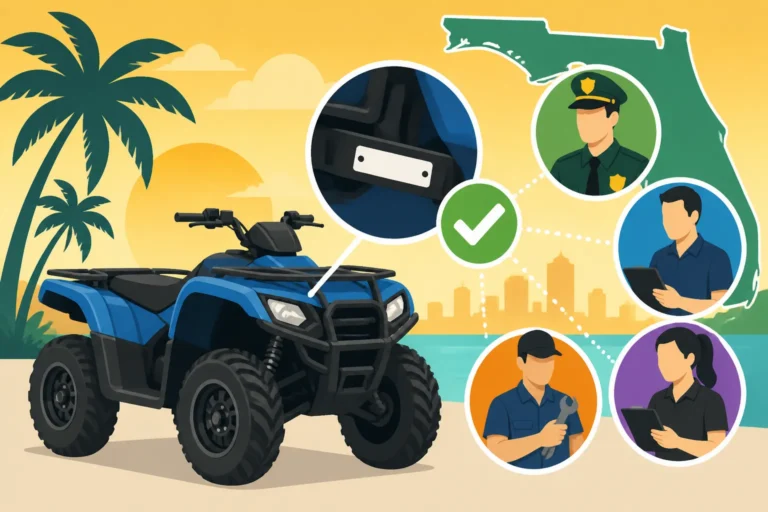
Once you've found a machine that catches your eye, resist the urge to immediately jump on it. Before you even think about money, you absolutely must verify the Vehicle Identification Number (VIN). The VIN is essentially your ATV or UTV's unique fingerprint—a 17-character code that identifies that specific machine. It's usually found stamped on the frame, often near the steering head, on a frame rail, or sometimes under the seat. Make sure the VIN on the machine matches the VIN on the title the seller presents to you, character for character. Any discrepancies, even a single digit, are a massive red flag.
Beyond just matching the numbers, taking the time to check the machine's history is a critical step that far too many buyers skip. While Florida doesn't have a centralized public database specifically for ATV title histories in the same way cars do, you can still take precautions. One of the biggest concerns is buying a stolen machine. You can ask the seller to accompany you to a local law enforcement office, or even your county tax collector's office, to have the VIN checked against stolen vehicle databases. While this might feel like an awkward request, any legitimate seller should understand your caution. If they refuse, that's another big red flag. A proper VIN check can reveal if the machine has been reported stolen or if there are other issues. For official verification, you'll need to know [Who Can Verify an ATV VIN in Florida?]. Always be wary if the VIN appears to have been tampered with or if there's any sign it's been removed or re-stamped.
Another crucial check involves looking for any recorded liens on the title. A lien means someone else (often a bank or credit union) has a financial interest in the ATV. If you buy a machine with an outstanding lien, you could become responsible for that debt, and the lienholder could even repossess the machine, even if you paid the seller in full. On a physical title, a lienholder's name and address will typically be printed right on the document. If it's an electronic title, the seller should be able to provide documentation showing any liens have been satisfied. If a lien is present, insist that the seller provide a lien satisfaction letter from the lienholder showing the debt has been paid off. Never take their word for it. This verification step is non-negotiable for your financial protection.
Understanding Florida's ATV Title Requirements
Okay, so you’ve found a promising machine, you’ve checked the VIN, and everything seems above board so far. Now it’s time to dive into the nitty-gritty of Florida’s specific title requirements. Florida has distinct rules for off-highway vehicles (OHVs), which include ATVs and UTVs, and understanding these regulations is key to a smooth transfer. You don't want to get to the tax collector's office only to find you're missing a critical piece of the puzzle.
Who Needs to Title an ATV in Florida?
This is a question many new and even seasoned riders often ponder, and it's essential to get it right from the start. In Florida, the law is pretty clear: if you plan to operate your ATV or UTV on public lands, you are legally required to title it. This includes state forests like Ocala National Forest, designated OHV parks like Croom Motorcycle Area, or any publicly accessible trail systems. It doesn't matter if you're just riding it for recreation or if you're using it for work on public property; if it's public land, it needs a title. This requirement ensures proper identification and helps with everything from theft recovery to managing trail access.
However, there's a common misconception that if you only ride on private property, you don't need a title. While you are not legally mandated by the state to title your ATV solely for use on your own private land or private club trails, there are still very good reasons to do so. A title provides indisputable proof of ownership, which is incredibly valuable in case of theft or a dispute. It also makes it much easier to sell the machine down the road. Most reputable buyers will expect a title, even if they only plan to ride it on private land. So, while the law specifically targets public land use, getting that title is almost always the smart move for any ATV or UTV owner in Florida. The general rules for this are laid out in [Florida Off-Highway Vehicle Title Rules Explained], with specific triggers like [Riding Public Land as the Trigger for a Title].
Essential Documents from the Seller
When you're buying a used ATV in Florida, the seller's paperwork is just as important as the machine itself. Without the right documents, you simply won't be able to transfer the title into your name. Here’s a breakdown of what you absolutely must get from the seller:
First and foremost, you need the original Certificate of Title, properly signed over by the seller. This is the big one. On the back of the Florida title form, there's a section for transfer of ownership. The seller must sign their name exactly as it appears on the front of the title, and the buyer (that's you!) must sign where indicated. The purchase price should also be filled in accurately, as this will determine the sales tax you pay. Make sure all names are legible and complete. If there's more than one owner listed on the title, typically all owners must sign to release interest in the vehicle. If the seller "lost" the title, that's a problem, and you'll need to address the complexities of [Florida ATV Title When the Seller Lost the Paperwork].
Secondly, a Bill of Sale is highly recommended, even if not strictly required by law for a title transfer if you have the original title. However, for private sales, a bill of sale acts as a contract between you and the seller, documenting the transaction, purchase price, date of sale, and the condition of the ATV. It provides an extra layer of protection and clarity, especially if there are any disputes later. A robust bill of sale will include the full names and addresses of both buyer and seller, the ATV's make, model, year, and VIN, and the agreed-upon sale price. You can find reliable templates for this online; for instance, LawDepot offers comprehensive, customizable bill of sale forms that can help ensure all necessary details are included. This ensures you have all the specifics for [Florida ATV Bill of Sale: What It Needs to Say].
Finally, if you're buying a brand-new ATV that the seller never titled (perhaps they bought it new from a dealer but never got around to registering it, which sometimes happens with older inventory), you'll need the Manufacturer's Certificate of Origin (MSO). This document is issued by the manufacturer and is essentially the "birth certificate" for a new vehicle, showing it has never been titled before. The MSO will then be surrendered to the state when you apply for the initial title. If the seller can only provide a bill of sale and claims they never received a title, make sure you understand the nuances of [Proof of Ownership When the MSO Is Missing].
When a Quad Has an Electronic Title or a Lien
The world of vehicle titles has largely gone digital, and Florida is no exception. Many ATVs and UTVs now have electronic titles, meaning there isn't a physical paper document floating around. This can sometimes cause confusion for buyers used to receiving a paper title. When you purchase an ATV with an electronic title, the seller's information is simply removed from the state's database, and your information is added. While this is convenient for the state, many buyers prefer a physical paper title for their records. You can typically request a paper copy of your newly issued electronic title from the Florida Department of Highway Safety and Motor Vehicles (FLHSMV) after the transfer is complete, often for a small fee. It's good to understand the difference between an [Electronic Title vs Paper Title for a Quad] upfront.
Dealing with liens is another critical aspect of buying a used ATV. As mentioned earlier, a lien means there's an outstanding loan or debt against the machine. If the seller still owes money on their ATV, the lienholder (like a bank or credit union) will be listed on the title. You absolutely cannot transfer ownership until that lien is satisfied and officially released. If you're purchasing an ATV that has a lien, the seller must provide you with a lien satisfaction letter from the financial institution. This letter proves that the loan has been paid in full and the lienholder has released their claim to the ATV. Without this document, the tax collector's office will not process the title transfer into your name. Insist on seeing this letter or verifying with the lienholder directly before you finalize the sale and hand over payment. It's your protection against assuming someone else's debt. Make sure to review information on [Electronic Liens on a Florida Quad] and the specific process for [Recording a Lien Release on an OHV Title].
The Transfer Process: Step-by-Step
You’ve done your homework, found the right machine, and gathered all the necessary documents from the seller. Fantastic! Now comes the actual transfer process, which involves a visit to your local Florida tax collector’s office. While it might seem like a bureaucratic chore, knowing exactly what to expect and what to bring will make the experience much smoother and quicker.
Completing the Florida ATV Title Application
The main form you'll need to complete is the Florida Vehicle Title and/or Registration Application (Form HSMV 82040). Don't be intimidated by its length; you won't need to fill out every single section for a title transfer. As the buyer, you'll be primarily focusing on sections related to the vehicle information, your personal details, and the transfer of ownership.
Here's a general guide to the key sections you'll need to complete:
- Section 1 (Vehicle Information): This is where you'll accurately list the ATV's year, make, model, body type (often "ATV" or "UTV"), fuel type, odometer reading (if applicable, though many ATVs don't have odometers), and—most importantly—the VIN. Double-check this against the title and the machine itself.
- Section 2 (Type of Application): You'll typically check the box for "Original Title (new vehicle)" if the MSO is being used, or "Transfer of Florida Title" or "Transfer of Out-of-State Title" if you're taking over an existing title.
- Section 3 (Owner Information): This is where you, as the new owner, will provide your full legal name, date of birth, Florida driver's license number, and current physical address in Florida. If there are multiple owners, all must be listed and present, or provide a power of attorney.
- Section 4 (Lien Information): If you financed your ATV, your lender will be listed here. If you paid cash and there's no lien, you can leave this section blank or write "None."
- Section 5 (Odometer Declaration): If your ATV has an odometer, you'll declare its reading here. If not, state "not applicable."
- Section 6 (Signatures): This is critical. You, as the buyer, must sign and print your name. If there are multiple owners, all must sign.
It's common for people to make mistakes here, like forgetting a signature, putting an incorrect date, or misspelling a name. These seemingly small errors can lead to your application being rejected, forcing you to start over. Always take your time, read each section carefully, and don't hesitate to ask a clerk for clarification if you're unsure. You can usually find a copy of the form online on the FLHSMV website, or pick one up at your local tax collector's office. Make sure you understand [Which Florida Title Form to Use for an ATV] before you go.
Sales Tax, Fees, and Payment
Once your application form is correctly filled out, you'll move on to the financial side of the title transfer. This involves paying sales tax and various titling fees. Don't be caught off guard; these costs can add up!
- Florida Sales Tax: In Florida, you are generally required to pay sales tax on the purchase price of the used ATV. This is typically calculated at the state sales tax rate on the agreed-upon purchase price you listed on the bill of sale or the title transfer section. It’s important to understand that this applies even to private sales, not just purchases from dealers. The tax collector's office will collect this at the time of title transfer. For more details on the specific rate and how it applies, refer to guidance on [Florida Sales Tax When You Title an ATV].
- Initial Title Fee: There is a standard fee for issuing an original or transfer title for an off-highway vehicle. This fee covers the administrative cost of processing your title application and recording your ownership.
- Service Charge: In addition to the title fee, there's usually a service charge added by the county tax collector's office or license plate agent for their processing services. This is a small but consistent fee applied to most vehicle transactions. For a detailed breakdown of what to expect, check out [Florida ATV Title Fee Breakdown: $29 Plus Service Charges] and explanations of items like [The $4.25 Service Charge on an OHV Title].
- Other Potential Fees: Depending on your situation, there might be other minor fees, such as a lien recording fee if you financed the purchase, or a separate fee if you choose to request a physical paper title after an electronic title has been issued.
When it comes to payment, most Florida tax collector offices accept cash, checks, and major credit cards. However, it's always a good idea to call ahead to your specific county office to confirm their accepted payment methods, especially if you plan to pay with a check for a large sum or need to use a particular credit card. Be prepared for these costs so there are no surprises at the counter.
Where to File Your Paperwork
With all your documents in order and fees understood, the final step is to submit everything to the proper authority. In Florida, this means visiting your local county tax collector's office or an authorized license plate agency. These offices are designated by the state to handle vehicle titling and registration services.
You can usually find the nearest office by searching online for "[Your County] Tax Collector" or "Florida DMV." While some larger counties might offer online services for certain transactions, initial title transfers for used ATVs typically require an in-person visit. This allows the clerks to review all original documents, verify signatures, and collect any necessary fees. Keep in mind that wait times can vary widely depending on the time of day, day of the week, and the specific office. Some offices allow you to make appointments online, which can save you a lot of time. Otherwise, be prepared for a potential wait, especially during peak hours.
When you go, make sure you bring:
- The properly signed-over original title from the seller (or MSO).
- Your completed Florida Vehicle Title and/or Registration Application (Form HSMV 82040).
- Your Florida driver's license or state ID.
- Proof of Florida residency (if your ID doesn't already show a Florida address, though for an ATV title, your Florida ID is usually sufficient).
- The bill of sale (highly recommended).
- Any lien satisfaction letters, if applicable.
- Funds to cover sales tax and all fees.
The staff at the tax collector's office are there to guide you, so if you have any last-minute questions, don't hesitate to ask them before submitting your paperwork. They will check everything to ensure compliance with Florida law. Knowing [Where to File an ATV Title in Florida] and understanding the difference between a [Florida County Tax Collector vs Service Center for ATV Titles] can save you a trip. It's also wise to research [What a Florida Tax Collector Asks For] to ensure you have all your ducks in a row.
Common Pitfalls and How to Avoid Them
Even with the best intentions, the process of buying a used ATV and transferring its title can hit some snags. There are a few recurring issues that many buyers encounter, often turning a smooth transaction into a frustrating ordeal. Being aware of these common pitfalls is your first line of defense in avoiding them.
The Untitled Quad Dilemma
This is perhaps the biggest and most frequent pitfall: encountering a seller who simply doesn't have a title for the ATV they're trying to sell. Their reasons can vary—maybe they bought it years ago from a friend who never had a title, or they lost it and never bothered to get a duplicate. Regardless of the story, buying an untitled quad is inherently risky in Florida.
Without a title, you lack legal proof of ownership. This means you won't be able to title the ATV in your name, which in turn means you cannot legally operate it on public lands in Florida. Beyond the legal restrictions, an untitled ATV is also much harder to sell in the future, significantly reducing its value. You might also run into issues with insurance companies or if the machine ever gets stolen. While there are sometimes complicated legal avenues like applying for a bonded title to establish ownership without a traditional title, these processes are often time-consuming, expensive, and not guaranteed to succeed. It's usually best to avoid purchasing a machine without a clear, transferable title unless you are fully aware of the challenges and prepared to face them. Dealing with [Buying a Quad From a Craigslist Seller With No Title] is a prime example of where this dilemma frequently arises, so exercise extreme caution.
If you absolutely must proceed with an untitled machine, ensure you have a comprehensive bill of sale, perhaps drafted using a service like LawDepot, clearly stating the lack of title and any representations the seller makes about ownership. However, for most buyers, the simplest and safest advice is to walk away from any deal where a clear title cannot be provided.
Missing or Incomplete Paperwork from the Seller
You've found a great deal, inspected the quad, and the seller says they have the title… but then they hand you a document that's missing signatures, has incorrect dates, or doesn't match the VIN. Or, even worse, they say they "lost" the title and offer you just a bill of sale. These situations are ripe for future headaches.
An incomplete or improperly filled-out title will be rejected by the tax collector's office. If the seller forgot to sign, or if they didn't fill in the odometer reading (if applicable), you'll be sent away and told to get the seller to correct it. This often means trying to track down a seller who might already be difficult to reach, potentially living far away, or simply unwilling to cooperate further.
Always inspect the title thoroughly before you finalize the sale. Ensure all fields are filled out correctly, all required signatures are present (especially the seller's signature exactly as it appears on the title), and the VIN matches perfectly. If the seller claims to have lost the title, insist that they apply for a duplicate title in their name first, and then transfer it to you. This might delay the sale, but it's crucial for your protection. Without a proper title, you're buying a problem. Remember, a robust [Florida ATV Bill of Sale: What It Needs to Say] can help document the transaction, but it rarely replaces a missing title.
Understanding "Title Jumping" and How It Affects You
"Title jumping" is an illegal practice that you absolutely want to avoid being a part of, either as a perpetrator or an unknowing victim. It occurs when a buyer purchases an ATV, but instead of transferring the title into their own name, they leave the seller's name as the owner on the title. They then turn around and sell the ATV to a third party, signing the original seller's name (or leaving it blank) and passing the title directly to the new buyer. The middleman "jumps" over titling the vehicle in their name.
Why do people do this? Primarily to avoid paying sales tax and title fees themselves. However, it creates a messy and illegal chain of ownership. If you buy an ATV from someone who is title jumping, you'll receive a title that's not in the name of the person who sold it to you. When you go to the tax collector's office, they will see that the seller on the title is not the person who transferred it to you, which immediately flags the transaction as potentially fraudulent.
The consequences for you, the unsuspecting buyer, can be severe. Your title transfer will be rejected, you'll be unable to legally title the ATV, and you might even be implicated in the illegal activity. You'll then have to track down the original seller (who you likely never met) to get a proper transfer, or try to get your money back from the title jumper, which can be extremely difficult. To avoid this, always insist that the seller's name on the title matches the person selling you the ATV, and that they are the one signing it over directly to you. This protects you from the legal and financial headaches associated with [Title Jumping and Why It Bites the Buyer].
What Happens After You File
You've successfully navigated the process, submitted all your paperwork, and paid the necessary fees at the tax collector's office. Congratulations! You're on your way to becoming the legal owner of your new-to-you ATV or UTV. But what happens next? It's not an instant process, and there are a few things to expect as you await your official title.
Processing Times and Receiving Your New Title
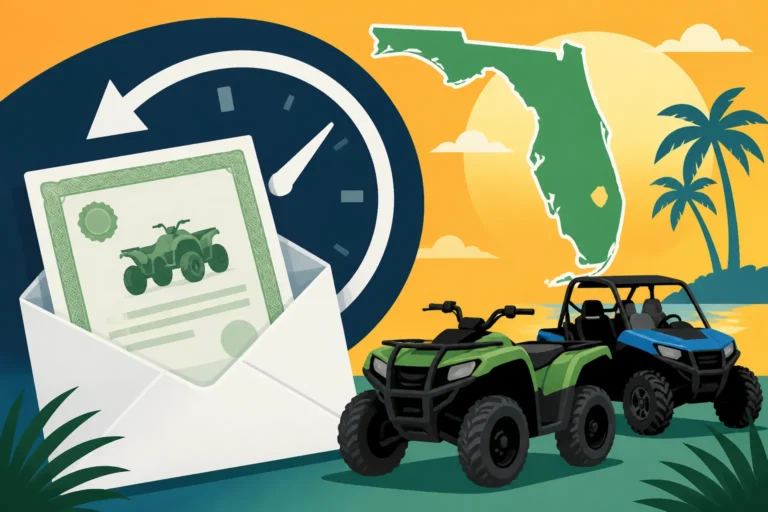
Once you've submitted your application, the tax collector's office needs time to process it. This involves verifying all the information, entering it into the state's system, and then issuing the new title. The typical wait time for a Florida ATV title to arrive in the mail can vary. Generally, you can expect it to take anywhere from two to four weeks. During peak times, or if there are any complexities with your application, it might take a bit longer. It's a good idea to factor this processing time into your plans, especially if you have a specific date in mind for when you want to legally hit the trails.
If you're in a hurry and absolutely need your title sooner, Florida does offer an expedited "Fast Title" service. For an additional fee, you can request to have your title processed and issued much more quickly, sometimes even on the same day if you submit it early enough. This can be incredibly useful if you need the title for a quick resale, to secure a loan against the ATV, or for any other urgent reason. Just be aware of the extra cost associated with this expedited service. For more details on what to expect, read up on [Florida ATV Title Application Processing Time] and [How Long a Florida ATV Title Takes to Arrive], as well as the specifics of a [Florida Fast Title for an ATV: The $7 Expedited Option].
Electronic vs. Paper Title
As we touched on earlier, Florida primarily issues electronic titles (e-titles) by default. This means that once your application is processed, the ownership information is updated in the state's central database, and no physical paper title is automatically mailed to you. For many people, this is perfectly fine, as the digital record is sufficient proof of ownership. However, if you prefer to have a physical paper title in hand—perhaps for peace of mind, for easy reference, or because you anticipate selling the ATV again soon—you will need to specifically request it.
You can typically request a paper copy of your electronic title at the same time you submit your title transfer application, or at a later date from the FLHSMV. There might be a small fee for this service. The paper title will then be mailed to the address you have on file. Understanding the difference between these two formats, as explained in [Electronic Title vs Paper Title for a Quad], is important for managing your expectations and ensuring you get the form of title you prefer.
Beyond the Title: Registration, Insurance, and Riding Rules
It's crucial to understand that getting your ATV titled in Florida is a separate process from registering it. A title proves ownership, but registration is what actually allows you to legally operate the ATV on public lands. While you can title an ATV without immediately registering it, if you plan to ride on state-managed trails or public access areas, you must also register your machine. Registration involves obtaining an OHV decal, which is typically renewed annually. The decal acts as proof that you've paid the necessary fees for public land use. The distinction is clear in [Florida ATV Title vs Registration: The Difference].
Regarding insurance, Florida law generally does not require ATV owners to carry liability insurance specifically for titling purposes, unlike on-road vehicles. However, just because it's not mandated for titling doesn't mean it's not a good idea. Operating an ATV, especially off-road, carries inherent risks. A good insurance policy can protect you financially in case of an accident, damage to your machine, or injury to yourself or others. Many riders opt for comprehensive ATV insurance for peace of mind, even if it's not a legal requirement for the title itself. Think of it as investing in protection for yourself and your valuable machine. You can find more information on this topic in [Do Florida ATVs Need Insurance to Be Titled].
Finally, always remember that even with a title and registration, there are specific rules and regulations for riding ATVs and UTVs in Florida, especially on public lands. These can include age restrictions, helmet requirements for minors, designated riding areas, and rules about operating on certain types of roads. Always familiarize yourself with the specific rules of any area you plan to ride in to ensure you're riding safely and legally. Remember, [Florida Residents Who Ride Public Land Must Title] their machines, and you'll want to ensure you meet all other requirements too.
Special Scenarios and Troubleshooting
The basic process of transferring an ATV title might seem straightforward, but real life often throws curveballs. There are several situations that can make the process a little more complex. Knowing how to handle these special scenarios can save you a lot of grief and ensure you successfully transfer ownership of your machine.
Buying from Out-of-State or a Dealer
Purchasing an ATV or UTV from an out-of-state seller or a licensed dealer involves slightly different steps compared to a private sale within Florida.
If you're buying from a licensed Florida dealer, congratulations—they will handle nearly all of the paperwork for you! Dealers are accustomed to the titling and registration process and will typically submit all the necessary forms, collect sales tax, and process fees on your behalf. They'll give you temporary tags or permits to ride while your official title and registration are being processed. This is by far the easiest route for a buyer, as the dealer acts as your intermediary with the state. This is especially useful to understand when dealing with [Florida Dealer Paperwork When You Buy a New ATV].
However, if you're buying from an out-of-state private seller or an out-of-state dealer, the process becomes a bit more hands-on. You'll bring the out-of-state title (properly signed over to you), a bill of sale, and proof of identification to your Florida county tax collector's office. You'll still need to complete the Florida Vehicle Title and/or Registration Application (Form HSMV 82040). You'll also need to pay Florida sales tax (if you haven't already paid sales tax in the state of purchase, or if the Florida tax is higher, you'll pay the difference). Additionally, you might need to have the VIN verified by a law enforcement officer or a licensed dealer in Florida to ensure it's legitimate and matches the paperwork. This verification is crucial for any out-of-state title transfer. For those moving into Florida, specific guidance on [Titling an Out-of-State ATV After Moving to Florida] is available.
Correcting Errors on Your New Title
Nobody's perfect, and sometimes, despite everyone's best efforts, a mistake might appear on your new title after it's been issued. This could be anything from a misspelled name or address to an incorrect VIN or an error in the lienholder information. Don't panic, but don't ignore it either. Errors on your title can cause significant problems down the line, especially when you try to sell the ATV.
If you discover an error, you need to contact your local Florida county tax collector's office as soon as possible. You'll likely need to submit a new application (Form HSMV 82040) specifically for a title correction. You'll also need to provide supporting documentation to prove the correct information—for instance, your driver's license for a name correction, or the original bill of sale for a VIN error. There might be a small fee associated with issuing a corrected title. The sooner you address the error, the easier it typically is to fix. Delaying it could mean more hassle or even questions about fraudulent activity if the discrepancy is significant. If you’re faced with a simple typo, refer to [Fixing a Misspelled Name on a Florida Title].
Gifting or Inheriting an ATV
Sometimes, an ATV or UTV comes into your possession not through a purchase, but as a gift or through inheritance. While the lack of a purchase price might seem to simplify things, there are still specific procedures you need to follow to legally transfer the title into your name.
For a gifted ATV: The donor (the person giving you the ATV) still needs to properly sign over their existing title to you. On the Florida title form, there will be a section to indicate that the transfer is a gift. While you won't pay sales tax on a legitimate gift, you will still be responsible for the standard title transfer fees. You'll need to complete the Florida Vehicle Title and/or Registration Application (Form HSMV 82040) with your information as the new owner, indicating the transfer as a gift. It's often helpful to have a gift affidavit or a simple gift letter signed by both parties, clearly stating that the ATV is a gift with no money exchanged. Services like LawDepot can provide templates for gift deeds that clearly document the transfer, which can be useful when dealing with [Florida Off-Highway Vehicle Title for a Gifted Quad].
For an inherited ATV: If you've inherited an ATV, the process typically depends on whether the deceased owner had a will and if the estate is going through probate. If there's a will and the ATV is specifically bequeathed to you, or if the estate is small enough to avoid formal probate, you might be able to transfer the title with a certified copy of the death certificate, the original title (if available), and possibly a court order or an affidavit from the executor of the estate. If the title is missing or the estate is complex, it's highly advisable to consult with an attorney or the probate court for specific guidance on how to legally acquire the title. This can be a sensitive time, so knowing the steps for [Inheriting a Titled Quad in Florida] can ease the burden.
It is always better to face these scenarios proactively and gather all the necessary documentation upfront to avoid unnecessary delays or complications in securing your legal ownership.
Comparing Documentation for ATV Title Transfer in Florida
| Scenario | Required from Seller | Required from Buyer | Sales Tax Due? | VIN Verification Needed? |
|---|---|---|---|---|
| Private Sale (Florida) | Properly signed Florida Title (original) | Florida Driver's License/ID, Completed Form HSMV 82040 | Yes | No (usually) |
| Private Sale (Out-of-State) | Properly signed Out-of-State Title (original), Bill of Sale | Florida Driver's License/ID, Completed Form HSMV 82040 | Yes | Yes |
| Florida Dealer Purchase | No documents (dealer handles it all) | Florida Driver's License/ID, Payment (dealer collects tax/fees) | Yes | No |
| Gift Transfer | Properly signed Florida Title (original) | Florida Driver's License/ID, Completed Form HSMV 82040 (Gift indicated) | No | No (usually) |
| Inherited Transfer | Original Title (if available), Death Certificate | Florida Driver's License/ID, Completed Form HSMV 82040, Probate Docs (if applicable) | No (usually) | No (usually) |
| New ATV (never titled) | Manufacturer's Certificate of Origin (MSO) | Florida Driver's License/ID, Completed Form HSMV 82040 | Yes | No |
Disclaimer
This article is for general informational purposes only and does not constitute professional advice. Laws, prices and regulations vary by location and change over time. Consult a qualified professional for guidance on your specific situation.