Non-Refundable and Non-Transferable Pass Terms
A pass marked non-refundable or non-transferable can be an expensive surprise if you buy the wrong one, change machines, or cancel a trip. Florida riders may encounter different pass systems for national forests and state forests, each with its own issuer and terms. Knowing what those words mean—and what to check before paying—can help you avoid assuming a pass will cover a different vehicle or be refunded later.
What Non-Refundable and Non-Transferable Mean
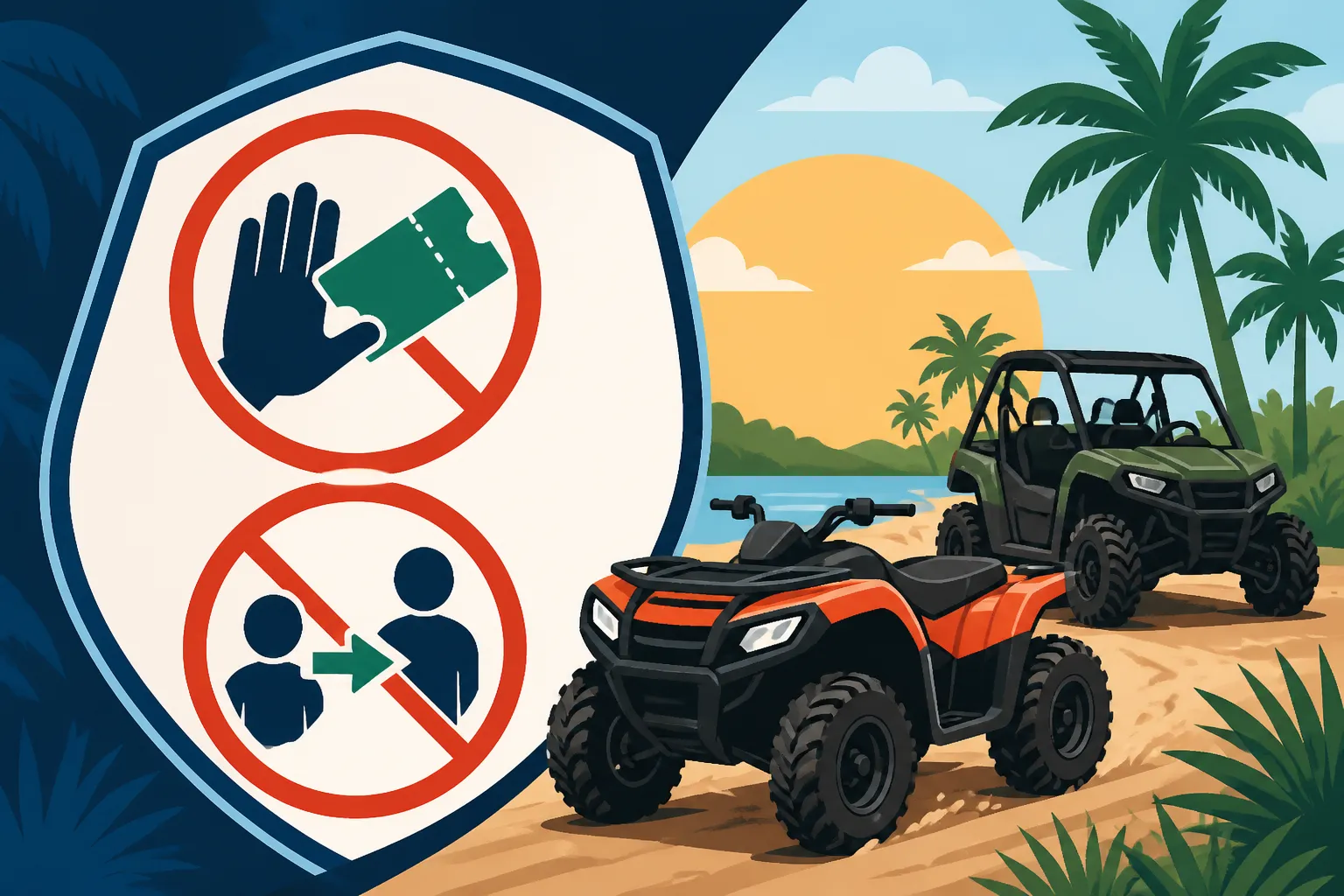
A non-refundable pass generally cannot be returned for a refund simply because plans change, a ride is canceled, or you decide you no longer need it. The rule may apply after purchase even if you have not used the pass. Whether an issuer makes an exception for a duplicate purchase, processing mistake, or other unusual situation depends on that issuer’s current policy.
A non-transferable pass generally cannot be handed to another person or moved to a different vehicle. The exact restriction depends on what the pass is issued for. A pass may be associated with a specific machine, a purchaser, or both. Do not assume that letting someone else ride your ATV means they can use a pass issued for your UTV, or that a pass can be peeled off one machine and put on another.
These terms affect two separate decisions:
| Term | What it usually means | What to check before buying |
|---|---|---|
| Non-refundable | You may not get your payment back if you cancel or buy the wrong pass | Whether the issuer allows exceptions, and how to report a mistaken or duplicate purchase |
| Non-transferable | You cannot give the pass to another person or move it to another vehicle | Whether the pass is tied to the rider, machine, or both |
| Per vehicle | Each eligible machine may need its own pass | Whether your ATV, UTV, or second machine needs a separate pass |
| Replacement | A lost or damaged pass may have a specific replacement process | Whether the issuer requires proof of purchase, machine details, or a new application |
These are practical interpretations, not a substitute for the terms shown by the pass issuer. Read the purchase page and any pass instructions before checking out. If a key point is unclear, ask the issuer before paying and keep the response with your receipt.
Florida has more than one OHV pass system. A national forest pass and a state forest pass are not automatically interchangeable. The permitted area, covered activities, pass period, and vehicle rules depend on the particular pass. Start with Florida OHV Permits: What You Need Before You Ride to identify which kind of authorization applies to your destination.
Identify the Pass Before You Pay
The first step is to match the pass to the place where you intend to ride. A pass that works for one managed area does not necessarily cover another, even if both are public lands in Florida. A pass is not a general permission slip for every trail or forest.
For national forest riding, check the terms for the specific pass option and the forest areas it covers. The options and their validity periods can differ. The details in Florida National Forest OHV Pass: 3-Day, 7-Day or Annual can help you compare the available types, but confirm current conditions with the issuing channel before purchasing.
State forest OHV passes follow a separate system. Check the state forest information for the riding area you plan to visit, including whether the pass is for day use or an annual period. Florida State Forest OHV Day Use and Annual Passes explains why it matters to confirm the pass category rather than relying on the word “annual” alone.
A pass might cover access to a designated OHV area but not every related cost or activity. For example, do not assume that a riding pass also covers camping, overnight parking, or a separate facility fee. Verify each part of your trip with the land manager. For national forest travel, One Forest Pass Covers Both Ocala and Apalachicola discusses an important coverage distinction, but the pass still needs to match the rules for your intended use.
Confirm who and what the pass covers
Before you purchase, look for the pass’s conditions on:
- The land or riding area where it is valid
- The eligible vehicle class, such as an ATV or UTV
- Whether the pass is assigned to a specific machine
- Whether every machine needs a separate pass
- The start and end of the validity period
- How the pass must be displayed or carried
- Whether another person may operate the covered machine
- What to do if the pass is lost, damaged, or the vehicle changes
Vehicle-specific rules deserve special attention when a household owns more than one machine. A pass that is valid for one quad may not cover a second quad on the same trip. Likewise, a family’s purchase may not mean that all household vehicles are covered. Review Florida Annual OHV Passes Are Per Vehicle and [Florida OHV Pass for a Second Machine] before treating one purchase as a group pass.
If your plan is only to ride in one area, buy for that area rather than choosing a pass based on a similar name or a search result. If the route includes multiple managed lands, confirm the rules for each one. A pass purchased from one system does not necessarily satisfy a separate system’s requirements.
Common Situations That Can Catch Riders Out
You cancel or change your trip
A canceled trip does not automatically make a pass refundable. If the pass terms say non-refundable, an unused pass may still be ineligible for a refund. Weather, a mechanical problem, a change of plans, or a closed trail may not change that rule.
Before purchasing, consider how certain your travel dates are and whether a shorter validity option would better match the trip. Do not buy an annual pass on the assumption that you can return it if you ride less than expected. If the purchase has already gone through and you believe an error occurred, contact the issuer promptly. Explain what happened and provide the confirmation details, but do not assume an exception will be granted.
Check closures separately from pass validity. A valid pass does not guarantee that a trail will be open on the day you arrive. Florida Trail Closures You Should Check First is useful when planning around changing access conditions.
You sell or replace the machine
A pass tied to a vehicle should not be assumed to follow the vehicle to its new owner—or to follow you to a replacement machine. Non-transferable terms may prevent moving the pass between machines even when you own both. If you are selling a quad, replacing a UTV, or switching the machine you planned to bring, ask the issuer what happens to the existing pass before making a change.
For guidance on this situation, see Florida OHV Pass Transfer to a New Quad. The safe approach is to confirm the rules directly rather than relying on what another rider says happened with a different pass or land manager.
You bought the wrong pass
If you selected the wrong pass type, area, or dates, contact the seller or issuing office as soon as you notice. Save the confirmation and make a note of the transaction details. A prompt request may make it easier for the issuer to review an error, but non-refundable terms can still apply.
If you have not yet received or displayed the pass, do not assume that means you can cancel it. Some policies treat the purchase itself as final. Ask whether the pass can be corrected, exchanged, or canceled, and request written confirmation of any approved change.
The pass is lost or damaged
Do not buy another pass immediately unless the issuer tells you to. There may be a replacement process, or the pass may need to be reissued in a particular way. Keep your purchase confirmation and any identifying information that connects the pass to your vehicle or account. The process is not necessarily the same for every type of pass. Florida OHV Pass Replacement If Lost covers the questions to ask before you pay again.
A receipt can help show that you purchased a pass, but it may not replace a required decal, display item, or other proof of authorization. Check what you must carry or show at the riding area.
Someone else will ride the machine
A pass that is assigned to a machine may be usable when another person operates that machine, but that is not guaranteed by the word “non-transferable” alone. The operator may still need to meet separate age, safety-course, supervision, or land-access requirements. Confirm both the pass conditions and the rider rules for the specific area.
Do not pass the permit itself to someone riding a different machine. If friends or relatives are bringing their own machines, check whether each one needs a separate pass.
How to Check the Terms and Avoid a Costly Mistake
Treat the purchase as final unless the issuer clearly says otherwise. These steps can help you confirm the details before you pay:
- Name the riding area. Identify the exact forest, trail system, or OHV area. Do not rely only on a nearby town or a general “Florida OHV” search.
- Find the correct pass system. Determine whether the area uses a national forest pass, a state forest pass, or another form of authorization.
- Match the pass to the machine. Confirm whether your ATV or UTV is eligible and whether each machine needs its own pass.
- Read the purchase terms. Look for refund, transfer, replacement, coverage, validity, and display rules before completing checkout.
- Check the dates. Make sure the pass period matches your visit. Annual passes may follow a defined validity period rather than lasting for a full year from the day you buy them.
- Save the proof. Keep the receipt, confirmation, and any instructions about displaying or carrying the pass.
- Ask before changing plans. If you change machines, dates, or riding areas, contact the issuer before assuming your purchase still applies.
Use the official purchase channel or land manager’s information for the final answer. Third-party listings, old receipts, social media posts, and advice from other riders may describe a different pass or outdated terms. If you speak with an office, write down the date and the guidance you received. If possible, get the answer in writing, especially when you are asking whether a pass can be reassigned or refunded.
The central distinction is simple: a non-refundable rule concerns getting your money back; a non-transferable rule concerns who or what may use the pass. One does not automatically explain the other. A pass could be tied to a vehicle and still have a separate refund policy, so check both before you purchase.
If a pass is explicitly vehicle-specific, plan to use it only with that machine unless the issuer confirms an exception. If it is unclear whether the pass is assigned to a person or a vehicle, pause before checkout. A quick confirmation is usually easier than arriving at the trailhead with a pass that does not fit the machine or destination.
Disclaimer
This article is for general informational purposes only and does not constitute professional advice. Laws, prices and regulations vary by location and change over time. Consult a qualified professional for guidance on your specific situation.