Florida OHV Pass Transfer to a New Quad
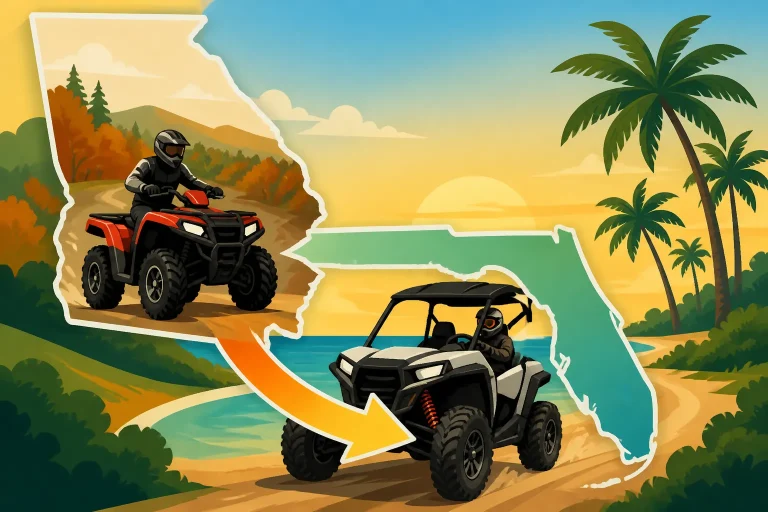
A Florida OHV pass generally stays with the machine it was issued for, not the rider who bought it. If you replace or add a quad, don’t assume you can move the old pass over. The right next step depends on whether you ride a national forest or state forest area, and on the pass issuer’s current replacement rules.
Can you transfer a Florida OHV pass to a new quad?
Usually, no. Florida OHV passes are generally issued for a particular vehicle, so a pass for your old quad should not be treated as a reusable pass for a replacement machine. Keeping the same owner, riding group, or pass term does not automatically make it valid on a different quad.
This is an important distinction from a pass that belongs to a person. A pass may be bought by you, but its use can be tied to the machine identified in the application or displayed on the vehicle. The pass may also be a decal with instructions for where and how to display it. Follow the issuer’s terms rather than peeling it off and putting it on another machine.
| Situation | Practical approach |
|---|---|
| You replace your quad | Check with the pass issuer and expect to obtain a pass for the replacement machine |
| You add a second quad | Plan on a separate pass if both machines will be used where passes are required |
| You sell the quad with a pass | Do not assume the pass transfers to the buyer or remains valid for their use |
| A pass is damaged or lost | Ask the issuer about its replacement process before buying another |
| You switch between national forest and state forest riding areas | Check each area’s pass requirements; one pass may not cover every kind of public land |
The terms depend on the pass type and the land manager. A national forest pass and a state forest pass are not necessarily interchangeable. For example, the national forest OHV pass has its own rules, while state forest OHV areas may use a separate pass system. Start by identifying the specific riding area and pass you have, then contact the agency or service that issued it.
For the national forest system, review the pass options and requirements in Florida National Forest OHV Pass: 3-Day, 7-Day or Annual. If your destination is a state forest OHV area, check Florida State Forest OHV Day Use and Annual Passes instead. Different issuers can have different purchase, display, and replacement procedures.
Passes described as non-transferable should not be moved to a different vehicle or handed to a new owner as though they were a transferable permit. See Non-Refundable and Non-Transferable Pass Terms for why those conditions matter. If the wording on your pass or receipt is unclear, ask the issuer to confirm how it applies to a replacement machine before you ride.
A pass is also not the same thing as a title, registration, or proof of ownership. It gives permission for a particular kind of use under the land manager’s rules; it does not settle whether the quad needs a Florida title. Those requirements are a separate question, covered in Florida Residents Who Ride Public Land Must Title. Likewise, having a valid title does not automatically satisfy an OHV pass requirement.
What to do when you replace or add a quad
The safest plan is to treat the replacement quad as a separate vehicle for pass purposes until the issuer confirms otherwise. That avoids finding out at a trailhead that the decal or permit is tied to your previous machine.
1. Identify the land and pass
Write down the name of the riding area and check who manages it. A federal national forest area and a Florida state forest area can have different pass systems. Private parks, county lands, and other public properties may have their own rules as well.
If you ride in more than one place, make a short list of those destinations. A pass that works for one land manager may not cover another. The national forest pass and state forest pass requirements are discussed separately in Florida National Forest Riding vs State Forest Riding.
2. Find out how the pass is linked to the quad
Look at your receipt, confirmation, decal, or account record. Check whether the application or purchase record includes a vehicle description or identifying information. Keep the receipt and any messages from the issuer; they can help staff locate the pass record and explain your options.
Before contacting the issuer, gather the details that identify both machines, such as make, model, and VIN if available. Also note the pass type, purchase channel, and any serial number printed on the decal or documentation. You may not need every item, but having them ready can make the question easier to resolve.
3. Ask about replacement, not just transfer
Explain that you have replaced the machine and ask whether the current pass can be reassigned, whether a replacement is available, or whether you need to buy a new pass. Do not assume that a staff member can change the vehicle record just because the pass is still active. The issuer’s written terms control.
If the quad was replaced under warranty, damaged, or sold unexpectedly, mention that when you ask. Those circumstances may affect what options the provider offers, but they do not guarantee an exception. If the pass was attached to the old vehicle, do not remove it unless the issuer specifically tells you to.
For a lost or damaged decal, use the appropriate process rather than treating the issue as a transfer. Florida OHV Pass Replacement If Lost covers that separate situation. A replacement for a damaged pass and a pass for a different machine are not necessarily handled in the same way.
4. Get the new quad covered before riding
If the issuer confirms that the existing pass cannot be reassigned, obtain the correct pass for the new machine before using a trail or area that requires one. Follow the current instructions for displaying a decal or carrying proof of purchase. If a receipt or digital confirmation is part of the process, keep it accessible, but do not assume it substitutes for a required vehicle decal.
Some riders own more than one machine and alternate between them. In that case, check the rules for each quad instead of moving one pass back and forth. The practical options are covered in [Florida OHV Pass for a Second Machine]. Annual passes can be tied to a vehicle rather than shared among everyone in a household; see Florida Annual OHV Passes Are Per Vehicle.
Avoiding pass problems at the trailhead
A little preparation can prevent a wasted trip. Before leaving, confirm that the pass is valid for the exact riding area, is assigned to the quad you are bringing, and is displayed or carried as required. If your route includes more than one managed area, check each one separately. A pass does not grant access to every public trail or forest.
Bring the relevant purchase confirmation and the vehicle information you used to obtain the pass. If the pass is a physical decal, make sure it is attached as instructed and can be read. Avoid placing it where mud, a rack, or bodywork will hide it. If the machine has changed since you purchased the pass, resolve that mismatch with the issuer before reaching the gate.
A weatherproof document pouch can help protect receipts or other paperwork during a ride. If you need one, a basic pouch sold through retailers such as Amazon may be useful, but it does not replace a required pass decal or make a pass transferable. Keep sensitive personal information secure, and carry only the documents you need.
Do not rely on another rider’s pass, even if you are traveling together or the pass holder is in the group. A vehicle-specific pass is not a group permit. If you are carrying several quads, check whether each machine needs its own pass and whether the pass must be associated with each vehicle. The current instructions from the land manager should settle those details.
If you are buying a used quad that already has a pass attached, ask the seller for the pass documentation and contact the issuer before counting on it. A decal staying on the machine does not necessarily mean the buyer can use it. The pass may be non-transferable to another owner, and the agency may require the new rider to purchase or arrange a separate pass. Treat title and pass paperwork as separate checks.
It also helps to keep a simple record for each machine: pass type, issuing agency, purchase date, any expiration information, and the vehicle it applies to. That is especially useful if your household has multiple quads or rides in different forests. Store the record with the machine’s ownership documents, but do not confuse those documents with permission to ride.
If you cannot get a clear answer before your trip, delay riding in the area that requires the pass or choose a destination whose requirements you can confirm. A paid pass, title, or registration from another state does not automatically satisfy every Florida public-land requirement. See Does Florida Honor an Out-of-State ATV Registration? for the separate question of out-of-state registration.
The simple rule is to make the pass match the quad you are taking. Confirm the land manager, ask about the existing pass, and obtain a pass for the replacement machine if required. That is more reliable than trying to reuse a decal and discovering the issue during a check at the trailhead.
Disclaimer
This article is for general informational purposes only and does not constitute professional advice. Laws, prices and regulations vary by location and change over time. Consult a qualified professional for guidance on your specific situation.