Alcohol Rules at a Private Park
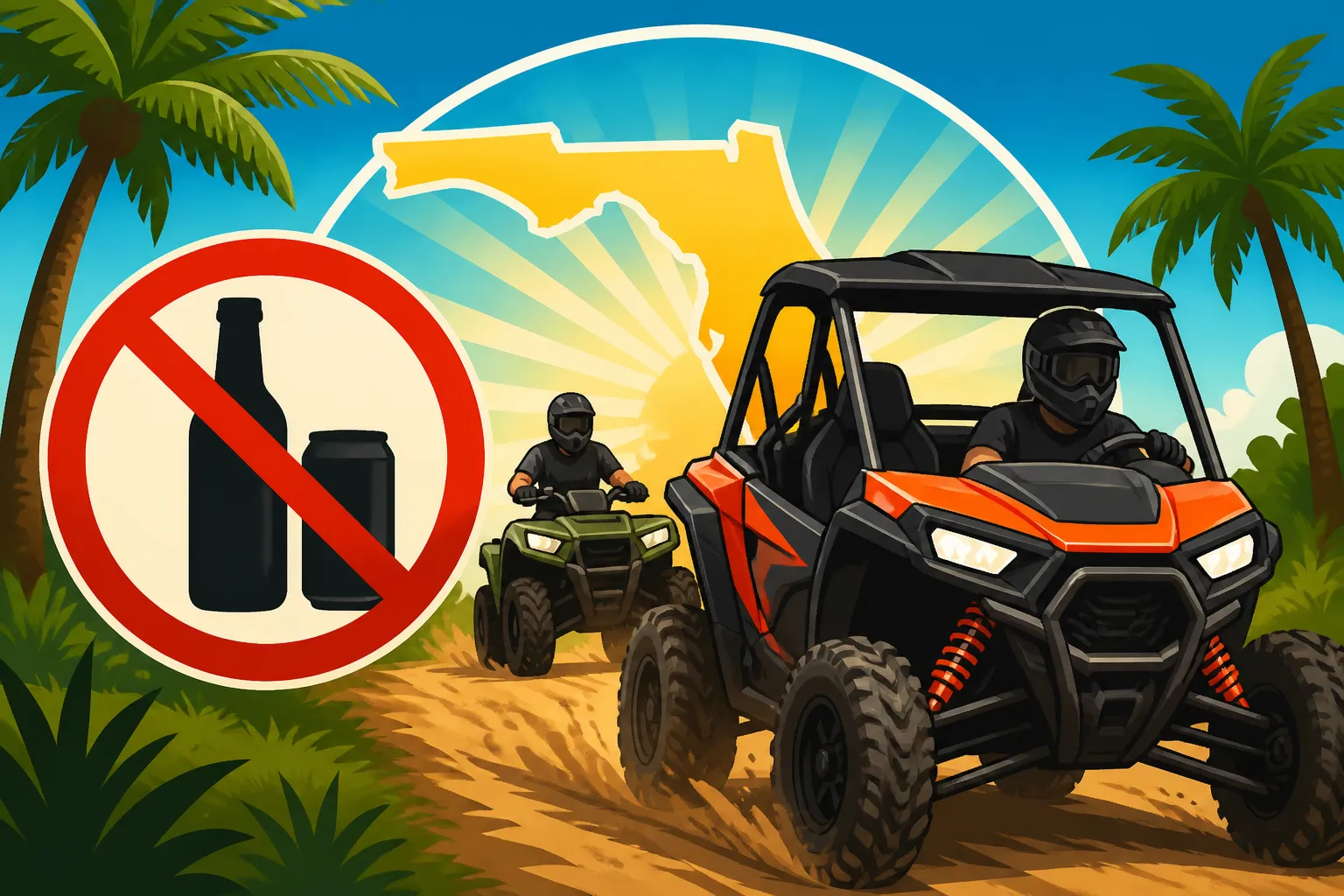
Alcohol rules at a private ATV or UTV park in Florida are not always obvious from the park’s website or waiver. One property may allow alcohol only at a campsite, while another may prohibit it altogether. The safest approach is to confirm the park’s written rules before arrival and keep drinking separate from riding.
A private park can set its own alcohol policy
Florida does not have one alcohol policy that automatically applies to every privately operated riding park. The owner or operator can set rules for the property, including whether guests may bring alcohol, where they may consume it, and whether open containers are allowed. Those rules can be stricter than what a visitor expects from a campground or other recreation area.
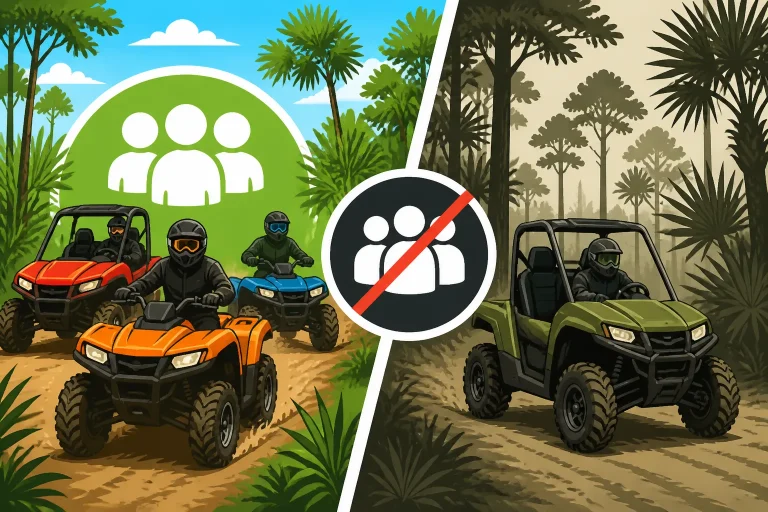
A park might prohibit alcohol across the entire property, allow it only in designated camping areas, or permit it for adult guests subject to restrictions. It may also ban alcohol during organized events or require guests to use specific facilities. Do not assume that a rule at one park applies at another, even when both offer trails, mud areas, or overnight camping.
| Park rule or situation | What to confirm before you go |
|---|---|
| Bringing your own alcohol | Whether it is allowed at all, and whether limits apply |
| Drinking while camping | Whether consumption is limited to a campsite or designated area |
| Open containers | Where, if anywhere, open containers are permitted |
| Riding after drinking | Expect riding while impaired to be unsafe and potentially unlawful |
| Events and group rides | Whether event rules add restrictions beyond the general policy |
| Leaving the park | How to arrange a sober driver and avoid riding on public roads |
Look for a current park rules page, rider handbook, reservation terms, or event notice. If the policy is unclear, call or message the operator and ask directly. Useful questions include:
- Can guests bring alcohol onto the property?
- Is alcohol permitted only in a camping or picnic area?
- Are open containers prohibited in staging areas or near the trails?
- Does the policy change during events or organized rides?
- Can staff remove a guest who breaks the rule?
- Does the park have specific rules for drivers and passengers?
Save the answer or a copy of the posted policy, especially if your group is attending an event or staying overnight. A verbal answer can help clarify an unclear rule, but the park may still rely on its written terms when enforcing its policy. If rules appear to conflict, ask the operator to explain which one applies to your reservation or event.
A day-use ticket or camping reservation is not permission to ignore property rules. A park can make alcohol restrictions a condition of entry and can take action when guests do not follow them. That may mean being asked to stop drinking, leave a restricted area, or leave the property. Whether a refund is available depends on the park’s terms, so do not count on getting your admission or camping payment back after a rule violation.
Also read the waiver and any event-specific terms. A waiver is not a substitute for the park’s rules, and signing one does not give a guest permission to ride impaired or disregard staff instructions. For more on the role and limits of these documents, see Florida Waivers Riders Sign at Private Parks.
Drinking and riding are separate questions
A park’s policy on possessing or drinking alcohol is different from the question of whether someone can safely or legally operate an ATV or UTV after drinking. Permission to drink in a campsite, if the park allows it, should never be treated as permission to ride afterward.
Operating an off-highway vehicle requires attention, judgment, and coordination. Alcohol can affect each of those, and the consequences of a mistake can be serious on uneven ground, in mud, around other riders, or on a side-by-side with passengers. A rider who feels “fine” may still have impaired reaction time or decision-making. The practical rule is simple: if you drink, do not ride.
There is a legal risk as well. Do not assume that a private park is outside Florida’s impaired-driving laws. The details of how a law applies depend on the circumstances, but private property should not be treated as a guaranteed exemption. Florida DUI Law Applied to ATV Riders explains why riders should not assume that an off-road machine or private location makes impaired operation legally safe.
Alcohol rules can also matter after a rider stops moving. A guest who is drinking but still in actual control of a machine may create a different situation from someone who has parked it, secured the keys, and is no longer planning to operate it. Avoid trying to draw a legal line based on how far the machine moved or whether it was on a trail. The safer choice is to finish riding, park the vehicle in an authorized area, secure it, and only then drink if the park allows it.
For groups, establish the plan before anyone opens a drink:
- Choose the riders for the day and make clear that anyone who drinks will not operate a machine afterward.
- Park and secure the machines before drinking, following the park’s directions for staging or overnight storage.
- Keep keys with a sober person rather than passing them around.
- Arrange a sober driver for the trip home, or stay overnight if that is permitted.
- Do not let a guest who has been drinking take a machine for “one last trip,” even a short one.
Passengers should take the plan seriously too. A passenger cannot make an impaired driver safe, and a UTV’s seat belts or roll structure do not remove the risks of a crash. If the driver has been drinking, do not get in. When riding with children, follow the park’s age and supervision rules as well as its alcohol policy; Florida Minimum Age at a Private Riding Park covers a separate set of requirements that can affect family plans.
Keep public-road travel out of the plan
A private park’s trails and access roads are not interchangeable with public roads. Riding from the park to a nearby store, campground, or lodging area may involve a public road, and the rules can change as soon as the route leaves private property. Do not assume that a park pass, waiver, or permission from an employee makes public-road riding legal. Check the route and the applicable rules first; Florida ATV Road Rules: Where You Can Legally Ride explains the distinction.
If your group plans to drink after riding, transport the ATV or UTV on a trailer rather than using it to travel away from the park. Plan the sober driver before the trip, not after drinking has started. If no one in the group can drive safely, stay where you are if the park allows it and arrange transportation later.
What park staff may enforce
Private parks can make entry conditional on following posted rules and staff instructions. The exact response to a violation varies by park and situation, so it is best not to assume that a first warning, a refund, or continued access is guaranteed. The operator’s terms may describe possible consequences, but staff may also need to respond to immediate safety concerns.
Alcohol-related rules may cover more than drinking beside a trail. A park could restrict bringing alcohol onto the property, consuming it in shared areas, carrying open containers, or behaving in a disruptive way. These are examples of issues to check, not rules that apply at every Florida park. Read the terms for the particular place you are visiting.
Be especially careful with posted boundaries and shared spaces. A campsite may be governed by different rules from a staging lot, trail, rental counter, family area, or event space. If you cannot tell where a permitted area begins or ends, ask before bringing alcohol there. Keep glass containers away from riding areas unless the operator explicitly allows them; broken glass can injure people, damage tires, and create a cleanup problem.
Staff may also stop or restrict riding for reasons that are separate from alcohol rules. A rider who seems impaired, is ignoring directions, or is creating a risk for others may be told not to ride or to leave. Do not argue with staff while operating a vehicle or attempt to ride away. Park safely, follow instructions, and have a sober person handle the conversation.
Private-park rules are also separate from requirements involving protective equipment, insurance, and age limits. For example, a park may set its own helmet or coverage conditions. Check Florida Helmet Rules at a Private Park and Florida Insurance Requirements at a Private Park for those related but distinct topics. Meeting one requirement does not cancel another: wearing a helmet does not make riding after drinking safe, and having insurance does not mean a park must allow a guest to stay.
The same care applies at a group event. An event organizer may have additional rules for spectators, vendors, camping, or designated riding areas. Ask whether the event follows the park’s ordinary policy or adds stricter conditions. Do not rely on what another attendee says if the event’s written rules or staff say otherwise.
If a guest is asked to stop drinking or leave, the safest response is to comply. A dispute over admission terms can be handled later, without operating a machine or escalating the situation in a busy riding area. Leaving by ATV after drinking is not a safe way to resolve a disagreement.
A practical plan before you arrive
A short check before the trip prevents most alcohol-related confusion. Start with the exact park and event you plan to attend. Search the operator’s current rules, reservation details, and event information rather than relying on an old post or a friend’s experience at another property. If you are renting a vehicle, ask the rental provider and the park about their respective rules; a rental contract and park policy may each apply.
Use this checklist:
- Confirm whether alcohol is allowed on the property.
- Find out whether drinking is limited to a campsite or other designated area.
- Ask whether open containers or glass are restricted.
- Check for different terms during events, group rides, or overnight stays.
- Decide in advance that anyone who drinks will not operate an ATV or UTV.
- Choose a sober driver or plan to stay overnight.
- Secure machine keys and park the vehicle before drinking.
- Review separate rules for helmets, passengers, age, insurance, and riding areas.
If the park’s response is vague, ask a direct, neutral question such as, “Can guests drink at their campsite after all riding is finished, and are open containers allowed anywhere else?” That makes it easier to distinguish between a property-wide ban and a restriction on trails or shared areas. Keep the answer with your booking information so the group can check it later.
For a family trip, set expectations before children see adults drinking near the machines. Make it clear that the riding session is over before alcohol comes out and that nobody who has been drinking will drive a machine or tow vehicle. A simple plan is easier to follow than making decisions after the group is tired, the trail is muddy, or the ride has run late.
A private park may be a place where alcohol is allowed in some circumstances, but that does not make drinking and riding compatible. Confirm the property’s policy, separate alcohol from vehicle operation, and arrange transportation before anyone drinks. If the park does not clearly allow alcohol, treat it as prohibited until the operator confirms otherwise.
Disclaimer
This article is for general informational purposes only and does not constitute professional advice. Laws, prices and regulations vary by location and change over time. Consult a qualified professional for guidance on your specific situation.