Florida Two-Rider ATV Titling Rules
Riding the trails with a buddy on the back of your ATV can be an absolute blast, creating memories that stick around longer than the mud on your fenders. But if you’ve got a factory-designed two-rider ATV, sometimes called a "two-up" quad, the paperwork side of things in Florida can feel a little murky. Many folks find themselves scratching their heads, wondering if these machines have special titling requirements compared to their single-rider counterparts. This guide is here to cut through that confusion and give you the clear, practical information you need to confidently title your two-rider ATV in the Sunshine State.
Understanding Florida's Definition of a Two-Rider ATV
Before you even fill out a single form, it’s absolutely essential to understand what Florida considers a "two-rider ATV." This isn't just about whether there's enough room on the seat; it's about how the manufacturer designed and certified the machine. Florida's Department of Highway Safety and Motor Vehicles (DHSMV) largely relies on these manufacturer specifications to classify your off-highway vehicle (OHV). Get this part wrong, and you could face complications down the road, from incorrect titling to issues with riding on public lands.
What Makes an ATV a Two-Rider Machine?
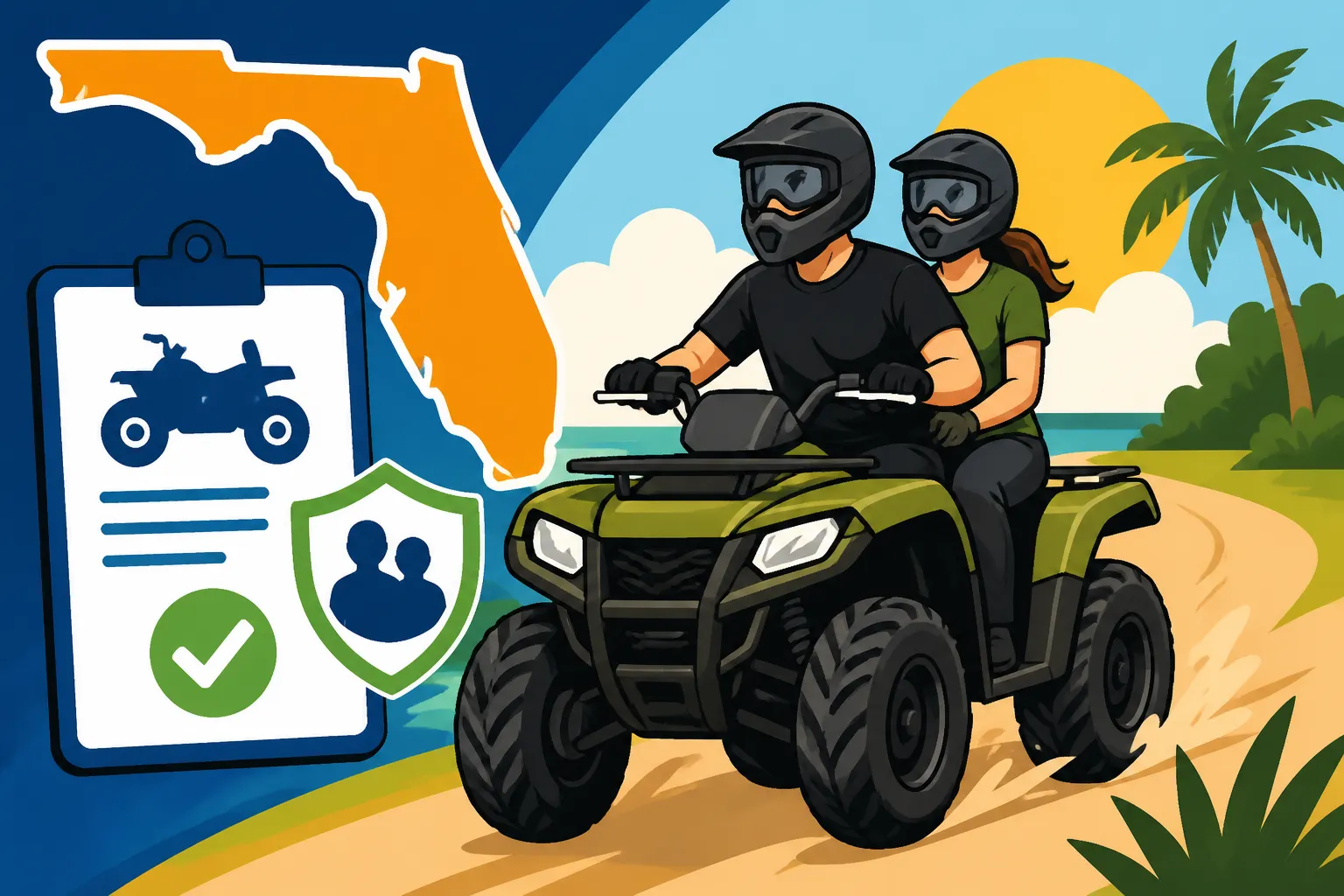
A true two-rider ATV, as recognized by Florida law for titling purposes, is specifically designed and manufactured to carry both a driver and a passenger. This isn't just a longer seat; it involves a whole host of engineering considerations. Think about the frame, the suspension, the braking system, and even the passenger handholds or footrests. These elements are built from the ground up to safely accommodate the added weight and dynamics of a second person. It's a common mistake to assume that simply adding an aftermarket passenger seat or footpegs transforms a single-rider ATV into a two-rider one in the eyes of the law. Unfortunately, that's often not the case for titling or legal operation. The manufacturer's intent and design are paramount here.
Moreover, these factory two-rider ATVs typically have a higher gross vehicle weight rating (GVWR) to safely handle the combined weight of two adults and any gear. This design integrity is what differentiates them. If your machine wasn't originally sold with the capacity to carry two people, simply modifying it won't make it a two-rider ATV for titling. It needs to be explicit in the manufacturer's documentation, which usually means it will be listed as such on the Manufacturer's Certificate of Origin (MSO) or subsequent title. This distinction is vital because it informs how the state classifies and ultimately titles your specific off-highway vehicle.
The Importance of Manufacturer Specifications
When you go to title your two-rider ATV in Florida, the Manufacturer's Certificate of Origin (MSO) is your bible. This document, issued by the manufacturer when the ATV is new, contains all the critical identifying information about your machine. Crucially, it will explicitly state if the ATV is designed for a single rider or for two riders. This isn't something that's left to interpretation or a quick visual inspection at the tax collector's office. If your MSO indicates it's a two-rider machine, then it will be titled as such. If it specifies a single rider, then that’s how it will be titled, regardless of any modifications you or a previous owner might have made.
The MSO is essentially the birth certificate of your ATV, and it carries significant legal weight. It details the make, model, year, and crucially, the vehicle class and design capacity. This document is what the Florida DHSMV uses to verify your ATV's characteristics, including its rider capacity. Without a clear MSO designating it as a two-rider ATV, titling it specifically under "two-rider rules" might not be an option, even if it physically has a second seat. Always double-check this document, especially if you're buying a used two-rider ATV, to ensure it aligns with your expectations. Don't be afraid to ask for a copy of the MSO or previous title when buying a used machine; it could save you a lot of grief down the line. [Florida's ATV Title Application Explained] offers more insights into the forms you'll encounter.
The Standard Florida ATV Titling Process (with Two-Rider Nuances)
Titling a two-rider ATV in Florida follows much of the same protocol as titling a single-rider one, but knowing the specific nuances for your two-up machine can prevent delays and headaches. The process largely involves submitting the correct paperwork to your local Florida county tax collector's office. While the core steps remain consistent, having a two-rider ATV means you'll want to be extra diligent that all documents clearly reflect its design and capacity to avoid any confusion. It's not an overly complicated process, but missing a key detail can send you home empty-handed.
Required Documentation for Titling
Regardless of whether your ATV is a single or two-rider model, you'll need a standard set of documents to title it in Florida. The absolute bedrock for a brand-new machine is the Manufacturer's Certificate of Origin (MSO). This document is your proof that the ATV is indeed a factory-made two-rider model. For a used ATV, you'll need the previous owner's properly assigned Florida title, or an out-of-state title if you're bringing it in from elsewhere. Beyond that, a bill of sale is crucial, even for a new machine, as it details the purchase price, which impacts your sales tax. [Florida ATV Bill of Sale: What It Needs to Say] is a great resource for understanding this document.
You'll also need proof of identity, such as a Florida driver's license or state ID, and proof of Florida residency. Remember, the sales tax will be collected at the time of titling, so be prepared for that expense. While Florida does not require ATV insurance for titling purposes, it's always wise to consider it for liability and damage protection, especially when carrying a passenger. The county tax collector's office will have the necessary application forms, usually Form HSMV 82040, which you'll need to fill out completely and accurately. Ensuring all names, VINs, and dates match across every document is critical to a smooth transaction.
Navigating the Application Form with a Two-Rider ATV
When completing the Florida Title Application (Form HSMV 82040), you’ll notice sections that ask for information about the vehicle type. For your two-rider ATV, it’s important to make sure the vehicle description accurately reflects its design. While the form itself might not have a specific checkbox for "two-rider ATV" versus "single-rider ATV," the vehicle classification will be based on the MSO or previous title information. The VIN, make, model, and year fields are standard, but the specific "body type" or "type of vehicle" classification will default to how the manufacturer categorized it. If the MSO clearly states it's a two-person OHV, that information will carry over.
Accuracy is key here. Double-check every letter and number, especially the Vehicle Identification Number (VIN). A single typo can lead to significant delays and require you to restart the process. If you’re unsure how to complete a specific section for your two-rider machine, don't hesitate to ask a clerk at the tax collector's office for guidance. They process these forms all day long and can clarify any ambiguities. Remember that [Florida's Off-Highway Vehicle Title Law Explained] clarifies the legal framework for these classifications. You might also find it helpful to look into services like LawDepot, which provides customizable legal forms, including bills of sale, that can help ensure you have all your ducks in a row for the purchase and subsequent titling process.
Specific Challenges and Considerations for Two-Rider ATVs
While titling is generally straightforward, owning a two-rider ATV can present a few unique challenges and considerations, especially regarding how the state views its dimensions and your responsibilities as a rider. These aren't roadblocks, but rather important details to be aware of so you can enjoy your machine safely and legally. Ignoring these specifics could lead to unexpected fines or even render your ATV ineligible for certain trails.
Weight and Width Considerations
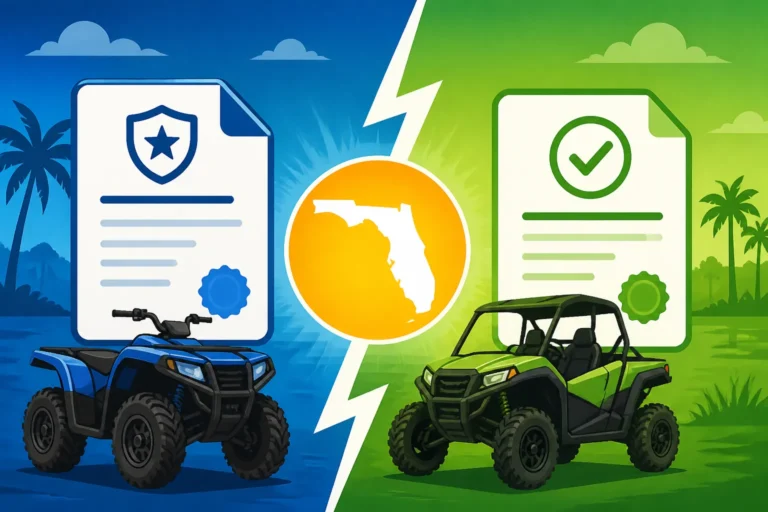
Florida's OHV statutes define ATVs by specific characteristics, including width and dry weight. For a standard ATV, the definition often includes machines that are 55 inches or less in width. While many two-rider ATVs still fall within this 55-inch width limit, some newer, larger models, especially those built for stability with two passengers, might push or even exceed this boundary. If your two-rider ATV is wider than 55 inches, it officially moves out of the "ATV" classification and into the "Recreational Off-Highway Vehicle" (ROV) category, commonly known as a side-by-side or UTV. [Florida's 55-Inch ATV Definition and Why It Matters] dives deep into this crucial distinction.
The titling process for an ROV is similar to an ATV, but the classification itself has implications for where and how you can ride. Many public lands and trail systems have width restrictions, and an ROV might not be permitted where a narrower ATV is. It’s absolutely critical to measure your machine, especially if it feels particularly wide, to confirm its exact classification. The dry weight is also a factor, as ATVs typically have a dry weight of 1,500 pounds or less. Larger two-rider machines can sometimes approach or exceed this, further solidifying their ROV status. Always check your owner's manual for these specs, and be prepared for your titling to reflect the actual class of your machine.
Insurance and Endorsements for Passengers
While Florida law does not require specific insurance for titling an ATV, common sense and personal responsibility dictate that you should absolutely have adequate coverage, especially when carrying a passenger on a two-rider ATV. Riding with a passenger significantly increases your liability risk. Imagine a scenario where an accident occurs, and your passenger is injured; without proper liability insurance, you could be on the hook for substantial medical bills and damages. Most standard ATV policies are designed for single riders, so it's vital to inform your insurance provider that you own a two-rider ATV and will be carrying a passenger. They may require specific endorsements or a different policy type to adequately cover the increased risk.
Beyond financial protection, consider the safety implications. Passengers, particularly young ones, should always wear appropriate safety gear, including a DOT-compliant helmet and eye protection. While Florida has helmet laws for riders under 16, it’s a good practice for everyone, regardless of age, on an OHV. Your insurance company might even have specific requirements regarding passenger safety gear for coverage to be valid. Don't assume your existing auto insurance will cover your ATV; off-road vehicles usually require a separate, specialized policy. Taking these precautions ensures not only your peace of mind but also the well-being of anyone you share the trail with.
Buying and Selling a Used Two-Rider ATV in Florida
Navigating the private sale market for used ATVs can be a bit of a maze, and when a two-rider machine is involved, it adds another layer of detail to consider. Whether you’re the buyer or the seller, understanding how to properly transfer the title for a two-rider ATV is key to protecting yourself and ensuring a legal transaction. Nobody wants unexpected surprises or lingering legal headaches after a sale.
Ensuring Clear Title Transfer
When you're buying a used two-rider ATV in Florida, the seller must have a clear, properly executed title in their name. This is the single most important document. If they don't have it, or if it's not in their name, walk away. [Buying a Quad With No Title From a Neighbor] is a cautionary tale worth reading. The seller is responsible for signing over the title in the designated area, usually on the back, and ensuring all lien information is cleared if there was a loan on the machine. For a two-rider ATV, double-check that the title accurately reflects its two-person capacity, matching the VIN and other identifying features. You don’t want to purchase a machine that’s technically a single-rider ATV on paper but has been modified to carry two.
As the buyer, you typically have 30 days to transfer the title into your name after the sale. Head to your local tax collector's office with the signed title, a bill of sale, and proof of identity and residency. They will collect sales tax based on the purchase price listed on the bill of sale or the ATV's market value, whichever is higher, and the titling fees. If the title is from out of state, an additional VIN verification might be required. Remember, completing this transfer promptly ensures that you are the legal owner and absolves the previous owner of any future liability. [Buying a Used ATV in Florida: Transferring the Title] provides comprehensive steps for this process.
Handling the Bill of Sale for a Two-Rider Machine
A robust bill of sale is crucial for any private ATV transaction in Florida, and it's especially important for a two-rider machine. This document serves as a record of the sale, the purchase price, and often, an agreement of the "as-is" condition. For a two-rider ATV, ensure the bill of sale clearly states the make, model, year, and VIN, and ideally, mentions its two-rider capacity as listed on the title. Both the buyer and seller should sign and date the document, and it's a good practice to have it notarized, although it's not strictly required by Florida law for titling an ATV.
A detailed bill of sale protects both parties. For the seller, it proves when ownership transferred, potentially shielding them from liability for any incidents after the sale. For the buyer, it establishes the purchase price for sales tax calculations and provides a secondary proof of ownership alongside the title. Platforms like LawDepot offer templates for bills of sale that can be customized to include all the necessary details, giving you peace of mind that you've covered your bases. Always make sure both parties retain a signed copy of the bill of sale for their records.
Common Misconceptions and Avoiding Pitfalls
The world of ATVs often comes with its own set of myths and misunderstandings, and two-rider machines are no exception. Riders often fall into traps because they misunderstand state regulations or make assumptions about their vehicle's classification. Being aware of these common pitfalls can save you from legal trouble, unexpected costs, or even compromising your safety. Let's clear up some of the most persistent confusions surrounding two-rider ATVs in Florida.
"Two-Up" Riding vs. Factory Two-Rider ATVs
This is perhaps the biggest area of confusion for riders. Many people mistakenly believe that if an ATV has a long enough seat for two people, or if they attach an aftermarket "buddy seat," it automatically becomes legal to carry a passenger for titling and riding purposes. This is a dangerous misconception. As we discussed, a true two-rider ATV is designed from the factory with the structural integrity, suspension, and braking capabilities to safely accommodate a second rider. These machines are often explicitly designated as "two-up" models by the manufacturer and on the MSO.
Operating a standard, single-rider ATV with a passenger, even if you’ve added an aftermarket seat, can lead to serious safety risks. The machine's balance, handling, and stopping power are compromised, making accidents more likely. Furthermore, it could violate Florida's OHV laws, which typically state that an ATV is "not designed to carry a passenger." If you're caught riding a single-rider ATV with a passenger on public land, you could face fines and penalties. Always refer to your ATV's original manufacturer specifications and the MSO or title to confirm its intended rider capacity before carrying a passenger. The risks simply aren't worth it. [Florida ATV Passenger Rules] can offer additional clarification on this matter.
Mistakes to Avoid When Titling
One of the most common mistakes people make when titling any ATV, including a two-rider one, is showing up at the tax collector's office unprepared. This often means forgetting critical documents like the MSO or previous title, not having a valid bill of sale, or not having current proof of Florida residency. Another frequent issue is incomplete or incorrect information on the application forms. Even a minor typo in the VIN or an unsigned section can result in your application being rejected, forcing you to make another trip. Always fill out forms carefully, double-checking every detail before you leave home.
Another pitfall is misunderstanding the fee structure. While the initial title application fee is a set amount, you'll also owe sales tax (if applicable), potential lien recording fees, and a service charge. [Florida ATV Title Fee Breakdown: $29 Plus Service Charges] can help you anticipate these costs. Some people also try to avoid sales tax by listing a ridiculously low purchase price on the bill of sale. Florida tax collectors are savvy to this and can assess the tax based on the ATV's fair market value, so it's best to be honest. Finally, don't assume that because your two-rider ATV is larger, it automatically qualifies as an ROV or vice-versa. Always go by the manufacturer's official designation and dimensions to avoid any reclassification issues during titling. Being thorough and prepared is your best defense against these common frustrations.
Disclaimer
This article is for general informational purposes only and does not constitute professional advice. Laws, prices and regulations vary by location and change over time. Consult a qualified professional for guidance on your specific situation.