Florida ATV Title vs Registration: The Difference
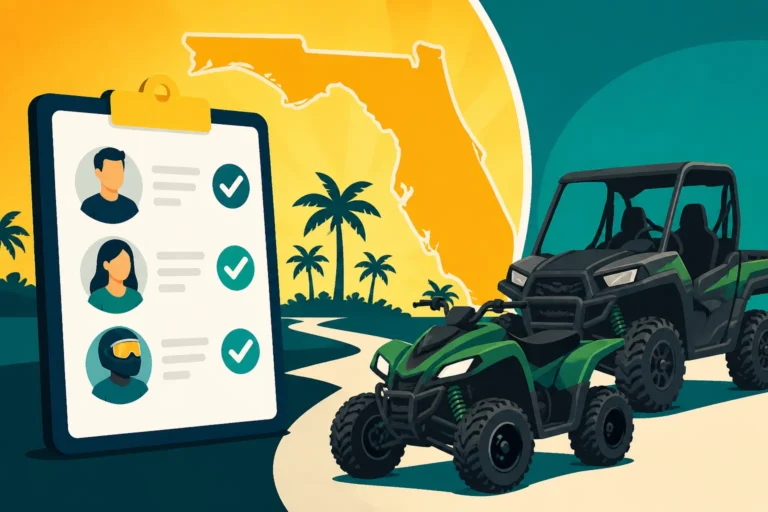
One of the most common headaches for Florida ATV and UTV enthusiasts is navigating the maze of rules surrounding vehicle ownership and riding permits. Many riders get confused about what exactly a "title" is versus what "registration" entails, leading to frustrating situations or even fines. This guide is here to clear up that confusion, explaining the critical differences between titling and registering your off-highway vehicle (OHV) in the Sunshine State, so you can ride with confidence and keep your paperwork in order.
What is an ATV Title in Florida?
Think of a Florida ATV title as your vehicle's birth certificate and deed rolled into one. It's a fundamental document that establishes legal ownership. Without it, proving that you legitimately own your quad or side-by-side can become incredibly difficult, especially if you ever need to sell it, insure it, or report it stolen. It's the state's official record that this particular machine, identified by its unique Vehicle Identification Number (VIN), belongs to you (or your financial institution, if you've financed it).
Proof of Ownership
When you buy a new ATV from a dealership, they handle the initial titling paperwork on your behalf. They'll submit your Manufacturer's Certificate of Origin (MSO) along with the required application and fees to the Florida Department of Highway Safety and Motor Vehicles (FLHSMV) or a local tax collector's office. The MSO is the very first ownership document, but it's not a title itself; it's what's used to get the first title. Once the title is issued, it will have your name (or your business's name) printed as the legal owner.
For a private sale, the title is paramount. When you're buying a used quad from a neighbor or someone you found online, the seller must sign over their existing Florida title directly to you. This is the moment when ownership legally transfers. If there's a lien on the title from a financing company, that lien must be satisfied and released before a clean title can be issued in your name. This piece of paper, or the electronic record it represents, is the undeniable proof that the ATV is yours, plain and simple.
Required for Public Land Use (The Titling Link)
While the title itself doesn't grant you permission to ride, it's a prerequisite for obtaining the necessary permits that do allow you on public land. Florida law clearly states that any ATV or UTV operated on designated public lands, like state forests or national forests, must have a valid Florida title. This is where the distinction between title and registration sometimes blurs in people's minds, because you need the title before you can get the permits. Without a title, you can't even get to the starting line for legal public land use.
The state wants to ensure that vehicles being operated on public property are legitimately owned. It helps prevent stolen machines from being used on public trails and provides a clear chain of custody if there's an accident or other issue. So, while your title might gather dust in a safe place at home, its existence is crucial for every other step in being a responsible OHV owner who enjoys Florida's beautiful public riding areas. You can delve deeper into [Florida Off-Highway Vehicle Title Rules Explained] for more details on this.
The Titling Process Simplified
The process of getting an ATV titled in Florida usually begins at a local tax collector's office or a licensed Florida motor vehicle dealer. You'll typically need to provide proof of identity, the MSO (for new machines) or the properly endorsed previous title (for used machines), and sometimes a bill of sale. Don't forget, Florida imposes sales tax on the purchase price of the ATV, whether new or used, which you'll usually pay at the time of titling. This can sometimes catch buyers off guard, especially in a private sale.
There are also various fees involved, including the initial title application fee. If you've just moved to Florida with an out-of-state ATV, you'll need to follow a specific process to [Titling an Out-of-State ATV After Moving to Florida]. The FLHSMV or your county tax collector will review your paperwork, ensure the VIN is legitimate (sometimes requiring a physical VIN verification), and then issue your title. This could be a paper title mailed to you, or increasingly, an electronic title that is held in the state's system until you request a paper copy. This whole process is primarily a one-time event for each machine you own, unless you sell it or transfer ownership.
What is ATV Registration in Florida?
Unlike a title, which proves who owns the machine, "registration" for an ATV or UTV in Florida isn't quite what many people expect. When most folks think of vehicle registration, they picture a license plate and a sticker. For ATVs and UTVs in Florida, it's a bit different. What Florida refers to as "registration" is essentially an annual permit or pass that grants you the privilege of riding your titled OHV on designated public lands. It's not a street-legal registration, nor does it come with a traditional license plate.
Annual Permit for Riding on Public Land
Florida does not "register" ATVs and UTVs in the same way it does cars, trucks, or motorcycles for road use. Instead, if you plan to ride your off-highway vehicle on public lands managed by the state or federal government (like a State Forest OHV area or a National Forest trail system), you are required to purchase an annual permit. This is often referred to informally as a "registration" by riders, even though it's technically an OHV permit or pass. This pass is what grants you the legal right to operate your machine on these specific public properties.
These permits are typically issued by the land management agency itself – for example, the Florida Forest Service for State Forests or the U.S. Forest Service for National Forests. They are not issued by the FLHSMV or county tax collector's offices. Each of these permits usually has its own fee structure and validity period, often expiring annually, and you need to ensure you have the correct one for the specific land you plan to visit. Without it, even with a valid title, you could face penalties for illegal operation on public land.
Proof of Compliance
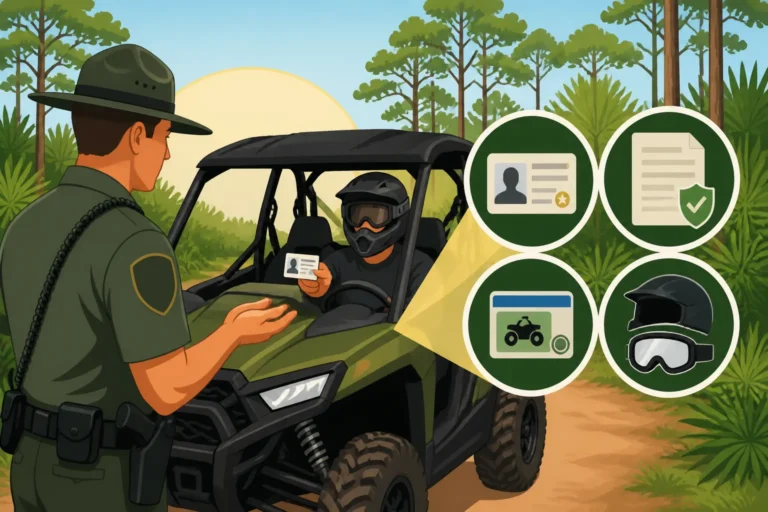
Having an OHV permit or pass is your proof that you're complying with the rules of the specific public land area you're visiting. When a park ranger or forest officer stops you on a trail, they'll often ask to see both your proof of title (or a copy) and your valid OHV pass. This ensures not only that you legitimately own the machine, but also that you've paid the required fees to use the facilities and trails. The funds collected from these passes often go directly back into maintaining the trails, signage, and facilities that riders use.
It's a system designed to ensure that those who benefit from the public riding areas contribute to their upkeep. Think of it like a membership fee for access to a club, where the "club" is Florida's fantastic network of public OHV trails. This "registration" isn't about making your ATV street legal – [What an OHV Title Does Not Let You Do] is important here – it's purely about responsible access to designated off-road riding zones.
The Registration (Permit) Process Simplified
The process for obtaining these riding permits is usually straightforward. For State Forest OHV areas, you can often purchase day-use or annual passes online through services like ReserveAmerica or directly at the park entrance via a self-pay kiosk. For National Forests, passes are often available through Recreation.gov. The cost varies depending on the duration (day, week, or annual) and the specific land management agency. [Florida State Forest OHV Day Use and Annual Passes] provides a good overview of what to expect.
It's crucial to remember that these passes are often per vehicle, not per rider, and some areas may have specific rules about youth riders also needing a valid safety certificate. You'll typically need to display a sticker or carry a printout of your pass while riding. Unlike the one-time nature of titling, these "registrations" or permits are an ongoing, annual requirement if you regularly ride on public lands.
Key Differences Between Titling and Registering Your ATV
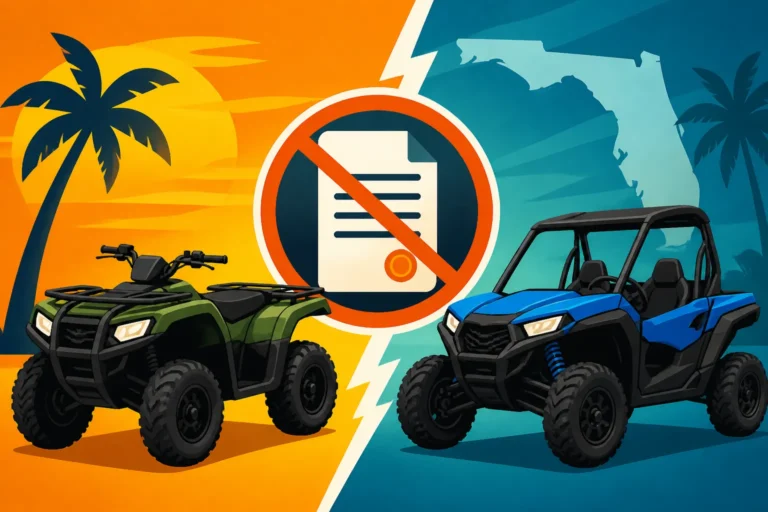
It's easy to get these two concepts mixed up, especially when you're just starting out in the ATV world. However, understanding the core distinctions between titling and registration is crucial for every Florida OHV owner. One is about asserting and proving ownership, while the other is about gaining permission to use specific public resources. They are separate but interconnected steps in being a fully compliant and responsible rider.
Purpose: Ownership vs. Permission
The most fundamental difference lies in their purpose. A title is exclusively a document of ownership. Its primary role is to legally identify who owns a particular ATV or UTV. It acts as a shield against theft by providing clear evidence that the machine belongs to you, and it's essential for any transfer of ownership, like selling the ATV or passing it down. It establishes your property rights.
Registration, in the Florida OHV context, is entirely about permission. It's the permit you acquire to legally operate your titled ATV on designated public lands. It doesn't prove ownership; it proves compliance with the rules of a specific riding area. Without a title, you generally can't even get to the point of "registering" (getting a permit) because most public land agencies require proof of ownership first.
Duration: One-Time vs. Annual Renewal
The lifespan of each document also highlights their distinct natures. A Florida ATV title is essentially a one-time issuance. Once your machine is titled in your name, that title remains valid for as long as you own the ATV. You don't renew a title annually. The only time a new title is generated is when the ownership of the vehicle changes – for instance, when you sell it to someone else, and a new title is issued in their name. This process of transferring ownership is vital and covered in topics like [Buying a Used ATV in Florida: Transferring the Title].
Registration, or the OHV permit, however, is almost always a temporary, renewable authorization. These permits typically expire after a year, on a specific date (like June 30th for Florida State Forest annual passes), or after a short period (like a 3-day or 7-day pass for National Forests). If you plan to continue riding on public lands, you must renew your permit annually or purchase a new short-term pass for each visit. It's an ongoing expense and a recurring piece of paperwork.
Legal Implications
The legal ramifications of not having one or the other are also quite different. Operating an ATV without a valid title (if required for public land use, or if you're trying to sell it) can lead to significant problems related to proof of ownership, fraud, or even the inability to get insurance or resolve disputes. If you buy an ATV without a title, you run the risk of purchasing a stolen vehicle or facing immense difficulty when you try to prove it's yours. This is why tools and templates, perhaps from a resource like LawDepot, can be helpful for creating thorough bills of sale even when titles are present, providing additional layers of proof.
Riding an ATV on public lands without the proper registration (OHV permit), even if you have a perfectly valid title, can result in citations, fines, and potentially even your ATV being impounded. These penalties are usually issued by the specific land management agency (e.g., a Forest Ranger) rather than a highway patrol officer, as the violation is about unauthorized use of public property, not illegal road operation. The absence of a permit means you are breaking the rules of that particular park or forest, regardless of who legally owns the machine.
Why Florida Has Both a Title and a Registration System
You might wonder why Florida has what seems like a two-tiered system for off-highway vehicles. Why not just one document? The answer lies in the distinct governmental interests each document serves: property rights and public land management. It's a pragmatic approach to ensure that individual ownership is protected while also regulating the use of shared natural resources.
Protecting Property Rights
The primary reason for requiring a title is to unequivocally establish and protect the property rights of ATV and UTV owners. Just like with cars, homes, or any other valuable asset, a title provides a legal record of who holds ownership. This is crucial for several reasons:
- Preventing Theft: A titled vehicle is easier to track and recover if stolen, as its VIN is linked to a specific owner in a state database. [What an OHV Title Proves in a Theft Claim] can be very important in these situations.
- Facilitating Sales: Clear ownership through a title makes buying and selling ATVs much smoother and safer. Buyers can verify that the seller has the legal right to transfer the vehicle. Using a comprehensive bill of sale, perhaps generated through LawDepot, alongside a clear title transfer, adds an extra layer of protection for both parties.
- Financing and Insurance: Lenders require a title to record their lien, securing their interest in the vehicle. Insurance companies also rely on titles to verify ownership before issuing policies or processing claims.
Without a title, the legal status of an ATV would be ambiguous, creating a nightmare for buyers, sellers, lenders, and law enforcement. The title ensures a clear, documented chain of ownership from the manufacturer to the current owner.
Funding Trail Maintenance and Safety
The OHV permit system (what riders often call "registration") exists for a completely different but equally important reason: funding and managing the public lands where ATVs and UTVs are permitted to ride. Florida's vast natural areas are a major draw for off-road enthusiasts, but maintaining these trails and ensuring rider safety comes with significant costs.
- Trail Upkeep: Funds generated from OHV permits are often earmarked for trail maintenance, repairing erosion, building bridges, clearing debris, and managing vegetation. This ensures that the trails remain safe, enjoyable, and sustainable for future use.
- Facilities and Infrastructure: Permit fees also help cover the costs of building and maintaining parking areas, restrooms, staging grounds, and informational kiosks at trailheads.
- Safety and Enforcement: These funds support the presence of rangers and law enforcement personnel who patrol trails, enforce safety regulations, and respond to emergencies. They also help fund safety education programs.
- Resource Protection: By regulating access through permits, land managers can control the number of riders, mitigate environmental impact, and protect sensitive ecosystems within public lands.
In essence, the permit system is a user-pays model. Those who enjoy the privilege of riding on public lands contribute directly to the management and preservation of those lands, which is a common practice across many states. This is also why you often see specific rules and regulations attached to these permits, such as [Florida ATV Safety Course Requirements for Riders Under 16].
Managing Off-Highway Vehicle Use
Beyond funding, the dual system helps Florida manage the unique challenges and opportunities presented by off-highway vehicle use. Unlike cars, ATVs and UTVs are not designed for public roads, and their operation requires different regulatory frameworks.
The title ensures that every OHV has a legal identity, making it part of the state's official vehicle records. This helps track the number of machines in circulation, aids in recovering stolen vehicles, and provides a clear legal basis for ownership disputes. It's a foundational layer of legal accountability for the machine itself.
The permit/registration system, on the other hand, focuses on regulating where and how these machines are used once they are legally owned. It allows land management agencies to:
- Designate Specific Riding Areas: By requiring permits for public lands, the state can direct OHV use to appropriate trails, preventing riders from encroaching on sensitive habitats or private property.
- Enforce Safety Rules: Permits often come with an understanding that riders will adhere to specific safety rules, such as helmet laws, age restrictions, and operating hours. [Florida ATV Helmet Law for Riders Under 16] is a perfect example of this.
- Monitor Usage Patterns: Data collected from permit sales can help land managers understand rider numbers, peak seasons, and popular areas, informing future planning and resource allocation.
Together, the title and the permit system create a comprehensive framework that balances individual property rights with the collective need to manage public lands responsibly and safely for everyone.
Situations Where You Need One But Not the Other
While titling and permits often go hand-in-hand for public land riders, there are specific scenarios where you might need one but not the other. Understanding these exceptions is key to avoiding unnecessary paperwork or accidental violations. It highlights the distinct roles each document plays.
Riding Only on Private Property (No Registration Needed)
If you own an ATV or UTV and only ride it on private property, such as your own land, a friend's farm, or a private mud park, you are generally not required to purchase a public land OHV permit (what we've been calling "registration"). The state's permit system is specifically for state and national forest lands, or other designated public riding areas.
This means you could own a titled ATV, keep it exclusively on your vast ranch in Central Florida, and never once need to buy a State Forest or National Forest pass. Your title is still crucial, of course, as it proves you own the machine being ridden on that private land. Without it, you might have trouble insuring the machine or proving ownership if it's stolen from your property. However, the recurring cost and paperwork of a public land permit would be entirely optional and unnecessary for your specific use case. This distinction is often misunderstood by new riders, leading them to believe they need a "registration" even for private land, which isn't the case in Florida. [Can You Ride an Untitled ATV on Private Land in Florida] addresses a related but slightly different scenario about untitled machines on private land.
Buying/Selling a Machine (Title is Crucial)
When you are involved in the transaction of buying or selling an ATV, the title is the absolute king. In these moments, the public land permit (registration) is entirely irrelevant to the transfer of ownership itself. You might be buying an ATV from someone who rode it exclusively on private land and never had a permit, or you might be selling to someone who also only plans to ride privately. The permit doesn't transfer with the machine in the same way the title does; it's a personal permit for a specific individual and machine for a specific time period.
For any legitimate sale in Florida, the seller must provide a properly endorsed title to the buyer. This includes signing it over, filling in the odometer reading (if applicable, though many ATVs don't have odometers that are legally required to be reported on titles), and recording the sales price. If you buy an ATV without a title, you're opening yourself up to a world of potential legal headaches. Conversely, if you're selling an untitled ATV, you might find it difficult to attract legitimate buyers or face questions about its provenance. This is where creating a clear bill of sale, which LawDepot can help you generate, becomes even more important, documenting the transaction even if the title situation is complex.
New Residents and Out-of-State Machines
If you've recently moved to Florida and brought your ATV or UTV with you, you'll need to get it titled in Florida. This is generally a requirement for all vehicles permanently residing in the state. However, whether you need to also "register" it (get an OHV permit) depends entirely on where you plan to ride.
You could move to Florida, get your ATV titled, and then continue to only ride it on your own private property, never needing a public land permit. Or, you might decide to explore the trails in Ocala National Forest, in which case, after titling your machine in Florida, you would then need to purchase the appropriate National Forest OHV pass. The act of becoming a Florida resident and titling your vehicle is separate from the decision to ride on public land and obtain a permit. The specific requirements for this are outlined in articles like [Florida ATV Title Requirements for a New Resident].
Common Misconceptions and How to Avoid Them
The distinction between titling and registration for Florida ATVs and UTVs often leads to a few persistent myths and misunderstandings. Clearing these up can save you time, money, and potential legal trouble. It's easy to assume things based on how cars work, but OHV rules have their own quirks.
"Title Means I Can Ride Anywhere"
This is perhaps the biggest misconception. Many new ATV owners assume that once they have a shiny new Florida title for their machine, they're free to ride it wherever they please. Absolutely not. Your title proves ownership; it does not grant you the right to operate your ATV on public roads, city streets, sidewalks, or undesignated public lands. Florida's laws are very specific about where ATVs can and cannot be operated.
In Florida, ATVs are generally considered off-highway vehicles and are not street-legal. Operating a titled ATV on most paved public roads or highways can lead to serious fines, traffic citations, and potentially even impoundment of your machine. There are limited exceptions, such as crossing a highway (with strict rules) or riding on unpaved county roads in counties that have explicitly designated them for ATV use, but these are exceptions, not the rule. Your title is merely a foundational document; permission to ride comes from specific permits for designated off-road areas, or explicit permission on private land. This is why understanding [Florida ATV Road Rules: Where You Can Legally Ride] is paramount.
"Registration Is a License Plate"
Another common mix-up comes from the term "registration" itself. For cars, registration means getting a license plate and a sticker to affix to it. For ATVs and UTVs in Florida, this is not the case. An ATV "registration" in Florida refers specifically to the OHV permit or pass you purchase to ride on public lands.
These permits do not come with a license plate or a traditional registration sticker that you'd see on a road-legal vehicle. Instead, you might receive a decal to place on your ATV (like for a State Forest pass) or simply carry a printout of your permit (for some National Forest passes). The goal is to provide proof that you've paid the required fees for access, not to make your vehicle street-legal. [Why an OHV Title Carries No Plate Number] further explains this lack of a traditional plate. If anyone tries to sell you an "ATV license plate" for a Florida off-highway vehicle, be very wary, as it's likely a scam or based on a fundamental misunderstanding of the law.
"My Bill of Sale Is My Title"
This is a dangerous misconception, particularly for private sales. While a bill of sale is an incredibly important document – especially when detailing the terms of a private transaction – it is not a substitute for a vehicle title. A bill of sale simply documents the agreement between a buyer and seller; it does not transfer legal ownership in the eyes of the state. It's a contractual agreement, not a state-issued certificate of ownership.
If you buy an ATV and only receive a bill of sale, even one you generated through a service like LawDepot, you do not legally own that ATV until the seller properly signs over the actual Florida title (or the MSO for a new machine) to you, and you then apply for a new title in your name. Buying an ATV with just a bill of sale can lead to an inability to title the machine, making it very difficult to prove ownership, insure it, or sell it in the future. Always insist on a properly endorsed title or MSO when purchasing an ATV, and use a bill of sale as a supporting document for the transaction, not the primary proof of ownership. [Proof of Ownership When the MSO Is Missing] highlights the challenges without proper documentation.
Navigating the Florida ATV Paperwork Maze
Understanding the distinct roles of titling and registration is your first step to being a confident and compliant ATV or UTV owner in Florida. It's not just about avoiding fines; it's about protecting your investment, ensuring you have legitimate access to riding areas, and participating responsibly in the vibrant Florida off-road community.
When you purchase a new ATV, the dealer will typically handle the initial titling process for you, submitting the Manufacturer's Certificate of Origin (MSO) and other necessary paperwork to the FLHSMV or county tax collector. They will also collect Florida sales tax at this time. Always double-check that this is being done correctly, and be sure to ask for tracking information for your title application.
For a used ATV bought privately, the responsibility falls squarely on you and the seller. The seller must provide you with the physical, properly signed-over Florida title. You'll then take this title, along with a bill of sale (which can be invaluable for detailing the transaction, especially for sales tax purposes, and can be easily created using platforms like LawDepot), to your local county tax collector's office to have the title transferred into your name. Remember, this transfer involves paying sales tax on the purchase price if it hasn't been paid already. [How Long You Have to Transfer a Florida Quad Title] gives you an idea of the timeline.
Once your ATV is properly titled in Florida, you then move to the "registration" aspect if you plan to ride on public lands. This means purchasing the appropriate OHV permit or pass for the specific State Forest or National Forest you intend to visit. These are typically annual passes or short-term permits that you purchase directly from the land management agency, either online or at the trailhead. Make sure you understand the expiration dates and display requirements for these passes. [Florida OHV Permits: What You Need Before You Ride] is an excellent resource for this.
| Feature | ATV Title in Florida | ATV Registration (OHV Permit) in Florida |
|---|---|---|
| Primary Purpose | Proof of legal ownership of the machine. | Permission to ride on designated public lands. |
| Document Type | State-issued Certificate of Title (paper or electronic). | Pass, decal, or digital permit from a land agency. |
| Issuing Authority | FLHSMV via county tax collector or licensed dealer. | Florida Forest Service, U.S. Forest Service (land managers). |
| Duration | One-time issuance, valid for as long as you own the ATV. | Annual or short-term (e.g., 3-day, 7-day) renewal required. |
| Cost Shape | Initial application fee, transfer fees, sales tax. | Annual pass fees, day-use fees. |
| Physical Manifestation | Paper certificate (or electronic record). | Sticker/decal for ATV or printout to carry. |
| What it Does NOT Do | Does not grant permission to ride on public roads. | Does not prove ownership or make ATV street-legal. |
| Required for | Selling, buying, insuring, reporting theft, public land permit. | Riding on State Forests, National Forests, designated public areas. |
By keeping these distinctions clear, you'll avoid common pitfalls and ensure you're always in compliance, whether you're just storing your ATV in your garage, selling it to a new owner, or tearing up the trails at Croom or Ocala National Forest. Always refer to official Florida sources or your local tax collector's office for the most current rules and fees.
Disclaimer
This article is for general informational purposes only and does not constitute professional advice. Laws, prices and regulations vary by location and change over time. Consult a qualified professional for guidance on your specific situation.