Who Must Title an ATV in Florida
Figuring out Florida's rules for ATVs and UTVs can feel like trying to navigate a palmetto thicket in the dark – confusing, full of twists, and with the potential for unexpected bumps if you don't know where you're going. Many riders assume that because their quad isn't street legal, it doesn't need a title, or they're just plain lost on when and why a title is even a thing for an off-highway vehicle. This comprehensive guide will illuminate exactly who must title an ATV in Florida, cutting through the confusion to give you a clear path forward.
The Fundamental Question: Do You Really Need to Title Your ATV in Florida?
It's a question we hear all the time: "Do I actually have to get a title for my quad?" For many riders, especially those new to Florida or just getting into the sport, the idea of titling an off-highway vehicle seems counterintuitive. After all, you don't title a bicycle, right? But Florida law has specific mandates, and whether you need to title your ATV or UTV largely hinges on one critical factor: where you intend to ride it.
The Public Land Mandate: The Core Trigger for Titling
Let's get straight to the point: if you plan to ride your ATV or UTV on any designated public lands in Florida, it absolutely needs to be titled. This isn't just a suggestion; it's a legal requirement. Think of it like this: the State of Florida wants a clear record of ownership for machines that might be used on public property, just as it does for cars, boats, or other vehicles. This helps with everything from theft recovery to managing recreational resources. So, if your weekend plans involve tearing up the trails at Croom Motorcycle Area, exploring the designated routes in Ocala National Forest, or hitting any state-managed OHV parks, you need a title. Without it, you're not just risking a stern look from a ranger; you could face fines or even have your machine impounded. It’s a crucial piece of paperwork that proves your machine is legitimately yours and that you're playing by the rules when accessing shared recreational spaces.
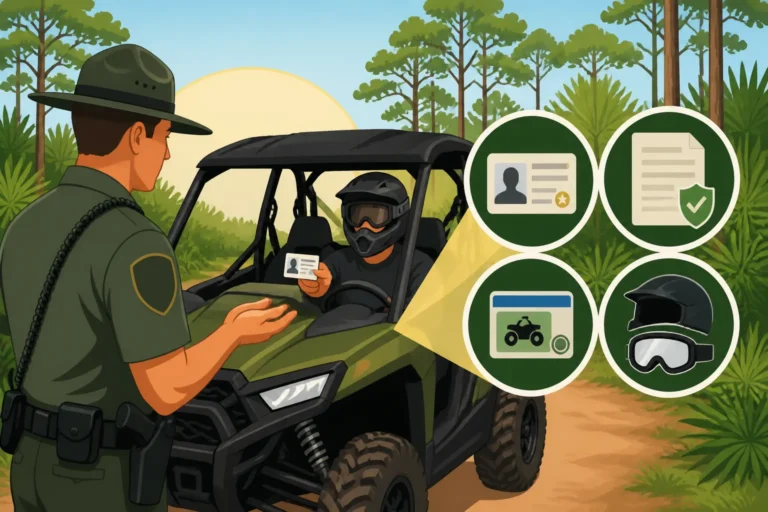
For example, imagine you've just bought a shiny new quad and head straight to the [Ocala National Forest ATV Trails in Florida] for an exciting day of riding. You're geared up, your machine is prepped, and you're ready to hit the dirt. A park ranger approaches during a routine check, asks to see your OHV permit and, critically, proof of ownership. If you can't produce a Florida ATV title, you're in a tough spot. The ranger might issue a citation, and in some cases, you could be asked to remove your vehicle from the property, effectively ending your day before it even really began. This scenario is exactly why understanding the public land mandate is so important.
What Counts as "Public Land" in Florida?
The term "public land" can sometimes feel a bit vague, especially when you're talking about vast natural spaces. In Florida, when it comes to ATV and UTV titling, "public land" generally refers to any property owned, managed, or maintained by the state, federal government, or a local municipality that is designated for public recreational use, including off-highway vehicle access. This encompasses a broad range of areas where riders often seek adventure.
This includes state forests with designated OHV trails, such as the Blackwater River State Forest or Tate's Hell State Forest. It also covers national forests like Ocala National Forest, which offers extensive riding opportunities. Beyond these major tracts, some counties or cities might have smaller, locally managed parks or trail systems that fall under this public land umbrella. What's important to remember is that if it's not explicitly your private property, or property you have explicit permission to ride on, assume it's public land for titling purposes. This even extends to certain water management district lands where recreational riding might be permitted under specific rules. When in doubt, it’s always best to check with the land management agency, but err on the side of caution and ensure your machine is titled if there's any chance you'll be riding beyond your own backyard.
Consider a rider who lives near a large, undeveloped parcel of land that looks like a perfect spot for some off-road fun. They might see other tracks and assume it's fair game. However, if that land is actually part of a state conservation area or a managed forest tract, it's public land. Without a title, and the necessary OHV permit, that rider would be in violation. It's not just about designated trail systems; it's about any land that falls under public jurisdiction for which you don't have private permission. Understanding this distinction can save you a lot of headache and potential legal trouble.
The Consequences of Riding Untitled on Public Land
So, what actually happens if you decide to take your chances and ride an untitled ATV or UTV on public land in Florida? Well, it's not a mere slap on the wrist. Florida Statute 316.2123 outlines the requirements for off-highway vehicles, including the titling mandate for public land use. Violating this statute can lead to a noncriminal traffic infraction, which often comes with a fine. The exact amount can vary by county and the discretion of the enforcing officer, but it's rarely a pleasant surprise.
Beyond the monetary fine, you could also face other, more inconvenient consequences. Law enforcement, whether it's a county sheriff's deputy, a state park ranger, or a federal forest service officer, has the authority to issue a cease and desist order, meaning you have to stop riding immediately. In some cases, particularly for repeat offenders or egregious violations, your ATV could even be impounded. Imagine having your prized machine hauled away, incurring towing and storage fees on top of any fines, all because you skipped the titling process. It’s a scenario no rider wants to experience. Furthermore, if you're involved in an accident on public land without a title, it can complicate insurance claims and legal proceedings, making an already stressful situation even worse. The title serves as official proof of ownership, and without it, verifying who legally owns the machine can become a significant hurdle. In short, the small effort and cost of obtaining a title are a much better alternative to the potential headaches and expenses of getting caught without one. It ensures peace of mind and allows you to enjoy Florida's beautiful public riding areas legally and responsibly.
Understanding "Off-Highway Vehicle" (OHV) in Florida Law
Before you can decide if your machine needs a title, it's absolutely crucial to understand what Florida law actually considers an ATV or UTV. The state has very specific definitions, primarily based on factors like width, dry weight, and the number of wheels. These definitions directly impact whether your vehicle is classified as an "off-highway vehicle" (OHV) that falls under the titling requirements, or if it's something else entirely. Misunderstanding these classifications can lead to incorrect assumptions about titling.
What Defines an "All-Terrain Vehicle" (ATV) for Titling Purposes?
In Florida, an "all-terrain vehicle" or ATV is specifically defined by several key characteristics that set it apart from other off-road machines. According to state statute, an ATV is typically a motorized, off-highway vehicle designed to travel on four low-pressure tires. Crucially, it must have a seat designed to be straddled by the operator and handlebars for steering control. This immediately differentiates it from something like a car or even a golf cart.
However, the most critical defining factors for titling are its dimensions and weight. Florida law defines an ATV as being 55 inches or less in width and having a dry weight of 1,500 pounds or less. These numbers are not arbitrary; they are the literal line in the sand for classification. If your machine is wider than 55 inches or weighs more than 1,500 pounds (without fluids or fuel), it generally won't be considered an "ATV" under this specific statute for titling purposes, even if it looks and feels like a traditional quad. This is especially important for modern, larger quads or those designed for two riders, as they might push these limits. Knowing these exact measurements is the first step in determining if your vehicle falls into the ATV category that requires titling for public land use. Always check your machine's specifications, often found in the owner's manual or on the manufacturer's website, before heading to the tax collector. You can also refer to [Florida's 55-Inch ATV Definition and Why It Matters] for more detailed information.
For instance, you might purchase a new, powerful utility quad that is marketed as an "ATV" by the manufacturer. You love its robust capabilities and extra-wide stance. However, when you measure it at home, you realize it's actually 58 inches wide. Despite its marketing, under Florida law, this machine would likely be categorized differently (possibly as an ROV, as we’ll discuss next) and would need to be titled according to those specific regulations. This distinction is vital because the application process, and even the fees, can sometimes differ slightly based on the vehicle classification.
Florida's Definition of a "Recreational Off-Highway Vehicle" (ROV/UTV)
While "ATV" refers to the traditional straddle-seat quad, Florida law also has a separate, distinct classification for "Recreational Off-Highway Vehicles," commonly known as ROVs or UTVs (Utility Task Vehicles). These machines are increasingly popular, offering side-by-side seating, steering wheels, and often more cargo capacity. Just like ATVs, ROVs are subject to titling requirements if they are to be operated on public lands in Florida.
The key differences in definition for an ROV compared to an ATV lie in its width, weight, and seating arrangement. An ROV is designed for travel over unimproved terrain, can have four or more wheels, and is equipped with a non-straddle seat (meaning you sit in it more like a car) and a steering wheel. For titling, Florida specifies that an ROV must be 80 inches or less in width and have a dry weight of 3,500 pounds or less. This broader classification covers most modern side-by-sides, from smaller two-seaters to larger four or six-passenger models. If your side-by-side meets these criteria and you plan to ride it on public land, it absolutely needs a Florida OHV title. Don't assume that just because it's bigger than an ATV, it's somehow exempt; in fact, its size places it firmly within another titled category. For more specific information, check out [Florida UTV Titling for Side-by-Sides Over 55 Inches] and [Florida ROV Definition: 80 Inches and 3,500 Pounds].
Let's say you've invested in a fantastic four-seat side-by-side, perfect for family adventures on the trails. This machine is clearly wider than 55 inches and weighs over 1,500 pounds, meaning it doesn't fit the ATV definition. Instead, it falls squarely into the ROV category. If you then take this ROV to a state forest for a weekend camping and riding trip, you would need to ensure it's titled as an ROV according to Florida's regulations. The paperwork and process will be similar to an ATV, but the classification on the title itself will reflect its ROV status. This is important for record-keeping and ensuring compliance with all state statutes.
Three-Wheelers, Dirt Bikes, and Other Off-Highway Vehicles
Florida's OHV titling rules aren't just for four-wheel ATVs and side-by-sides. The statutes also address other types of off-highway vehicles that might be used on public lands. For instance, while three-wheelers (also known as ATCs) are less common today, if you happen to own one and plan to ride it on designated public trails, it would also fall under the titling requirements as an off-highway vehicle, assuming it meets similar general criteria for recreational use.
Dirt bikes, or off-highway motorcycles, are another category often confused with ATVs. In Florida, if you intend to ride an off-highway motorcycle on public lands, it too must be titled. The process is similar to ATVs and ROVs, ensuring that these machines have a clear chain of ownership recorded with the state. The critical distinction is usually the presence of an engine, the ability to travel off-road, and the intent to use it on public property. Go-karts, on the other hand, typically do not fall under the ATV or ROV titling requirements in Florida, as they are generally not designed or intended for the same type of public land recreational use, nor do they often meet the specific statutory definitions. It's a nuanced landscape, and if you have a unique or older off-highway vehicle, it's always best to clarify its classification with the Florida Department of Highway Safety and Motor Vehicles (FLHSMV) or your local tax collector's office to ensure you're compliant before you hit the trails. For specifics on dirt bike titling, you can find information under [Off-Highway Motorcycle Titles in Florida].
Consider a vintage three-wheeler you've lovingly restored. It's a blast to ride, and you're thinking of taking it to a local OHV park. Because it's a motorized off-highway vehicle intended for public land use, it would indeed require a title. The application process would treat it much like a four-wheel ATV in terms of documentation and fees. Similarly, if you're an avid motocross enthusiast who bought a brand-new dirt bike from a dealer, that machine will come with a Manufacturer's Certificate of Origin (MSO) that you'll use to apply for its Florida off-highway motorcycle title. The rules are designed to ensure accountability for any motorized vehicle designed for off-road use when it interacts with public spaces.
When Titling Isn't Mandatory (The Key Exemptions)
While the general rule in Florida is to title your ATV or UTV if you plan to use it on public land, there are some significant exceptions. These exemptions are important to understand because they can save you time, effort, and money if your specific use case falls outside the public land mandate. It’s not about finding loopholes, but rather understanding the law’s intent and where it applies.
Exclusive Private Property Use: The Biggest Exception
This is arguably the most common and significant exemption to Florida's ATV and UTV titling requirements. If you own an ATV or UTV and only plan to operate it on your own private property, or on private property with the explicit permission of the owner, then a Florida title is generally not required by the state. This means if your riding is confined to your sprawling ranch, a friend's hunting lease, or a dedicated private mud park that doesn't operate under state land rules, you are usually off the hook for titling.
The logic here is straightforward: the state's interest in tracking ownership and regulating use primarily applies when vehicles are operating on public lands. On private property, the landowner sets the rules (within legal boundaries, of course), and the state's titling mandate doesn't typically extend to these private activities. Many riders who use their quads exclusively for chores around their farm, hunting on private acreage, or recreational riding on their own vast back forty never bother with a title, and they are perfectly within their rights to do so. However, it's always wise to have some form of [Proof of Ownership When the MSO Is Missing] or a bill of sale, even for private use, just in case of theft or other disputes. And remember, "private property" means truly private; canal roads, utility easements, or even dirt roads that look private but are technically public access points, do not count as private property for this exemption.
For example, a cattle rancher in Okeechobee might use several side-by-sides daily to check fences, move livestock, and transport tools across their expansive private property. These machines are essential for their work, but because they never leave the ranch land and are not operated on any state or federal lands, the rancher is not legally required to title them. They might still choose to keep excellent records, including bills of sale and manufacturer's certificates of origin, for internal accounting and proof of purchase, but an official Florida OHV title isn't a state mandate for their specific use.
Agricultural Use: Farm and Ranch Machines
Closely related to the private property exemption, Florida law often provides specific considerations for off-highway vehicles used primarily for agricultural purposes. While these machines might occasionally cross a public dirt road to get from one field to another, their primary function is tied to farming, ranching, or other bona fide agricultural operations.
Many state regulations recognize the distinct role of farm equipment and may offer exemptions or different rules for these utility-focused vehicles. Often, if an ATV or UTV is used exclusively for agricultural or grove work on private land, it may not require a title, even if it could technically be classified as an ATV or ROV. This is designed to ease the burden on farmers and agricultural businesses that rely on these machines as tools for their trade, rather than as purely recreational vehicles for public trail riding. However, it's critical that the use genuinely falls under agricultural operations and that the operation remains predominantly on private land. If that farm machine is then used for recreational riding on a state trail, the titling requirement would kick back in. Always clarify with the local tax collector's office or the FLHSMV if you believe your agricultural use qualifies for an exemption, especially if there’s any overlap with public road crossings or casual recreational use. The nuances can sometimes be tricky, and it's better to be sure than sorry.
Consider a large citrus operation in Central Florida that employs a fleet of UTVs to transport pickers, scout groves, and carry supplies. These machines are rarely, if ever, used for recreational purposes on public trails. Their primary function is integral to the farm's productivity. In this scenario, those UTVs would typically fall under the agricultural exemption from mandatory titling, as long as their use remains confined to the private property of the citrus grove or designated agricultural corridors. However, if an employee decided to take one of these UTVs out to a nearby state forest for personal trail riding, that specific instance of use would likely trigger the titling requirement, regardless of its primary agricultural designation.
Dealer Inventory and Rental Fleet Exemptions
Another significant area of exemption applies to businesses that deal with ATVs and UTVs. If you visit a Florida dealership, you'll see dozens of shiny new quads and side-by-sides on the showroom floor or in storage. These machines, while fully capable of hitting the trails, are considered dealer inventory. As such, they are not typically titled in the dealer's name. Instead, they remain on a Manufacturer's Certificate of Origin (MSO) until they are sold to an end-user. It's only upon the first retail sale that the new owner will take the MSO to the tax collector's office to apply for the initial Florida title in their name. This streamlines the commercial process and avoids unnecessary titling paperwork for vehicles that are constantly changing hands within the wholesale and retail chain.
Similarly, large rental fleets operated by businesses like those found near popular riding destinations such as Croom Motorcycle Area might also have specific exemptions or different titling procedures. While individual machines in a rental fleet might require some form of registration or internal tracking, the general public-land titling rules might be handled differently for vehicles that are never truly "owned" by an individual rider. These commercial entities often operate under specific business licenses and regulations. If you're buying a machine from a dealer, your primary responsibility is to understand [Florida Dealer Paperwork When You Buy a New ATV] and ensure you receive the correct MSO or existing title from them, which then becomes your documentation for applying for a title. For rental operations, the rental company handles the compliance, and you as the renter are typically just responsible for following their rules and the park's rules for operation.
Imagine you walk into a power sports dealership in Gainesville and fall in love with a new ATV. The dealer isn't going to have a title in their name for that machine. Instead, they'll provide you with the Manufacturer's Certificate of Origin (MSO) and a bill of sale. It's your responsibility, as the new owner, to take these documents to the tax collector and apply for the first Florida title. Similarly, if you rent a side-by-side from [Croom Florida ATV Rentals] for a day of fun, the rental company will have taken care of any necessary titling or fleet registration for their machines. Your responsibility is limited to signing their waivers, understanding their operational rules, and having your driver's license ready.
Here's a quick summary table of common titling scenarios:
| Scenario | Does an OHV Title (Generally) Apply? | Key Considerations |
|---|---|---|
| Riding on Florida Public Lands | YES | Required by law for ATVs, UTVs (ROVs), and Off-Highway Motorcycles. |
| Exclusive Private Property Use | NO | No state title required, but keep proof of ownership (bill of sale, MSO) for personal records and theft protection. |
| Agricultural Use on Private Land | NO | Primarily used for farming/ranching on private property. Occasional public road crossing for farm use may be exempt, but clarify with FLHSMV. |
| Dealer Inventory | NO | Title is applied for by the first retail purchaser using the MSO. |
| Rental Fleet | NO (Typically) | Handled by the rental company under specific business regulations; individual renters do not title. |
| Moving to Florida (Out-of-State) | YES | Must be titled in Florida within 30 days if you intend to ride on public land. |
| Buying Used with Existing FL Title | YES | Must transfer the existing title into your name. |
| Buying Used with NO FL Title | YES (if public use) | If the previous owner never titled it but rode it on public land, they were in violation. You must title it if you plan public land use. May need a [Florida ATV Bill of Sale: What It Needs to Say]. |
Navigating Ownership Changes: When the Title Becomes Your Priority
Life happens, and ATVs and UTVs change hands for all sorts of reasons. Whether you're buying a used machine, receiving one as a gift, or moving to Florida with your existing quad, these changes in ownership often trigger the need to interact with the titling system. Understanding your responsibilities during these transitions is crucial to avoid future headaches and ensure legal compliance.
Buying a Used ATV in Florida: Understanding Title Transfer Responsibilities
One of the most common ways people acquire ATVs and UTVs is by purchasing them used, often through a private sale from a previous owner. This is where understanding title transfer responsibilities becomes absolutely critical. If the ATV or UTV you're buying was previously titled in Florida, it's the seller's legal obligation to properly sign over the title to you. This includes completing the assignment of title section on the physical title certificate, which typically requires the seller's signature, printed name, and the date of sale. As the buyer, you then take this signed-over title to your local tax collector's office to transfer it into your name.
It's paramount to ensure you receive a properly executed title from the seller. A common pitfall is buying an ATV from someone who "never got around to titling it themselves" after buying it from another person, a practice sometimes called "title jumping." This can leave you without a clear chain of ownership and make it very difficult to title the machine in your name later, especially if the original titled owner can't be found. Always insist on a proper title that the seller can legally sign over to you. If the ATV was never titled in Florida (perhaps it was only ridden on private land), then the seller should provide you with a bill of sale and, if available, the Manufacturer's Certificate of Origin (MSO). You would then use these documents to apply for an original Florida title, assuming you plan to use it on public lands. Don't underestimate the importance of this step; a clean title transfer protects you as the buyer. For more information, check out [Buying a Used ATV in Florida: Transferring the Title] and [Florida ATV Title Transfer After a Private Sale]. If you need a robust bill of sale to protect yourself, platforms like LawDepot offer templates that can be customized to Florida's requirements, ensuring all necessary details are included for a smooth transfer of ownership.
Imagine you've found the perfect used quad on an online marketplace. The seller says they've owned it for years and used it for hunting. They hand you a bill of sale but explain they never got a title because they only rode on private land. This is a red flag if you intend to hit public trails. In this scenario, you'd need to ensure the bill of sale is comprehensive and then prepare to apply for an original Florida title yourself, likely needing additional documentation or a VIN verification. If the seller did have a Florida title, but it's lost, you should insist they get a [Florida ATV Title Lost or Damaged: Getting a Duplicate] before you complete the purchase, or at the very least, be prepared to navigate that process yourself, often with a notarized bill of sale.
Gifting or Inheriting an ATV: What Paperwork is Needed?
Sometimes an ATV or UTV comes into your possession through a gift or inheritance, rather than a purchase. While there's no money changing hands, the need for a proper title transfer remains, especially if the machine will be used on public lands. If you receive an ATV as a gift, the giver should endorse their existing Florida title over to you, indicating "GIFT" as the purchase price. You would then take this title to the tax collector's office to apply for a new title in your name. Even though it's a gift, you will still be responsible for the titling fees.
In the unfortunate event that you inherit an ATV or UTV, the process can be a bit more complex, depending on whether the previous owner had a will, the value of the estate, and how the estate is being administered. Generally, you'll need documentation proving you are the rightful heir, such as a death certificate and either a copy of the will or court documents appointing you as the personal representative of the estate. The FLHSMV or your local tax collector can provide guidance on the specific forms required for an inherited vehicle. In some cases, a probate court order might be necessary to legally transfer ownership. Just like with a private sale, ensuring you have a clear chain of ownership from the original title holder (or their estate) is crucial to successfully titling the machine in your name and avoiding any future disputes. For further information, consider reading [Florida Off-Highway Vehicle Title for a Gifted Quad] and [Inheriting a Titled Quad in Florida].
For example, your Uncle Joe, a lifelong off-road enthusiast, passes away and leaves you his beloved quad in his will. If the quad was titled in Florida, you would need to present a copy of the death certificate and the relevant portion of the will (or a court order) along with the existing title to the tax collector's office. They would then process the title transfer into your name. If the quad was never titled because Uncle Joe only rode it on his private hunting lease, you would then need to present the death certificate, will/court order, and possibly a notarized affidavit stating the circumstances, to apply for an original Florida title if you plan to use it on public lands.
Moving to Florida with an Out-of-State ATV
Welcome to the Sunshine State! If you're relocating to Florida and bringing your ATV or UTV with you, you'll need to address its titling status. Florida law generally requires new residents to title their out-of-state vehicles in Florida within 30 days of establishing residency, if that vehicle is intended for use on public lands. This applies to ATVs and UTVs just as it does to cars and trucks.
The process typically involves presenting your out-of-state title to a Florida tax collector's office. You'll also need a VIN verification, which can usually be performed by a Florida law enforcement officer, a licensed Florida dealer, or a notary public. If your previous state didn't issue titles for ATVs (some states only register them, or have no paperwork at all), you'll likely need to provide proof of ownership from that state (like a registration document, bill of sale, or a Manufacturer's Certificate of Origin) along with the VIN verification. The goal is for Florida to establish a clear title record for your machine within its system. Failing to title your out-of-state ATV can lead to issues if you try to ride on public lands or if you later try to sell it within Florida. Make sure this is high on your to-do list after you've unpacked your boxes! Find more details on [Titling an Out-of-State ATV After Moving to Florida] and [Florida ATV Title Requirements for a New Resident].
Let's say you've moved from a state where ATVs were never titled, and you've always just carried a bill of sale. Now that you're in Florida and want to explore the state's amazing public trail systems, you'll need to get a Florida title. You would gather your bill of sale, any past registration documents, and then arrange for a VIN verification. With these documents in hand, you'd visit the tax collector's office to apply for an original Florida title. They might also ask for proof of Florida residency, such as a Florida driver's license or utility bill, as part of the application process.
The Florida Titling Process: A Step-by-Step Walkthrough
Alright, you've determined that your ATV or UTV needs a Florida title. Now what? The actual process of obtaining a title is relatively straightforward, but it requires careful attention to detail and ensuring you have all the necessary paperwork in order. Skipping steps or forgetting documents can lead to frustrating delays and multiple trips to the tax collector's office, which nobody enjoys.
Gathering Your Documentation: What You'll Need
The golden rule for any government paperwork is to "be prepared." For a Florida ATV or UTV title, this means having all your ducks in a row before you even walk through the door of the tax collector's office. Here's a breakdown of the essential documents you'll typically need:
- Application for Certificate of Title With/Without Registration (Form HSMV 82040): This is the main form. You can usually download and fill it out beforehand from the FLHSMV website, or you can get one at the tax collector's office. Make sure every section is completed accurately.
- Proof of Ownership:
- New ATV/UTV: This will be the Manufacturer's Certificate of Origin (MSO or MCO). This document essentially acts as the "birth certificate" for your machine, issued by the factory.
- Used ATV/UTV (previously titled in FL): The existing Florida title, properly signed over to you by the seller.
- Used ATV/UTV (never titled in FL or from out-of-state with no title): A bill of sale (notarized is always a good idea, though not always legally required for ATVs), along with any previous state registration or proof of ownership. If the MSO is still available, even better. For creating a solid bill of sale, tools like LawDepot can be invaluable for generating legally sound documents that include all the necessary information, protecting both buyer and seller.
- VIN Verification: Florida requires verification of the Vehicle Identification Number (VIN) for most out-of-state or untitled vehicles. This can be done by a Florida law enforcement officer, a licensed Florida dealer, or certain other authorized individuals. The verification usually needs to be completed on a specific form (HSMV 86062, Vehicle Identification Number and Odometer Verification).
- Identification: Your valid driver's license or other government-issued photo ID.
- Payment for Fees: Be prepared to pay the applicable titling fees, sales tax (if applicable), and any service charges. Cash, check, or credit/debit cards are usually accepted, but it's wise to check with your specific county tax collector beforehand.
- Odometer Disclosure (if applicable): While not typically required for true off-highway ATVs (as they don't have odometers), for ROVs or other machines that do have odometers, an accurate disclosure of the mileage may be needed.
Having all these documents organized in a folder will make your visit much smoother. Double-check everything for accuracy before you go to avoid unnecessary trips back home. For more details on the forms, refer to [Which Florida Title Form to Use for an ATV].
Consider a scenario where you're buying a quad from an individual who lives in a different county. You meet up, exchange money, and they give you a handwritten bill of sale. When you go to title it, the tax collector informs you that the bill of sale isn't robust enough or that a VIN verification is missing for your out-of-state machine. This means a delay, a return trip, and potential frustration. If you had used a comprehensive bill of sale template from LawDepot and ensured the VIN verification was completed at the time of purchase, you would have saved yourself a lot of hassle.
Fees and Charges: Breaking Down the Cost of a Florida ATV Title
Nobody likes hidden fees, so it’s good to understand the typical costs associated with titling an ATV or UTV in Florida. While specific amounts can change, the structure of the fees generally remains consistent.
The primary fee you'll encounter is the Initial Title Application Fee. This is usually a set amount, and it covers the administrative cost of processing your new title. Additionally, there's often an Electronic Title Fee, as Florida typically issues titles electronically unless you specifically request a paper title (which may incur a small extra charge). Beyond the basic title fees, expect a service charge from the county tax collector's office. This is a small fee added to most transactions to help fund local operations.
The biggest variable in your total cost will likely be Florida sales tax. If you bought your ATV or UTV from a licensed dealer, they usually collect sales tax at the time of purchase. However, if you bought it in a private sale, you will be responsible for paying the Florida sales tax directly to the tax collector's office when you apply for your title. The sales tax is typically calculated based on the purchase price you state on your bill of sale or title application. This is why it's crucial to accurately state the purchase price, even if it's a "deal" you got from a friend. Undervaluing the machine to avoid sales tax can lead to legal issues.
If you're in a hurry, Florida also offers a Fast Title option for an expedited service, which comes with an additional fee. This allows you to get your paper title much faster than the standard processing time. While not always necessary, it can be a lifesaver if you need the physical title quickly for a resale or other urgent matter. Always confirm current fees with your local tax collector's office, as they can sometimes vary slightly by county or be subject to legislative changes. You can get more details on [Florida ATV Title Fee Breakdown: $29 Plus Service Charges] and [Florida Fast Title for an ATV: The $7 Expedited Option].
Here's a generalized table of potential fees (amounts are illustrative and subject to change):
| Fee Type | Description | Typical Scenario |
|---|---|---|
| Original Title Application Fee | Basic fee for processing a new title. | New purchase, out-of-state title, or first-time titling in Florida. |
| Electronic Title Fee | Fee for generating an electronic title record. | Standard for all new titles. |
| Service Charge | County tax collector's administrative fee. | Applies to most transactions. |
| Florida Sales Tax | Percentage of the purchase price (if applicable). | Private sale; collected by dealer for new sales. |
| Fast Title Fee (Optional) | Expedited processing for a physical title. | If you need a paper title quickly. |
| Duplicate Title Fee (If needed) | For replacing a lost or damaged title. | Only if you need a replacement. |
| Lien Recording Fee (If financed) | For recording a lien holder's interest on the title. | If you financed your ATV/UTV. |
| Paper Title Fee (Optional) | Small fee to request a physical paper title, in addition to the electronic one. | If you prefer a physical copy of your electronic title. |
Where to File: Navigating the Tax Collector's Office
Once you have all your documents and are ready to pay the fees, your final step is to visit your local County Tax Collector's Office. In Florida, these offices handle vehicle titling and registration services on behalf of the state. While some larger counties might have dedicated service centers, the tax collector's office is your primary destination.
It's a good idea to check their website or call ahead for office hours, specific location details, and whether they recommend appointments or offer online queueing systems. Some offices can be quite busy, especially during peak times, so a little planning can save you a long wait. When you arrive, you'll typically take a number and wait for your turn to be called to a service counter. The clerk will review your application, verify your documents, collect the necessary fees, and process your title.
In most cases, Florida issues an electronic title, which means you won't walk out with a paper title in your hand that day. The electronic record is stored by the state. If you specifically requested a paper title (and paid the small extra fee for it), it will usually be mailed to you within a few weeks. The clerk will, however, provide you with a temporary receipt and often a temporary registration document if applicable, proving that you have applied for the title. This temporary documentation is important to keep with you if you plan to ride on public land before your official title arrives. The main thing is to ensure you complete the transaction with a knowledgeable clerk who can answer any last-minute questions and confirm that all your paperwork is correctly submitted. Check out [Where to File an ATV Title in Florida] for more location-specific advice.
Consider a rider who lives in Marion County and needs to title their new UTV. Instead of driving all the way to a major city, they can visit the Marion County Tax Collector's office. By checking online beforehand, they might discover the office has a specific queue for motor vehicle services, or that certain days are less busy. They bring their MSO, driver's license, and payment, and after a brief wait, a clerk reviews their paperwork, processes the payment, and provides a receipt confirming the title application has been submitted. This allows them to legally take their UTV to the [Ocala National Forest ATV Trails in Florida] with peace of mind.
Beyond the Title: What a Florida ATV Title Truly Means
Getting a Florida ATV or UTV title is a crucial step for many riders, especially those who enjoy public land recreation. However, it's also important to understand what that title actually signifies and, perhaps more importantly, what it doesn't. There are common misconceptions about titling that can lead to confusion or even legal trouble if not properly clarified. A title is a key piece of your ownership puzzle, but it's not a magic pass for everything.
The Difference Between a Title and Registration (or Lack Thereof)
One of the biggest points of confusion for ATV and UTV owners in Florida is the difference between a "title" and "registration." For cars, trucks, and motorcycles, you typically get both: a title (proving ownership) and a registration (allowing you to operate it on public roads, evidenced by a license plate and decal). For ATVs and UTVs in Florida, the situation is different.
Florida issues an OHV title (Off-Highway Vehicle title) which serves as official proof of ownership. This is the document that establishes who legally owns the machine and provides a record of its VIN with the state. However, Florida does not require or issue traditional "registration" for ATVs and UTVs in the same way it does for street-legal vehicles. This means you will not receive a license plate, a registration decal, or a yearly tag renewal for your titled ATV or UTV. The state considers these machines off-highway vehicles, and as such, they are not intended for regular public road use, which is what traditional vehicle registration facilitates. This distinction is vital: having a title does not mean your ATV is "registered" in a way that makes it street-legal, nor does it require annual renewal fees like a car registration. You can learn more about this nuance by looking up [Florida ATV Title vs Registration: The Difference] and [Why an OHV Title Carries No Plate Number].
For instance, after you successfully title your brand-new UTV, you will receive either an electronic title record or, if requested, a paper title certificate. What you won't receive is a license plate or a registration sticker for the UTV itself. This often surprises new owners who are used to the car titling and registration process. While you might need to register the trailer you use to haul your UTV, the UTV itself only gets a title, not a registration for operational purposes. This is because the title's purpose for OHVs is primarily to prove ownership and facilitate legal use on designated off-road areas, not to permit on-road operation.
Proof of Ownership: Why the Title is Your Ultimate Security
Despite the lack of traditional registration, the Florida OHV title is an incredibly important document because it serves as your ultimate proof of ownership. Think of it as the deed to your off-road machine. This is crucial for several reasons:
First, it protects you against theft. If your ATV or UTV is stolen, having a state-issued title makes it much easier for law enforcement to track it down and for you to prove it's yours. Without a title, proving ownership can be a challenging, drawn-out process, especially if all you have is a handwritten bill of sale. Law enforcement agencies rely on official title records to identify rightful owners.
Second, it simplifies resale. When you go to sell your ATV or UTV, a clear Florida title provides confidence to potential buyers that the machine is legally yours to sell and isn't stolen or subject to hidden liens. A clean title streamlines the sales process and generally commands a better price. Buyers are often wary of machines without titles because of the potential for fraud or future titling difficulties.
Third, it's essential for insurance. While Florida doesn't mandate liability insurance for ATVs in the same way it does for cars, many riders choose to insure their machines against theft, damage, or for liability coverage while riding. Insurance companies will almost always ask for the title number and proof of ownership when you're obtaining or filing a claim for coverage. The title is the official record that links you, the owner, to the specific VIN of your machine, making it a vital document for any insurance dealings. In essence, the title provides a layer of legal and financial security that you simply don't get with just a bill of sale. For more information, read [What an OHV Title Proves in a Theft Claim].
Consider a scenario where your prized side-by-side, which you've only ever ridden on private land and thus never titled, is stolen from your garage. You have the original bill of sale, but that's it. When you file a police report, the officer notes the lack of an official state title. While they will still investigate, the absence of a title could complicate the process of officially identifying the machine as yours in state databases and recovering it if it's found elsewhere. Conversely, if you had a Florida OHV title, the VIN would be in the state system linked to your name, making the recovery process much more straightforward and verifying your ownership unequivocally.
Limitations of an OHV Title: Still Not Street Legal!
Finally, and this is a point that cannot be stressed enough: obtaining a Florida OHV title does NOT make your ATV or UTV street legal. This is a persistent misconception that can lead to serious legal consequences. An OHV title merely certifies ownership and allows you to legally operate the machine on designated public off-highway trails. It does not magically grant permission to ride on paved public roads, streets, or highways.
Florida law is very clear: ATVs and UTVs are designed for off-road use only. They lack the safety equipment (like turn signals, proper headlights, brake lights, mirrors, and often even DOT-approved tires) required for on-road operation. Attempting to ride your titled ATV on a public road, even just to get to a gas station or cross a street, can result in significant fines, traffic citations, and potentially even impoundment of your vehicle. There are very limited, specific exceptions for crossing paved roads or riding on unpaved county roads under strict conditions, but these do not equate to being "street legal." Always consult the specific Florida statutes and local ordinances regarding ATV road use. Do not assume your title grants you any rights to public road travel. The title is for the dirt, not the pavement. For more specific details, refer to [Are ATVs Street Legal in Florida?] and [Why Florida ATVs Cannot Use Paved Streets].
Imagine you've just titled your quad and you're feeling good about being fully compliant. You need gas, and the closest station is just across a paved county road. You think, "Well, it's titled now, so it must be okay for a quick hop." As you pull onto the asphalt, a sheriff's deputy immediately pulls you over. Despite having a valid Florida OHV title, you are operating an off-highway vehicle on a public paved roadway, which is a violation. The deputy might issue a hefty fine, and you could face additional penalties, all because the title was misinterpreted as a green light for street use. This scenario highlights the absolute importance of understanding the limitations of your OHV title.
Disclaimer
This article is for general informational purposes only and does not constitute professional advice. Laws, prices and regulations vary by location and change over time. Consult a qualified professional for guidance on your specific situation.