Florida’s ATV Title Application Explained
Oh, the joys and occasional headaches of owning an ATV or UTV in the Sunshine State! If you’ve been scratching your head trying to figure out how to officially title your beloved quad or side-by-side here in Florida, you’re definitely not alone. It can feel like navigating a swamp in the dark sometimes, with all the forms, fees, and rules. But don't fret! This comprehensive guide is here to shine a light on every single step of Florida's ATV title application process, helping you cut through the confusion and get that paperwork sorted so you can hit the trails with peace of mind.
Why Florida Requires an ATV Title in the First Place
Let's be honest, for many years, titling an ATV wasn't even on the radar for folks in Florida. You bought it, you rode it, and that was that. But things have changed, and for good reason! The state introduced specific laws to ensure that off-highway vehicles (OHVs) are properly documented, which ultimately benefits both owners and the broader community. It’s all about creating a clear record of ownership and ensuring accountability.
Understanding Florida's Off-Highway Vehicle Title Law
The law that brought OHV titling into play in Florida was a significant step. Before this legislation, tracking stolen ATVs or proving ownership in disputes was incredibly difficult. Imagine buying a quad, only to find out months later it was reported stolen from another state. Without a proper title system, it was often a quagmire of legal battles. This law aims to prevent such scenarios by establishing a clear paper trail for every machine. It helps law enforcement recover stolen property, discourages illegal sales, and provides legitimate owners with a rock-solid proof of their investment. It's not just red tape; it's a layer of protection for you and your machine. The whole idea is to bring ATVs and UTVs under a similar umbrella of ownership documentation as cars and trucks, albeit with some key differences tailored to their off-road nature. If you're curious about the specifics, diving into [Florida Off-Highway Vehicle Title Rules Explained] can really clear things up.
The Core Difference Between a Title and Registration
This is where many new OHV owners get a little tangled up, and it's completely understandable. In Florida, for ATVs and UTVs, a "title" is not the same as "registration" or having a license plate. Think of it this way: your title is the ultimate proof of ownership. It's a legal document that states who the rightful owner of the ATV is. It includes details like the vehicle identification number (VIN), make, model, and the owner's name. It's what you'd show if you were selling your ATV, or if it were unfortunately stolen and recovered.
Registration, on the other hand, is generally about permission to operate a vehicle on public roads or for specific purposes, and it usually involves a license plate or decal. For most ATVs in Florida, you won't be registering it for road use because, well, they're not street legal in the traditional sense! The title simply establishes ownership. You don't get a decal or a tag for your ATV just because you titled it. So, while your car needs both a title and registration to be legally driven on the street, your ATV primarily needs a title to prove you own it, especially if you plan on riding it on public lands. Getting a grip on [Florida ATV Title vs Registration: The Difference] is crucial for avoiding any mix-ups.
Who Must Title Their ATV in Florida
Here’s the golden rule, and it's pretty straightforward: if you ride your ATV or UTV on any public lands in Florida, it needs to be titled. This includes state forests, national forests, designated OHV parks like the Croom Motorcycle Area, or even publicly accessible trails. It doesn’t matter if it’s just for an hour or if you never leave the state; if it touches public dirt, it needs a title. This requirement ensures that all OHVs operating on state-managed recreational areas are traceable and legally owned.
Now, if you only ride your ATV on your own private property, or on private land where you have explicit permission, the state doesn't mandate a title. However, even in this scenario, many people still choose to title their machines. Why? Because a title is your best defense against theft and your strongest proof of ownership if you ever decide to sell it. Trying to sell an untitled ATV, even one only ridden on private land, can be a real headache for both you and the potential buyer. So, while it might not be legally required for private land use, it's almost always a good idea. Understanding [Who Must Title an ATV in Florida] can save you a lot of future hassle.
Essential Forms and Documentation for Your Application
Alright, let's talk paperwork. This is often the part that makes people's eyes glaze over, but breaking it down into manageable chunks makes it much less intimidating. Having the right forms filled out correctly and all your supporting documents in order before you head to the tax collector's office is half the battle won. Seriously, a little preparation here goes a very long way!
The Main Application Form: HSMV 82040
Your journey to a titled ATV in Florida almost always starts with Form HSMV 82040, which is the official "Application for Certificate of Title With/Without Registration." Even though most ATVs don't get a "registration" in the traditional sense for road use, this is still the form you'll use for titling your off-highway vehicle. It's a multi-purpose form, so don't be thrown off by the "registration" part.
When you're filling this out, you'll need to provide details about yourself as the owner, including your full name, address, and driver's license number (or other identifying information). Then, you'll delve into the specifics of your ATV: the year, make, model, and critically, the Vehicle Identification Number (VIN). Be meticulous here! Any errors can lead to delays or even outright rejection of your application. There are sections for odometer readings (though not always applicable for ATVs), purchase price, and lienholder information if you've financed your machine. Take your time, read each section carefully, and don't hesitate to ask for clarification if something isn't clear before you submit it. This form is the backbone of your application, so precision is paramount. For a deeper dive into the exact form, check out [Which Florida Title Form to Use for an ATV].
Proof of Ownership: MCO, Bill of Sale, or Previous Title
This is arguably the most crucial piece of your application: proving you actually own the ATV you're trying to title. The type of proof you need depends entirely on how you acquired your machine.
If you bought your ATV brand new from a dealership, your primary proof will be the Manufacturer's Certificate of Origin, or MCO. This document essentially serves as the birth certificate for your ATV. It's issued by the manufacturer and transferred to the dealer, and then from the dealer to you. It's vital that the dealer correctly assigns the MCO to your name. Without it, you’ll have a hard time proving you’re the first owner.
For a used ATV, the game changes. You'll need the previous owner's properly assigned Florida title. They should have signed it over to you in the designated sections, completing all the necessary buyer information. If the ATV was bought out of state, you'd present the out-of-state title. Sometimes, a previous title is missing, or you might have bought a machine that was never titled to begin with. In such cases, a detailed bill of sale becomes incredibly important. A well-crafted bill of sale, especially if the MCO is missing, can be used to establish your chain of ownership, though it might require additional steps or documentation. Using a reputable template from a service like LawDepot can ensure your bill of sale includes all the necessary legal clauses and details, preventing issues down the road. This helps establish a clear chain of custody, which the state really scrutinizes.
When you're dealing with a private sale, especially if the ATV has never been titled before or the seller has lost the original paperwork, a robust bill of sale is your lifeline. This document should clearly state the buyer and seller's names and addresses, the ATV's VIN, make, model, year, the sale date, and the purchase price. Both parties should sign and date it, and having it notarized adds an extra layer of authenticity, though it's not always strictly required for titling. It’s also wise to include a statement that the seller attests they have full legal ownership and the right to sell the vehicle. Without clear proof of ownership, your application will likely be rejected, and you could face significant delays trying to resolve the issue. Always insist on proper paperwork when buying a used ATV; it protects everyone involved. For specific details on what this document should contain, look up [Florida ATV Bill of Sale: What It Needs to Say]. And remember, sometimes [When an MSO Beats a Bill of Sale] can be a critical piece of knowledge.
Verification of Vehicle Identification Number (VIN)
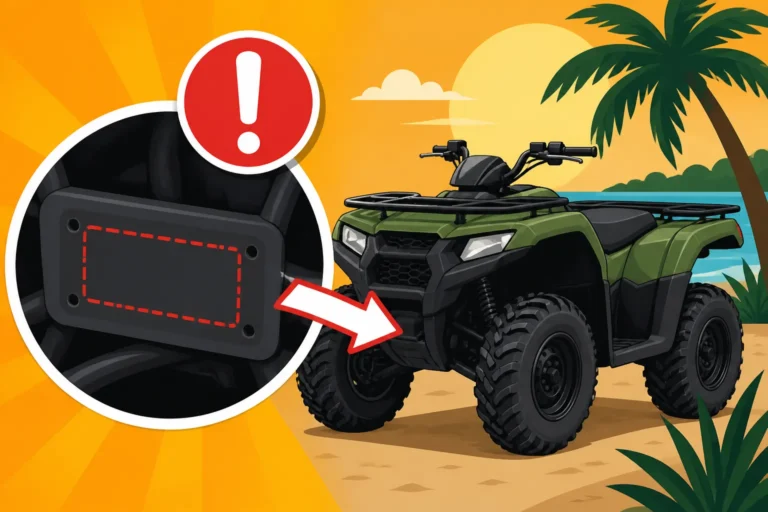
Before your ATV can get a Florida title, its VIN needs to be verified. This isn't just a formality; it's a critical step in preventing theft and ensuring the machine you're titling is actually the machine it claims to be. The state wants to confirm that the VIN on your application matches the physical VIN stamped on the ATV's frame.
You'll need to fill out a separate form for this, typically the Florida Department of Highway Safety and Motor Vehicles (FLHSMV) Form HSMV 84062, "Vehicle Identification Number and Odometer Verification." Who can perform this verification? Usually, it's a law enforcement officer (like a sheriff's deputy or police officer), a licensed motor vehicle dealer, or a Florida Department of Highway Safety and Motor Vehicles (FLHSMV) inspector. Some county tax collector offices even have staff authorized to do this on-site, but it's always best to call ahead and confirm their services and hours. They'll physically inspect the VIN on your ATV and then sign off on the form. This step ensures that legitimate vehicles are being titled and helps catch potential discrepancies that could point to a stolen or tampered-with machine. Make sure the VIN is clean and easily readable before you bring it in for inspection. It’s a small step that plays a big role in securing your title. Knowing [Who Can Verify an ATV VIN in Florida?] is essential before you head out.
Understanding the Costs Involved
Let's face it, nobody enjoys talking about fees, but they are an unavoidable part of the titling process. It’s far better to know exactly what to expect so you can budget accordingly and avoid any unwelcome surprises when you’re standing at the counter. Florida's fee structure for ATV titles is relatively straightforward, but there are a few components that add up.
Breakdown of the Initial Titling Fees
When you apply for a new ATV title in Florida, there's a base application fee. This fee is standard across the state, regardless of where you submit your paperwork. Beyond that, you'll also encounter service charges. These are typically charged by the county tax collector's office or the license plate agent for processing your application. Think of it as the cost of doing business at their counter. These service charges are also usually fixed and consistent within a particular office, but can sometimes vary slightly between different county agencies or private tag agencies.
Additionally, there’s a small, often overlooked, fee for the "Incidental Trust Fund." This is a nominal charge, usually just a couple of dollars, that goes into a state fund. While individually small, these various charges contribute to the overall cost. It’s important to remember that these are separate from the actual purchase price of your ATV and are required to get that official title in your hand. Always check your specific county tax collector’s website for the most current fee schedule before you go, as sometimes these small fees can be adjusted. A comprehensive look at [Florida ATV Title Fee Breakdown: $29 Plus Service Charges] will give you a clear picture of what to expect, and [The $29 Initial Title Application Fee Explained] often answers many questions about the core fee.
Sales Tax Considerations for New and Used ATVs
Sales tax is another significant financial component you'll need to account for during the titling process. In Florida, sales tax applies to the purchase of most goods, and ATVs are no exception. If you buy a new ATV from a dealership, the sales tax is typically collected by the dealer at the time of purchase and then remitted to the state. They’ll usually provide you with a receipt or documentation showing that the sales tax has been paid.
For used ATVs bought in a private sale, the responsibility for paying sales tax shifts to the buyer. You will pay this tax directly to the county tax collector's office when you submit your title application. The sales tax is calculated based on the purchase price you declared on your bill of sale or title application. It’s important to be honest about the sale price, as grossly understating it can raise red flags with the tax collector. If you bought your ATV out of state, Florida still requires you to pay the difference in sales tax if the tax rate in the other state was lower than Florida’s or if no sales tax was paid at all. They want their fair share! So, always factor in sales tax when you're budgeting for a used ATV, even from a private seller. Delving into [Florida Sales Tax When You Title an ATV] and specifically [Sales Tax on a Private Quad Sale in Florida] can help you understand these financial obligations.
Optional Fees: Fast Titles and Duplicate Titles
Sometimes, you need that title in your hands yesterday. Florida understands this and offers an expedited service known as a "Fast Title." For an additional fee, usually a modest amount, you can request to have your title processed and issued much more quickly than the standard processing time. This can be incredibly useful if you’re trying to sell your ATV quickly, need the title for a loan, or have some other time-sensitive reason. It's an optional service, but for that peace of mind and speed, many find the extra cost well worth it.
Another optional, but often necessary, fee comes into play if your original title is ever lost, stolen, or damaged. Life happens, and sometimes paperwork goes missing. In such cases, you’ll need to apply for a duplicate title. This also comes with its own fee, which is typically less than the initial title application fee but still a cost to consider. While you hope you never need one, it's good to know the process and the cost involved in getting a replacement. Understanding [Florida Fast Title for an ATV: The $7 Expedited Option] and [Florida Duplicate ATV Title Cost] will help you plan for these situations.
Navigating the Application Process Step by Step
Now that we’ve covered the "why" and "what" of titling, let’s get into the "how." The actual process of submitting your application might seem daunting, but by breaking it down into a few clear steps, you'll find it's quite manageable. Preparation is your best friend here, as it minimizes trips and ensures a smooth experience.
Gathering Your Paperwork and Information
Before you even think about heading to the tax collector’s office, create a robust checklist of everything you need. This might seem like overkill, but it genuinely saves time, frustration, and potential multiple trips. Here’s a typical rundown of what you’ll want to have in hand:
- Completed Application Form: Form HSMV 82040. Double-check every field for accuracy!
- Proof of Ownership: Original MCO (for new ATVs), properly assigned previous title (for used ATVs), or a detailed bill of sale.
- VIN Verification: Completed Form HSMV 84062, signed by an authorized verifier.
- Identification: Your valid Florida driver’s license or state ID. If there are multiple owners, everyone needs to bring their ID.
- Payment for Fees and Sales Tax: Know the total amount you owe and bring acceptable forms of payment (cash, check, credit/debit card – call ahead to confirm accepted methods).
- Lienholder Information: If applicable, have the name and address of your financing company.
- Any supporting documents: This could include things like power of attorney if someone is applying on your behalf, or proof of residency if you're a new Florida resident.
It's a really smart move to make photocopies of all your documents before you hand over the originals. This way, you have a record for your own files. Using a comprehensive checklist template, perhaps one you can customize from a platform like LawDepot, can be a lifesaver to ensure you haven't overlooked any crucial piece of information or documentation. Remember, the more organized you are, the faster your application will likely be processed.
Where to File Your Application
Once your paperwork is meticulously gathered, the next question is where to actually submit it. In Florida, you generally have a couple of main options for titling your ATV:
- Your Local County Tax Collector's Office: This is the most common route for most Floridians. Each county has its own tax collector's office, and often multiple branch locations. These offices handle a wide array of motor vehicle services, including title applications. They are state-run agencies, and their staff are well-versed in the requirements.
- Authorized Private Tag Agencies (Service Centers): In many areas, there are also private businesses licensed by the state to process motor vehicle transactions. These "service centers" or "tag agencies" can often provide faster service with shorter wait times, but they typically charge an additional convenience fee on top of the standard state and county fees. They offer a great alternative if you’re pressed for time or prefer a less crowded environment.
The choice really comes down to your priorities. The county tax collector's office is the most direct and generally the most cost-effective, but wait times can sometimes be longer. A private tag agency might save you time, but you'll pay a little extra for the convenience. Regardless of which you choose, it's always a good idea to check their specific operating hours and any special requirements they might have (like appointment-only services) before you make the trip. Knowing [Where to File an ATV Title in Florida] and the differences between [Florida County Tax Collector vs Service Center for ATV Titles] can genuinely streamline your experience.
What to Expect When You Visit the Office
You've got your documents, you know where you're going – now for the actual visit. Walking into a government office can feel a bit intimidating, but knowing what to expect can ease some of that apprehension.
When you arrive, you'll likely take a number and wait your turn. Once called to the counter, a clerk will review all your submitted forms and supporting documents. They'll meticulously check for completeness and accuracy, ensuring all signatures are present and all required fields are filled out. This is where those double-checks you did at home really pay off! They might ask you questions about your purchase, such as the date of sale or where the ATV was acquired, especially if there are any ambiguities in your paperwork. Be prepared to answer clearly and concisely.
The clerk will calculate your total fees, including the title application fee, any service charges, and sales tax if it hasn't already been paid. You'll then make your payment. Once everything is confirmed, you'll typically be given a temporary receipt or a printout confirming your application has been accepted. They will keep your original documents (MCO, previous title), but your copies will come in handy for your personal records. Be patient, be polite, and have all your ducks in a row. Sometimes, the clerk might point out a minor issue, like a missing signature or an incomplete field. If this happens, try to fix it on the spot if possible, or be prepared to return with the corrected information. They are there to ensure compliance with state law, so cooperating fully makes the process smoother for everyone involved. For more insights into what happens at the counter, read [What a County Clerk Checks on Your Application].
Special Considerations and Common Hurdles
While the general titling process is fairly straightforward, life often throws us curveballs. There are specific scenarios that can complicate matters, and it's essential to understand these potential hurdles so you can navigate them effectively. Knowing what to do when things aren't perfectly by the book can save you a lot of grief.
Titling a Used ATV or One Without a Previous Title
Buying a used ATV, especially from a private seller, often comes with its own set of challenges regarding the title. Ideally, the seller will have a properly assigned Florida title that they can sign over to you. However, it's not uncommon to encounter situations where the seller has lost the title, or perhaps the ATV was never titled in Florida to begin with. This can lead to significant headaches for the buyer.
If the seller lost the paperwork, they are generally responsible for obtaining a duplicate title before they can legally transfer ownership to you. Insist on this! Buying a quad with no title from a neighbor, or anyone else for that matter, can quickly become a nightmare. The state needs a clear chain of ownership. If a duplicate isn't an option, or if the ATV was truly never titled and lacks an MCO, you might be looking at a more complex process involving a bonded title. A bonded title requires you to purchase a surety bond, which protects the state and any previous owner against claims if it turns out the ATV was stolen or there's a dispute over ownership. This is a last resort and adds cost and complexity. Always prioritize a seller who has a clean, assignable title. Always ask about [Florida ATV Title When the Seller Lost the Paperwork] before you agree to buy. Understanding the nuances of [Buying a Used ATV in Florida: Transferring the Title] is vital, as is knowing what to do when [Buying a Quad With No Title From a Neighbor].
Handling Liens and Multiple Owners
Financing an ATV is a common practice, and if you’ve taken out a loan to purchase your machine, there will be a lien on your title. A lien simply means that your lender has a financial interest in your ATV until the loan is fully paid off. When you apply for your title, the lienholder’s information (name and address of the bank or credit union) will be recorded directly on the title certificate. This is a standard procedure. Once you’ve paid off your loan, the lienholder will send you a lien satisfaction letter, which you'll need to submit to the FLHSMV to have the lien officially removed from your title. Until then, they are legally recognized as having a claim on the vehicle.
For those purchasing an ATV with another person, such as a spouse or a family member, you'll need to decide how you want to hold ownership on the title. Florida allows for multiple owners to be listed. The common options are "and" (e.g., John Doe AND Jane Doe) or "or" (e.g., John Doe OR Jane Doe). The "and" designation means that both parties must sign to sell or transfer the ATV, providing more protection for each owner. The "or" designation allows either party to sell or transfer the ATV independently, which can be convenient but offers less individual protection. Make sure everyone listed on the title is present with their identification when submitting the application, or you’ll need specific power of attorney documentation. Properly recording [Florida ATV Title With a Lien Recorded] is key, and understanding the implications of [Two Names on One Florida Quad Title] can prevent future disagreements.
Out-of-State Purchases and New Residents
Moving to Florida with your ATV or purchasing one from a dealer or private seller in another state involves a few extra steps for titling. If you're a new resident, Florida law requires you to title your out-of-state registered vehicles (including ATVs if they meet Florida's titling criteria) within a certain timeframe, generally 30 days after establishing residency. You’ll need to bring your out-of-state title, your Florida driver's license, and proof of Florida residency.
A critical step for out-of-state vehicles is the VIN verification. Even if the ATV had a VIN verification in its previous state, Florida will require a new one performed by an authorized Florida agent. This is to ensure the integrity of the vehicle's identification within the state's system. For an ATV bought from an out-of-state dealer, they should provide you with an MCO or a properly assigned title. If it’s from a private seller, you’ll need their signed-over title from their state. Remember, you'll also be liable for any sales tax difference if the tax paid in the other state was less than Florida's rate. Don't let these extra steps deter you; they're all part of ensuring a smooth transition for your off-road machine into its new Florida home. Check out [Titling an Out-of-State ATV After Moving to Florida] and [Florida ATV Title for a Machine Bought Out of State] for more specific guidance.
After You've Applied: What Happens Next?
You’ve done the hard work: gathered all the documents, filled out the forms, paid the fees, and submitted everything at the tax collector’s office. Phew! Now comes the waiting game. But even after you’ve walked out of the office, there are still a few things to know about what happens next, how to keep your title safe, and what to do if you need to make changes down the line.
Processing Times and How Your Title Arrives
Once your application is submitted, it needs to be processed by the FLHSMV. The standard processing time for a Florida ATV title can vary. Generally, you can expect to receive your physical title certificate in the mail within a few weeks. It's not usually an instant process unless you opted for the "Fast Title" service. The FLHSMV typically mails the paper title to the registered owner's address listed on the application.
It’s important to understand that Florida primarily issues electronic titles (E-titles) for many vehicles, including ATVs, especially if there's a lienholder involved. This means the actual paper certificate isn't printed and mailed until the lien is satisfied. However, as an owner, you can always request a paper copy of your electronic title at any time for a small fee, even if there’s an active lien. If you don't receive your title within the expected timeframe, it's wise to follow up with the office where you submitted your application, or directly with the FLHSMV, to check on its status. Patience is key here, but it's also good to be proactive if it seems to be taking an unusually long time. To get an idea of how long you might be waiting, read [Florida ATV Title Application Processing Time] and [How Long a Florida ATV Title Takes to Arrive].
Keeping Your Title Safe and What to Do If It's Lost
Your ATV title is an incredibly important legal document, proving your ownership. Treat it with the same care you would your car title or the deed to your home. It’s best to store it in a secure location, like a fireproof safe, a safe deposit box, or another secure place in your home, separate from your ATV itself. You should never carry the original title on your ATV or leave it in the vehicle, as it could be lost or stolen.
Despite our best efforts, sometimes titles get lost, damaged, or even stolen. If this happens to you, don't panic, but do act quickly. You'll need to apply for a duplicate title. This involves filling out a specific form (usually HSMV 82101, "Application for Duplicate Title"), providing your identification, and paying the duplicate title fee. You can typically submit this application at your local county tax collector's office or an authorized tag agency. Having the VIN of your ATV readily available will make this process much smoother. It's always a good idea to keep a copy (or at least a record of the VIN and title number) in a separate secure place, just in case the original goes missing. Understanding the steps for [Florida ATV Title Lost or Damaged: Getting a Duplicate] and [Replacing a Lost Florida Quad Title] can make a difficult situation much easier to handle.
Changing Information on Your Title
Life is dynamic, and sometimes information on your ATV title might need updating. The most common change is an address update. If you move within Florida, it's important to update your address on all your vehicle titles, including your ATV. While there isn't usually a strict penalty for not doing so immediately for an ATV title, keeping your records current ensures you receive any important notices from the FLHSMV. This typically involves submitting a simple form, sometimes along with your new proof of residency, at your local tax collector’s office.
Another less common, but equally important, reason to change information on your title is to correct a misspelled name or an error in the VIN. These are serious errors that need to be rectified immediately to prevent future complications when selling the ATV or dealing with law enforcement. This often requires submitting a new application form, clearly indicating the correction, and possibly providing supporting documentation to prove the correct information. While it might feel like more paperwork, ensuring your title accurately reflects your details and your ATV's information is crucial for maintaining clear legal ownership. Resources like LawDepot can be helpful for finding forms related to various legal document changes, which can sometimes provide guidance even for vehicle-specific updates. Always address any discrepancies promptly to avoid legal headaches down the road, and check out [Fixing a Misspelled Name on a Florida Title] if you encounter this issue.
Comparison of Common Florida ATV Titling Scenarios
To help you visualize the different paths to titling your ATV in Florida, here’s a quick comparison of the most common scenarios. Keep in mind that specific fees can fluctuate, so always confirm with your local tax collector's office.
| Scenario | Key Documents Required | Typical Fees (General) | Potential Hurdles |
|---|---|---|---|
| New ATV from Dealer | – Completed FLHSMV 82040 | – Title application fee | – Dealer errors on MCO |
| – Manufacturer's Certificate of Origin (MCO) | – Service charges | – Odometer verification (if required) | |
| – VIN verification (if not done by dealer) | – Incidental Trust Fund fee | – Financing paperwork delays | |
| – Proof of sales tax paid (from dealer) | – Optional Fast Title fee | ||
| – Valid ID | |||
| Used ATV Private Sale | – Completed FLHSMV 82040 | – Title application fee | – Seller lost title |
| – Previous owner's properly assigned FL title | – Service charges | – Incomplete Bill of Sale | |
| – Bill of Sale (recommended, especially if MCO missing) | – Incidental Trust Fund fee | – Unpaid sales tax from previous owner | |
| – VIN verification | – Florida sales tax (if applicable) | – VIN discrepancies | |
| – Valid ID | – Optional Fast Title fee | ||
| Out-of-State ATV (New Resident/Purchase) | – Completed FLHSMV 82040 | – Title application fee | – Out-of-state title not recognized |
| – Out-of-state title (properly assigned) | – Service charges | – Required VIN verification takes time | |
| – Proof of Florida residency (for new residents) | – Incidental Trust Fund fee | – Differences in sales tax rates | |
| – VIN verification (required for out-of-state) | – Florida sales tax (if difference) | – Missing original MCO | |
| – Valid ID | – Optional Fast Title fee |
Disclaimer
This article is for general informational purposes only and does not constitute professional advice. Laws, prices and regulations vary by location and change over time. Consult a qualified professional for guidance on your specific situation.