Florida’s Off-Highway Vehicle Title Law Explained
It’s a truly frustrating feeling when you’re ready to hit the trails, maybe at Croom or out in the Ocala National Forest, but you’re stuck wondering if your trusty ATV or UTV is actually legal to ride. Florida's off-highway vehicle (OHV) title law can seem like a bit of a maze, leaving many owners scratching their heads about what paperwork they need, where to go, and why it all matters. This guide is designed to clear up that confusion, walking you through the ins and outs of Florida's OHV titling requirements so you can ride with confidence and keep everything above board.
Why Florida's OHV Title Law Exists and Who It Applies To
Let's be honest, dealing with paperwork isn't anyone's favorite pastime, especially when you'd rather be out riding. But Florida's OHV title law isn't just about bureaucracy; it serves some really important purposes for both you and the state. Understanding why these rules are in place can make the whole process feel a little less daunting.
The Core Purpose of Titling
Imagine for a moment that your beloved quad goes missing. It's a nightmare scenario, right? Without an official title, proving that the machine is yours can become an incredibly difficult, if not impossible, task. The title is your legal proof of ownership. It establishes a clear chain of custody, which is absolutely vital if your machine is ever stolen, involved in an accident, or if you simply want to sell it. Without it, you could be left with nothing but a headache and a major financial loss.
Beyond proving ownership, a title plays a critical role in preventing theft. When every off-highway vehicle is legally documented, it makes it much harder for thieves to sell stolen machines. It also means that law enforcement has a tool to trace ownership, increasing the chances of recovering stolen property. Furthermore, the state uses titling to help fund programs that maintain our public riding areas. That little bit you pay for your title helps keep those trails open and in good shape for everyone to enjoy. It's a small but important contribution to the riding community.
Defining "Off-Highway Vehicle" in Florida
This is where some of the biggest questions arise. What exactly is an "off-highway vehicle" in the eyes of Florida law? It's not just any machine you ride off-road. The statutes are quite specific, and it's essential to understand these definitions because they dictate whether your machine needs a title.
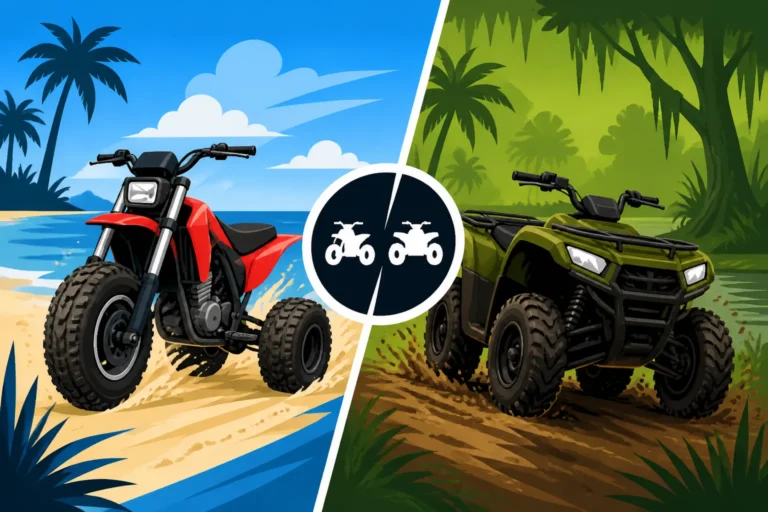
Florida law generally categorizes off-highway vehicles into a few distinct types, primarily ATVs (All-Terrain Vehicles) and ROVs (Recreational Off-Highway Vehicles, which we usually call UTVs or side-by-sides). For an ATV, the key characteristics include having three or four wheels, a seat designed to be straddled by the operator, and handlebars for steering. Critically, Florida law has a specific [Florida's 55-Inch ATV Definition and Why It Matters]. If your machine is wider than 55 inches, it generally doesn't qualify as an ATV under Florida's titling statute and is instead classified as an ROV.
ROVs, or UTVs, are generally wider, have a steering wheel, non-straddle seating (like a car), and can carry more passengers and cargo. They also have a dry weight limit. If your machine is significantly heavier than 1,500 pounds, it might not be considered an ROV for titling purposes either, pushing it into a different category entirely. Off-highway motorcycles, or dirt bikes, are also included in the OHV titling requirements, but they have their own specific definitions. The bottom line is that these definitions aren't just technical jargon; they are the legal framework that determines whether your beloved machine needs a title to legally exist in Florida's off-road world.
When a Title Becomes Mandatory
Now for the big question: do all ATVs and UTVs in Florida need a title? The answer isn't a simple yes or no, which is often the source of so much confusion. Florida law specifies a key trigger: your off-highway vehicle must be titled if it is operated on public lands. This is the crucial point for most riders. If you plan on taking your quad or side-by-side to a state forest, a national forest, or any other publicly managed trail system, then yes, it absolutely needs a title. This includes places like Croom Motorcycle Area, the Ocala National Forest, or Clear Creek OHV Area. [Riding Public Land as the Trigger for a Title]
What if you only ride on private property that you own, or on land where you have explicit permission? In those specific circumstances, the state doesn't require a title for operation. Many farmers, for instance, use their utility ATVs and UTVs exclusively on their private agricultural land and might never title them. However, even if you only ride on private land, having a title is still a smart move for all the reasons we just discussed: proving ownership, deterring theft, and simplifying any future sale. Think of it as investing in peace of mind. Without it, selling your machine later will be much harder, and proving it's yours if it's stolen becomes a bureaucratic nightmare.
The Titling Process: Step-by-Step for Florida Residents
You've decided it's time to get your OHV titled, or maybe you're a new Florida resident bringing in a machine from another state. The process can seem a bit like navigating a government office on a Monday morning – confusing and possibly long. But breaking it down into manageable steps makes it much clearer.
Gathering Your Essential Paperwork
This is often the first hurdle, and it's crucial to get it right. Having all your ducks in a row before you head to the tax collector's office will save you a lot of time and frustration. What you need depends largely on whether your OHV is brand new or used.
For a brand-new ATV or UTV purchased from a dealer, the most important document you'll receive is the Manufacturer's Certificate of Origin (MSO). This is essentially the birth certificate for your machine. It proves it's new, details its specifications, and names the initial owner (which is usually you). You'll also need a bill of sale from the dealer. If you're buying from a private seller, you'll need the previous owner's properly assigned title. Make absolutely sure that the previous owner has signed off on the title in the correct places, and that all information matches.
Regardless of whether it's new or used, a solid bill of sale is critical, especially for private party transactions. It should clearly identify both the buyer and seller, list the OHV's VIN, make, model, year, and the purchase price. A simple, clear bill of sale protects both parties. Services like LawDepot offer templates for bills of sale that can ensure you cover all the necessary legal bases, saving you the headache of drafting one from scratch. You’ll also need to prove your identity (driver's license or state ID) and residency in Florida. Finally, a VIN verification is often required, particularly for machines coming from out of state or those that haven't been previously titled in Florida. This step ensures the VIN on your paperwork matches the machine itself, helping prevent fraud. [Florida's ATV Title Application Explained] [Florida ATV Bill of Sale: What It Needs to Say]
Where to File Your Application
Once your paperwork is neatly organized, your next stop is the Florida County Tax Collector's office. This is the primary agency responsible for processing OHV titles. While Florida Highway Safety and Motor Vehicles (FLHSMV) sets the rules, it's your local county tax collector who handles the actual application. You can usually find a list of their branch offices and hours on your county's official website.
Many counties also have authorized private service centers that can process title applications, sometimes for an additional convenience fee. These can be a good option if your tax collector's office has notoriously long wait times or inconvenient hours. However, it's always a good idea to call ahead to any service center to confirm they handle OHV titles, as not all of them do. For example, if you live near Hernando County, you'd typically go to the Hernando County Tax Collector's office. Different counties might have slightly different procedures or wait times, so a quick phone call can save you a trip. [Where to File an ATV Title in Florida]
Understanding the Fees and Charges
Nobody likes surprise fees, especially when you're just trying to do the right thing. When you title your OHV in Florida, you'll encounter a few different charges. The initial title application fee is a standard amount set by the state. As of my knowledge, it covers the cost of processing your application and creating the official record. [The $29 Initial Title Application Fee Explained]
In addition to the base title fee, you'll also pay service charges. These are typically smaller fees that cover the administrative costs of the tax collector's office or the authorized service center that processes your application. These might be a few dollars here and there, but they do add up. Another significant cost you'll encounter is Florida sales tax. This is generally calculated based on the purchase price of your OHV. Even if you bought the machine from a private seller, you're still liable for sales tax at the time of titling, unless a specific exemption applies (like if it was a gift). The tax collector will collect this when you submit your title application. [Florida Sales Tax When You Title an ATV]
For those in a hurry, Florida does offer an expedited "Fast Title" option. This comes with an additional fee, but it can significantly speed up the processing time, allowing you to get your physical title (if you choose paper) much quicker. This can be particularly useful if you need to quickly sell the machine or if you're facing a deadline for some reason.
The Wait for Your Official Title
After you've submitted all your paperwork and paid your fees, the hardest part for many is the waiting game. The processing time for a Florida OHV title application can vary. Generally, if everything is in order, you can expect the process to take a few weeks. It's not an instant turnaround, so plan accordingly if you have a specific date you need the title by. [Florida ATV Title Application Processing Time]
Most modern titles in Florida are issued electronically. This means you won't receive a physical paper title in the mail unless you specifically request one and pay an additional fee. An electronic title is perfectly valid and is stored securely in the state's database. When you go to sell your OHV, the transfer of ownership can be done electronically as well. However, some people still prefer a physical paper title for their records, or because a buyer might expect one. Make sure you understand whether you're getting an electronic or paper title at the time of application, and ask for a paper copy if that's your preference.
Special Scenarios and Common Titling Hurdles
Life isn't always a straight line, and neither is OHV titling. Sometimes you buy a machine without a title, or you move to Florida with an out-of-state quad. These situations can throw a wrench into the works, but there are usually paths forward, even if they require a bit more effort.
Buying a Used ATV Without a Title
This is perhaps one of the most common and frustrating scenarios for Florida riders. You find a great deal on a used ATV or UTV, but the seller claims they never titled it, or they've lost the paperwork. What do you do? First and foremost, be extremely cautious. Buying a machine without a clear title can lead to significant headaches down the road, including the risk that the machine might be stolen.
If the seller legitimately never titled the machine from new, they should at least have the Manufacturer's Certificate of Origin (MSO) in their name, along with a bill of sale proving their purchase. This MSO can then be assigned to you. If the MSO is missing, or the seller has no proof of ownership at all, you're in a much trickier spot. In such cases, your options become very limited and often involve a process called a "bonded title." This is a complex legal procedure that requires purchasing a surety bond for the value of the machine, essentially insuring against any claims of prior ownership. It's a last resort and usually quite costly and time-consuming, and there's no guarantee of success. [Buying a Quad With No Title From a Neighbor] It's always best to insist on a properly titled machine or one with a clear MSO from the original owner to avoid these potential pitfalls.
Titling an Out-of-State Machine
Welcome to Florida! If you're a new resident bringing your off-highway vehicle with you, you'll need to get it titled here. The good news is the process is fairly straightforward, assuming your machine was properly titled in your previous state. You'll typically need to present your out-of-state title, along with proof of identity and Florida residency.
A key step for out-of-state machines is a VIN verification. This means a qualified individual must visually inspect your OHV to ensure the Vehicle Identification Number on the machine matches the one on your title documents. This helps prevent fraudulent titling of stolen vehicles. Who can perform this verification? In Florida, this can often be done by a law enforcement officer, a licensed dealer, or sometimes by specific personnel at the tax collector's office. Call your local tax collector ahead of time to confirm the acceptable methods and any specific forms you might need. Once verified, you'll follow a similar application process, including paying Florida's titling fees and sales tax (if applicable, credit may be given for tax paid in another state). [Titling an Out-of-State ATV After Moving to Florida] [Who Can Verify an ATV VIN in Florida?]
Lost, Damaged, or Incorrect Titles
Accidents happen. Maybe your title got shredded in the paper tray, or perhaps it was lost in a move or a natural disaster. The good news is that replacing a lost or damaged Florida OHV title is a relatively simple process. You'll typically need to fill out an application for a duplicate title, provide proof of identity, and pay a duplicate title fee. This can be done at your local tax collector's office. [Florida ATV Title Lost or Damaged: Getting a Duplicate]
What if you notice a typo on your title – perhaps your name is misspelled, or a VIN digit is incorrect? It's crucial to get these errors corrected immediately. An incorrect title can cause major problems when you try to sell the machine or if you ever need to prove ownership. To correct an error, you'll need to visit the tax collector's office, explain the discrepancy, and provide any necessary supporting documentation (like your driver's license for a name correction, or the MSO for a VIN error). They will guide you through the process of issuing a corrected title. [Fixing a Misspelled Name on a Florida Title]
Finally, if there's a lien recorded on your title (meaning you still owe money on the machine), and you've paid it off, you'll want to ensure the lien is properly released from your title. Usually, the lienholder (like a bank or credit union) will electronically notify the state when the loan is satisfied. However, it's a good idea to follow up and ensure that the lien has been removed from your title record.
Beyond the Initial Title: What It Means for Ownership and Riding
Getting your OHV titled isn't just a one-time chore; it has ongoing implications for how you interact with your machine, from selling it to protecting it. Understanding these long-term aspects is key to being a responsible and well-informed rider.
Title vs. Registration: What's the Difference?
This is a point of common confusion for many new OHV owners, especially those familiar with how cars are handled. In Florida, off-highway vehicles are titled, but they are generally not registered in the same way cars are. What does this mean?
When you title your ATV or UTV, the state establishes legal ownership and provides a record of that ownership. However, you will not receive a license plate or a registration decal to put on your machine. This is a crucial distinction. For cars, registration allows you to operate them on public roads. Since ATVs and UTVs are generally not street legal in Florida (with very limited exceptions for unpaved county roads in specific situations), they don't get traditional road registration. [Florida ATV Title vs Registration: The Difference] The title proves you own it, but it doesn't grant you permission to ride it on paved public roads. Understanding this difference is vital to avoid fines and potential impoundment if you mistakenly try to ride your titled OHV on prohibited roadways. Your title is proof of ownership, not a road permit. [What an OHV Title Does Not Let You Do]
Selling Your Titled OHV
When the time comes to upgrade or simply part ways with your machine, a properly titled OHV makes the selling process infinitely smoother. The title is the core document you'll transfer to the new owner, much like selling a car. You'll need to sign and date the appropriate sections on the title, typically assigning ownership to the buyer. Ensure all information is accurate and legible.
It’s also highly recommended to create a comprehensive bill of sale, even when transferring a titled OHV. This document, in addition to the signed title, clearly spells out the terms of the sale, the purchase price, and the condition of the machine. It serves as an extra layer of protection for both you and the buyer, documenting the transaction and helping avoid disputes later on. Again, resources like LawDepot can provide excellent templates for these critical documents, ensuring you don't miss any vital details. Make sure you also report the sale to the FLHSMV to remove your liability for the machine after it's in new hands. [Florida ATV Title Transfer After a Private Sale] This prevents any issues if the new owner, for example, abandons the machine or gets into an accident before properly retitling it themselves.
Why a Title is Your Best Friend for Theft and Insurance
Beyond the legal requirement for public land riding, having a title is genuinely about protecting your investment and your peace of mind. As mentioned earlier, if your OHV is stolen, the title is the absolute best proof of ownership you have. Law enforcement will rely heavily on the VIN and title information to trace and recover your machine. Without it, your claim of ownership becomes much harder to substantiate, complicating recovery efforts significantly.
Similarly, if you carry insurance on your ATV or UTV (which is a very good idea, even if not strictly required for private land use), your insurance company will almost certainly require the title number or VIN to underwrite your policy and to process any claims. In the unfortunate event of a total loss due to theft, fire, or accident, the title proves your legal right to receive a payout. Trying to file an insurance claim without a valid title can lead to significant delays, disputes, or even outright denial of your claim. Think of your title as the ultimate security blanket for your off-highway vehicle.
Florida OHV Titling Documentation Checklist
To help you keep track, here's a quick checklist of the common documents and information you'll need when titling your off-highway vehicle in Florida. Remember, specific situations may require additional items, so always check with your local tax collector's office.
| Document/Requirement | New Machine (Dealer Purchase) | Used Machine (Private Purchase) | Out-of-State Machine (New Resident) |
|---|---|---|---|
| Proof of Identity | Valid Driver's License or State ID | Valid Driver's License or State ID | Valid Driver's License or State ID |
| Proof of Florida Residency | Florida Driver's License/ID, utility bill, etc. | Florida Driver's License/ID, utility bill, etc. | Florida Driver's License/ID, utility bill, etc. |
| Manufacturer's Certificate of Origin (MSO) | Original MSO, properly assigned by dealer | N/A (Previous Title takes its place) | N/A (Previous State Title takes its place) |
| Previous Title | N/A | Original Title, properly assigned by seller | Original Out-of-State Title, in your name or assigned to you |
| Bill of Sale | From dealer, showing purchase price and VIN | From seller, showing purchase price, VIN, buyer/seller info | Not always required, but good to have for purchase history |
| VIN Verification | Not usually required if purchased from a Florida dealer | Required if title is unclear or for some transfers | Required for all out-of-state machines |
| Lien Information | If financed, lienholder information will be required | If lien exists, release of lien or lienholder information | If lien exists, release of lien or lienholder information |
| Application Form | HSMV 82040 (Application for Certificate of Title) | HSMV 82040 (Application for Certificate of Title) | HSMV 82040 (Application for Certificate of Title) |
| Fees | Title fee, service charges, sales tax | Title fee, service charges, sales tax | Title fee, service charges, sales tax (with credit for tax paid) |
Remember, this table is a general guide. It's always best practice to consult the Florida Department of Highway Safety and Motor Vehicles website or call your local County Tax Collector's office for the most current and specific requirements for your situation.
Disclaimer
This article is for general informational purposes only and does not constitute professional advice. Laws, prices and regulations vary by location and change over time. Consult a qualified professional for guidance on your specific situation.