A Missing VIN Plate on a Florida Quad
Finding that the Vehicle Identification Number (VIN) plate is missing from your beloved quad can be incredibly unsettling, leaving you wondering if your machine even has an identity anymore. It’s a real headache, especially when you think about selling it, getting it titled, or just proving it’s actually yours. This guide is here to walk you through the frustrating reality of a missing VIN plate on your Florida quad, explaining exactly what steps you need to take to sort things out and prevent future issues.
The Immediate Panic: Why a Missing VIN Plate is a Big Deal in Florida
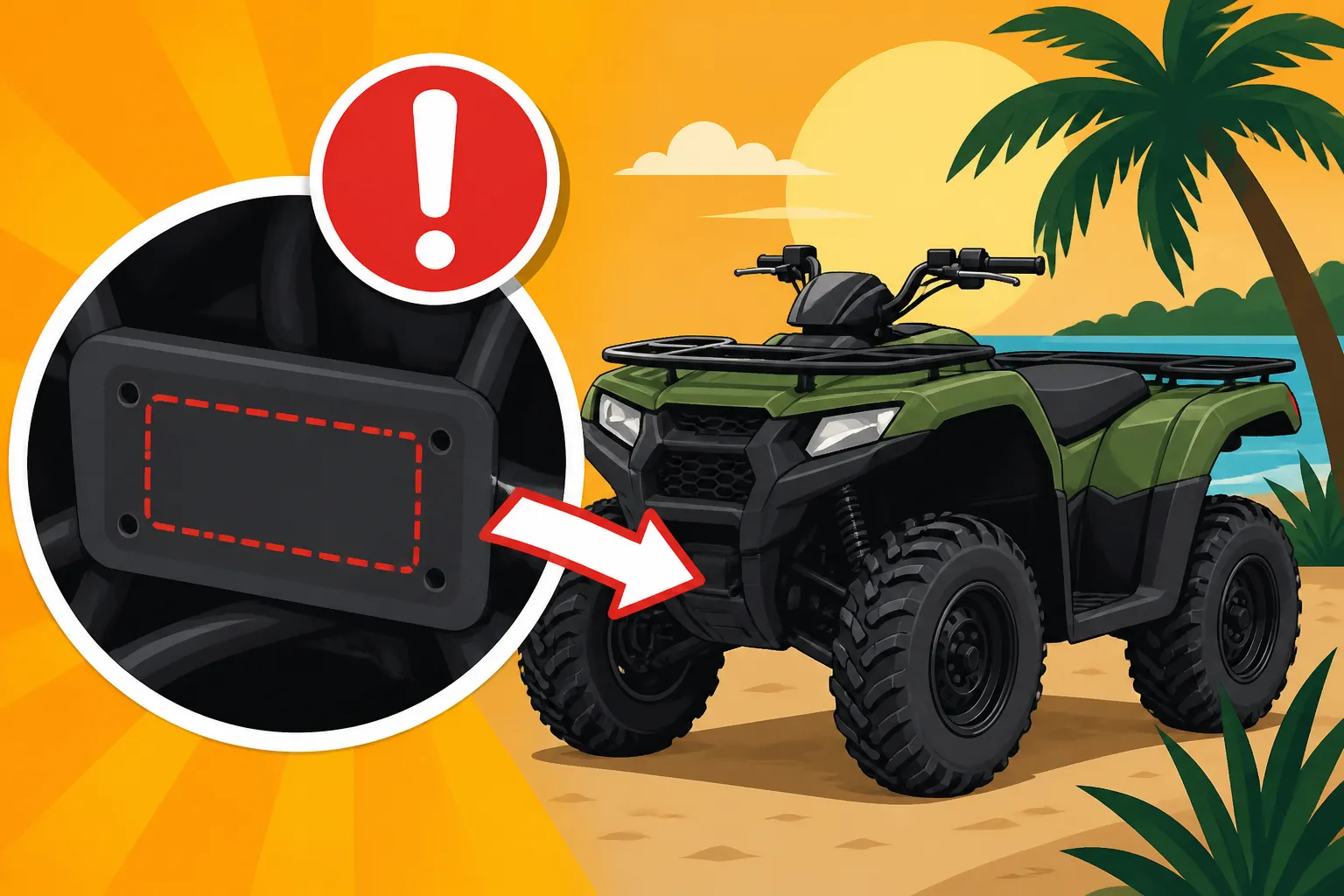
That moment you realize the VIN plate is gone can send a jolt of anxiety through any quad owner. It's not just a minor aesthetic flaw; a missing VIN plate in Florida is a serious issue that can complicate just about everything related to your ATV or UTV. The VIN is essentially your machine's unique fingerprint, its birth certificate, and its identity rolled into one. Without it, you’re left with a quad that, on paper, is essentially anonymous.
Proving Ownership Without a Visible VIN
One of the biggest immediate hurdles is proving that the quad belongs to you. Imagine trying to sell it, and a potential buyer asks for the VIN – a perfectly reasonable request – only for you to have no physical plate to show. Or, worse, what if your quad is stolen? How do law enforcement officials identify it as yours without that crucial identifier? It's like having a car without a license plate and trying to explain it to the police. Your ownership documents, like a bill of sale or previous title, are your first line of defense, but they almost always refer back to that VIN. This is why having all your paperwork in order, even without the plate, becomes paramount.
The state of Florida requires a VIN for just about any official transaction, from initial titling to transferring ownership. If you don't have a VIN that can be verified, you're looking at a roadblock that prevents legal ownership and operation. It's not just about compliance; it's about establishing clear, undisputed rights to your machine. Without that clear chain of identification, you could run into trouble if the quad's history comes into question, or if you ever need to involve authorities for any reason.
The Risk of Unrecorded Machines
Beyond the immediate ownership dilemma, an unrecorded or unidentifiable machine poses risks. When a VIN plate is missing, it can sometimes raise red flags, making people wonder if the machine was involved in something illicit or if it's been "chopped." While your situation might be entirely innocent – maybe the plate simply fell off or was damaged – the perception can be negative. Florida has specific requirements for titling off-highway vehicles, and a major part of that process is the VIN verification. If your quad doesn't have a visible, verifiable VIN, it can't be properly titled. This means you can't legally ride it on public lands, and you'll find it extremely difficult to sell it through legitimate channels.
The Department of Highway Safety and Motor Vehicles (DHSMV) relies heavily on the VIN to track vehicles and ensure proper taxes and fees are collected. A missing VIN plate can therefore lead to significant complications down the road, potentially resulting in fines or other penalties if you're caught operating an untraceable machine on property where a title is required. It's a frustrating situation that forces you to navigate bureaucratic channels, all because of a small metal plate.
First Steps and Gathering Proof of Ownership
Okay, take a deep breath. A missing VIN plate isn't the end of the world for your quad, but it does mean you have some detective work ahead. The very first thing you need to do is gather every single piece of documentation you have related to that machine. This is your lifeline.
Digging Through Your Paperwork
Start by looking for anything that includes the VIN. Did you buy the quad new? Then your Manufacturer's Certificate of Origin (MSO) is gold. It's the original "birth certificate" for your ATV or UTV. If you bought it used, you should have a previous title. Even if it's from another state, it's still crucial. Look for old bills of sale, insurance policies, repair records, or even financing agreements. Any document that lists your machine’s VIN is extremely helpful. These documents establish a paper trail, which is absolutely vital when the physical VIN plate is gone.
Sometimes, people lose their MSO or misplace the previous title, adding another layer of complexity. If this is your situation, don't despair, but prepare for a slightly longer process. You might need to contact the previous owner, if possible, to see if they have copies of older documents. For private sales, a detailed bill of sale, especially one created with a service like LawDepot, that explicitly states the VIN and ownership transfer can be a saving grace, even if the plate itself is gone. Even if the VIN wasn't visible when you bought it, hopefully, it was written on the bill of sale.
What if You Have No Paperwork?
This is the trickiest scenario. If you have no MSO, no previous title, and only a flimsy handwritten bill of sale (or none at all), the road ahead gets steeper. In such cases, Florida’s DHSMV will need strong evidence to confirm your ownership and the quad’s identity. You might need to swear out an affidavit of ownership, explaining how you came into possession of the quad and why you lack standard documentation. This affidavit essentially formalizes your sworn statement about ownership, but it needs to be backed up by as much corroborating evidence as possible. Photos of the quad (especially if you have any from when you first acquired it), maintenance records, or even witness statements from people who know you own the machine can help build your case. This situation is why the state has processes like [What a Bonded Title Takes in Florida] – a method to provide ownership for vehicles without clear paper trails, though it can be a lengthy process.
The VIN Verification Process in Florida
Once you've gathered all your available documentation, the next critical step is getting your quad's VIN verified. Even if the plate is missing, there are usually other places on the machine where the VIN is stamped or affixed. This verification is a mandatory part of titling in Florida, especially when the primary VIN plate is compromised or absent.
Who Can Perform a VIN Verification?
In Florida, specific entities are authorized to perform VIN verifications. Your local county tax collector's office can often point you to where you can get this done. Typically, it’s done by:
- Law Enforcement Officers: This includes police, sheriff's deputies, or Florida Highway Patrol officers. They are trained to locate VINs and identify potential tampering.
- Florida Department of Highway Safety and Motor Vehicles (DHSMV) personnel: Certain DHSMV representatives are authorized to conduct these inspections.
- Licensed Dealers: If you're dealing with a reputable ATV/UTV dealer, they might be able to assist, especially if they have an on-site inspector.
- Tax Collector Employees: Some county tax collector offices have employees specifically authorized to perform VIN inspections.
The process usually involves completing a form, often a HSMV 82042 form, which details the vehicle information and the results of the inspection. The officer or authorized agent will physically inspect your quad, looking for the VIN stamped on the frame, engine, or other components. This is where your machine's hidden identifiers become crucial. They know common locations where manufacturers stamp secondary VINs, sometimes less obvious than the main plate. You can read more about this in [Who Can Verify an ATV VIN in Florida?].
What Happens During the Verification?
When you bring your quad in for verification, the inspector will systematically search for the VIN. Manufacturers often stamp the VIN in multiple locations on the frame, sometimes under seats, near the engine mount, or on other structural components. They'll compare any numbers they find against your existing documentation.
If a VIN is found and it matches your paperwork, the inspector will complete the verification form, essentially confirming that the vehicle you possess corresponds to the documentation you have. This is a huge step forward. They'll certify that the VIN is present and appears legitimate.
However, if no VIN can be found, or if the inspector suspects tampering, the situation becomes much more complicated. Tampering could include grinding off numbers, restamping, or other alterations. In such cases, the officer will likely refuse to complete the verification and may even launch an investigation to determine the origin of the vehicle. This is why it’s always critical to know the history of any quad you purchase, especially if you're buying a [Buying a Quad With No Title From a Neighbor].
Table: Common Locations for ATV/UTV VINs
Knowing where to look can help you prepare for the verification process. While the primary plate is often on the steering head or front frame, secondary stamps are critical.
| Location Type | Common Spot on ATV/UTV | Notes |
|---|---|---|
| Steering Head/Neck | Often on the frame tube where the handlebars attach. | Most common location for the primary VIN plate or sticker. |
| Front Frame Crossmember | Behind the bumper, underneath the front of the frame. | Stamped directly into the metal. |
| Rear Frame | Near the rear axle, often on a frame rail or crossmember. | Can be harder to spot due to mud/debris. |
| Engine Block | Stamped onto the engine casing itself. | Usually visible, but may be obscured by hoses or components. |
| Transmission Casing | On the side or bottom of the transmission. | Less common, but some manufacturers use it. |
| Under Seat / Fender | Sometimes on a subframe component beneath the seat or fender. | May require removal of plastic bodywork to access. |
Always ensure the area is clean and free of mud or debris before inspection. A wire brush and some cleaner can often reveal a hidden VIN that's just caked in dirt.
Addressing Titling Challenges and Potential Solutions
Even after a successful VIN verification, getting your quad fully titled with a missing original VIN plate can still present unique challenges. Florida has processes in place for these scenarios, but they require diligence and patience.
Applying for a Title After Verification
Once you have that completed VIN verification form, you'll proceed to your county tax collector's office with all your other documentation – your proof of ownership (MSO, bill of sale, previous title), your valid photo ID, and the required fees. The tax collector will review everything. If all checks out, they will process your application for an Off-Highway Vehicle (OHV) title. It’s important to understand that even with a verified VIN, the process might be slower than a straightforward title transfer, as the missing plate adds a layer of scrutiny. The application process and associated fees are detailed further in resources like [Florida's ATV Title Application Explained] and [The $29 Initial Title Application Fee Explained].
Be prepared for questions and potentially longer processing times. The state wants to ensure that no fraudulent activity is taking place. If the tax collector still has concerns, they might ask for additional affidavits or documentation to solidify your claim of ownership. This is another situation where a well-drafted legal document, perhaps put together using an online service like LawDepot, can help explain the circumstances surrounding the missing plate and your legitimate ownership.
What if the VIN Cannot Be Found or Verified?
This is the most challenging outcome. If a VIN verification cannot be completed because no numbers can be found, or if there's evidence of tampering, your options become more limited.
- Rejection of Titling: The tax collector's office will likely reject your titling application. Without a verifiable VIN, the state cannot issue a legal title, as the machine cannot be uniquely identified.
- Bonded Title: For legitimate owners who simply cannot establish a clear chain of ownership or verify a VIN, Florida offers a bonded title process. This usually involves purchasing a surety bond for a certain value of the vehicle. This bond protects the state and any previous unknown owners against potential claims. The bonded title essentially acts as proof of ownership for a period (often three years), after which, if no claims are made, a clear title can be issued. This is a complex process, and you’ll need to research [What a Bonded Title Takes in Florida] thoroughly. It's often a last resort for vehicles where the history is murky.
- Application for a New VIN: In very specific cases, if a vehicle is determined to be legitimate but has no verifiable VIN (perhaps it's a "homemade" quad or one assembled from parts), the state might issue a new VIN. This typically involves an extensive inspection by the DHSMV and adherence to strict regulations for rebuilt or assembled vehicles. This process is generally more applicable to significant rebuilds rather than just a missing plate, but it’s an avenue to explore if all else fails. You can learn more by looking into [Titling a Homemade or Rebuilt ATV in Florida].
Long-Term Considerations and Prevention
Once you do get your quad titled with a new or verified existing VIN, it’s wise to take steps to prevent this headache from happening again. Consider getting a secondary, permanent VIN etching on the frame in a discreet but accessible location. Keep all your documentation, including the VIN verification form and your new title, in a safe place. If you ever sell the quad, make sure the bill of sale clearly states the VIN and references the circumstances of the original missing plate, if applicable. A comprehensive bill of sale, readily available through platforms like LawDepot, can ensure all parties are protected and the information is accurately recorded.
Dealing with a missing VIN plate is undoubtedly a hassle, but by understanding Florida's requirements and following these steps, you can navigate the process and ensure your quad is legally identifiable and rightfully yours.
Disclaimer
This article is for general informational purposes only and does not constitute professional advice. Laws, prices and regulations vary by location and change over time. Consult a qualified professional for guidance on your specific situation.