Does a Florida Quad Title Need a Notary?
One of the most common headaches for anyone navigating the world of Florida ATV and UTV ownership is the paperwork. Specifically, the question of whether a Florida quad title needs a notary can leave even experienced riders scratching their heads. You might be used to other legal documents, like real estate deeds or certain affidavits, always requiring that official stamp. But when it comes to titling your off-highway vehicle (OHV) in the Sunshine State, the rules aren't always what you'd expect. This guide will cut through the confusion and clarify exactly when, if ever, a notary is required for your Florida ATV title.
The Basics of Florida ATV Titling
Before we dive into the specifics of notarization, let's lay a solid foundation regarding how ATVs and UTVs are titled in Florida. Understanding the general process will make the notary requirements much clearer.
Why Florida Titles Off-Highway Vehicles
You might have heard that Florida is one of the states that requires titling for off-highway vehicles, and it's true. Unlike some states that only require a basic registration or decal for public land use, Florida goes a step further by mandating an actual certificate of title for most ATVs and UTVs. The primary reason for this is to establish clear proof of ownership. This title certificate is a critical document, much like a title for a car, proving who legally owns the machine. It helps deter theft, aids in recovery if a machine is stolen, and streamlines the process of buying and selling. Without a title, proving ownership can become a real nightmare, especially in a private sale scenario. Beyond ownership, the title also plays a role if you plan to ride on public lands, which often require you to have a properly titled machine. It's often misunderstood, but a title is distinct from an annual registration or permit you might need for specific riding areas. For a deeper dive, check out [Florida ATV Title vs Registration: The Difference].
What Paperwork the State Requires
When you head to your local county tax collector's office or a service center to title your ATV, you'll need to come prepared with a specific set of documents. For a brand-new machine purchased from a dealer, you'll typically need the Manufacturer's Certificate of Origin (MCO), which is basically the birth certificate of your quad. For a used ATV, you'll need the previous owner's properly assigned Florida title certificate. In both cases, you'll also complete a Florida Department of Highway Safety and Motor Vehicles (FLHSMV) application form, usually Form HSMV 82040, "Application for Certificate of Title With/Without Registration." This form captures all your details, the machine's information, and acts as your official request for a title.
Beyond these core documents, you'll also need proof of identity and residency, and crucially, for certain transactions (like bringing in an out-of-state ATV or titling a used machine for the first time in Florida), a Vehicle Identification Number (VIN) verification. This verification ensures the machine's VIN matches the paperwork and hasn't been tampered with. It's an essential fraud prevention step. Sometimes, a bill of sale is also required or highly recommended, particularly for used machines bought from a private seller, even if you have the title. This document provides a record of the transaction, including the purchase price, which is vital for calculating sales tax. [Florida's ATV Title Application Explained] offers more detail on filling out these forms.
Navigating Notary Requirements for Your Florida Quad Title
This is where the rubber meets the road on the core question. Understanding exactly when a notary's stamp is required, and when it's not, can save you a lot of time and frustration.
When a Notary Isn't Needed for a Standard Application
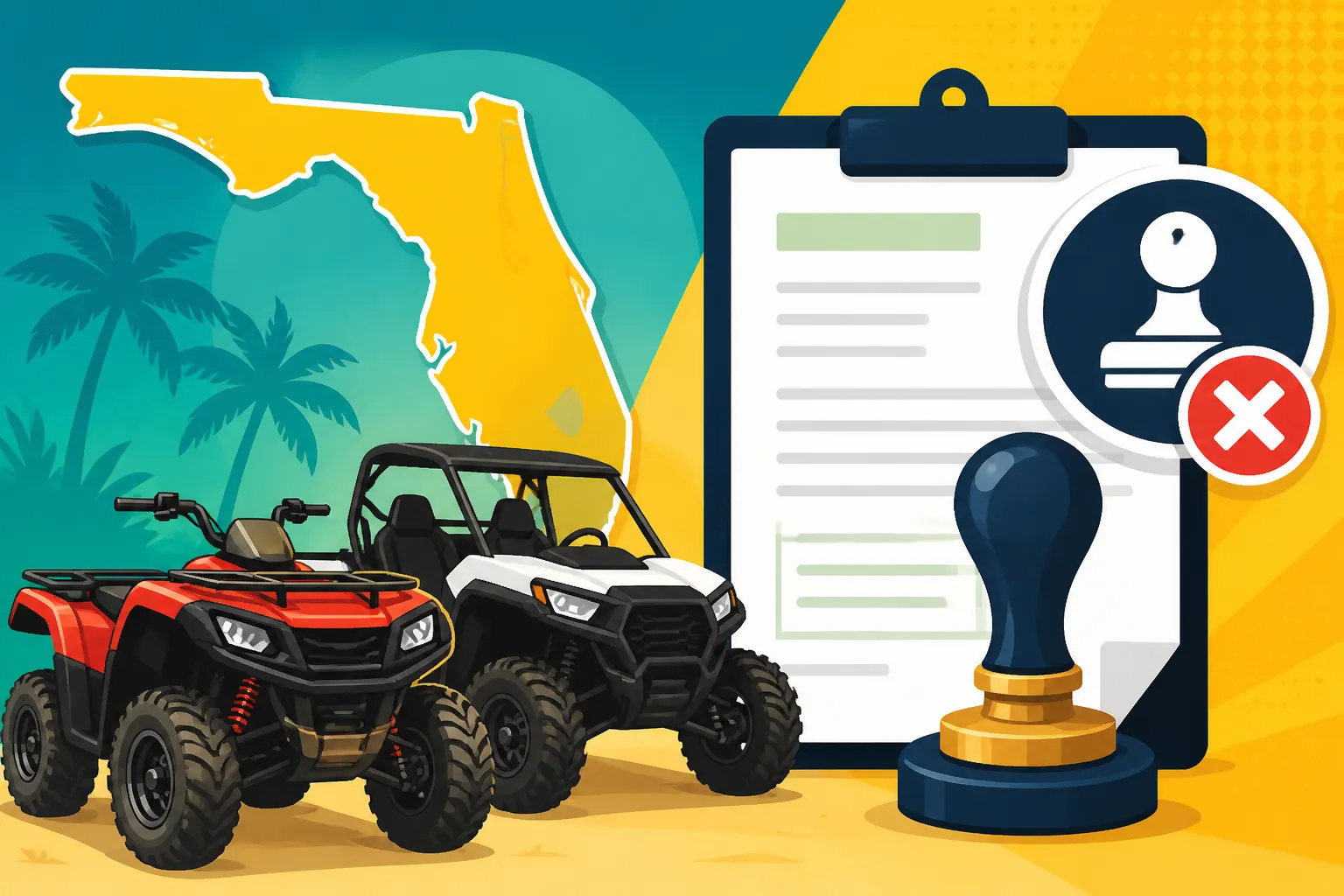
Here's the good news that often surprises people: your signature on the main Florida Certificate of Title Application (Form HSMV 82040) generally does NOT need to be notarized by you, the applicant. This is a frequent point of confusion because many other significant legal documents require a notary to attest to your signature. For example, if you were preparing a will or a specific type of legal affidavit, you'd almost certainly need a notary present. However, for the standard act of applying for an ATV title in Florida, the state does not typically require your signature as the buyer or new owner on the primary application form to be notarized.
When you present your application at the tax collector's office, the clerk will verify your identity, witness your signature, and process your paperwork. Their verification serves the purpose that a notary might for other documents. This streamlined process is designed to make titling more accessible without adding an extra step that could be inconvenient for many Floridians. While you might feel compelled to get every document notarized "just in case," it's usually an unnecessary step for your own signature on the title application itself and won't be requested by the state for this specific part of the process.
Specific Scenarios Where Notarization Comes Into Play
While your direct signature on the primary title application isn't usually notarized, there are definitely specific scenarios where a notary public's stamp becomes very important in the ATV titling and transfer process. Missing a required notarization in these situations can lead to delays or rejection of your application.
One of the most common instances where notarization is crucial is on the VIN verification form. If your ATV is coming from out of state, or if it's a rebuilt or homemade machine, it will need a physical inspection to verify the Vehicle Identification Number. This verification must be performed by a law enforcement officer, a Florida licensed dealer, or a notary public authorized to perform VIN verifications. The person performing the verification must sign the verification section of the application form (or a separate verification form) and have their signature notarized (unless they are a certified dealer or law enforcement officer, in which case their official stamp or badge number suffices). This ensures the integrity of the VIN verification process. You can find more information about this at [Who Can Verify an ATV VIN in Florida?].
Another key document where notarization is highly recommended, and sometimes effectively required, is the bill of sale. While Florida law generally doesn't mandate a notarized bill of sale for an ATV title transfer specifically, having one is a very strong best practice, especially for private party sales. A notarized bill of sale adds a layer of legal protection for both the buyer and the seller. It confirms the identities of the parties involved and verifies that the signatures on the document are authentic. This can be invaluable in preventing future disputes over the sale price, date of sale, or even claims of fraud. If you're using a template for a bill of sale, services like LawDepot offer customizable forms that can easily be notarized, giving you that extra peace of mind.
Finally, affidavits are almost always notarized. If you've lost your original title, you might need to submit an affidavit swearing that it's lost and you haven't transferred it to someone else. Similarly, if you're trying to title an ATV but the Manufacturer's Certificate of Origin (MSO) is missing, you might need an affidavit of ownership. These sworn statements, by their very nature, require notarization to confirm the identity of the person making the statement and that they swore to the truthfulness of its contents under penalty of perjury. [Florida ATV Title Lost or Damaged: Getting a Duplicate] has more information on this.
The Transfer of Ownership: Private Sales and Notarization
Understanding the role of notarization during a private sale of an ATV is critical for a smooth and legally sound transaction for both the buyer and the seller. This is often where confusion truly reigns supreme.
Seller's Responsibilities and Your Peace of Mind
When you're buying a used ATV from a private individual in Florida, the seller has some key responsibilities, and ensuring proper documentation is paramount. The seller must sign the existing Florida title certificate, effectively assigning it over to you, the new owner. This signature should be clear and match the name printed on the title. If there are two names on the title, often both signatures are required for transfer, depending on how the names are joined (e.g., "and" vs. "or").
While the state itself may not require the seller's signature on the title certificate to be notarized, having a separate, notarized bill of sale is an incredibly smart move for both parties. For the seller, it provides irrefutable proof that they sold the ATV on a specific date to a specific person, for a specific amount. This protects them from any future liability or claims of ownership once the machine is out of their hands. Imagine a scenario where the buyer never titles the ATV in their name and later abandons it or gets into an accident. Without a notarized bill of sale, the original seller could potentially still be linked to the machine.
For you, the buyer, a notarized bill of sale offers similar protections. It legally binds the seller to the transaction and helps confirm the authenticity of the sale. If, for instance, there's a discrepancy later with the title, or if the seller tries to claim they never sold the ATV, your notarized bill of sale stands as strong evidence. It acts as a concrete record of the transfer, even if the physical title certificate itself is electronic or has some minor issue. This peace of mind is invaluable, especially when dealing with transactions outside of a formal dealership setting. You might also want to explore [Florida ATV Bill of Sale: What It Needs to Say] for specifics on what to include.
The Role of a Bill of Sale in Florida ATV Transfers
The bill of sale is a powerful document in the transfer of an ATV, even when the actual title certificate is present. It serves as a clear, written contract between the buyer and the seller, detailing the transaction. For Florida ATV transfers, it's particularly important for several reasons. First, it establishes the purchase price, which the state uses to calculate the sales tax you owe when you go to title the machine in your name. Without a bill of sale or a clearly stated purchase price on the title, the tax collector may use an estimated market value, which could be higher than what you actually paid.
Second, as mentioned, a bill of sale provides crucial proof of the transaction date and terms. This is particularly important if you're dealing with a lost or delayed title, or if you encounter issues with the state's processing. A well-crafted bill of sale should include the full names and addresses of both buyer and seller, the date of sale, the make, model, year, and VIN of the ATV, the agreed-upon purchase price, and a statement that the vehicle is being sold "as-is" (if applicable). Both parties should sign it.
While you can write one up yourself, using a reputable template can ensure you don't miss any critical details. Online services like LawDepot provide state-specific bill of sale templates that you can customize and print. Having this document, especially if it's notarized, strengthens your position as the new legal owner and simplifies the titling process at the Department of Highway Safety and Motor Vehicles. It's often the first thing the clerk asks for after the title itself, providing supplemental information that makes their job (and your life) easier.
Avoiding Common Pitfalls with Florida ATV Notary Rules
Navigating any state's bureaucracy can be tricky, and Florida's ATV titling process is no exception. A little foreknowledge can save you a lot of headaches, especially when it comes to notarization.
Misunderstandings About the Application Form
One of the most frequent misunderstandings stems from people's general experience with legal documents. Many assume that any official form they sign for the state needs to be notarized. For the main Florida Application for Certificate of Title With/Without Registration (HSMV 82040), this simply isn't true for your signature as the applicant. You'll sign it in the presence of the clerk at the tax collector's office, and they will verify your identity. Trying to get your signature notarized beforehand is an extra step that isn't required and won't expedite the process.
However, the key distinction, and where many people stumble, is that the VIN verifier's signature does need to be notarized if they are a private individual acting as a notary public authorized for VIN verification. If a law enforcement officer or a licensed Florida dealer performs the VIN verification, their official capacity and stamp/seal substitute for a notary. So, while you aren't notarizing your own signature for the title application, you need to ensure that the VIN verification portion (if applicable to your transaction) has been properly executed and, if necessary, notarized by the verifying party. Forgetting this crucial detail can lead to your application being rejected on the spot, forcing you to go back and get the verification properly done.
When in Doubt, Ask the Experts
Given the nuances of Florida's titling laws, especially when it comes to specific scenarios like inheriting a quad, titling a homemade machine, or dealing with a lost MCO, it's always best to err on the side of caution. If you're unsure whether a particular document needs notarization for your specific situation, don't guess. The quickest and most reliable way to get accurate information is to contact your local Florida county tax collector's office directly. Their staff handles these applications every day and can provide definitive answers based on the most current regulations.
You can usually find their contact information and often a list of required documents for various transactions on their official county website. Some counties even offer online chat services or detailed FAQs. Taking a few minutes to make a call or check their site can save you hours of wasted time, gas money, and potential frustration from having to return with corrected paperwork. Remember, every little detail matters, and presenting a complete and accurate application the first time around is the best way to ensure your Florida ATV title is issued without a hitch. Getting a sense of [Florida ATV Title Application Processing Time] can help manage your expectations after submission.
Beyond the Notary: Other Title Application Considerations
While notary requirements are a key piece of the puzzle, they're just one part of successfully titling your ATV in Florida. There are other critical elements you'll need to consider to ensure a smooth process.
VIN Verification: A Mandatory Step
For many ATV titling scenarios in Florida, particularly when you're bringing an out-of-state machine into Florida, titling a used ATV for the first time in Florida, or titling a homemade or rebuilt quad, a VIN verification is a non-negotiable step. This process involves a physical inspection of your ATV to confirm that the Vehicle Identification Number on the machine matches the VIN on your ownership documents (like the MCO or previous title). It's a vital safeguard against theft and fraud, ensuring that the machine you're trying to title is legitimately yours and accurately identified.
Who can perform this verification? In Florida, it can be done by a law enforcement officer (such as a sheriff's deputy or police officer), a Florida-licensed motor vehicle dealer, or a notary public authorized to perform VIN verifications. As discussed earlier, the person performing the verification will sign the appropriate section of the title application form, or a separate VIN verification form, and their signature will either be notarized (if by an authorized notary) or certified by their official capacity (if by law enforcement or a dealer). Make sure this step is completed correctly before you head to the tax collector's office, as it's a common reason for application delays. For more specific guidance, read [Who Can Verify an ATV VIN in Florida?].
Fees, Taxes, and Service Charges
Getting your Florida ATV title also involves various costs, and it's essential to be aware of them upfront so you're not caught off guard. These fees typically include an initial title application fee, which covers the state's cost for processing and issuing your title certificate. There's also usually a service charge added by the county tax collector's office for handling the transaction. This is a standard fee applied to almost all motor vehicle transactions they process.
Perhaps the most significant cost for many buyers will be the Florida sales tax. If you purchase an ATV, whether new or used, you'll generally be required to pay sales tax on the purchase price. This tax is calculated based on the sales price you declare on your bill of sale or title application. If you buy from a licensed dealer, they will typically collect and remit the sales tax for you. If you buy from a private seller, you will pay the sales tax directly to the county tax collector when you apply for your title. It's crucial to factor this into your budget when purchasing an ATV, as it can add a substantial amount to the overall cost. For a detailed breakdown of these expenses, refer to [Florida ATV Title Fee Breakdown: $29 Plus Service Charges] and [Florida Sales Tax When You Title an ATV].
Beyond these, there might be additional small fees for things like expedited "fast title" service if you need your paper title quickly, or if you request a paper copy of an electronic title. Always call ahead to your county tax collector's office or check their website for the most current fee schedule, as specific amounts can vary or be updated.
Here's a quick overview of common documents and their typical notary status for Florida ATV titling:
| Document/Action | Notary Required for Your Signature (Applicant/Owner) | Notary Required for Other Signatures/Verifications | Purpose |
|---|---|---|---|
| FLHSMV Form 82040 (Title Application) | NO (Signed in presence of clerk) | YES (For VIN verifier's signature, if not LE/dealer) | Your request to the state for a certificate of title. |
| Bill of Sale (Private Sale) | NO (But HIGHLY Recommended for both parties) | YES (Recommended for both parties) | Establishes terms of sale, purchase price, and acts as proof of transaction, protecting both buyer and seller. Helps for sales tax calculation. |
| Manufacturer's Certificate of Origin (MCO) | NO (Signed by dealer, if applicable) | N/A (Original document from manufacturer) | The "birth certificate" for a new ATV, establishing first ownership. |
| Previous Florida Title Certificate (Transfer) | NO (Seller's assignment on title) | NO (Seller's assignment on title) | The official document transferred from seller to buyer; seller signs to assign ownership. |
| Affidavit of Ownership/Lost Title | YES (Always for sworn statements) | YES (Always for sworn statements) | A sworn statement to the state, typically used when original proof of ownership is missing or to attest to certain facts under penalty of perjury. |
| Power of Attorney | YES (If granting power to someone else) | YES (If granting power to someone else) | A legal document allowing one person to act on behalf of another in specific matters, often including vehicle transactions. |
| Lien Release | NO (Signed by lienholder) | N/A (Issued by lienholder) | Document from a financial institution confirming a loan has been paid off and the lien on the title should be removed. |
Disclaimer
This article is for general informational purposes only and does not constitute professional advice. Laws, prices and regulations vary by location and change over time. Consult a qualified professional for guidance on your specific situation.