Taking a Titled Quad Out of Florida
So, you've got your beloved quad, the one you've spent countless weekends tearing up Florida's trails or even just cruising your private property, and now life is taking you, or the machine itself, out of the Sunshine State. Maybe you're relocating for a job, moving closer to family, or perhaps you've sold your ATV to a buyer in Georgia or Alabama. Whatever the reason, dealing with a Florida-titled quad when it leaves the state can feel like navigating a whole new set of confusing rules. This guide is here to demystify the process, explain what you need to do with your Florida title, and help you prepare for its journey beyond our state lines.
Why Your Florida ATV Title Matters Beyond State Lines
It's easy to think once you leave Florida, its rules and paperwork just melt away like an ice cream cone on a hot summer day. But that's not quite how it works, especially when it comes to something as important as your vehicle's title. Your Florida ATV title is more than just a piece of paper; it's the legal document that establishes ownership of your off-highway vehicle (OHV). Without it, proving you lawfully own your quad, selling it, or even titling it in another state can become a massive headache, turning a simple process into a bureaucratic nightmare.
Proving Ownership and Preventing Theft
Imagine trying to sell your quad, say to a buyer in Tennessee, and not having a clear title to present. How would they know it’s truly yours? How would they confidently invest their hard-earned money? A valid Florida title is your undeniable proof of ownership. It contains critical information like the Vehicle Identification Number (VIN), make, model, and year, all linked directly to you (or your lienholder, if you financed it). In the unfortunate event of theft, a title is often the first piece of documentation law enforcement will ask for to help recover your machine. Losing track of your title, or failing to properly transfer it, can leave you vulnerable. We've all heard stories about people getting burned by a private sale gone wrong, often because the ownership chain wasn't clear. That's why understanding your [Florida Off-Highway Vehicle Title Rules Explained] is so important, even if you plan to move on.
The Role of a Florida Title in Out-of-State Transactions
When you're taking your quad out of Florida, whether it's because you're moving or selling it to someone in another state, the Florida title acts as the foundation for whatever comes next. If you're moving and plan to re-title the quad in your new state, the Florida title is what the new state's Department of Motor Vehicles (or equivalent) will use to verify your ownership and issue a new title. They'll scrutinize it, looking for any liens recorded, proper signatures, and correct information. If you're selling it, the Florida title is what you'll sign over to the new owner, officially transferring legal ownership. This makes the title a critical bridge between Florida's titling system and whatever system the next state uses. Without it, you might find yourself in a situation similar to needing to [Title an Out-of-State ATV After Moving to Florida], but in reverse, which comes with its own set of unique challenges.
Preparing Your Florida Title for Its Journey
So, you've established that your Florida title is indeed very important. Now, let's talk about getting it ready for whatever lies ahead. The specific steps you take will depend on whether you're moving with your quad or selling it. However, a few general principles apply to both scenarios. Always ensure your title is in good condition, free from damage, and that all information on it is accurate.
Checking for Liens and Securing a Paper Title
Before your quad ever crosses a state line, one of the first things you absolutely must do is check for any outstanding liens recorded against the title. Many people finance their ATVs, and if you still owe money on your quad, the lender will have a lien recorded on your Florida title. This means you don't fully own the quad until that lien is satisfied. You cannot legally transfer ownership to a new buyer or even re-title it in a new state without the lien being released.
If your title is currently electronic (which is quite common in Florida), and you need a physical paper title for an out-of-state transaction, you'll need to request one from the Florida Department of Highway Safety and Motor Vehicles (FLHSMV). This is especially crucial if the receiving state only accepts paper titles or if you're making a private sale where a physical title exchange provides immediate proof of transfer. While Florida is generally moving towards electronic titles, many other states, or even certain private lenders, might still require a paper copy. You can learn more about the difference in [Electronic Title vs Paper Title for a Quad] to understand what you might need. Requesting a paper title usually involves a small fee and some processing time, so don't wait until the last minute!
Gathering Essential Documentation
Whether you're moving or selling, having all your ducks in a row with supporting documentation can make the transition smoother. This often includes more than just the title itself.
- Bill of Sale: If you're selling the quad, a comprehensive bill of sale is critical. This document protects both you and the buyer by outlining the terms of the sale, the purchase price, and confirming the transfer of ownership. Even if your new state doesn't explicitly require it, it's wise to have one. Websites like LawDepot can provide customizable bill of sale templates that ensure all necessary information is included, giving both parties peace of mind. A good bill of sale will capture details that sometimes get missed in casual transactions, like the exact date and time of the sale, which can be important for liability.
- Proof of Identity: When signing over a title or filling out forms, you'll almost always need a valid photo ID, such as a driver's license. Ensure your ID matches the name on the title perfectly.
- Lien Release: If you paid off a loan recently, make sure you have the official lien satisfaction document from your lender. Without it, the new state or buyer won't know the quad is free and clear.
- Maintenance Records: While not legally required, having maintenance records can be a huge selling point for a buyer and can help establish the history of the machine if any questions arise during a re-titling process.
- Photos: Taking photos of the quad, especially its condition and the VIN plate, before it leaves your possession or crosses state lines, can be helpful for your records.
Scenarios: Moving, Selling, or Gifting Out of State
The path you take with your Florida-titled quad will largely depend on its ultimate destination and purpose. Each scenario has its own nuances, and it’s important to understand them to avoid any unwelcome surprises.
Scenario 1: Moving Your Quad to a New State
If you're packing up your life and your quad is coming with you to your new home outside of Florida, your primary goal will be to title and potentially register it in your new state of residence. Each state has its own specific requirements and timelines for new residents.
- New State's Rules: The very first step is to research the OHV titling and registration rules of your destination state. Some states might require you to get a new title immediately, while others might allow you a grace period. They will almost certainly require your Florida title as proof of ownership. They'll also check for any outstanding liens and verify the VIN. Don't assume your Florida title or registration transfers automatically; they almost never do. What Florida considers an ATV, another state might classify differently, leading to different titling requirements. For more on what Florida defines, you can read [Florida's 55-Inch ATV Definition and Why It Matters].
- Proof of Residency: When you go to title your quad in your new state, you'll need to prove you are a resident there. This could involve a utility bill, a new driver's license from that state, or a lease agreement.
- Emissions and Inspections: While less common for ATVs than for cars, some states might have inspections for off-road vehicles. Check these requirements beforehand.
- Sales Tax: Depending on your new state's laws, if you've owned the quad for a short period, or if there's a significant difference in sales tax rates, you might owe additional sales tax when you re-title it. Most states provide an exemption for personal property moved as part of a residency change, but it's always worth verifying.
Scenario 2: Selling Your Quad to an Out-of-State Buyer
Selling your quad to someone in another state introduces a few more considerations, primarily revolving around a smooth and legally sound transfer of ownership. You want to make sure you're protected and the buyer has everything they need to title the quad in their state.
- Clear Title Transfer: This is where your Florida title truly shines. You will sign the title over to the buyer in the designated area. Make sure all signatures are present and legible. If there's a lien, ensure it's been released and recorded, or that the buyer is aware and the sale terms address it. A proper [Florida ATV Title Transfer After a Private Sale] requires meticulous attention to detail.
- Bill of Sale (Again!): I can't stress this enough. A comprehensive bill of sale is crucial for private sales, especially across state lines. It details the quad, the sale price, the date, and confirms that ownership has transferred. It can also include an "as-is" clause if you're selling it that way. LawDepot offers excellent templates for these documents, which can be invaluable when dealing with buyers from different states who may not be familiar with Florida's specific rules. Having a professionally structured document helps prevent future disputes.
- Sales Tax Considerations: When selling to an out-of-state buyer, generally, the sales tax is the buyer's responsibility in their home state when they title the quad there. You, as the seller, typically don't collect Florida sales tax unless the transaction occurs entirely within Florida and the buyer is taking immediate possession here. However, verify this with your state's and the buyer's state's tax agencies. Don't take chances here. For context, you can research [Florida Sales Tax When You Title an ATV] to see what applies here in Florida.
- Shipping/Transport: Discuss who is responsible for transporting the quad across state lines. Will the buyer pick it up, or will you arrange shipping? This is a logistical detail, but an important one to clarify.
Scenario 3: Gifting Your Quad to an Out-of-State Recipient
Gifting a quad to a family member or friend in another state is a generous act, but it still requires formal transfer of ownership. You can't just hand over the keys and wave goodbye.
- Gift Affidavit: While not always strictly required, a gift affidavit or a bill of sale showing $0 or "Gift" as the purchase price is highly recommended. This document, signed by both parties, formally declares the quad as a gift and helps the recipient title it in their state without incurring unnecessary sales tax (though some states do levy a gift tax or require an appraisal). [Florida Off-Highway Vehicle Title for a Gifted Quad] provides more specific information if the gift is staying within Florida, but the principle of proper documentation extends across state lines.
- Florida Title Transfer: Just like a sale, you'll still need to sign over the Florida title to the recipient. Ensure all sections are correctly filled out, especially the odometer reading (if applicable and required by their state), even for an ATV where odometers are less common than cars.
- Recipient's State Rules: The recipient will need to follow their state's procedures for titling a gifted vehicle, which may involve presenting the Florida title, the gift affidavit, and their proof of residency. They should check if their state has any specific gift tax implications.
| Scenario | Key Documents Needed (Beyond Florida Title) | Important Considerations |
|---|---|---|
| Moving Out of State | New state's residency proof | Research new state's titling/registration laws, lien release. |
| Selling Out of State | Comprehensive Bill of Sale | Lien release, buyer's state sales tax, transport logistics. |
| Gifting Out of State | Gift Affidavit / Bill of Sale (value $0) | Lien release, recipient's state gift/sales tax rules. |
Potential Pitfalls and How to Avoid Them
Even with the best intentions, moving a titled quad out of Florida can hit a snag or two. Knowing what to watch out for can save you a lot of grief and prevent delays.
Missing or Damaged Titles
It happens. You misplace the title, or it gets torn, water-damaged, or somehow rendered unusable. If your physical Florida title is lost, stolen, or severely damaged, you must apply for a duplicate before you can move, sell, or gift the quad out of state. Trying to proceed without a proper title is a recipe for disaster. The process for getting a duplicate involves submitting an application and paying a fee to the FLHSMV. This isn't usually an overnight process, so if you realize your title is compromised, start the duplicate process immediately. You can find detailed steps on [Florida ATV Title Lost or Damaged: Getting a Duplicate].
Unreleased Liens
This is a big one. As mentioned, if there's an active lien on your Florida title, you generally cannot legally transfer ownership. If you've paid off your quad loan, ensure you receive the official lien satisfaction document from your lender. This document, sometimes called a "lien release," is what the FLHSMV will need to update their records and remove the lien from your title. If you've been carrying an electronic title, the lender should electronically release the lien, but always confirm this. If you need a physical title after a lien release, you'll then request a paper copy. Always confirm with your lender that the lien has been officially released before attempting any out-of-state transaction.
Notary Requirements of Other States
Florida typically does not require titles to be notarized for transfer. You simply sign and date the appropriate sections. However, the state you're moving to, or the state the buyer resides in, might have a notary requirement for title transfers. It’s always a good idea for the seller to verify this with the buyer or with the new state's DMV equivalent. If the buyer's state requires a notarized signature, you'll need to find a notary public to witness your signature on the Florida title before sending it off. While Florida law doesn't make it mandatory for you, satisfying the other state's requirements is key to a smooth process for the recipient.
Unclear Bill of Sale Details
A vague or incomplete bill of sale is a legal risk for both parties. Ensure it includes:
- Full legal names and addresses of both seller and buyer.
- The date of the sale.
- The exact purchase price (or "gift" if applicable).
- The full VIN of the ATV.
- Make, model, and year of the ATV.
- A statement that the seller is the legal owner and has the right to sell the vehicle.
- An "as-is" clause if that's the nature of the sale, which is common for private sales.
- Signatures of both parties.
Using a template from a reputable source like LawDepot can ensure you don't miss any critical details that could come back to haunt you later. Remember, what seems like a minor omission can turn into a major headache if there's a dispute down the road.
Different Vehicle Classifications Between States
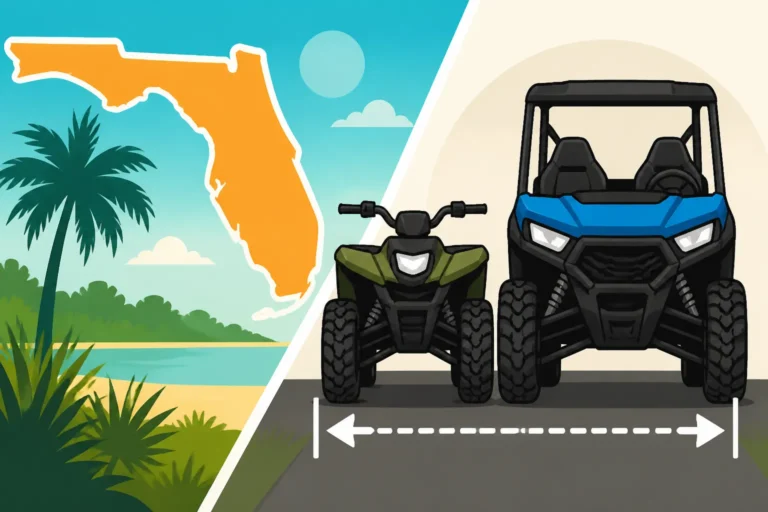
Florida has specific definitions for ATVs, ROVs (Recreational Off-Highway Vehicles, like side-by-sides), and off-highway motorcycles. For instance, an ATV in Florida has specific width and dry weight limits. [Florida's ROV Width Rule Explained] or [Why 1,500 Pounds Dry Weight Is the ATV Ceiling] detail these specifications. Another state might classify your "Florida ATV" as something else entirely, which could impact their titling fees, registration requirements, or even where you can legally ride it. Before moving or selling, advise the buyer or research your new state's specific definitions to avoid surprises during the re-titling process. This can often be a source of frustration for new residents or buyers who are used to their own state's lingo.
Taking your titled quad out of Florida doesn't have to be a confusing ordeal. By understanding the importance of your Florida title, preparing all necessary documents, and being aware of the specific requirements of your destination state or buyer, you can ensure a smooth transition. Your off-road adventures don't have to end at the state line!
Disclaimer
This article is for general informational purposes only and does not constitute professional advice. Laws, prices and regulations vary by location and change over time. Consult a qualified professional for guidance on your specific situation.