Florida’s ROV Width Rule Explained
Navigating the world of off-highway vehicles in Florida can feel like wading through a cypress swamp after a heavy rain – confusing, muddy, and full of hidden snags. One of the biggest areas of head-scratching often comes down to vehicle classifications, specifically the difference between an ATV and a Recreational Off-highway Vehicle (ROV), and how a simple measurement like width can completely change everything for owners. This guide will cut through the dense legal jargon and explain Florida's ROV width rule in plain English, helping you understand its implications for titling and riding your machine.
Understanding the Different Off-Highway Vehicle Categories in Florida
Before we dive deep into the specific width rule for ROVs, it’s really helpful to understand the landscape of off-highway vehicles (OHVs) in Florida. The state has specific definitions for these machines, and mistakenly classifying your vehicle can lead to all sorts of headaches down the line, from titling snafus to issues on the trail.
What is an ATV, Really?
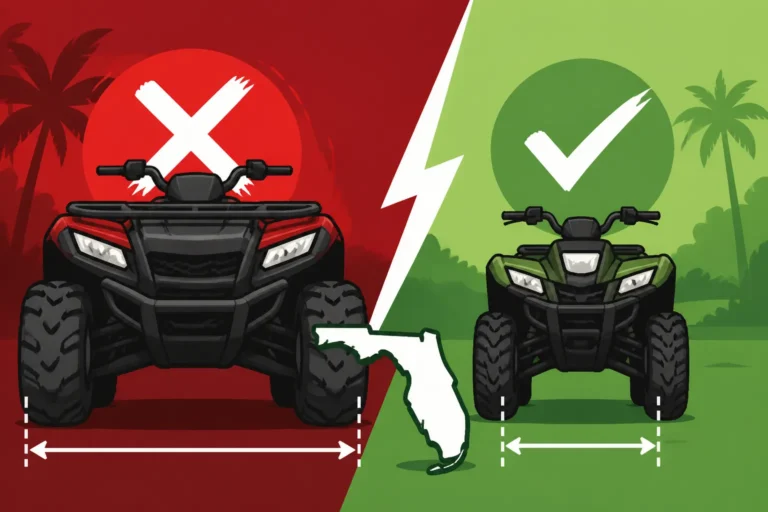
When most folks think of an ATV, they picture a classic four-wheeler: you straddle a seat like a motorcycle, hold onto handlebars, and generally ride solo, though two-up models exist. Florida law defines an ATV as a motorized off-highway vehicle 55 inches or less in width, having a dry weight of 900 pounds or less, designed to travel on three or more non-highway tires. It’s built for off-road use, primarily for a single operator. The key here is that "straddled seat" and "handlebars" combined with the width and weight limits.
The width of an ATV is a critical distinguishing factor, especially when you're trying to figure out if your machine truly fits the "ATV" designation or if it's straying into ROV territory. While 55 inches is the general cutoff, the core design elements are also hugely important. A traditional quad, whether it's a sport machine or a smaller utility model, usually fits this mold. If you're pondering the nuances, you might want to check out [Florida's 55-Inch ATV Definition and Why It Matters] for a deeper dive into that specific measurement. These machines are designed for agility, often for technical trail riding or even racing, where the rider's body movements are integral to controlling the vehicle.
The Rise of the Recreational Off-Highway Vehicle (ROV)
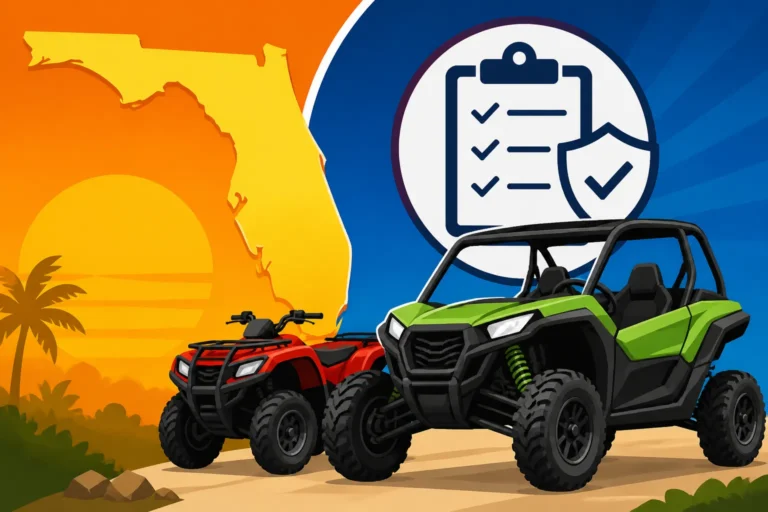
Then we have the ROV, commonly known as a side-by-side or a UTV. These vehicles are a different beast altogether. Instead of straddling a seat, you sit in an ROV, much like a car, complete with a steering wheel and often bucket or bench seats. They also typically come equipped with seatbelts and a roll-over protective structure (ROPS), making them feel a bit more enclosed and secure than an open ATV.
ROVs have really exploded in popularity because they bridge the gap between a traditional ATV and a small utility vehicle. They can carry multiple passengers, haul gear, and often offer more comfort for longer rides. Think of them as the SUV of the off-road world. Because of their design and increased passenger capacity, the state of Florida has a distinct set of rules for them, which we'll get into shortly. Many ROVs, especially the larger, more powerful sport models, easily exceed the 55-inch width limit of an ATV, which is where the specific ROV width rule becomes so important. They are often seen working on ranches, exploring vast expanses, or conquering challenging terrain with a group of friends.
Florida's Crucial ROV Width Rule Explained
Now, let's get to the heart of the matter: the specific measurement that defines an ROV in Florida. This isn't just a technicality; it's a fundamental part of its legal identity in the state.
The 80-Inch Measurement: What It Means for Your Machine
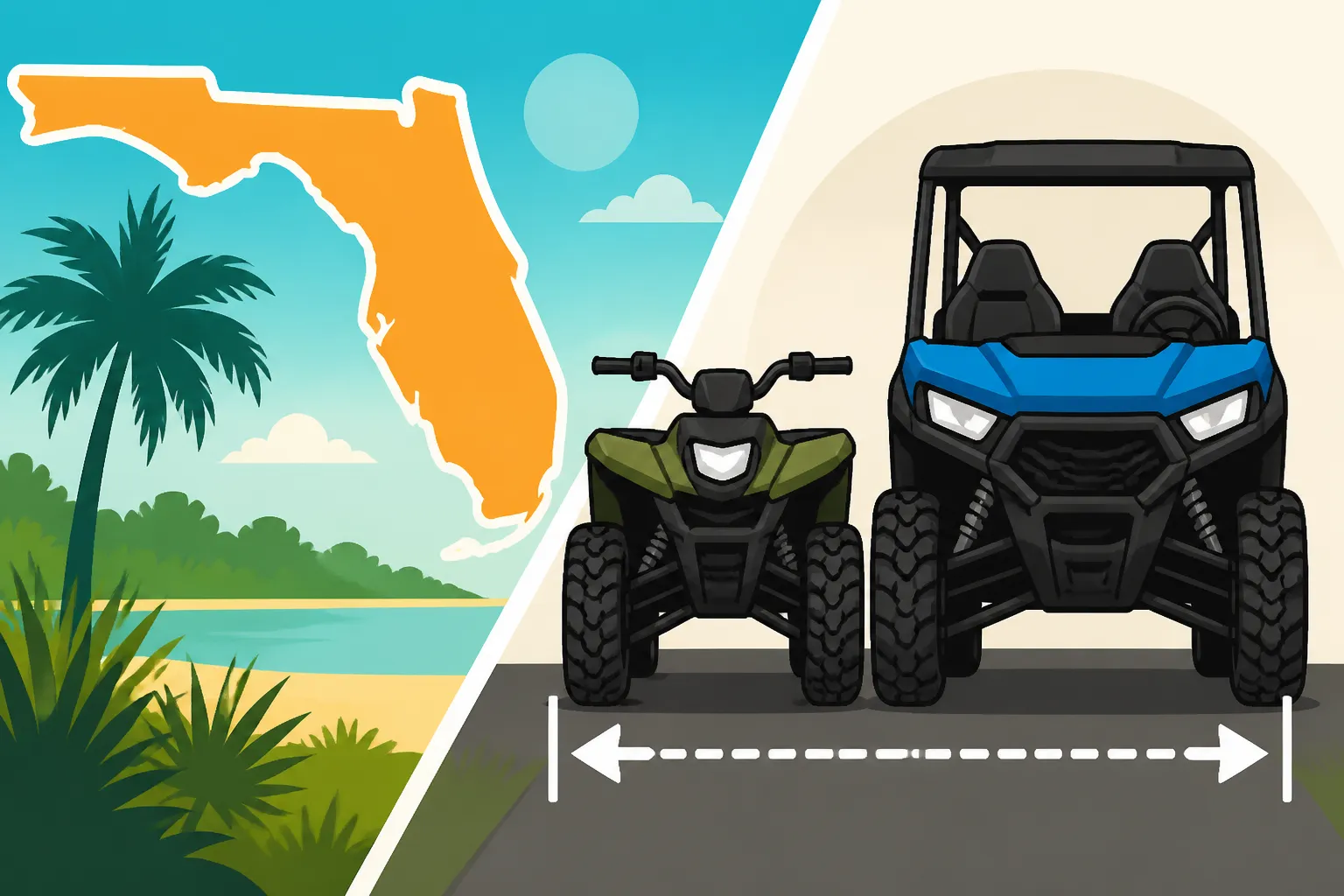
In Florida, an ROV is explicitly defined as a motorized off-highway vehicle that is 80 inches or less in width. This 80-inch maximum is the critical number. It means that if your side-by-side, UTV, or whatever you call your machine, measures up to 80 inches across at its widest point (excluding mirrors), it falls squarely into the ROV classification under Florida law. If it's wider than that, it's not an ROV in the eyes of the state.
This measurement is usually taken from the widest part of the vehicle, which is often the outside edge of the tires. It's not always as simple as checking the manufacturer's spec sheet, especially if you've added aftermarket wheels and tires that might push the limits. It's a good idea to actually measure your machine yourself to be absolutely sure. You'd be surprised how often modifications can inadvertently change a vehicle's legal classification. For a detailed guide on how to get this measurement right, you might find [Measuring Machine Width the Way the Statute Does] to be incredibly helpful. This ensures that when you go to title or operate your machine, there are no surprises about its classification.
Why 80 Inches is the Magic Number (And What Happens If You Exceed It)
The 80-inch rule isn't arbitrary; it helps Florida distinguish ROVs from other types of vehicles. This maximum width defines the boundary for what the state considers a "recreational off-highway vehicle" for titling and operational purposes. If your machine is wider than 80 inches, it might no longer be classified as an ROV. Instead, it could be pushed into a different category, potentially as a "special purpose vehicle" or, in some cases, even require it to meet the more stringent requirements of a [Florida Low-Speed Vehicle Rules for Side-by-Sides] (LSV) if it's intended for limited road use.
The implications of exceeding 80 inches are significant. Primarily, it means your machine might not be eligible for an ROV title. This can create a cascade of problems. Without the proper title, you could face difficulties obtaining insurance specifically designed for off-highway vehicles, or you might find yourself unable to legally operate it on public lands where ROVs are permitted. Imagine showing up at a state forest trailhead, excited for a ride, only to be turned away because your machine, due to its width, doesn't match the classification on its paperwork or falls outside the allowed vehicle types for that area. It's a frustrating scenario that can be entirely avoided by understanding and adhering to this crucial width rule from the outset. For those with larger machines used for work, understanding [Farm Side-by-Sides and Florida Title Rules] might also be particularly relevant, as certain agricultural exemptions can still have width considerations.
Titling Implications of the ROV Width Rule
Understanding the ROV width rule isn't just about knowing what your machine is; it's about knowing how to properly register and title it in Florida. The width plays a direct role in this administrative process.
How the Width Rule Affects Your Florida ROV Title Application
When you purchase an ROV, whether new or used, and go to the Florida Department of Highway Safety and Motor Vehicles (DHSMV) or your local tax collector's office to apply for a title, the width of your machine is a key piece of information. For a new ROV, the Manufacturer's Certificate of Origin (MSO) will list crucial specifications, including its width. This document is the bedrock of your initial title application. The state uses this information to confirm that your vehicle indeed meets the criteria for an ROV. It’s wise to thoroughly review your MSO; if you need a refresher on reading these documents, [Reading a Manufacturer's Certificate of Origin] offers some great pointers.
If you've bought a used ROV, or if your machine is a homemade creation or has undergone significant modifications, the process might require a bit more legwork. You might need to provide an affidavit of ownership or have the vehicle inspected to verify its specifications, including its width. This ensures that the state is accurately titling your machine based on its actual characteristics. Incorrectly classifying your machine, perhaps as an ATV when it's clearly an ROV over 55 inches wide, will raise red flags. The state has specific guidelines for [Florida UTV Titling for Side-by-Sides Over 55 Inches], which are distinct from ATVs and require careful attention to detail on the application forms.
Consequences of Incorrect Classification or No Title
Failing to properly classify your ROV or operating it without the correct title can lead to a host of unpleasant consequences. If your machine is, by definition, an ROV (up to 80 inches wide) but somehow ends up titled incorrectly – say, as an ATV or even without any title at all – you're setting yourself up for potential legal and financial headaches.
For example, if your ROV is ever involved in an accident or is stolen, having an incorrect title or no title at all can complicate things immensely. Insurance companies rely on accurate vehicle classifications to determine coverage. If your policy is for an ATV but you're riding a significantly wider ROV, your claim could be denied because the vehicle wasn't correctly described or titled. [What an OHV Title Proves in a Theft Claim] becomes particularly relevant here, as a proper title is your ultimate proof of ownership. Many [Insurance Companies That Ask for the Title Number] during policy setup, emphasizing the need for everything to be aligned. Furthermore, operating an untitled ROV on public land where titles are required can result in citations, fines, and even impoundment, making your day of recreation turn sour quickly.
Real-World Scenarios and Practical Advice
Let's move from the legal definitions to how this ROV width rule impacts your everyday life as an off-road enthusiast in Florida. Knowing the rules is one thing; applying them in real-world situations is another.
Buying and Selling an ROV in Florida
When you're in the market to buy a used ROV in Florida, always, always, always verify its width yourself. Don't just take the seller's word for it, especially if it's a machine that looks custom or heavily modified. Grab a tape measure and double-check. An extra inch or two can shift its classification, leading to potential titling issues. Make sure the seller has a clear, accurate title that correctly identifies the machine as an ROV, and verify the VIN on the title matches the machine itself. A solid bill of sale is also your best friend here. Consider using a reputable service like LawDepot for a comprehensive bill of sale that details all the vehicle's specifics, including its width, VIN, and the agreed-upon terms. This provides an additional layer of protection for both parties. For more guidance on this process, check out [Buying a Used ATV in Florida: Transferring the Title].
If you're selling an ROV, transparency is key. Be upfront about your machine's dimensions and ensure the title is in order. You don't want the buyer to run into problems titling it, as that can reflect poorly on you and potentially lead to disputes. Providing all the necessary paperwork, including the MSO if available, will make the sale go much smoother.
Riding and Transporting Your ROV
While the 80-inch rule is primarily about titling, it also has practical implications for where and how you can ride. Many off-road parks and trail systems, especially those managed by state or federal agencies, have width restrictions for different types of vehicles. An ROV fitting the Florida definition of 80 inches or less will generally be welcome where ROVs are allowed. However, if your machine exceeds that width, even if it has an ROV title, you might find certain trails or parks inaccessible because they have tighter physical constraints, like narrow gates or bridges. Always check the specific rules of any riding area before you go.
Transporting your ROV also requires consideration of its width. An 80-inch wide ROV will fit on most standard utility trailers, but you need to ensure your trailer has sufficient deck width and capacity. Always secure your machine properly for transport, especially on Florida's busy highways. If you're going on a long haul, some tips from [Trailering a Quad on Florida Highways] can make the journey safer. Remember, even with the correct title and classification, an ROV is generally not street legal in Florida. While some unpaved county roads might allow them, the ROV width rule does not magically make it okay to cruise down paved city streets or state roads. For a clearer picture, it's worth reading [Are ATVs Street Legal in Florida?] to understand the limitations.
Understanding the ROV width rule is an essential part of responsible ROV ownership in Florida. It's not just a number on a piece of paper; it's a doorway to hassle-free titling, proper insurance, and enjoyable, legal riding experiences throughout the Sunshine State.
| Feature | ATV (All-Terrain Vehicle) | ROV (Recreational Off-Highway Vehicle) |
|---|---|---|
| Seating Position | Straddled seat | Side-by-side seating, typically bench or bucket |
| Steering | Handlebars | Steering wheel |
| Roll-Over Protection | Typically none (though some have aftermarket cages) | Integrated roll-over protective structure (ROPS) |
| Primary Use | Recreational, sport, utility work (single operator) | Recreational, utility, carrying passengers and cargo |
| Florida Width Rule | Generally 55 inches or less for ATV classification | 80 inches or less |
| Passenger Capacity | Single rider, or two-up for designated models | Multiple passengers (often 2-6) |
| Weight | Usually under 900 lbs dry weight | Can vary significantly, often heavier than ATVs |
Disclaimer
This article is for general informational purposes only and does not constitute professional advice. Laws, prices and regulations vary by location and change over time. Consult a qualified professional for guidance on your specific situation.