Reading a Manufacturer’s Certificate of Origin
Getting your hands on a brand-new ATV or UTV in Florida is an absolutely thrilling experience. The excitement of hitting the trails, feeling the sun on your face, and conquering new terrain is what it’s all about. But then you get home, and there’s this official-looking document: the Manufacturer's Certificate of Origin, or MCO. For many new owners, this piece of paper can feel like an intimidating hurdle, causing a lot of confusion about its purpose and what you actually need to do with it. This guide will meticulously break down your MCO, explaining its critical role and how to understand every section to smoothly navigate the Florida titling process for your new off-highway vehicle.
What Exactly IS a Manufacturer's Certificate of Origin (MCO) and Why It's Your ATV's Birth Certificate
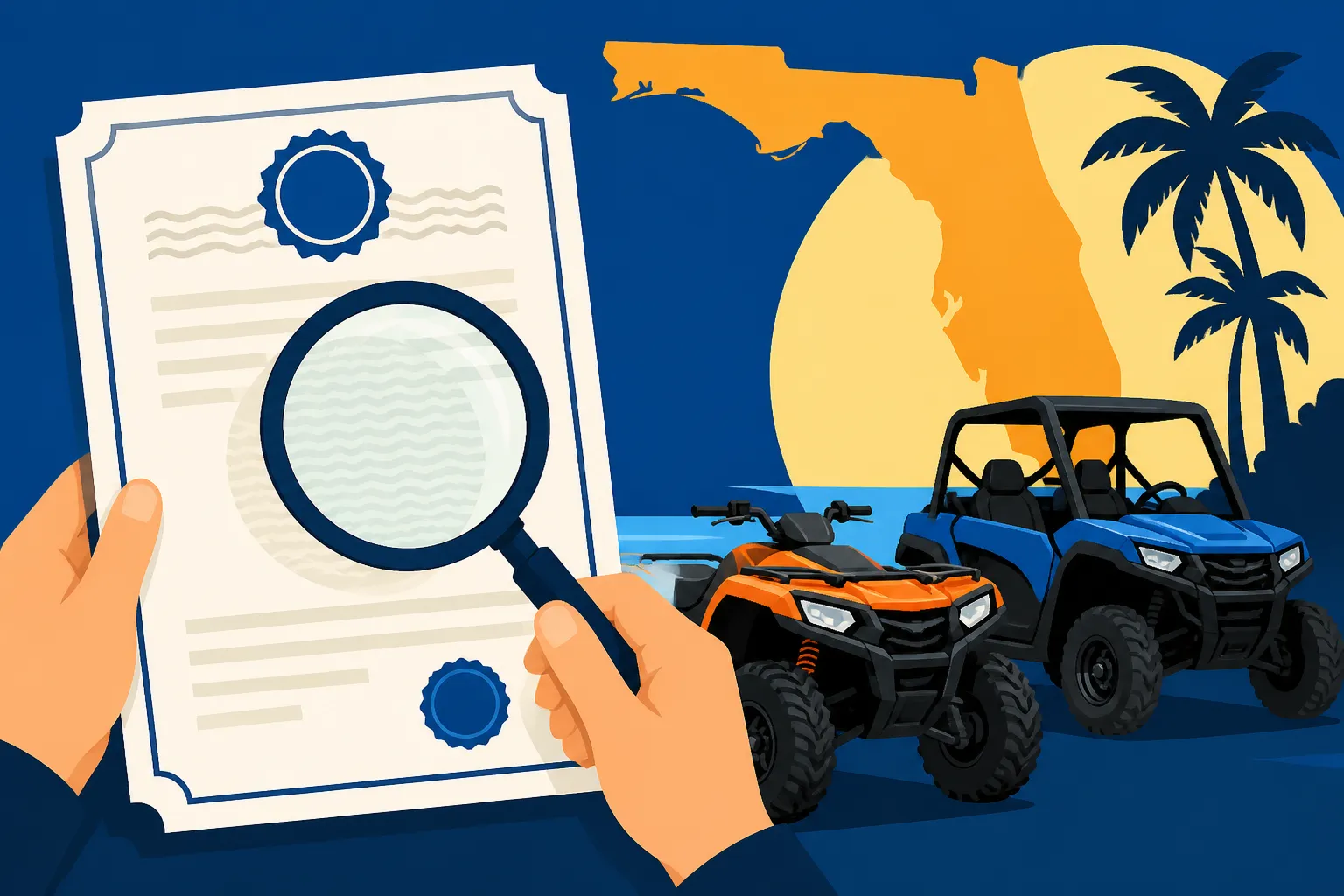
Think of the Manufacturer's Certificate of Origin, or MCO (sometimes called an MSO for Manufacturer's Statement of Origin), as the birth certificate for your brand-new ATV or UTV. It's the very first official document that proves your machine was manufactured and identifies it uniquely. Before an ATV or UTV can ever be titled and legally recognized in Florida, it has to have an MCO. Without this crucial document, the process of officially establishing ownership and getting that initial title simply cannot begin.
The MCO: Your First Proof of Ownership in Florida
When you purchase a new off-highway vehicle from a dealer, you're essentially becoming the first retail owner. The MCO is what bridges the gap from the manufacturer, through the dealership, to you. It contains vital information about the vehicle itself and tracks that initial transfer. It's the undisputed proof that the vehicle is legitimate, hasn't been titled before, and is ready for its first official owner in the state. This document is critical for any new owner looking to comply with Florida's titling laws, especially since [Who Must Title an ATV in Florida] outlines the clear requirement for public land use.
Without a proper MCO, you’d be stuck in a bureaucratic limbo, unable to prove your ownership in a way that the Florida Department of Highway Safety and Motor Vehicles (FLHSMV) accepts. This can be incredibly frustrating, especially after you've just spent a significant amount of money on your new machine. It’s why you need to safeguard this document from the moment you receive it from the dealership. Consider it as important as the keys to your new quad.
Why an MCO is Different from a Regular Title
It's easy to confuse an MCO with a vehicle title, but they serve distinct purposes. An MCO is issued by the manufacturer when the vehicle is made and essentially declares its existence and initial specifications. It's a statement from the manufacturer. A vehicle title, on the other hand, is a state-issued document (in this case, from Florida) that legally establishes who currently owns the vehicle and serves as proof of that ownership. It also typically records any liens on the vehicle.
The MCO is used once to get the first title for a new vehicle. Once the Florida title is issued in your name, the MCO has served its primary purpose and is typically kept on file by the state. You won't use it again for subsequent transfers. A title, however, is transferred from owner to owner during private sales or dealer trade-ins. Understanding this distinction is key to navigating the paperwork. If you’re ever curious about the differences, comparing it to [How a Florida Quad Title Compares to a Car Title] can offer some clarity.
Deciphering the Details: Essential Information on Your ATV or UTV's MCO
The MCO might look like a complex document, but once you know what to look for, it's quite straightforward. Each section provides critical data that Florida's titling authorities will scrutinize to ensure accuracy and prevent fraud. Taking the time to understand these details will save you headaches down the road.
Identifying the Manufacturer, Model, and Year
One of the first things you'll notice on an MCO is the detailed description of the vehicle. This typically includes:
- Manufacturer Name: The company that produced the ATV or UTV (e.g., Honda, Polaris, Can-Am).
- Make and Model: The specific brand and model of your machine (e.g., Polaris RZR XP 1000, Honda Foreman Rubicon).
- Model Year: The year the vehicle was manufactured.
- Body Type/Vehicle Type: This will usually specify "ATV," "UTV," "ROV" (Recreational Off-Highway Vehicle), or "OHV" (Off-Highway Vehicle), which is crucial for Florida's specific titling categories, especially considering nuances like [Florida's 55-Inch ATV Definition and Why It Matters] or [Florida UTV Titling for Side-by-Sides Over 55 Inches].
- Weight and Dimensions: Important specifications like dry weight, length, and width are often listed. These are particularly relevant in Florida, where classifications like [Why 1,500 Pounds Dry Weight Is the ATV Ceiling] and [Why 3,500 Pounds Is the Side-by-Side Ceiling] dictate how your machine is titled.
These details are fundamental because they confirm that the MCO matches the physical vehicle you've purchased. Always double-check these against your purchase agreement and the actual machine before leaving the dealership. Any discrepancies here could cause major issues when you go to title your vehicle.
Understanding the Vehicle Identification Number (VIN) Section
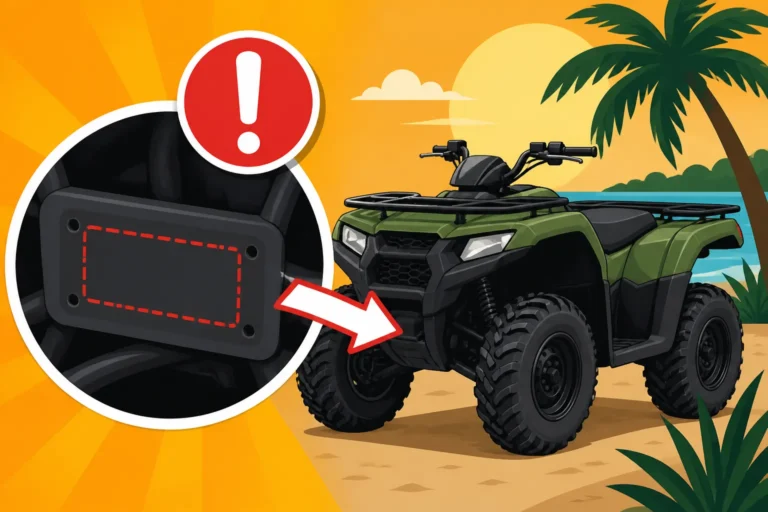
The Vehicle Identification Number (VIN) is arguably the most critical piece of information on your MCO. It's a unique 17-character alphanumeric code that acts as the singular identifier for your ATV or UTV. Just like a fingerprint, no two vehicles have the same VIN. The MCO will clearly display this VIN, and it's imperative that this number matches the VIN physically stamped or affixed to the frame of your ATV or UTV.
Florida's tax collector offices and law enforcement rely heavily on the VIN for vehicle identification. During the titling process, a VIN verification might be required, especially if you're coming from out-of-state or there are any unusual circumstances. The VIN connects your MCO to the vehicle itself, proving its authenticity and allowing it to be tracked for ownership, theft, and safety recalls. If you're ever in doubt about who can verify this, it's good to know [Who Can Verify an ATV VIN in Florida?].
Dealer Information and Transfer of Ownership Details
The MCO also includes sections detailing the chain of custody from the manufacturer to you. This will typically show:
- Manufacturer's Statement of Assignment: This part confirms that the manufacturer assigned the MCO (and thus the vehicle) to the dealership.
- Dealer's Assignment Section: This is where the dealership officially transfers ownership of the vehicle to you. It will include the dealer's name, address, and crucially, the date of sale and the signature of an authorized dealer representative.
- Your Information: As the buyer, your name and address will be recorded in this section, often filled in by the dealer at the time of purchase.
This dealer assignment section is paramount. It’s the legal handshake that moves ownership from the dealer to you. Without the proper signatures and dates in this area, the MCO is incomplete and invalid for titling purposes. When you pick up your new quad, always verify that the dealer has properly filled out and signed this section. If they haven't, you won't be able to get your Florida title.
Here's a quick look at common MCO sections and their importance:
| MCO Section | Key Information Provided | Importance for Titling in Florida |
|---|---|---|
| Manufacturer Details | Name, address, type of vehicle. | Confirms origin and type of OHV; ensures it meets Florida's definitions. |
| Vehicle Description | Make, Model, Year, Body Style, Engine Size, Weight. | Verifies the physical vehicle matches the document; critical for classification. |
| Vehicle ID Number (VIN) | Unique 17-character code. | Absolute identifier for the vehicle; crucial for preventing fraud and tracking. |
| Assignment to Dealer | Dealer's name, address, and date of assignment. | Establishes the legitimate chain of custody from manufacturer to dealer. |
| Assignment to Purchaser | Your name, address, date of sale, dealer's signature. | Crucial for transferring ownership from the dealer to you. Without it, you cannot title. |
| Odometer Reading | Current mileage at time of sale. | Required for titling, even if minimal for a new OHV. See [Odometer Rules on a Florida Quad Title]. |
Beyond the Basics: Red Flags and Common Issues with an MCO
While buying a new ATV or UTV from a reputable Florida dealer should be a smooth process, it's always smart to be vigilant. Sometimes, errors or oversights happen, and being aware of potential red flags on an MCO can save you a lot of grief.
Missing or Incomplete Information: What to Watch For
An MCO must be complete and accurate in every detail. Any missing or incorrect information is a red flag that needs to be addressed immediately with the dealer before you leave their lot. Common omissions include:
- Missing VIN: If the VIN section is blank or doesn't match the vehicle, stop everything. This is a critical error.
- Incomplete Dealer Assignment: The dealer’s name, address, date of sale, or signature might be missing from the "Assignment to Purchaser" section. This is the most frequent issue and will prevent you from titling.
- Incorrect Personal Details: Your name or address might be misspelled or incorrect. While sometimes fixable with an affidavit, it's best to get it right from the start.
- Missing Odometer Reading: Even if your new machine has just a few "delivery" miles, that reading needs to be recorded.
If you encounter any of these issues, do not accept the MCO. Insist that the dealer correct them on the spot. Leaving with an incomplete MCO is essentially leaving with incomplete proof of ownership, and you’ll find yourself unable to complete [Florida's ATV Title Application Explained] at the tax collector's office.
The Seller's Signature: Why It Matters So Much
The signature on the MCO, specifically in the "Assignment to Purchaser" section, is legally binding. It's the dealer's authorized representative formally releasing the vehicle to you. Without this signature, there is no official record of transfer, and Florida will not recognize you as the legal owner. It's not just a formality; it's a legal requirement.
Think of it this way: if you were selling an item, you'd sign a receipt or a bill of sale to confirm the transfer. The MCO's assignment section serves that same purpose for a brand-new vehicle. Make sure the signature is legible, and if there's a printed name, ensure it corresponds. This is the kind of detail that can hold up your title application, so double-check it before you drive away.
When the MCO is Lost or Damaged Before Titling
Life happens, and sometimes important documents get lost or damaged. If your MCO goes missing before you've had a chance to title your ATV or UTV, it can feel like a disaster. However, it's not an insurmountable problem. Your first step should always be to contact the dealership where you purchased the vehicle. They are often able to request a duplicate MCO from the manufacturer, though there might be a fee and a waiting period involved.
If for some reason the dealer cannot help, or if the manufacturer no longer exists, you might need to explore alternative proofs of ownership, such as a bonded title. This is a more complex process involving surety bonds and potentially more scrutiny from the FLHSMV. The key takeaway is to act quickly if your MCO is lost. Resources like [Proof of Ownership When the MSO Is Missing] offer further guidance on these challenging situations.
Your MCO and the Florida Titling Process: What Comes Next
Once you have your complete and accurate MCO in hand, you're well on your way to getting your ATV or UTV legally titled in Florida. The MCO is the cornerstone document, but it's not the only piece of the puzzle.
Preparing Your MCO for Submission to the Tax Collector
When you head to your local Florida County Tax Collector's office (or a licensed tag agency), you'll need more than just the MCO. Typically, you'll also need:
- Proof of Identity: A valid driver's license or state ID.
- Proof of Florida Residency: Utility bills, lease agreements, etc., if you're a new resident or if your ID doesn't show your current Florida address.
- Florida Off-Highway Vehicle Title Application Form (HSMV 82040): This form will be filled out with your information and the vehicle's details from the MCO. You can often download this from the FLHSMV website or get one at the office.
- Bill of Sale: While the MCO proves the transfer from dealer to you, a separate bill of sale often details the purchase price, which is crucial for sales tax calculation. If you're looking for a template, resources like LawDepot can provide a robust and legally sound bill of sale. [Florida ATV Bill of Sale: What It Needs to Say] offers specifics on what this document should include.
- Payment for Fees and Taxes: This includes the initial title fee, any lien recording fees, and Florida sales tax.
Gathering all these documents beforehand will make your visit to the tax collector much smoother. It's a good idea to call ahead or check their website for specific requirements, as some county offices might have slightly different procedures. For a general overview, [What a Florida Tax Collector Asks For] provides a helpful checklist.
The MCO's Role in Sales Tax Calculation
When you title your new ATV or UTV in Florida, you'll be required to pay Florida sales tax on the purchase price. The MCO, in conjunction with your bill of sale, confirms the vehicle's details and, crucially, the amount you paid for it. The sales tax is calculated on the agreed-upon purchase price before any trade-in allowances.
It’s important to understand this, as many new buyers sometimes forget to factor sales tax into their initial budget for getting the machine on the trails. This isn't an arbitrary fee; it's a standard part of vehicle ownership in Florida. If you're curious about the specifics, [Florida Sales Tax When You Title an ATV] delves into the details of how this tax is applied.
What Happens After You Submit Your MCO
Once you've submitted your MCO and all other required documents, paid your fees and taxes, the tax collector's office will process your application. They'll verify all the information, especially the VIN against the MCO, and then issue your official Florida Certificate of Title.
In most cases, Florida issues an electronic title (e-title) by default. This means you won't immediately receive a physical paper title in the mail. Instead, the FLHSMV keeps an electronic record. If you require a paper copy, you'll typically need to specifically request it, often for an additional fee. Understanding whether your title will be electronic or paper is important for your records and future transactions. You can learn more about this in [Electronic Title vs Paper Title for a Quad] and [Why a Florida Quad Title Is Electronic Only]. The processing time can vary, so be patient; it often takes a few weeks for the system to update, but [How Long a Florida ATV Title Takes to Arrive] can give you an idea of what to expect.
Disclaimer
This article is for general informational purposes only and does not constitute professional advice. Laws, prices and regulations vary by location and change over time. Consult a qualified professional for guidance on your specific situation.