Measuring Machine Width the Way the Statute Does
There's a common struggle for off-road enthusiasts in Florida: figuring out how your ATV or UTV is classified, especially when it comes to the nitty-gritty details like its width. It feels like a minor detail until you’re trying to title your new-to-you quad or planning a trip to a public riding area, only to find that your machine doesn't fit the legal definition you thought it did. This guide is here to unravel the mystery of machine width, explaining exactly how Florida's statutes define and measure your off-highway vehicle so you can navigate titling and riding rules with confidence.
Why Machine Width Matters So Much in Florida
You might think a few inches here or there don't make a difference, but when it comes to Florida's off-highway vehicle (OHV) laws, machine width is a critical factor that dictates everything from how your vehicle is titled to where you can legally ride it. The state has very specific definitions, and misunderstanding them can lead to unexpected headaches.
The Critical 55-Inch ATV Cutoff
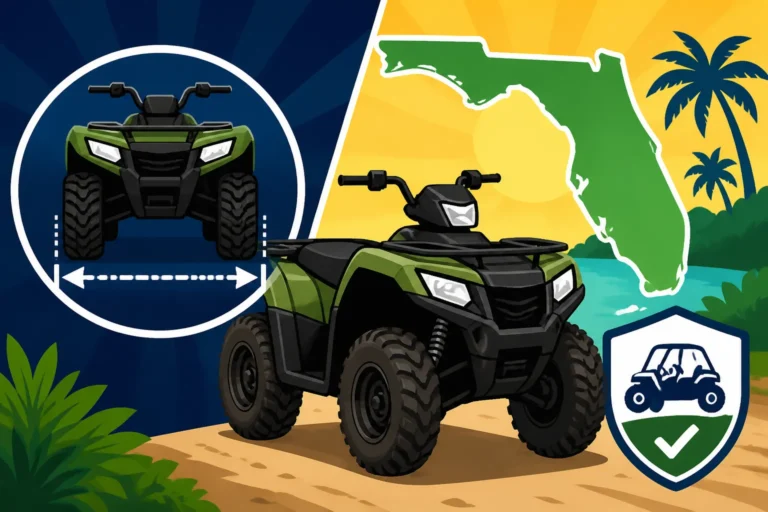
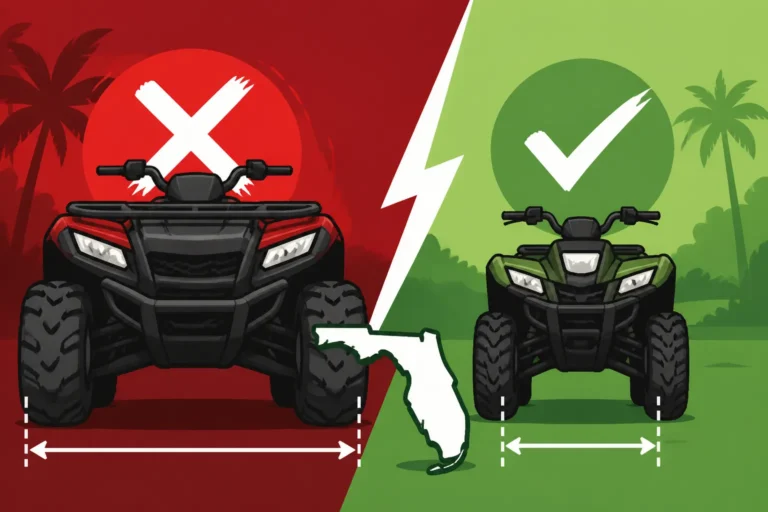
For many riders, the most important number to remember is 55 inches. In Florida, an "all-terrain vehicle" or ATV is legally defined as a motor vehicle 55 inches or less in width. This isn't just a random measurement; it's a foundational element of how these machines are classified. If your quad, whether it's a sport model or a utility machine, measures more than 55 inches from its widest point, it simply isn't considered an ATV under state law for titling purposes.
This distinction is massive because it impacts how you interact with state agencies like the tax collector's office. You can't just walk in and say, "I want to title my ATV," if the machine technically exceeds that 55-inch mark. Instead, it falls into a different category, which means different paperwork and different rules. The implications extend beyond just the title; they also affect where you're permitted to ride. Many public riding areas and trails, like sections of the Croom Motorcycle Area, have strict width limitations. If your machine is wider than 55 inches, even by an inch, you could be turned away at the gate, despite having a valid title and all the necessary permits. It’s not about capability; it's about classification.
The 80-Inch ROV/UTV Definition
On the other side of the spectrum, we have recreational off-highway vehicles (ROVs), more commonly known as UTVs or side-by-sides. Florida statute defines an ROV as an off-highway vehicle that is 80 inches or less in width. This broader category encompasses the vast majority of side-by-sides you see on trails and farms across the state. The 80-inch rule acts as an upper limit for these vehicles, similar to the 55-inch rule for ATVs.
Understanding this definition is crucial, especially if you own a larger side-by-side. If your UTV squeezes in under the 80-inch mark, it falls neatly into the ROV category for titling. However, just as with ATVs, if your machine is wider than 80 inches, it might be classified as something else entirely, which could have further titling and operational ramifications. The definition of an ROV in Florida also includes other specifications like having a non-straddle seat and a steering wheel, but width remains a primary distinguishing factor. For more details on this, you might want to read [Florida's ROV Definition: 80 Inches and 3,500 Pounds]. This distinction ensures that machines are titled appropriately, which in turn helps law enforcement and land managers regulate their use on public and private lands.
Beyond Width: Other Classification Factors
While width is a huge piece of the puzzle, it's not the only factor that defines your off-highway vehicle in Florida. State statutes look at a combination of characteristics to properly classify a machine. For instance, dry weight is another significant differentiator. ATVs are typically capped at a dry weight of 1,500 pounds, with anything heavier generally pushing it into the ROV category. This is explored further in [Why 1,500 Pounds Dry Weight Is the ATV Ceiling] and [Dry Weight Limits That Decide Your Machine's Class].
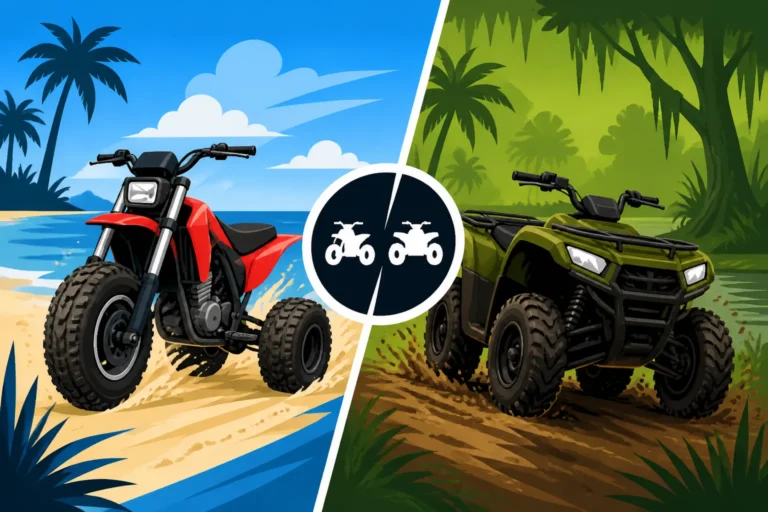
The number and type of wheels also play a role; most ATVs are three- or four-wheeled, while ROVs almost always have four wheels. The seating arrangement is another key factor: ATVs have a straddle seat, meaning you sit on it like a motorcycle, whereas ROVs have non-straddle seating, often side-by-side bucket seats or a bench. Steering mechanisms differ too, with ATVs typically using handlebars and ROVs using a steering wheel. While this guide focuses on width, remember that these other characteristics collectively determine your machine's official classification. Getting any of these details wrong can lead to issues when you try to title your vehicle or when you're stopped by a ranger on a trail.
The Official Way to Measure Your Machine's Width
Now that you understand why width matters, let's get down to the practical side of how to measure your machine accurately, just as the Florida statute expects. This isn't a casual estimate; it requires precision to avoid potential problems.
Understanding the "Widest Point" Rule
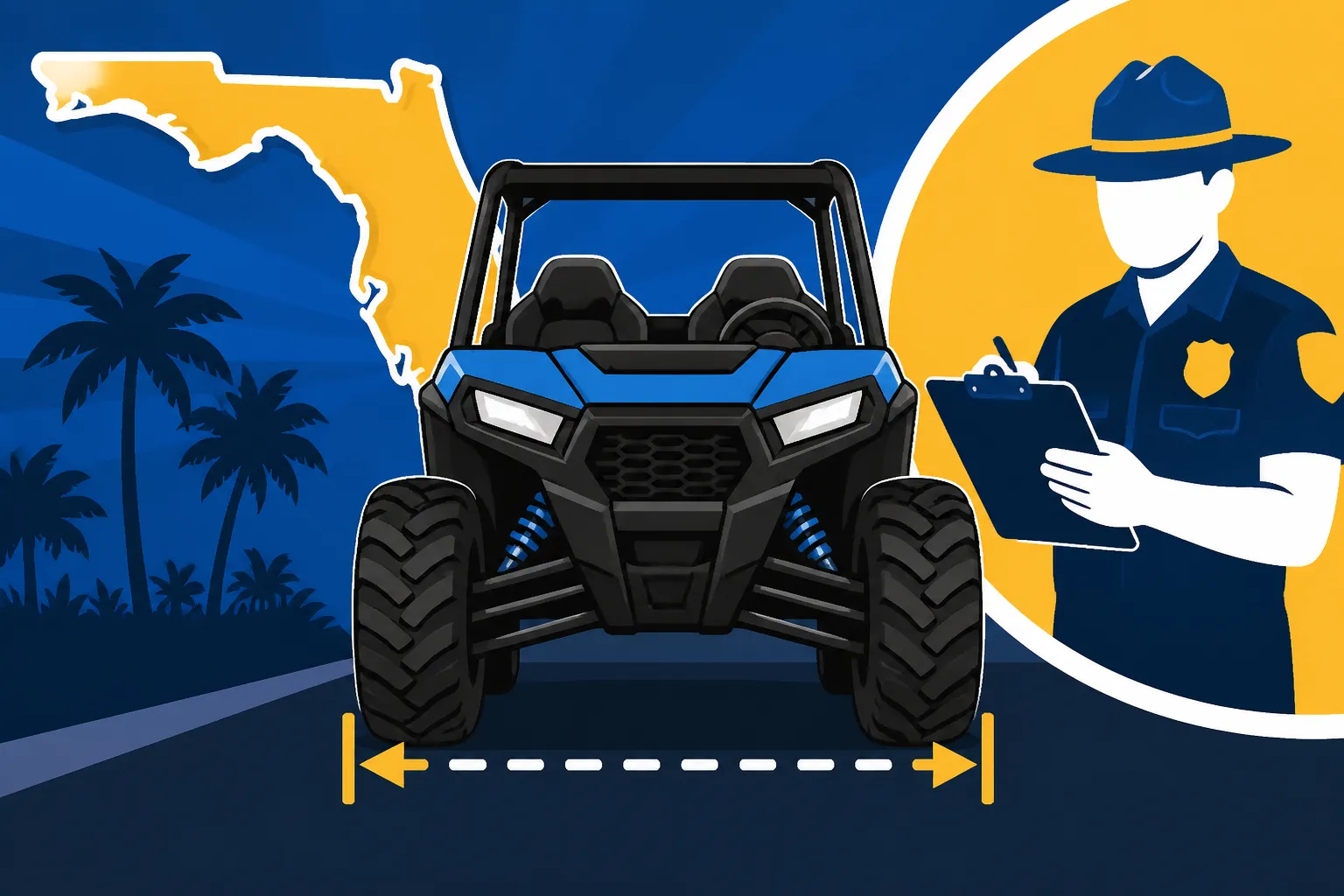
The key phrase here is "widest point." When the statute refers to machine width, it means the absolute maximum horizontal dimension of the vehicle. This isn't just measuring tire tread to tire tread. You need to account for anything that protrudes furthest from the center line of your machine. This absolutely includes the outermost edge of your tires, but it also extends to fenders, wheel spacers, and any factory-installed or aftermarket accessories that are permanently affixed and contribute to the overall width. Items like mirrors, brush guards, or even certain types of luggage racks can push your machine over a critical threshold if they are the widest point.
To get an accurate measurement, park your ATV or UTV on a perfectly flat, level surface. Ensure your tires are inflated to their recommended pressure, as underinflated tires can slightly distort measurements. You're looking for the horizontal distance between the two furthest points on either side of your vehicle. Imagine two parallel lines drawn vertically from the furthest left and furthest right points of your machine; the distance between those lines is your statutory width.
Tools You'll Need and Best Practices
Measuring your machine's width accurately isn't rocket science, but having the right tools and following a few best practices will save you a lot of guesswork and potential headaches. Here's what you'll need:
- A good quality tape measure: A standard household tape measure works just fine, but one that's at least 10-12 feet long will make it easier to measure larger UTVs without having to reposition it. A construction-grade tape measure with a sturdy blade is ideal for stretching across the machine.
- Chalk or a marker (optional but helpful): This can be useful for marking the widest points on the ground to ensure you're measuring straight across.
- A helper (optional but highly recommended): Having a second person to hold the end of the tape measure steady and ensure it's taut and straight across the widest points can significantly improve accuracy, especially for wider side-by-sides.
Here are the steps for best practice:
- Park on level ground: This is non-negotiable. Any slope will give you an inaccurate measurement.
- Inflate tires correctly: Check your owner's manual for the recommended tire pressure and ensure all tires are properly inflated. Under- or over-inflated tires can change the width slightly.
- Identify the widest points: Carefully walk around your machine and visually determine what parts extend furthest to the left and right. For most machines, this will be the outer edge of the tires, but don't forget fenders, wheel wells, or any mounted accessories.
- Measure straight across: With your helper, stretch the tape measure from the absolute furthest point on one side to the absolute furthest point on the other. Make sure the tape is perfectly horizontal and not sagging or angled. If you're alone, you can use two pieces of wood or straightedges placed vertically at the widest points, then measure the distance between them.
- Take multiple measurements: Measure two or three times to ensure consistency. If your measurements vary, re-evaluate your process.
Remember, the goal is to get a true, precise figure. When you're standing at the tax collector's office or facing a gate attendant at a trail, you want to be certain about your machine's dimensions.
Common Measurement Mistakes to Avoid
Even with the right tools and intentions, it's easy to make small errors that can lead to incorrect width measurements. Being aware of these common pitfalls can help you avoid them:
- Not including fenders or side mirrors: This is a big one. Many riders assume "width" only refers to the tires. However, if your fenders extend beyond the tire's outer edge, or if your side mirrors (especially on UTVs) are the widest point, they must be included in your measurement. Florida statute is clear about the "widest point," not just the widest part of the frame or wheelbase.
- Measuring from tire tread to tire tread: This is often an underestimation. The actual widest point of a tire is usually the bulging sidewall, not just the contact patch of the tread. Make sure you're measuring to the outermost rubber.
- Measuring on uneven ground or with deflated tires: As mentioned before, this will give you skewed results. Always ensure your machine is on a level surface and tires are at the correct pressure.
- Allowing the tape measure to sag: If you're measuring alone or not holding the tape taut, it can sag in the middle, giving you a falsely shorter measurement. This is where a helper comes in handy, or using rigid markers on the ground.
- Forgetting about aftermarket modifications: If you've added wider tires, wheel spacers, or custom fenders, these additions almost certainly affect your machine's overall width. Always measure after any modifications are complete, as they can easily push a borderline machine over a critical limit. For example, a "50-inch" trail UTV with aggressive offset wheels might suddenly become a 55-inch machine.
By avoiding these common mistakes, you'll ensure that the width measurement you provide for titling or use at public parks is accurate and compliant with Florida law.
What Happens If Your Machine's Classification Changes Based on Width
So, you've measured your machine and discovered it falls into a different category than you initially thought. Now what? The consequences of an incorrect classification due to width can affect various aspects of your off-roading experience in Florida, from paperwork to where you can actually ride.
Titling Implications: ATV vs. ROV vs. Something Else
The first and most immediate impact of an accurate width measurement is on how you title your vehicle. If your quad measures 56 inches wide, it simply cannot be titled as an ATV in Florida because [A Quad Wider Than 55 Inches Is Not an ATV]. Instead, it would likely fall under the ROV category, assuming it meets other ROV criteria like seating and steering. This means that when you go to the Florida Department of Highway Safety and Motor Vehicles (DHSMV) or your local tax collector's office, you'll need to specify that it's an ROV, not an ATV.
The paperwork you fill out, the fees you pay, and even the "type of vehicle" noted on your title will reflect this difference. Submitting an application for an ATV title when your machine is clearly an ROV can cause delays, require resubmission of forms, and lead to general frustration. It's not about trying to "trick" the system; it's about making sure your documentation aligns with the physical reality of your machine. Similarly, if your UTV happens to be wider than the 80-inch limit for ROVs, you might be looking at a unique situation that requires further investigation with the DHSMV, as it might not fit into a standard OHV category at all. For those needing to navigate the nuances of titling larger machines, reviewing [Florida UTV Titling for Side-by-Sides Over 55 Inches] can be very helpful.
Riding Restrictions and Penalties
Beyond titling, your machine's width classification directly impacts where you can legally ride in Florida. Many public lands, particularly State Forests and National Forests with designated OHV trails, have strict width restrictions. Croom Motorcycle Area in the Withlacoochee State Forest, for instance, has a gate that often measures vehicles. If your UTV or wider ATV exceeds the stated limit (often 55 inches for certain ATV-only trails, or a higher limit for UTV-specific trails), you will be denied entry, regardless of your valid permits or title. This can be incredibly disappointing after traveling a long distance with your machine.
Riding a misclassified vehicle on public lands can also lead to citations and penalties. If law enforcement or a park ranger determines your "ATV" is actually an ROV that is not permitted on a specific ATV trail, you could face fines or even have your machine impounded. It’s important to understand [What 316.2123 Actually Permits] when it comes to off-road vehicles. These rules are in place not just for safety, but also for environmental protection and to manage trail wear. Knowing your machine's true width and classification helps you avoid these costly and frustrating encounters, ensuring your day on the trails remains enjoyable. The consequences of [Penalties for Operating Untitled on Public Land] can be severe, even if the primary issue is misclassification rather than a lack of title.
When in Doubt: Seek Clarification
It's far better to clarify any uncertainties about your machine's width and classification before you head to the tax collector's office or a public trail. If you're on the fence about whether your machine is 55 inches or 56, or if you've made significant modifications that might alter its classification, take the initiative to get definitive answers.
Your first point of contact should be your local Florida County Tax Collector's office. They are the experts in titling and registration and can provide guidance specific to your situation. Bring your measurements, photos of your machine, and any manufacturer's specifications you have. They can review the current statutes and help you determine the correct classification.
If you're dealing with a complex scenario, or if you want to ensure all your ownership documents are legally sound, consulting with a legal professional who specializes in vehicle law can be a wise step. Additionally, when you're preparing documents for purchase, sale, or transfer of ownership, having clear, properly formatted paperwork is essential. Services like LawDepot offer templates for bills of sale, property agreements, and other legal documents that can help ensure you have all your bases covered, preventing future disputes over machine details and classification. Even if you're just drawing up a simple bill of sale for a private transaction, making sure it accurately reflects the vehicle type and dimensions can save a lot of grief down the road.
Practical Scenarios and Examples
Let's walk through a couple of real-world scenarios to illustrate how width measurements can play out with different types of off-highway vehicles in Florida. These examples will highlight the importance of careful measurement.
Measuring a Utility ATV
Imagine you've just bought a used Honda Foreman. You know it’s a tough, reliable workhorse, but you're not sure if it technically fits the 55-inch ATV definition after seeing some of the wider modern utility machines. You park it on your garage floor, which is nice and level, and check the tire pressure – all good.
You grab your tape measure. Starting from the outermost edge of the front left tire's sidewall, you extend the tape straight across to the outermost edge of the front right tire's sidewall. Your buddy holds the other end, making sure it’s perfectly taut and horizontal. You note the measurement. Then you move to the rear, repeating the process. You also double-check if the fenders extend wider than the tires. For this particular Honda Foreman, the tires are the widest point, and your measurement comes in at 47 inches.
This is great news! At 47 inches, your Honda Foreman easily falls under Florida's 55-inch maximum width for an ATV. This means you can confidently proceed with titling it as an ATV, and you know it will meet the width requirements for many state forest ATV trails, like the designated ATV trails at Blackwater River State Forest. If it had measured, say, 58 inches due to aftermarket wheel spacers and larger tires, you'd then know it would need to be titled as an ROV, changing your approach entirely.
Measuring a Side-by-Side (UTV)
Now, let's consider a Polaris RZR XP 1000. These are known for being wider, high-performance machines. You've heard about the 80-inch ROV limit and want to make sure your machine complies before you try to title it and plan a trip to a mud park like Hog Waller. Again, you're on a level surface with properly inflated tires.
You notice that on this RZR, the aggressive off-road tires and the flared fenders are the widest points. You meticulously measure from the furthest point on one side (let’s say the outer edge of the left front fender) straight across to the furthest point on the other side (the outer edge of the right front fender). You have a friend helping to ensure the tape measure is perfectly level and taut. Your reading comes in at 64 inches.
Knowing that the Florida statute defines an ROV as 80 inches or less in width, your 64-inch RZR fits comfortably within this classification. You can confidently proceed to title it as an ROV. This measurement is crucial because while it's well within the ROV limit, it's significantly over the 55-inch ATV limit, making it clear this machine is not an ATV for titling or most ATV-specific trail use. This knowledge is also key if you plan to visit a place like Croom, which has specific gates for side-by-sides due to their width, often requiring the machine to fit within their 65-inch or 72-inch specific rules for certain areas. Understanding [Florida UTV Title for a Machine Over 1,500 Pounds] also helps put the width into context for these larger machines.
These examples show that a simple measurement can save you significant time, money, and frustration by ensuring your machine is correctly classified and titled from the outset.
| Vehicle Type | Florida Width Limit | Seating Type | Steering Type | General Purpose | Titling Class |
|---|---|---|---|---|---|
| ATV | 55 inches or less | Straddle seat | Handlebars | Recreation, utility | ATV |
| ROV (UTV/SxS) | 80 inches or less | Non-straddle seat | Steering wheel | Recreation, utility | ROV |
| Other OHV | Wider than 80 inches (or other specific criteria not met) | Varies, usually non-straddle | Steering wheel | Specialized, commercial | Specific, or no OHV title |
Disclaimer
This article is for general informational purposes only and does not constitute professional advice. Laws, prices and regulations vary by location and change over time. Consult a qualified professional for guidance on your specific situation.