Filling Out Florida’s Title Form Line by Line
Trying to navigate the paperwork for a Florida ATV or UTV title can feel like you're trying to solve a puzzle with half the pieces missing. It's frustrating when you just want to get out and ride, but you're stuck indoors trying to figure out which blank goes where. This guide is designed to walk you through the Florida title application form, section by section, so you can fill it out with confidence and get your machine properly documented.
Understanding the Basics Before You Begin
Before you even pick up a pen, it's really helpful to gather all your necessary documents and understand what kind of information you'll be providing. This isn't just about avoiding a second trip to the tax collector's office; it's about making the whole process smoother and less stressful. Many people rush into filling out the form only to realize they're missing a crucial piece of information, leading to delays and headaches.
Why a Proper Title is Essential
Having a properly completed Florida title application isn't just a bureaucratic hurdle; it’s fundamental to proving ownership of your ATV or UTV. This document is your legal proof that the machine belongs to you, which becomes incredibly important for a number of reasons. For starters, if your quad is ever stolen, law enforcement will rely heavily on the title information to help recover it and verify ownership. Without it, proving the machine is yours can be an uphill battle, often delaying the process of getting it back.
Beyond theft, a correct title is vital for selling your ATV or UTV down the road. Most reputable buyers, whether they're a private individual or a dealer, will insist on a clean, properly transferred title. If your title paperwork is incomplete or incorrect, it can significantly complicate or even halt the sale. Imagine finding the perfect buyer, only to lose the deal because your paperwork isn't in order – it's a common and frustrating scenario. Furthermore, if you plan on riding on any public lands in Florida, a title is often a prerequisite. Check out [Florida Residents Who Ride Public Land Must Title] for more details on this.
What Documents You'll Need to Assemble
Think of this as your pre-flight checklist. Before you even look at the form, make sure you have these items readily available. First and foremost, you'll need the original Manufacturer's Certificate of Origin (MCO) if you're titling a brand-new machine. This is the "birth certificate" for your ATV or UTV. If you bought a used machine, you'll need the previous owner's properly assigned title. This is where many private sales run into trouble; always ensure the seller has a clear title to sign over.
Next, you'll likely need a bill of sale, especially for used machines or if there's any ambiguity in the MCO or prior title. A well-drafted bill of sale, perhaps one created using a service like LawDepot, can clarify purchase price, dates, and buyer/seller information, which can be crucial for calculating sales tax. Proof of identity, usually your Florida driver's license or state ID, is also a must. If you’re a new resident, you might also need documents proving Florida residency. Lastly, be prepared with payment for the applicable fees. While I can't give you exact figures, understand that there's an initial title application fee, and potentially other service charges. You can learn more about this by reading [Florida ATV Title Fee Breakdown: $29 Plus Service Charges].
Here's a quick checklist of common documents:
| Document Type | New Machine Purchase | Used Machine Purchase |
|---|---|---|
| Manufacturer's Certificate of Origin (MCO) | Required | Not applicable (title instead) |
| Previous Owner's Title | Not applicable | Required |
| Bill of Sale | Recommended (dealer may provide) | Highly Recommended |
| Proof of Identity (Driver's License/ID) | Required | Required |
| Proof of Residency (if new to FL) | May be required | May be required |
| Lien Information (if financing) | Required | Required (if lien exists) |
| VIN Verification (if out-of-state) | Not applicable | May be required |
| Payment for Fees | Required | Required |
Section by Section: Your Owner Information
This is where you, the proud owner, put your stamp on the application. It's crucial to get this right because any discrepancies here can cause your application to be rejected, leading to frustrating delays. The goal is to ensure the information on the title perfectly matches your legal identification.
Your Full Legal Name and Address
On the form, you'll find spaces for the registered owner's name. This isn't the time for nicknames or abbreviations. Use your full legal name exactly as it appears on your Florida driver's license or state identification. If you have a middle initial, include it. If you have two last names, list them as they appear on your ID. Accuracy here prevents a mismatch with your identity verification.
Your mailing address is equally important. This is where your physical title will be sent, assuming you don't opt for an electronic title. Make sure it's current and accurate, including any apartment or unit numbers. If you've recently moved, ensure your address is updated with the Department of Highway Safety and Motor Vehicles (DHSMV) or that you're using an address where you reliably receive mail. Nothing is more frustrating than expecting your title and having it sent to an old address. If you’re putting the ATV in a trust or LLC name, the rules are a little different; for more on that, consider [Putting a Florida Quad in an LLC's Name].
Co-Owners or Joint Ownership
Sometimes, you might want to title your ATV or UTV with another person, perhaps a spouse, a family member, or a business partner. The form will have specific sections for joint ownership. It's vital to decide how you want the ownership structured: "and" (requiring both signatures for future transactions) or "or" (allowing either owner to conduct transactions independently). This distinction has significant legal implications down the road, especially if you ever decide to sell the machine or if one owner becomes incapacitated.
Each co-owner will need to provide their full legal name and relevant identification information. Both parties will also typically need to be present or provide properly notarized signatures when submitting the application. Skipping this step or trying to cut corners here can lead to major headaches if you ever need to sell or transfer the ATV/UTV. It's always best to be clear and explicit about co-ownership from the start. For insights into naming multiple owners, check out [Two Names on One Florida Quad Title].
Detailing Your ATV or UTV
This section is all about the machine itself. The information you provide here helps the state identify your specific ATV or UTV and ensure it meets the criteria for titling as an off-highway vehicle (OHV) in Florida. This is where you connect the paperwork to the actual machine sitting in your garage or driveway.
Vehicle Identification Number (VIN)
The Vehicle Identification Number, or VIN, is the unique identifier for your ATV or UTV. It’s like the machine’s fingerprint. You'll find this number stamped on the frame, usually in a visible location. Common spots include the front of the frame, near the handlebars, or on the lower left side of the frame near the footpeg. It's absolutely crucial that you transcribe this number accurately onto the title application. A single digit or letter transcribed incorrectly can lead to your application being rejected, or worse, your title not matching your machine, creating immense problems down the line.
Double-check the VIN against the MCO, the previous title, or directly on the machine itself. Don't rely on memory or a hasty scribble. If your ATV was bought out of state, or if there's any question about its VIN, you might need a physical VIN verification. Learn more about this process and [Who Can Verify an ATV VIN in Florida?]. This ensures the state accurately records your specific vehicle.
Make, Model, Year, and Odometer Reading
Beyond the VIN, you’ll need to provide the make (e.g., Honda, Polaris, Yamaha), the specific model (e.g., Foreman, RZR, Grizzly), and the manufacturing year of your ATV or UTV. This information is usually found on the MCO or the previous title. It's also often on a sticker or plate affixed to the machine itself. Again, accuracy is key to prevent discrepancies.
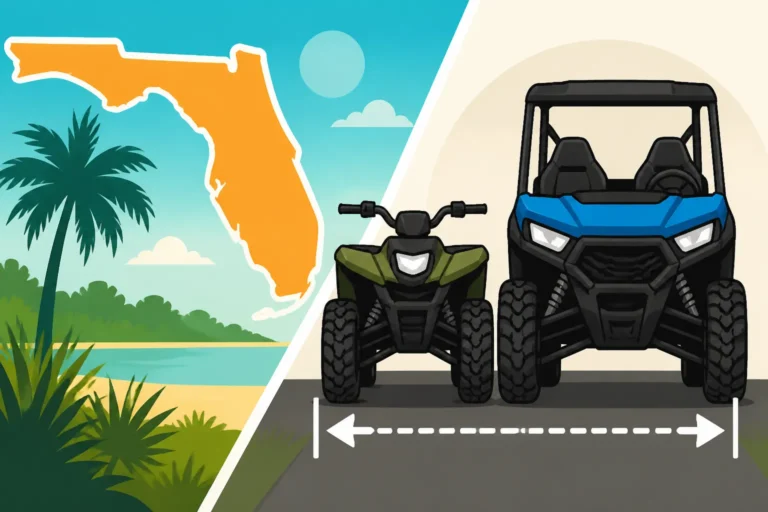
For the odometer reading, if your ATV or UTV has one, you'll need to record it. While ATVs and UTVs aren't subject to the same strict odometer disclosure rules as passenger cars, providing an accurate reading at the time of title application is good practice and may be required by the form. If your machine doesn't have an odometer, the form typically provides an option to indicate "actual mileage unknown" or "not applicable." For more on how Florida defines ATVs and other OHVs, consider reading [Florida's 55-Inch ATV Definition and Why It Matters] or [Florida UTV Titling for Side-by-Sides Over 55 Inches].
Color and Fuel Type
These might seem like minor details, but they contribute to a complete vehicle description on your title. Provide the primary color of your ATV or UTV. If it's a multi-colored machine, choose the most dominant color. As for fuel type, most ATVs and UTVs run on gasoline. Simply indicate "GAS" or "Gasoline" in the designated field. These details help distinguish your specific machine in the state's database, especially if there are other vehicles with similar VINs due to manufacturing variations or errors. It's all about creating a unique and unmistakable record for your machine.
Handling Lien Information (If Applicable)
If you've financed your ATV or UTV, this section is incredibly important. A lienholder is the bank, credit union, or financial institution that holds a legal claim on your vehicle until the loan is fully paid off. The state needs to know this so they can record the lien on the title, protecting the interests of the lender.
Identifying the Lienholder
On the application form, there will be a specific space to identify any lienholders. You’ll need the full legal name of the financial institution (e.g., "Bank of Florida," "Sunshine Credit Union"), not just the branch name or a person's name. You'll also need their complete mailing address. This is critical because the state will communicate directly with the lienholder regarding the title, and sometimes the physical title might even be sent directly to them or held electronically until the lien is satisfied.
If you've taken out a loan, your lending institution will provide you with all the necessary details, including their specific address for title and lien purposes. It's always a good idea to confirm this information directly with them before filling out the form. Any errors here could delay the processing of your title or, worse, cause issues with your loan agreement. For a deeper dive, check out [Florida ATV Title With a Lien Recorded].
Recording and Releasing a Lien
When you submit your application with lienholder information, the Florida DHSMV will record this lien electronically. This means that until the lien is satisfied and the lienholder officially notifies the state, you won't be able to sell or transfer the title free and clear. This electronic recording helps prevent fraudulent sales and protects both you and the lender.
Once you pay off your loan, the lienholder is legally obligated to release the lien. They will electronically notify the state, and your title will then show as "clear." If you had an electronic title, you can then request a paper copy. If you received a paper title with the lien noted, you might receive an updated one or a lien satisfaction letter to keep with your original. Understanding the process for [Electronic Liens on a Florida Quad] is key for any financed machine.
The Seller's Role in a Title Transfer
When you're buying a used ATV or UTV, the seller plays a critical role in getting that title into your name. Their accurate and complete information on the title application (or the back of the existing title) is just as important as yours. Errors here are a common reason for title rejection and immense frustration for the new owner.
Seller's Name and Signature
If you're buying a used machine, the previous owner must sign the existing title in the designated "Assignment of Title" section. Their signature must match the name printed on the title exactly. If there are two owners listed with "and" between their names, both individuals typically need to sign. This is where attention to detail really matters. If the seller has a common name and there are multiple owners, ensure you're getting the signature from the legal owner listed.
Often, alongside the signature, the seller will need to print their name and provide their current address. It's always a good idea for you, the buyer, to verify this information against their ID, if possible, to prevent any issues with fraudulent sales or misrepresentation. A clear, legible signature is paramount for the state to accept the transfer.
Sale Price and Date of Sale
The sale price is a crucial piece of information that the state uses to calculate sales tax. On the title application or the bill of sale, the seller will need to record the agreed-upon purchase price. It’s important to be honest and accurate here. Attempting to underreport the sale price to save on sales tax can lead to penalties and fines if discovered. For guidance, check out [Florida Sales Tax When You Title an ATV].
Equally important is the date of sale. This date establishes when ownership legally transferred from the seller to you. It's used for calculating the timeline for transferring the title (Florida has specific deadlines) and for determining any pro-rated taxes or fees. Make sure the date is clearly written and accurate, matching what's on your bill of sale. A well-written bill of sale from a reputable source, such as one you might generate through LawDepot, can make this part of the process much smoother and provide a clear record for both parties.
Finalizing Your Application: Signatures and Submission
You're almost there! Once all the blanks are filled in with accurate information, the final steps involve signing the form and getting it submitted to the proper authorities. Don't underestimate the importance of these last few actions.
Your Signature and Date
After carefully reviewing every section of the application, you, as the new owner, will need to sign and date the form. Your signature should be your legal signature, matching your identification. Don't use initials or a stylized signature that doesn't clearly represent your legal name. The date you sign is also important, as it usually needs to be close to the date of sale and submission to avoid any questions about delays.
If there are co-owners, each co-owner will need to sign the form. In some cases, depending on how ownership is structured and the specific form used, a notary might be required to witness signatures. While many Florida title transfers for OHVs don't require a notary for the assignment, always double-check the specific instructions on the form or with your local tax collector's office. For more on this, you might find [Does a Florida Quad Title Need a Notary?] helpful.
Where and How to Submit Your Form
Once your form is complete and signed, you'll need to submit it to your local Florida County Tax Collector's office or a licensed tag agency. This isn't something you mail to Tallahassee and hope for the best; it’s a local transaction. You can usually find the nearest office by searching online for "Florida County Tax Collector" and your county name. For more on this, [Where to File an ATV Title in Florida] is a great resource.
You'll typically submit the application in person, along with all your supporting documents (MCO or previous title, bill of sale, ID, etc.) and payment for fees. Many offices allow walk-ins, though some may recommend appointments. Be prepared for a wait, especially during peak hours. When you submit, a clerk will review your paperwork for completeness and accuracy. If everything is in order, they'll process your application. You'll usually receive a temporary registration or receipt on the spot, and your physical title will be mailed to you within a few weeks, or it will remain electronic. If you're in a hurry, there might even be an expedited option for an extra fee, often referred to as a "Fast Title." If you're wondering about the timing, check out [How Long a Florida ATV Title Takes to Arrive].
Disclaimer
This article is for general informational purposes only and does not constitute professional advice. Laws, prices and regulations vary by location and change over time. Consult a qualified professional for guidance on your specific situation.