Selling a Machine You Never Titled
Oh, the classic Florida dilemma! You've got an ATV or a UTV, maybe you've had it for years, ridden it on private land, and the thought of titling it just never crossed your mind. Or perhaps you bought it from a friend or a private party, and the paperwork was a bit…fuzzy. Now, you're ready to sell, and suddenly you realize you're staring down a mountain of confusion because you don't have a title to hand over. It’s a frustrating spot to be in, but don't worry, this guide will walk you through the realities and best practices for selling an ATV or UTV in Florida when you never got around to titling it yourself.
Why Titling Matters Even If You Just Rode Private Land
It's a common misconception among riders in Florida that if you only use your ATV or UTV on private property – your own land, a friend's ranch, or a private mud park – you don't need a title. While it's true that the main trigger for requiring a title in Florida is operating your off-highway vehicle (OHV) on designated public land or public access trails, having a title is about more than just legal riding access. It's about establishing clear ownership, which becomes absolutely critical when you decide to sell.
The Chain of Ownership and Why It Breaks Without a Title
Think of an ATV or UTV title like a deed to a house, or the title to your car. It's the official document issued by the state that legally establishes who owns the machine. When a new ATV or UTV is sold by a dealer, it comes with a Manufacturer's Certificate of Origin (MSO). This MSO is essentially the birth certificate of the vehicle, and it's what the first owner uses to apply for their initial Florida title. Each subsequent sale should involve transferring that title from seller to buyer, creating a continuous "chain of ownership."
When you buy a machine, especially a used one, and you don't get it titled in your name, you effectively break or obscure that chain. You might have a bill of sale, which is a great start, but without a state-issued title in your name, the state doesn't officially recognize you as the owner. This doesn't usually cause problems for private land use, but it creates a massive hurdle for your buyer down the road. They'll face the same issues you're facing now, trying to prove their legal ownership to Florida's Department of Highway Safety and Motor Vehicles (DHSMV) so they can get their own title. It's not just about compliance; it's about protecting yourself and providing peace of mind to your buyer.
Future Sales and the Headache of Missing Paperwork
Imagine trying to sell a car without a title. Most buyers would run a mile, and for good reason. The same principle applies to ATVs and UTVs. While some private buyers might be willing to take a chance on an untitled machine, the pool of potential buyers shrinks dramatically. Experienced buyers know that an untitled machine can be a headache, potentially involving extra steps, fees, or even the need for a bonded title – a complex and often costly process to establish ownership when the chain is broken.
If you don't have a title in your name, your buyer will have to apply for one, and they'll need solid proof of ownership from you. This usually means the original MSO (if you're the first owner who never titled), or a clear bill of sale from the person you bought it from, along with a bill of sale from you to them. If multiple owners have passed the machine around without titling, the paperwork trail can become incredibly convoluted, making it very difficult for your buyer to satisfy the state's requirements. This is why addressing the title issue before you sell is often the smoothest path.
Understanding Your Situation: Why Is Your Machine Untitled?
Before you can figure out the best way to sell your untitled ATV or UTV, it's crucial to understand why it's untitled in your name. The reasons can vary, and each scenario might have slightly different implications for the paperwork you'll need.
Bought New Without Ever Titling
This is arguably the "cleanest" of the untitled scenarios, though still requiring attention. You purchased a brand-new ATV or UTV from a dealer, received the Manufacturer's Certificate of Origin (MSO), and simply never took it to the tax collector's office to get it titled in your name. Perhaps you bought it purely for farm work or recreational use on private land, believing a title wasn't necessary.
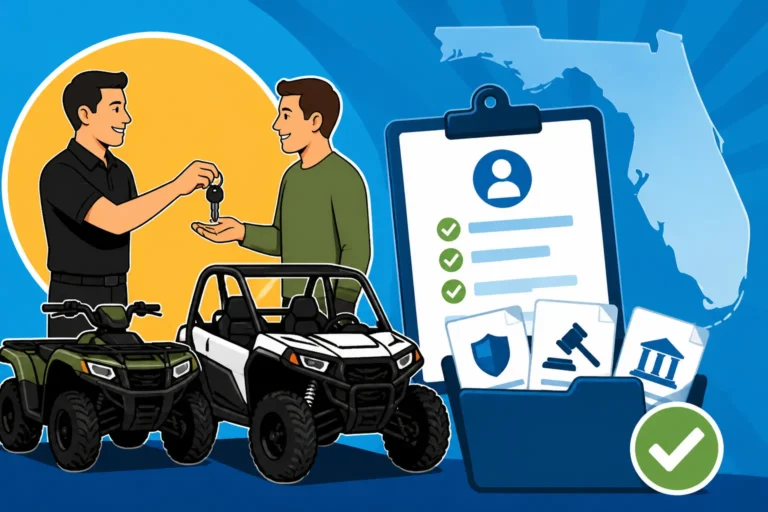
In this case, you hold the MSO, which is the gold standard for proof of original ownership. To title it in your name, you would present the MSO, a completed application for title, proof of identity, and pay the required fees, including sales tax (if not already paid at the dealership) and the [The $29 Initial Title Application Fee Explained]. The MSO is essentially your ticket to establishing yourself as the first titled owner. If you plan to sell, getting the title in your name first is often the least complicated route for both you and your buyer. You can then sign the title over to them directly.
Bought Used Without a Proper Title Transfer
This is a much more common and often more problematic situation. You bought a used ATV or UTV from a private seller, and they either didn't have a title, or they had one but never properly transferred it to you. Maybe you exchanged cash for a bill of sale, or even just a handshake, and took the machine home. Now, you have a bill of sale (hopefully) from the previous owner, but no MSO and no title in your name.
The challenge here is proving the full chain of ownership to the state. The tax collector will want to see how the machine got from its original MSO to your hands. If the person you bought it from never titled it either, you'll need their proof of ownership (like their bill of sale from their seller, or ideally, the MSO if they were the first owner and never titled it). This can quickly turn into a frustrating scavenger hunt for old paperwork, especially if the previous owners are difficult to track down or uncooperative. The state wants to prevent [Title Jumping and Why It Bites the Buyer], so they'll scrutinize these situations.
Inherited or Gifted Without Paperwork
Sometimes, an ATV or UTV comes into your possession through inheritance or as a gift, and the original owner might have passed away or simply didn't keep meticulous records. This can be tricky, as you might have even less formal documentation than if you bought it. You might have a will, a general gift letter, or simply possession of the machine.
In these cases, you'll likely need to provide an affidavit of ownership or a sworn statement explaining how the machine came into your possession, along with any available supporting documents like the deceased's will or a letter from the giver. If the machine was previously titled, you'd need the old title, a death certificate, or other legal documents to prove your right to the machine. Without a clear chain of custody, getting a title in your name can be quite an uphill battle. It's often best to gather every scrap of information and paper you can find before approaching the tax collector's office.
Your Options for Selling an Untitled ATV/UTV
Alright, you've assessed your situation. Now, what are your actual options for selling this machine? There are two primary paths, and one is definitely smoother than the other for everyone involved.
Option 1: Title It Yourself First
This is, by far, the recommended approach for selling an untitled ATV or UTV in Florida. Taking the time to title the machine in your name first makes the sale process much cleaner, inspires confidence in your buyer, and ultimately helps you get a better price. Think about it: if you were buying a machine, wouldn't you prefer one with a clear, transferable title?
Here’s a general rundown of what this path entails:
-
Gather Your Proof of Ownership: Depending on how you acquired the machine, this could be the original MSO, a detailed bill of sale from the person you bought it from, or legal documents if it was inherited or gifted. If you're missing a solid bill of sale, consider creating one for your records, especially if you want to apply for a bonded title down the line if direct titling proves impossible. For official documents like a bill of sale, you might consider using a reputable service like LawDepot to ensure all the necessary legal language and fields are included.
-
Complete the Florida Application for Certificate of Title With/Without Registration (Form HSMV 82040): This is the main form you'll need. You'll fill in all the details about the ATV/UTV, including the VIN, make, model, and your personal information. If you're unsure which form to use, checking out guides like [Which Florida Title Form to Use for an ATV] can be helpful.
-
Get a VIN Verification: Florida requires a VIN verification for any used vehicle coming into the state or for a machine where the title history is unclear. This can be done by a Florida law enforcement officer (like a sheriff's deputy), a licensed dealer, or a notary public with specific authorization. They'll physically inspect the VIN on your machine to ensure it matches your paperwork and isn't stolen. You can learn more about this process by looking up [Who Can Verify an ATV VIN in Florida?].
-
Pay Fees and Taxes: You'll be responsible for the initial title application fee (currently $29), any applicable sales tax if it hasn't been paid on the purchase, and possibly a service charge. You might also encounter the [The $4.25 Service Charge on an OHV Title] that gets tacked on to these transactions.
-
Submit Your Paperwork: Take everything – your proof of ownership, completed application, VIN verification, and payment – to your local Florida tax collector's office. You can find out more about where to go by looking into [Where to File an ATV Title in Florida] or checking your local county office.
Once the title is issued in your name, you are the legal owner. When you sell, you simply sign over the title to your buyer, just like you would with a car. This is the cleanest, most hassle-free way to proceed for everyone involved.
Option 2: Selling "As Is" Without a Title
While less ideal, sometimes titling the machine in your name first isn't feasible due to lost paperwork, uncooperative previous owners, or simply the time and effort involved. In this scenario, you'd be selling the ATV or UTV "as is" with the explicit understanding that you do not hold a title in your name.
This path comes with significant caveats for both you and the buyer:
- For You, the Seller: You will severely limit your potential buyer pool. Many buyers, especially those new to OHVs or unfamiliar with Florida's titling laws, will steer clear. Those who are interested will likely expect a lower price to compensate for the hassle they will face getting it titled. You must be completely transparent about the lack of a title and clearly state this in your advertisements and during negotiations. If you mislead a buyer, you could face legal repercussions.
- For the Buyer: The burden of titling will fall entirely on them. They will need a robust bill of sale from you, and potentially copies of any prior bills of sale you might have. They may need to go through a bonded title process if the chain of ownership cannot be fully established, which involves purchasing a surety bond, submitting additional paperwork, and potentially waiting a significant amount of time. They'll also be on the hook for any unpaid sales tax from your original purchase (or their current one). Understanding the buyer's potential challenges is key, especially if they are looking for information on [Buying a Quad With No Title From a Neighbor].
Protecting Yourself and Your Buyer
No matter which option you choose, a comprehensive bill of sale is your absolute best friend. Even if you're titling it first, you'll still need a bill of sale for your buyer. If you're selling it untitled, the bill of sale becomes the single most important document you possess, and the buyer will rely heavily on it to establish their eventual ownership.
-
The Crucial Role of a Comprehensive Bill of Sale: This document proves the transaction occurred, who the parties were, what was sold, and for how much. It also allows you to document the title status clearly. A simple handwritten note on a napkin won't cut it. You need something official. Services like LawDepot offer customizable bill of sale templates that ensure all the necessary legal protections and information are included, giving you and your buyer peace of mind.
-
What to Include in Your Bill of Sale (Absolutely Critical):
- Full Names and Addresses: Of both the buyer and the seller.
- Detailed Machine Description: Make, model, year, color, and most importantly, the Vehicle Identification Number (VIN) exactly as it appears on the machine.
- Purchase Price: The agreed-upon amount.
- Date of Sale: When the transaction occurred.
- "As Is" Clause: A statement that the machine is being sold "as is," without any warranties or guarantees, unless you explicitly provide them.
- Statement of Title Status: Crucially, if you do not have a title in your name, the bill of sale MUST clearly state this. For example: "Seller states that the ATV/UTV does not have a Florida Certificate of Title in the seller's name, and the buyer understands and accepts this condition. Buyer assumes all responsibility for obtaining a title."
- Signatures: Both buyer and seller should sign. Witness signatures can also add an extra layer of protection, though not always legally required for a basic bill of sale.
- Odometer Reading: While ATVs/UTVs don't have the same strict odometer laws as cars, it's good practice to include the current hours/mileage if available.
Having a robust bill of sale drafted through a platform like LawDepot can save you a world of trouble down the line. It's an investment in a smooth, transparent transaction.
Setting Realistic Expectations for the Sale
Selling an untitled ATV or UTV in Florida requires a good dose of realism. It’s not an impossible task, but it’s definitely not as straightforward as selling a titled machine.
Lower Value and Limited Buyer Pool
As mentioned, not having a title in your name will almost certainly depress the selling price of your machine. Buyers will factor in the extra time, effort, and potential costs they'll incur to get it titled themselves. Be prepared for offers that are lower than what comparable titled machines are selling for.
Your buyer pool will also be smaller. Serious buyers who want a clear title for resale or for riding on public lands will likely pass. You'll mostly attract buyers who are comfortable with the titling process, plan to use the machine exclusively on private land (and might not care about titling), or are looking for a bargain. Transparency from the outset is your best strategy.
Transparency is Key
Above all else, be completely honest with potential buyers about the title status. Disclose upfront that you do not have a title in your name and explain why (e.g., "I bought it from a friend and never got around to titling it"). Provide them with all the documentation you do have – the MSO (if applicable), any previous bills of sale, and the detailed bill of sale you will provide them.
Walk them through the steps they might need to take to title it, based on what you've learned. This transparency builds trust and helps avoid misunderstandings or disputes after the sale. Trying to hide the fact that your machine is untitled will only lead to headaches, lost sales, or even legal trouble. A simple table can help visualize the differences between your options:
| Feature | Option 1: Title It Yourself First | Option 2: Sell "As Is" Untitled |
|---|---|---|
| Seller Effort | Higher (gather docs, visit tax collector) | Lower (primarily just creating bill of sale) |
| Seller Risk | Low (clear title transfer) | Higher (potential disputes, lower price) |
| Buyer Effort | Low (simple title transfer) | High (gather docs, VIN verification, possible bonded title) |
| Buyer Risk | Low (clear ownership) | Higher (uncertainty of titling, legal issues) |
| Resale Value | Higher (comparable to other titled machines) | Lower (discounted due to title complexity) |
| Buyer Pool | Wide (appeals to all buyers) | Limited (only those willing to take on title issues) |
| Legal Protections (You) | Strong (clear transfer) | Relies heavily on robust bill of sale |
| Legal Protections (Buyer) | Strong (clear ownership) | Depends on buyer's ability to secure title |
It's clear that while Option 2 seems easier for you in the short term, it creates significantly more hassle and risk for your buyer, and often results in a lower selling price for you. Taking the initiative to title it yourself first is almost always the more advantageous route.
Selling an untitled ATV or UTV in Florida doesn't have to be a nightmare, but it does require careful attention to detail and a commitment to transparency. By understanding the state's titling requirements, gathering all available paperwork, and using a comprehensive bill of sale, you can navigate the process successfully, ensuring a smooth transaction for both yourself and your buyer.
Disclaimer
This article is for general informational purposes only and does not constitute professional advice. Laws, prices and regulations vary by location and change over time. Consult a qualified professional for guidance on your specific situation.