What a County Clerk Checks on Your Application
Getting your ATV or UTV titled in Florida can sometimes feel like navigating a maze, especially when you're not sure what the folks behind the counter at the county tax collector's office are looking for. It's easy to get frustrated if you show up with what you think is all the right paperwork, only to find you've missed a crucial detail. This guide is here to demystify that process, walking you through exactly what a county clerk checks on your application so you can be prepared and avoid unnecessary trips.
The Initial Gauntlet: What They Look for First
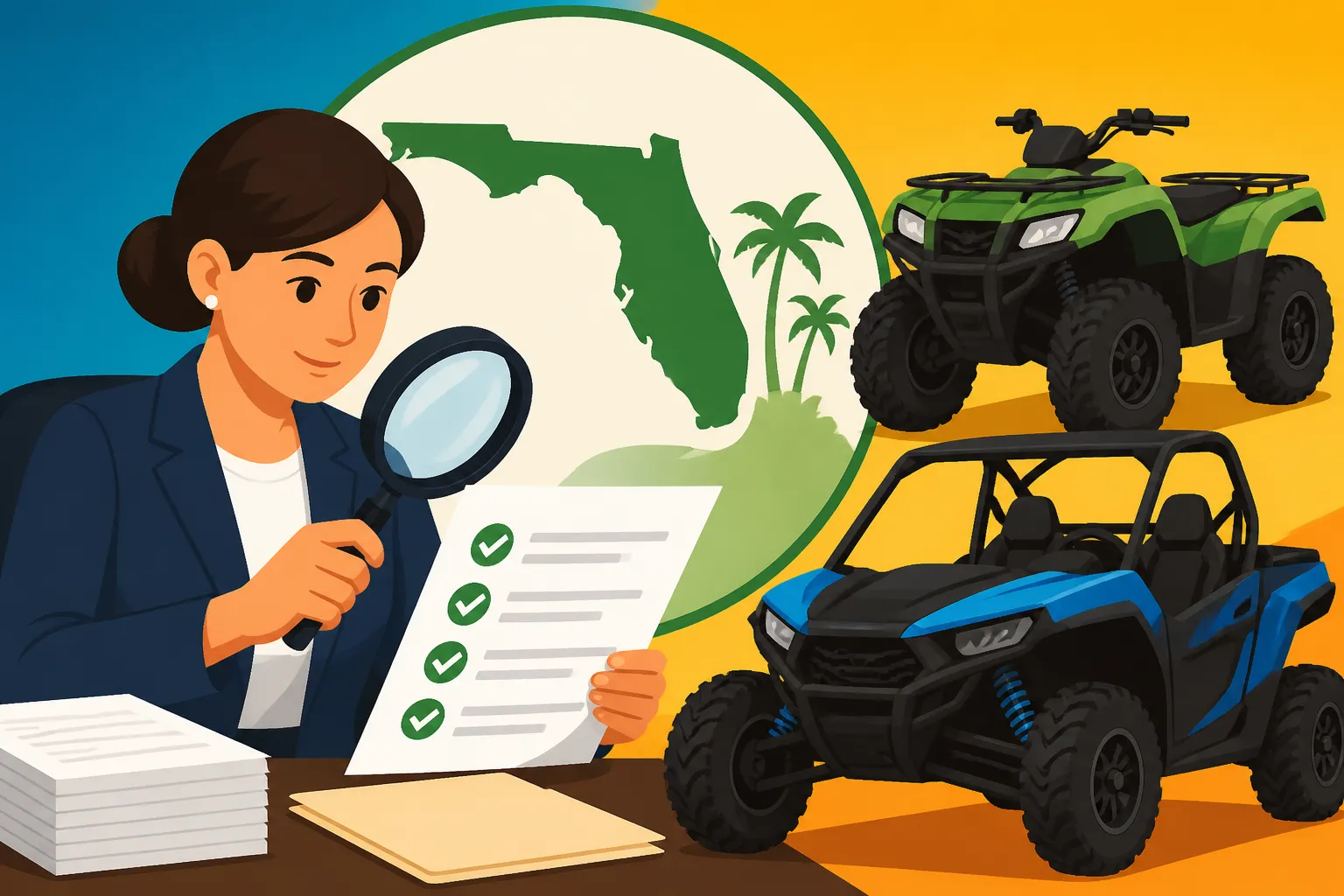
When you walk into a Florida county tax collector's office, the clerk isn't just taking your paperwork and stamping it. They're actually performing a pretty thorough review to ensure everything aligns with state regulations. Think of them as the gatekeepers of legal ownership and proper machine identification, and their first few checks are all about confirming the basics of your machine and your identity.
Identifying Your ATV or UTV: VIN Verification
One of the absolute first things a clerk will verify is your ATV or UTV's Vehicle Identification Number (VIN). This isn't just a formality; it's the unique identifier for your machine, much like a social security number for a person. The VIN needs to be present on your application form, and it absolutely must match the VIN on your proof of ownership documents. If there's a discrepancy, even a single digit, it's an immediate red flag, and your application will likely be put on hold until it's resolved.
They're not just looking for a number on paper, though. In many cases, especially for an ATV or UTV that's never been titled in Florida, or if you're coming from out of state, a physical VIN verification might be required. This means having an authorized party—which could be law enforcement, a Florida dealer, or even certain notary services—physically inspect your machine and confirm the VIN on the chassis matches the VIN on your paperwork. It's a critical step to prevent fraud and ensure the machine is what it claims to be. You can learn more about [Who Can Verify an ATV VIN in Florida?]. The clerk will confirm that this verification has been properly documented and attached to your application. Without it, your application won't move forward.
Proof of Ownership: The Paper Trail
Once the VIN is squared away, the clerk will dive deep into your proof of ownership. This is arguably the most crucial part of your application. For a new ATV or UTV, you'll need the Manufacturer's Certificate of Origin (MCO), which is the factory document that essentially acts as the machine's birth certificate. This MCO needs to be properly assigned to you by the dealer. For a used machine, you'll need the previous owner's Florida title, signed over to you. If you bought it out of state, you'd present its out-of-state title.
But what if you're in a situation where the MCO is missing, or the seller lost the title? This is a common point of frustration for many riders. The clerk will need a clear, unbroken chain of ownership. If the MCO is lost, you might need to obtain a duplicate from the manufacturer or dealer, which can take time. If a used machine's title is missing, you'll need the seller to apply for a duplicate title first, or you might have to explore options like a bonded title, though these are more complex and require specific circumstances. The goal is to prove, without a shadow of a doubt, that you are the rightful owner of that particular VIN. Without solid proof, your application will simply be denied. It’s also wise to always have a detailed bill of sale, which can be easily drafted using resources like LawDepot, to support your ownership claims, especially in private sales. For more details on this, check out [Proof of Ownership When the MSO Is Missing].
Your Identity and Residency: Who You Are
Finally, the clerk needs to confirm who is applying for the title. This means presenting a valid government-issued photo ID, such as a Florida driver's license or ID card. The name on your ID must match the name on the application and the ownership documents. If you recently moved to Florida, or your name has changed, you'll need to provide supporting documents for that as well.
They'll also confirm your Florida residency. While your Florida driver's license usually covers this, sometimes additional proof might be requested, especially if you're a new resident or there's any ambiguity. This could include utility bills, a lease agreement, or other official mail showing your current Florida address. This is important because Florida's titling rules are specifically for its residents and machines that will be primarily operated here. Make sure your address on the application is accurate and matches your ID. Don't forget, if you have any questions about the forms themselves, sites like LawDepot offer guidance on filling out official documents correctly.
Money Matters: Fees and Taxes
Beyond the paperwork proving your ownership and identity, the county clerk is also responsible for collecting the correct amount of money. This isn't just about the title fee itself; it often includes sales tax and various service charges, all of which need to be calculated accurately. Underpaying or missing a fee is another common reason for an application delay.
Calculating the Florida Sales Tax
One of the biggest financial checks a clerk makes is ensuring the correct Florida sales tax is paid. This tax is typically assessed on the purchase price of your ATV or UTV. If you bought your machine from a dealer, the sales tax would usually have been collected by them at the time of sale and remitted to the state. In that case, you'd need to show proof of this payment.
However, if you purchased your ATV or UTV in a private sale, it's your responsibility to pay the sales tax directly to the county tax collector when you apply for the title. The clerk will look at your bill of sale, which you can create using a template from LawDepot or similar services, to determine the purchase price. They might also refer to industry guides to ensure the stated price isn't artificially low, which is a tactic some people try to avoid paying the full tax. If they suspect the value is significantly understated, they may assess tax based on the fair market value of the machine, regardless of what's on your bill of sale. For more on this, check out [Florida Sales Tax When You Title an ATV].
Understanding the Title Fees and Service Charges
In addition to sales tax, there are specific fees associated with the titling process itself. The clerk will calculate the initial title application fee, which is a standard charge for processing your new title. There are also various service charges that apply to almost every transaction. These aren't always immediately obvious to the consumer, but the clerk adds them into the total.
Here's a simplified look at the typical fee structure you might encounter:
| Fee Type | Description |
|---|---|
| Initial Title Application Fee | The base fee for processing a new title for your ATV or UTV. |
| Service Charge | A mandatory fee collected by the county tax collector for processing transactions. |
| Electronic Filing Fee | Often included for digitally processing the title. |
| Lien Recording Fee | If you financed your machine, a fee to record the lienholder's interest. |
| Fast Title Fee | An optional expedited service fee if you need your paper title quickly. |
| Sales Tax | Percentage of the purchase price (or fair market value) if not already paid. |
The clerk will ensure all these relevant fees are accounted for. For instance, if you have a lien on your machine because you financed it, they'll make sure the lienholder's information is correctly recorded and the associated fee is collected. They'll also check if you're requesting a "Fast Title," which incurs an additional fee but gets you a paper title much quicker. Knowing these charges beforehand can prevent surprises. For a deeper dive into these costs, explore [The $29 Initial Title Application Fee Explained] and [The $4.25 Service Charge on an OHV Title].
Specific Scenarios That Raise Eyebrows
Sometimes, your application might present a unique challenge or fall into a specific category that requires extra scrutiny from the clerk. These aren't necessarily deal-breakers, but they do mean the clerk will be looking for particular pieces of documentation or confirmations before proceeding. Being prepared for these scenarios can save you a lot of time and hassle.
Dealing with Missing Paperwork or Out-of-State Machines
This is where many riders encounter headaches. What if you bought a machine from a private seller, and they simply don't have the title? Or maybe you've moved to Florida with an ATV or UTV you owned for years in another state, and its original paperwork is lost or different from Florida's typical requirements. The clerk is trained to handle these situations, but they'll need very specific supporting documents.
For a missing title from a private sale, the clerk will first advise that the seller needs to apply for a duplicate title in their name and then properly sign it over to you. Florida doesn't permit "title jumping," where an intermediary simply signs off on a title without ever putting it in their own name. This is crucial for maintaining a legal chain of ownership. If the seller is unreachable, or the situation is more complex, you might be looking at a bonded title process, which is a much more involved legal procedure. When you're bringing an out-of-state machine to Florida, the clerk will compare your existing title or registration to Florida's [Florida Off-Highway Vehicle Title Rules Explained] and likely require a VIN verification. Be prepared to provide the out-of-state title and potentially other documents, such as previous registrations, to establish a clear ownership history. Learn more about [Titling an Out-of-State ATV After Moving to Florida] and [Florida ATV Title When the Seller Lost the Paperwork].
When the Application Doesn't Quite Match
Clerks are meticulous about consistency. Any discrepancies between the information on your application form and your supporting documents will raise a flag. For example, if the name on your driver's license doesn't exactly match the name on the title being transferred, or if the odometer reading (if applicable to your machine, though less common for ATVs) is inconsistent with previous records, the clerk will stop and ask for clarification.
They also pay close attention to the details of the machine itself. If your application describes a "side-by-side," but the VIN history or MCO indicates it's a "quad," they'll need to resolve that discrepancy. This is especially true with Florida's specific definitions for ATVs and Recreational Off-Highway Vehicles (ROVs). These details can sometimes impact fees or even whether the machine is eligible for a standard OHV title. Always double-check your application against all your supporting documents for accuracy before you even step into the office. A minor typo can lead to significant delays.
Special Cases: Minors, Gifts, and Liens
Finally, certain situations bring their own set of requirements. If you're titling an ATV or UTV for a minor, the clerk will check for specific documentation regarding the minor's name, often requiring an adult co-owner or guardian's signature and ID. This ensures legal responsibility is properly assigned. For detailed information, see [Florida ATV Title Rules for a Minor Owner].
If the ATV or UTV was gifted to you, the clerk will look for a clear statement of gift from the previous owner, often requiring a signed affidavit or a bill of sale indicating a "gift" or a nominal purchase price, but you'll still pay sales tax based on the machine's fair market value unless it's between immediate family. They want to ensure it's a legitimate transfer and not an attempt to evade sales tax. You can find more specific rules under [Florida Off-Highway Vehicle Title for a Gifted Quad].
When there's a lien involved, meaning you financed the machine, the clerk's role is to ensure the lienholder's information (like the bank or credit union) is correctly recorded on the title application. They will capture the lender's name and address and ensure the lien is noted on the electronic title record. This protects the lender's interest until the loan is paid off. Once paid, the lender will send you a lien satisfaction, which you'd then present to the tax collector to have the lien removed from the title. For more on this, check out [Florida ATV Title With a Lien Recorded].
Disclaimer
This article is for general informational purposes only and does not constitute professional advice. Laws, prices and regulations vary by location and change over time. Consult a qualified professional for guidance on your specific situation.