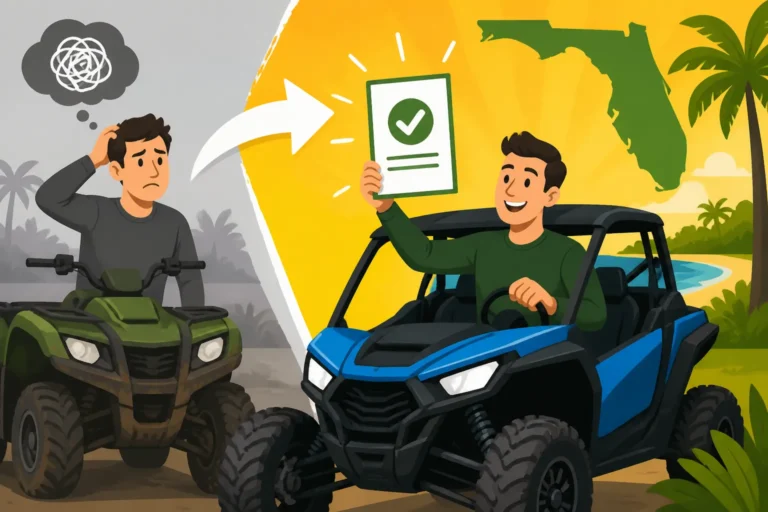
Buying a Quad at a Palatka Estate Sale
Buying a quad at an estate sale in a charming town like Palatka can seem like a fantastic opportunity to snag a great deal on a recreational vehicle. However, it often comes with a unique set of challenges, especially when it comes to confirming ownership and getting the proper paperwork in order to legally title and enjoy your new machine. This guide will walk you through the common pitfalls and essential steps to ensure a smooth purchase and title transfer when you find that perfect ATV or UTV at a Florida estate sale.
The Unique Challenges of Estate Sales for ATV Buyers
Estate sales are designed to liquidate assets of a deceased person, or sometimes an entire household being downsized. While you might find hidden gems, the process isn't always as straightforward as buying from a private seller who's still actively using the machine. You're often dealing with family members or an estate executor who might not have intimate knowledge of every item, especially older recreational vehicles.
Understanding Estate Sales and Their Paperwork Quirks
When you walk into an estate sale, whether it's in a quiet Palatka neighborhood or a sprawling rural property, you're entering a situation where the previous owner is no longer able to provide direct information. This means that important details about the quad – its maintenance history, usage, and most critically, its official paperwork – might be less clear than in a typical private sale. The person facilitating the sale, usually an executor or family member, might be focused on clearing out the property quickly and may not be intimately familiar with the specific requirements for transferring an off-highway vehicle title in Florida.
They might present you with what they think is the correct documentation, or they might simply tell you they "can't find anything." This uncertainty around the paper trail is the biggest hurdle for an estate sale ATV purchase. Unlike buying a car from a dealership where all the title and registration work is handled for you, or even a private sale where the seller has the title in hand, an estate sale often requires you to do a bit more legwork and due diligence. You might also encounter situations where the quad has been sitting for a long time, sometimes years, without being used or having its paperwork updated, which adds another layer of complexity to the titling process.
The Risk of Missing or Incomplete Documentation
The most common frustration for buyers at estate sales, especially for ATVs and UTVs, is the absence of a clear title or Manufacturer's Certificate of Origin (MSO). Many older ATVs, or those that have only ever been ridden on private land, were never formally titled in Florida. While [Selling an Untitled ATV in Florida] is possible, it adds significant steps for the buyer. The executor might not realize that a specific title is required for public land use, or they might simply have misplaced it amidst the chaos of managing an estate.
You might also encounter situations where the title exists but is incomplete or incorrectly filled out. Perhaps the deceased owner had purchased it years ago but never formally transferred it into their name, or there's a lien recorded that was never properly released. These scenarios can cause significant headaches down the road when you try to apply for a new title at the Putnam County Tax Collector's office. You absolutely need a clear chain of ownership to satisfy Florida's requirements. Without it, you could end up with a quad you legally own, but can't title or ride on public lands, severely limiting its use and resale value.
Essential Steps Before You Buy at a Palatka Estate Sale
Before you get caught up in the excitement of a potential deal on a quad at a Palatka estate sale, it's crucial to slow down and perform some key checks. Being prepared can save you a lot of grief and money later on. Remember, once you pay and take possession, resolving title issues becomes your responsibility.
Verifying Ownership and Machine History
Your first priority should be to establish who legally owns the ATV or UTV and what documentation they possess. Ask the estate sale organizer directly for the original title or the Manufacturer's Certificate of Origin (MSO). If they don't have it, inquire if they have any other proof of ownership, such as old registration documents, purchase receipts, or even a previous bill of sale. For a machine that has been in Florida for a while, a Florida ATV title is the gold standard. If the title is missing, ask if they have filed for [Florida ATV Title Lost or Damaged: Getting a Duplicate] previously.
If the quad was owned by a deceased individual, the person selling it should be the executor of the estate, or someone legally authorized to act on behalf of the estate. They should be able to provide documentation proving their authority, such as letters of administration or a will naming them as executor. This is vital because their signature will be required on the bill of sale and potentially the title transfer forms. If you're told there's no title, it's worth checking with the Florida Highway Safety and Motor Vehicles (FLHSMV) database using the VIN to see if a title was ever issued in Florida, or if there's a recorded lien. This simple step can prevent you from buying a machine with a clouded past.
Inspecting the Quad and Assessing Its Condition
Beyond the paperwork, a thorough physical inspection of the ATV or UTV is absolutely non-negotiable, especially at an estate sale where machines might have sat unused for extended periods. While you're at the Palatka estate sale, check for obvious signs of neglect or damage. Look at the tires for dry rot, examine the frame for cracks or rust, and check fluid levels and colors. Does it start? Does it run smoothly? Test the brakes, lights, and any other features. Bring a friend who knows ATVs if you're not mechanically inclined.
Beyond the visible, inquire about the machine's maintenance history. While detailed records might be rare at an estate sale, any information the family can provide about its past use (e.g., only ridden on the family farm, or regularly serviced) can be valuable. Remember that a quad sitting for years might have fuel system issues, seized brakes, or deteriorating rubber components that aren't immediately apparent. Factor in potential repair costs when negotiating your price. A pristine appearance can sometimes hide mechanical issues, just as a rough exterior might mask a well-maintained engine underneath.
Navigating the Title Transfer Process for an Estate Sale Quad
Once you've done your due diligence and decided to move forward with purchasing the quad, the real work begins: transferring the title into your name. This process can be simple if all the paperwork is present and correct, or it can require more effort if documents are missing.
What You'll Need for the Florida Title Application
Assuming the estate has a clear, physical Florida title for the ATV, the process is similar to any private sale. You'll need the original title, properly signed and dated by the executor of the estate (or legal representative) in the seller's section. Ensure their name and the deceased owner's name are clearly linked, usually through an accompanying document like letters of administration or a court order. You'll also need a bill of sale, and it's always a good idea to create a robust one. If you need help with a solid legal document, services like LawDepot can provide templates that ensure all necessary details are covered, protecting both you and the estate.
The bill of sale should include:
- The full names and addresses of both the seller (estate/executor) and buyer.
- The date of the sale.
- The purchase price.
- A detailed description of the ATV/UTV, including make, model, year, and crucially, the Vehicle Identification Number (VIN).
- A statement that the seller warrants they are the legal owner and have the right to sell the machine.
- Signatures of both parties.
Bring these documents, along with your Florida driver's license or ID, to your local County Tax Collector's office – for Palatka, that would be the Putnam County Tax Collector. Be prepared to pay the [Florida ATV Sales Tax When You Title an ATV] and the standard titling fees. If the quad was never titled, you may need a notarized bill of sale and possibly a verification of the VIN. You can find more details on [Florida's ATV Title Application Explained] for a general overview.
Handling Special Situations: Missing MSO or Title
This is where estate sales can get tricky. What if the original title is genuinely lost, or the quad was never titled in Florida in the first place, and the MSO is also gone? This isn't an uncommon scenario, especially for older ATVs. The first step is to communicate clearly with the estate representative. They might need to apply for a duplicate title on behalf of the estate before they can transfer it to you. This is an extra step and cost for them, so be prepared for potential delays. The [Florida Duplicate ATV Title Cost] is generally manageable, but it adds time to the process.
If no title or MSO can be produced, you'll need to demonstrate a clear chain of ownership. This might involve compiling all available documentation: old registration cards (even if expired), prior bills of sale, or even sworn affidavits from family members confirming ownership. In some cases, especially if the machine is very old and untitled, you might need to pursue a bonded title. This is a more involved legal process, essentially insuring against a claim of ownership by a third party. While a bonded title can be a lifeline, it's not a quick fix and involves additional fees and procedures. Always consult with the Putnam County Tax Collector's office directly for guidance on these unique situations, as their specific requirements can sometimes vary slightly from one county to another within Florida. You might also need to provide [Proof of Ownership When the MSO Is Missing].
Protecting Your Purchase and Future Riding
Even with all the challenges, buying an ATV at an estate sale can be incredibly rewarding. However, taking a few extra precautions can help protect your investment and ensure you can enjoy your new quad without any legal headaches down the road.
The Importance of a Solid Bill of Sale
We can't stress this enough: a comprehensive bill of sale is your best friend when buying a quad from an estate sale, especially if the title situation is less than perfect. Think of it as your primary proof of purchase and a crucial link in the ownership chain. Even if the estate has the original title, a detailed bill of sale provides an extra layer of protection by clearly outlining the transaction. It should list the exact purchase price, the date, and a complete description of the ATV, including the VIN.
Crucially, for an estate sale, the bill of sale needs to clearly state that the seller is acting on behalf of the estate of the deceased individual, and it should include the executor's name and title (e.g., "Jane Doe, Executor of the Estate of John Smith"). This helps establish the legal authority of the seller. If you're uncomfortable drafting one yourself, a service like LawDepot can provide excellent templates that are legally sound and comprehensive, ensuring you don't miss any critical clauses. A well-crafted bill of sale can be indispensable if you later need to clarify ownership with the FLHSMV or even if you face questions about [Florida Sales Tax When You Title an ATV]. It also formalizes the transfer of possession and responsibility, which is important for your records.
What Happens If You Can't Get a Title
Let's be realistic: despite your best efforts, there might be rare cases where obtaining a Florida title for your estate sale quad proves impossible, or prohibitively difficult and expensive. If you end up in this situation, it doesn't mean your purchase is worthless, but it severely limits your riding options. An untitled ATV in Florida can generally only be ridden on private property with the landowner's permission. This includes your own land, private farms, or dedicated private mud parks that don't require titled machines. You cannot legally ride an untitled quad on public lands, such as state forests or national forests, which require an off-highway vehicle title for identification and tracking purposes.
Operating an untitled ATV on public land can lead to fines, citations, or even impoundment of your machine by law enforcement. It also complicates matters if the quad is ever stolen, as proof of ownership without a title can be much harder to establish. Before you make the purchase, especially if you anticipate title issues, weigh the importance of public land access versus the potential deal. If your primary goal is to ride the vast trails of Ocala National Forest or Croom Motorcycle Area, then a clear, transferrable title is a must. If you only plan to ride around your Palatka property, then an untitled machine might be acceptable, but always be aware of the limitations.
| Document Type | Required for Standard Transfer | Common Issue at Estate Sales | Resolution Path |
|---|---|---|---|
| Florida ATV Title | Yes | Missing, unsigned | Executor applies for duplicate; Executor signs title |
| Manufacturer's Cert. of Origin (MSO) | Yes (for new/untitled) | Lost, never issued | Affidavits, prior registration, bonded title (last resort) |
| Bill of Sale | Yes | Incomplete, informal | Use a comprehensive template (e.g., LawDepot) |
| Proof of Executor Authority | Yes (if deceased owner) | Not provided | Ask for Letters of Administration/Court Order |
| VIN Verification | Sometimes | Not done | Get law enforcement/dealer to verify |
| Lien Release | Yes (if applicable) | Not obtained | Contact lienholder for release |
Disclaimer
This article is for general informational purposes only and does not constitute professional advice. Laws, prices and regulations vary by location and change over time. Consult a qualified professional for guidance on your specific situation.