Do Florida Dirt Bikes Get Titled Too?
Navigating the world of off-highway vehicle (OHV) titles in Florida can feel like slogging through a swamp after a heavy rain – confusing, mucky, and full of hidden snags. One question I hear a lot, especially from folks new to the Sunshine State's trails, is whether their beloved dirt bike needs a title, just like an ATV or UTV might. This guide aims to clear up that specific confusion, diving deep into Florida's titling laws so you can hit the trails with confidence and proper paperwork.
Florida's Off-Highway Vehicle Landscape: Understanding the Categories
Before we tackle the dirt bike question head-on, it's crucial to understand how Florida categorizes different off-highway vehicles. The state's Department of Highway Safety and Motor Vehicles (DHSMV) has specific definitions that dictate whether a vehicle needs a title, registration, or neither. This isn't just bureaucratic red tape; these distinctions often determine where and how you can legally ride, and what kind of proof of ownership you'll need.
The Big Three: ATVs, UTVs, and Off-Highway Motorcycles
When most of us think of off-road fun, we picture ATVs, UTVs (or side-by-sides), and dirt bikes. While they all share the common goal of getting you off the paved roads and into the great outdoors, the law sees them a little differently. An All-Terrain Vehicle (ATV) is generally a motorized vehicle, 55 inches or less in width, having a dry weight of 1,500 pounds or less, designed to travel on three or more non-highway tires, and manufactured for recreational use by a single operator. A Utility Terrain Vehicle (UTV), or Recreational Off-Highway Vehicle (ROV), is typically wider and heavier, often designed for multiple passengers and utility tasks, with different width and weight limits.
Off-highway motorcycles, or dirt bikes, are a distinct category. They are two-wheeled, motorized vehicles that are not street-legal and are designed exclusively for off-road use. Think of the specialized tires, suspension, and lack of typical road-going features like turn signals or mirrors. This specific design purpose is a key factor in how Florida's titling laws apply to them. The intent of these vehicles – whether for recreational riding, utility, or competition – plays a significant role in their legal classification and, consequently, their titling requirements.
Why Distinctions Matter for Titling
The reason these distinctions are so important for titling is rooted in the state's efforts to track ownership, prevent theft, and regulate the use of these vehicles, particularly on public lands. For example, if you're buying a used ATV in Florida, the title is paramount for proving ownership and ensuring a smooth transaction. The process of [Buying a Used ATV in Florida: Transferring the Title] is largely dependent on having that official document.
Without clear definitions, the system would be a mess. Imagine trying to identify a stolen vehicle if there was no official record of who owned it. The titling process, while sometimes feeling like a chore, provides a legal chain of custody for valuable assets. It also clarifies responsibilities for things like sales tax and ensures that when you sell your machine, you can transfer ownership properly, avoiding future headaches for both yourself and the buyer.
Do Florida Dirt Bikes Really Need a Title? The Straight Answer
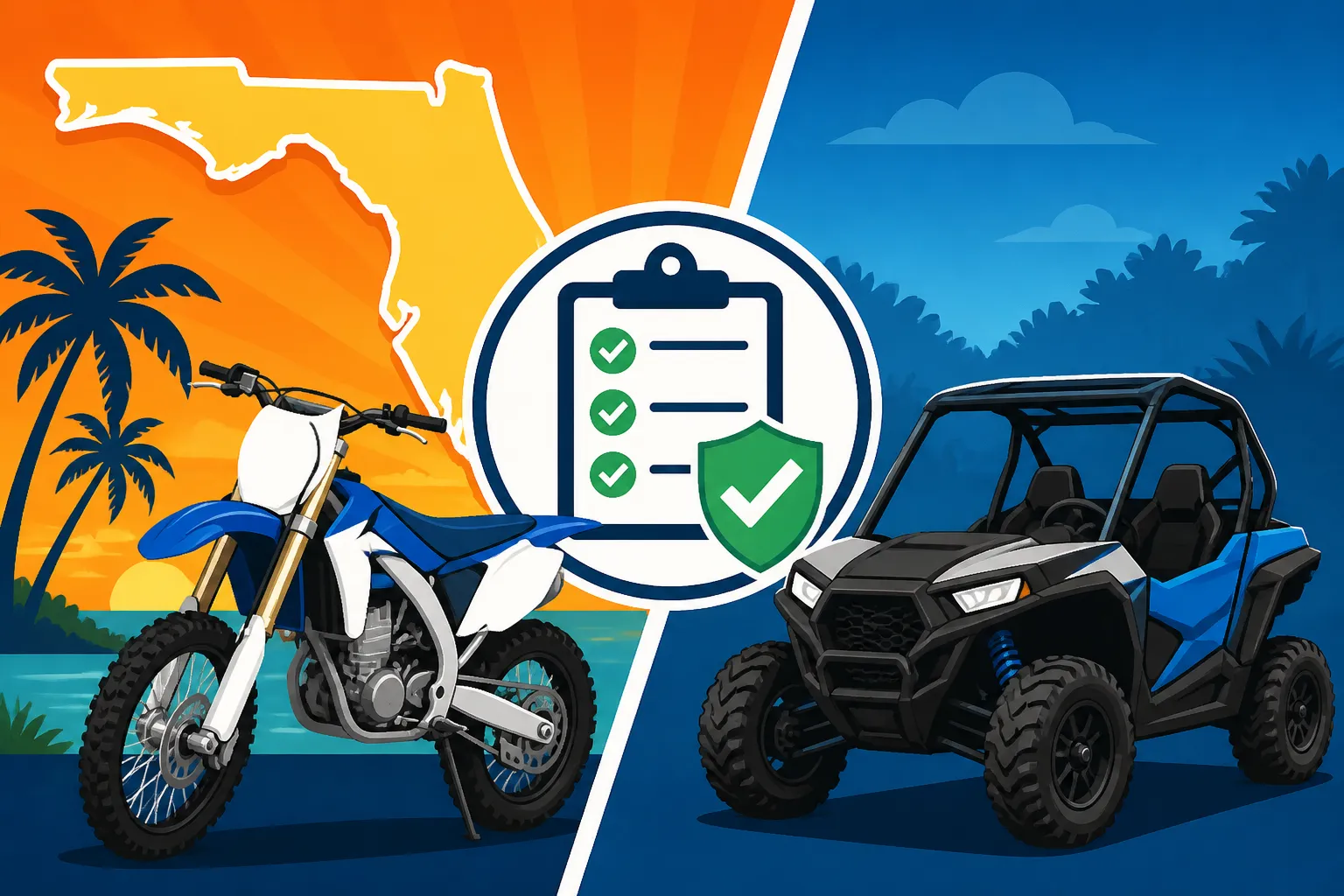
Let's cut right to it, because I know this is the burning question on many riders' minds: Do Florida dirt bikes get titled? The answer is yes, generally, off-highway motorcycles (dirt bikes) in Florida are subject to titling requirements under the same state law that applies to ATVs and UTVs. This often comes as a surprise to riders who might assume that because a dirt bike isn't street legal, it wouldn't need a formal title.
Florida's Off-Highway Vehicle Title Law Explained
Florida Statutes section 316.2123, known as the "Florida Off-Highway Vehicle Title Law," establishes the framework for titling OHVs, including off-highway motorcycles. This law states that every off-highway vehicle, unless specifically exempted, must be titled. The primary purpose of this title is to prove ownership, just like with a car or an ATV. It's that official document from the state that says, "This machine belongs to this person." [Florida's Off-Highway Vehicle Title Law Explained] provides a deeper dive into the statute itself.
The law broadly defines an "off-highway vehicle" to encompass various types of machines, including those designed to be operated solely off roads or highways. This includes dirt bikes. The key takeaway here is that while your dirt bike won't get a license plate and road registration like a car, it absolutely needs a certificate of title if you want to legally own and operate it, especially on public lands where a title or proof of ownership might be requested.
Who Must Title an Off-Highway Motorcycle?
Essentially, anyone who owns an off-highway motorcycle in Florida, whether purchased new from a dealer or acquired through a private sale, is typically required to title it. There are specific guidelines for [Who Must Title an ATV in Florida], and these largely extend to off-highway motorcycles as well. If you buy a brand-new dirt bike from a dealership, they will usually handle the initial paperwork, including submitting the Manufacturer's Certificate of Origin (MSO) and your application to the DHSMV for the title.
For private sales, the responsibility usually falls to the buyer to transfer the title into their name. If you're selling an untitled ATV in Florida, it's already a sticky situation, and the same applies to dirt bikes. Having a title in hand protects both the buyer and the seller. If you're wondering about [Off-Highway Motorcycle Titles in Florida], rest assured that the state generally treats them similarly to other OHVs for titling purposes.
The Titling Process for Florida Dirt Bikes
So, you've got a dirt bike, or you're planning to get one, and now you know it needs a title. What's next? The process isn't overly complicated, but it does require attention to detail and specific documentation. Just like with ATVs, you'll generally interact with your local County Tax Collector's office or a licensed service center.
Required Documentation for Titling
To title your dirt bike in Florida, you'll need to gather a few key pieces of paperwork. This typically includes:
- Application for Certificate of Title: This is the main form (Form HSMV 82040) that you'll fill out, providing all the details about yourself and your dirt bike. Make sure every field is accurate, as errors can cause delays.
- Manufacturer's Certificate of Origin (MSO) or Previous Title: If the dirt bike is brand new, you'll need the original MSO from the manufacturer. If it's a used bike, you'll need the previous owner's properly assigned title. This is your proof of where the machine came from.
- Bill of Sale: Even with an MSO or a previous title, a clear and comprehensive bill of sale is always a good idea, especially for private transactions. It outlines the purchase price, date, and details of both parties. You can find reliable templates for this, perhaps through a service like LawDepot, to ensure it covers all the necessary legal points.
- Proof of Identity: A valid driver's license or state-issued ID is essential to confirm who you are.
- Payment for Fees: There will be titling fees, which include the initial title application fee and potentially other charges like service fees. While I can't give specific figures, expect to pay a set amount for the title itself, plus any applicable processing fees.
It's always a smart move to call your local County Tax Collector's office beforehand to confirm their exact requirements and current fees. This can save you a wasted trip and ensure you have everything in order.
What to Do If You Don't Have an MSO or Title
Sometimes, you might acquire a dirt bike without a clear MSO or a properly assigned title. This often happens with older machines, gifted quads, or bikes bought from private sellers who simply "lost the paperwork." This situation can be tricky, but it's not always a dead end. [Proof of Ownership When the MSO Is Missing] explores options for proving ownership when you don't have the primary documents.
In some cases, if you have a solid bill of sale (again, a template from a service like LawDepot can be invaluable here) and can establish a clear chain of ownership, the DHSMV might work with you. However, it can be a longer and more involved process. You might need to provide additional affidavits or even pursue a bonded title if necessary. The most straightforward path is always to insist on a proper MSO or titled document when purchasing any OHV.
Why Titling Your Dirt Bike Matters (Even Without a License Plate)
Even though your dirt bike won't ever be road legal and receive a license plate, having a title is incredibly important for several reasons. It's not just a formality; it's a critical document that protects your investment and ensures legal compliance.
Proof of Ownership and Theft Deterrence
The most fundamental reason for titling is establishing clear legal ownership. Your title is the official state-issued document that proves you are the rightful owner of that specific dirt bike. This is absolutely critical in cases of theft. Imagine your prized dirt bike goes missing from your garage or gets stolen from a trailhead. [What an OHV Title Proves in a Theft Claim] highlights just how vital that piece of paper is when you're reporting the theft to law enforcement and working with your insurance company. Without a title, proving that the bike was yours can be incredibly difficult, complicating recovery and insurance claims.
Beyond theft, a title prevents disputes over ownership. If you ever decide to sell your dirt bike, a clear, properly transferred title assures the buyer they are acquiring legitimate property and helps prevent issues like title jumping, which can cause significant headaches. A comprehensive bill of sale, perhaps generated using LawDepot's customizable templates, can supplement the title during a private sale, detailing the terms and conditions.
Requirements for Riding on Public Lands
Florida has numerous fantastic public riding areas, from state forests to designated OHV parks like the Croom Motorcycle Area. If you plan to ride your dirt bike on these public lands, you'll often be required to show proof of ownership, and a title is the gold standard. While some areas might accept a bill of sale, having the official title leaves no room for doubt when a park ranger or law enforcement officer checks your paperwork.
Furthermore, many of these public lands have age requirements for riders and sometimes specific safety course requirements for minors. For instance, [Florida ATV Safety Course Requirements for Riders Under 16] apply to dirt bike riders as well. Being able to demonstrate that you legally own the machine you're riding is part of showing you're a responsible operator complying with all state rules.
Future Sales and Financial Transactions
Let's face it, most of us don't keep the same dirt bike forever. Eventually, you might want to upgrade, switch brands, or simply move on from the sport. When that time comes, having a clean title makes selling your dirt bike significantly easier and often allows you to command a better price. Buyers are naturally wary of untitled vehicles because of the potential legal complications and unknown history.
Additionally, if you ever needed to use your dirt bike as collateral for a loan, or if you initially financed the purchase, the lienholder would absolutely require a title to record their interest. Without a title, these financial transactions become impossible or far more complex. The title is essentially the birth certificate and legal identity of your off-highway motorcycle in Florida.
Florida OHV Titling Overview
To help clarify the differences across common off-highway vehicles in Florida, here's a quick overview of their general titling requirements:
| Vehicle Type | General Titling Requirement in Florida | Why It's Required | License Plate/Registration Required? |
|---|---|---|---|
| ATV (All-Terrain Vehicle) | Yes | Proof of ownership, theft prevention, public land use compliance. | No (unless street-legal conversion) |
| UTV (Utility Terrain Vehicle / Side-by-Side) | Yes | Proof of ownership, theft prevention, public land use compliance. | No (unless street-legal conversion) |
| Off-Highway Motorcycle (Dirt Bike) | Yes | Proof of ownership, theft prevention, public land use compliance. | No |
| Go-Kart (Off-Road Only) | No | Generally considered a recreational device, not an "off-highway vehicle" under statute. | No |
Note: This table provides general guidance. Always verify specific requirements with the Florida DHSMV or your local County Tax Collector, as definitions and rules can be nuanced.
Final Thoughts on Titling Your Florida Dirt Bike
The bottom line is this: if you own or plan to own a dirt bike in Florida, you should absolutely plan on obtaining a title for it. While it might seem like an extra step for a vehicle that can't hit the paved roads, the benefits of having a clear, official title far outweigh any minor inconvenience. It protects your investment, streamlines future sales, and ensures you're ready for any questions about ownership that might arise, especially when you're enjoying Florida's fantastic trails.
Remember, confusion around off-highway vehicle laws is common, but taking the time to understand them saves you from potential headaches down the line. Whether you're filling out forms yourself or working with a dealer, ensure that the titling process for your dirt bike is completed correctly and promptly.
Disclaimer
This article is for general informational purposes only and does not constitute professional advice. Laws, prices and regulations vary by location and change over time. Consult a qualified professional for guidance on your specific situation.