Rebuilt Quads Assembled From Two Machines
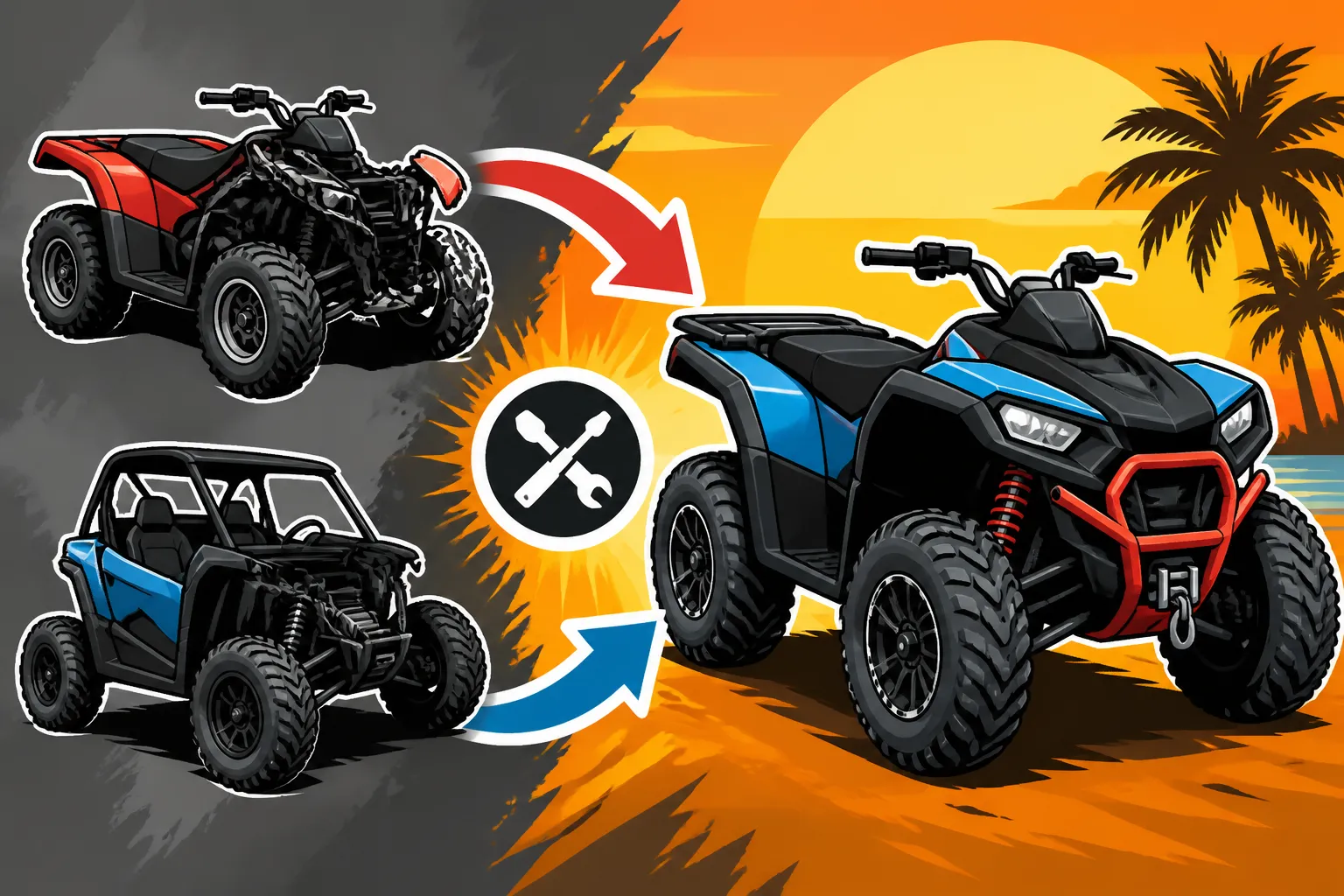
So, you found a couple of rough-looking ATVs, maybe one with a good frame and the other with a solid engine, and you thought, "Hey, I can make one killer quad out of these!" You spent countless hours in the garage, wrenching, welding, and bringing your vision to life. It's a true Frankenstein's monster of off-road power, and you're proud of your mechanical prowess. But now comes the part that often catches folks off guard: getting that rebuilt masterpiece officially recognized by the state of Florida. It’s not as simple as titling a new machine, and it can feel like you're navigating a labyrinth of paperwork and inspections. This guide is here to help you understand the unique challenges and steps involved in titling a quad in Florida that you've lovingly assembled from two or more donor machines.
The Unique Titling Challenges of a Rebuilt Quad
When you combine parts from multiple ATVs to create a single, functioning machine, Florida doesn't just see it as a simple ATV. It's a "rebuilt" or "homemade" vehicle in the eyes of the state, and that classification comes with a whole different set of rules and requirements compared to a straightforward title transfer. This distinction is where many DIY enthusiasts run into their first major roadblock, often after all the hard work of the build is done.
Why Florida Sees Your Rebuild Differently
Florida's Department of Highway Safety and Motor Vehicles (DHSMV) takes a much closer look at vehicles that have been pieced together, and for good reason. They want to ensure that the machine isn't built from stolen parts and that all major components have a legitimate chain of ownership. This isn't about casting doubt on your integrity; it's a standard procedure designed to protect everyone in the long run. If you're only replacing a bent axle or a broken plastic fender on an already titled ATV, that’s one thing. But when you’re combining frames, engines, and other major parts from different sources, the state needs to reconcile how all these pieces came together to form a new, cohesive vehicle. It means the process of proving ownership suddenly multiplies in complexity.
The challenge truly begins when you realize you can't just pick the best VIN from one of your donor machines and call it a day. If one donor ATV had a clean title and the other was just a parts machine with no paperwork, combining them requires explaining that entire lineage. The state wants to know where the frame came from, where the engine came from, and how you legally acquired both. Without this clear documentation for each significant component, you're essentially presenting a machine with an unclear history, which is a big red flag for the titling office.
Identifying Your Quad's "New" Identity
One of the first questions you’ll face, and one of the most critical, is: which Vehicle Identification Number (VIN) will your rebuilt quad carry? In most cases, the frame is considered the primary identifier of a vehicle. So, if you used the frame from one ATV and the engine from another, the VIN on the chosen frame will usually be the one the state focuses on. But what if that frame itself had a questionable past, or if it was part of a machine that was never titled? Or, worse, what if you essentially fabricated parts of the frame, making it truly "homemade"?
This is where the process can get complicated quickly. If the frame you've chosen as the primary identifier has a clear, legitimate VIN and associated paperwork, you're off to a good start. However, if the frame's VIN is missing, obscured, or from a machine that was never legally documented, you might be looking at the need for a new VIN assignment from the state. This is a much more involved process, often requiring a comprehensive inspection and potentially even a bonded title, to establish a completely new identity for your unique machine. It's a stark contrast to simply updating the owner's name on an existing, clean title.
Essential Paperwork for a Florida Rebuilt Quad Title
Gathering the right paperwork for a rebuilt quad is arguably the most critical step, and it requires meticulous attention to detail. This isn't a situation where a simple bill of sale for the finished product will suffice. Florida wants to see the entire story of how your machine came to be, piece by piece. Missing documentation for even one major component can bring the entire titling process to a grinding halt.
Proving Ownership for Every Major Component
Imagine trying to explain the family tree of your ATV. That's essentially what you're doing here. For a rebuilt quad, you absolutely must provide proof of ownership for each major component you used from different donor machines. This means if you took the frame from ATV "A" and the engine from ATV "B," you'll need separate bills of sale or previous titles for both ATV "A" and ATV "B." This is often where people run into trouble. Perhaps you bought one "parts quad" without a title for a song, or a friend gave you a broken one years ago. While those might seem like innocent transactions, they become significant hurdles when you're trying to prove legitimate ownership to the state.
A detailed [Florida ATV Bill of Sale: What It Needs to Say] is crucial here. Each bill of sale, even for parts-only machines, should clearly list the VIN (if available), the seller's information, your information, the purchase date, and the specific components acquired. Don't skimp on details. If you're dealing with private party purchases, and especially if the original titles for the donor machines are missing or never existed, having a well-drafted bill of sale is paramount. You might consider using a reputable legal document service like LawDepot to generate a comprehensive bill of sale form. This can help ensure that all the necessary legal clauses and details are included, giving your documentation a professional and legitimate appearance, which can be invaluable when presenting your case to the DHSMV.
The Importance of a Rebuilder's Statement
Beyond proving ownership of the individual parts, Florida will likely require a detailed "Rebuilder's Statement" or an affidavit explaining exactly how you assembled the machine. This isn't just a casual note scrawled on a napkin; it's a formal declaration outlining the entire rebuild process. Think of it as the birth certificate for your custom creation.
In this statement, you need to describe:
- The donor vehicles: What were their VINs, make, model, and year (if known)?
- The parts used: Specifically list the major components taken from each donor (e.g., "frame from 2005 Honda TRX450R, engine from 2007 Yamaha Raptor 700").
- The work performed: Detail the process of combining these parts, any fabrication, and major repairs.
- New parts: List any brand-new components purchased for the rebuild, such as new axles, tires, or steering components, and include receipts for these purchases. Even seemingly small purchases contribute to the overall value and legitimacy of your build.
This statement helps the state understand the scope of the project and verifies that the machine isn't just a slapped-together assortment of junk, but a deliberate rebuild. If you're unsure how to draft such a formal document, using resources like LawDepot to create a sworn affidavit or a customized legal declaration can provide a structured and legally sound format for your rebuilder's statement. It adds a layer of professionalism and clarity that can help your application move smoothly through the process.
| Document Type | Standard ATV Title Application | Rebuilt/Homemade ATV Title Application |
|---|---|---|
| Primary Proof | Manufacturer's Certificate of Origin (MSO) or previous title | Proof of ownership (title/bill of sale) for each major component (frame, engine) from all donor machines. |
| Bill of Sale | Often required for private sales | Required for each donor machine/component. Must be detailed and specific. |
| Rebuilder's Statement | Not applicable | Mandatory. A detailed, written account of the rebuild process, components used, and their origins. |
| VIN Verification | Often done by tax collector staff for out-of-state titles | Mandatory physical inspection by law enforcement or DHSMV compliance examiner. |
| Photos | Not typically required | May be requested or recommended to show the completed machine and key components. |
| Receipts | Not typically required | Receipts for all new parts purchased during the rebuild. |
| Forms | HSMV 82040 | HSMV 82040, possibly HSMV 84490 (VIN Verification), and others depending on unique circumstances (e.g., new VIN assignment). |
The VIN Verification and Inspection Process
Once you've gathered all your ownership documents and drafted your rebuilder's statement, the next crucial step for a rebuilt quad is the VIN verification and physical inspection. This is not just a quick glance at the VIN; it's a thorough examination to ensure everything matches your paperwork and that the vehicle is safe and legitimate. This stage can feel a bit like an interrogation, but it's a necessary part of the process to get your unique machine a clean Florida title.
Who Can Verify Your Rebuilt Quad's VIN
For a standard ATV title transfer, sometimes a county tax collector employee can verify the VIN if it’s from out-of-state. However, for a rebuilt or homemade vehicle, the stakes are higher, and so are the requirements for verification. You can't just roll your quad into any random shop. Florida mandates that the VIN verification for these types of machines must be performed by specific authorized personnel.
Typically, this means a law enforcement officer – either from your local police department or sheriff's office – or a Florida DHSMV compliance examiner. These individuals are trained to identify altered or missing VINs, verify component origins, and look for any signs of tampering. They're not just checking numbers; they're verifying the integrity of the vehicle's identity. Finding the right agency and scheduling an inspection can sometimes be a bureaucratic challenge, requiring a bit of patience and persistence. Some offices might prefer you bring the machine to them, while others might schedule an officer to come to your location. For more details, you might want to look into resources like [Who Can Verify an ATV VIN in Florida?].
What the Inspector Looks For
During the inspection, the officer or examiner will have a checklist. They'll primarily focus on the VIN you've designated as the primary identifier for your rebuilt quad, typically found on the frame. They'll ensure it's legible, untampered with, and matches the documentation you've provided. They’ll also scrutinize the engine number, comparing it against your bills of sale and rebuilder's statement.
Beyond just the numbers, they'll verify the physical components you've listed in your rebuilder's statement. If you said the engine came from a 2007 Yamaha Raptor, they'll be looking for an engine consistent with that description. They're looking for consistency and legitimacy across all your documentation and the physical machine. If the original VIN on the frame is compromised, unreadable, or was never officially associated with a titled vehicle, the inspector might recommend the assignment of a new Florida VIN. This is a special process for genuinely "homemade" or extensively rebuilt vehicles that don't have a clear, traceable original VIN. This level of scrutiny highlights why your detailed rebuilder's statement and impeccable paperwork are so critically important. If you’ve drafted any affidavits or supporting documents using services like LawDepot, ensure they are clear and readily available for the inspector.
Navigating the Application and Potential Roadblocks
With your paperwork in order and the VIN verification complete, you're ready for the final push: submitting your application. While you might feel like you've cleared the biggest hurdles, the application process for a rebuilt quad can still present unique challenges. It's often a different beast than titling a standard machine, and managing expectations regarding processing times and potential rejections is key.
Completing the Application for a Rebuilt Title
The primary form you'll use is the Florida Department of Highway Safety and Motor Vehicles (DHSMV) Form HSMV 82040, "Application for Certificate of Title With/Without Registration." However, for a rebuilt machine, this form is just the beginning. You'll need to attach all the supporting documentation we've discussed: your detailed bills of sale for each component, your rebuilder's statement, and the completed VIN verification form (often HSMV 84490).
When filling out Form 82040, pay extra attention to sections that ask about the vehicle's history and how you acquired it. Be completely transparent about the fact that it's a rebuilt machine from multiple sources. If a new VIN was assigned during the inspection, ensure that is clearly noted. Every line needs to be accurate and consistent with your supporting documents. Any discrepancies can lead to delays or outright rejection. While the official state forms are mandatory, if you've created any additional affidavits or declarations to clarify component ownership or the rebuild process, using a platform like LawDepot to ensure these documents are professionally drafted can certainly help your application stand out for clarity and completeness. It shows you've taken every step seriously. You can find general guidance on the process in articles like [Florida's ATV Title Application Explained].
Expecting Delays and Common Denials
Unlike a brand-new ATV purchase, which often results in a title in a few weeks, the processing time for a rebuilt title can be significantly longer. These applications often require a deeper review by DHSMV staff, especially if there are any unique circumstances or if a new VIN is being issued. It's not uncommon for these applications to take several weeks or even a few months to process, so patience is truly a virtue here. For a better understanding of typical timelines, you might find [How Long a Florida ATV Title Takes to Arrive] helpful, though note that rebuilt titles often sit on the longer end of that spectrum.
Common reasons for denial include:
- Insufficient Proof of Ownership: This is the big one. If you can't clearly show how you legitimately acquired all the major components, especially the frame and engine, your application will likely be denied. This can happen if you bought parts machines with no paperwork, or if previous owners weren't diligent in transferring titles. You can sometimes find yourself in a bind, as discussed in [Buying a Quad With No Title From a Neighbor].
- Inconsistencies in Documentation: If your rebuilder's statement contradicts your bills of sale, or if VINs don't match up, the state will flag it. Accuracy is paramount.
- Unverified VINs: If the VIN verification wasn't properly conducted or if the inspector found issues, your application will stall.
- Missing Forms: Ensure every required form and supporting document is included. Double-check for signatures, notarizations (if required), and completeness.
If your application is denied, don't despair immediately. The denial letter usually provides specific reasons. This allows you to address the issues, gather more documentation, or correct any errors, and then resubmit your application. It's often a back-and-forth process, but with persistence and thoroughness, you can eventually get that rebuilt quad legally titled and ready for the trails. For broader context on the rules, [Florida Off-Highway Vehicle Title Rules Explained] can be a valuable resource.
Disclaimer
This article is for general informational purposes only and does not constitute professional advice. Laws, prices and regulations vary by location and change over time. Consult a qualified professional for guidance on your specific situation.