When an MSO Beats a Bill of Sale
Buying or selling an all-terrain vehicle (ATV) or utility terrain vehicle (UTV) in Florida can feel like navigating a swamp sometimes, especially when you're trying to figure out which pieces of paper actually prove ownership. Many folks mistakenly believe a simple bill of sale is all you need, but in the Sunshine State, there's a crucial document that often carries far more weight, particularly for new machines: the Manufacturer's Statement of Origin, or MSO. This guide will help you understand when that MSO absolutely trumps a bill of sale, saving you headaches and potential title rejection at the tax collector's office.
Understanding the Manufacturer's Statement of Origin MSO
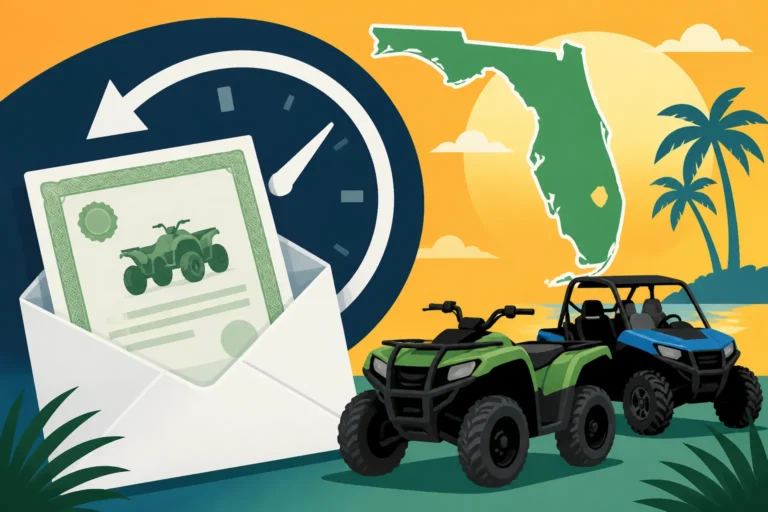
When you buy a brand-new ATV or UTV, whether it's a quad for tearing up the trails or a side-by-side for farm work, there's one document that stands above all others as proof of its very existence and initial ownership: the Manufacturer's Statement of Origin. This isn't just a fancy piece of paper; it's the official birth certificate for your machine, and Florida's titling process relies heavily on it.
What Exactly Is an MSO?
Think of an MSO as the very first title for your ATV or UTV. It’s issued by the manufacturer to the dealership when the machine leaves the factory. This document contains all the critical identifying information about the vehicle: the manufacturer's name, the model, the year, the weight, and, most importantly, the Vehicle Identification Number (VIN). It also certifies that the vehicle complies with federal regulations and confirms that it has never been titled or registered in any state before. For your local tax collector, the MSO is the undisputed evidence that your new machine is, well, new, and ready for its first official ownership record. Without it, the state has no way to trace the machine's origin from the factory floor to your garage.
Why the MSO is King for New ATVs/UTVs
In Florida, when you're titling a brand-new ATV or UTV for the very first time, the MSO is absolutely paramount. It’s the foundational document that allows the state to issue an [Off-Highway Vehicle Title in Florida]. Without it, you simply cannot get a title for a new machine. The MSO establishes the chain of ownership from the manufacturer to the dealer, and then from the dealer to you. It's what verifies that your quad or side-by-side is legitimate and ready to be entered into the state's titling system. Trying to title a new machine with just a bill of sale, even one from a reputable dealer, will likely result in a swift rejection from the Department of Highway Safety and Motor Vehicles (DHSMV) or your county tax collector’s office. They need that original MSO to establish the machine's identity and its first legal owner.
Dealing with a Lost or Missing MSO
It’s a truly frustrating scenario: you've bought a new ATV or UTV, but somehow, the MSO has gone missing. Maybe it was misplaced by the dealer, or perhaps you bought a "new" machine from a private seller who never actually titled it and now can't find the paperwork. This can throw a major wrench in your plans to get your machine legally titled. If your MSO is lost, your first step should always be to contact the dealership where you purchased the vehicle. They are usually able to request a duplicate MSO directly from the manufacturer. This process can take some time and might involve a fee, but it's often the only straightforward path. If the dealer is no longer in business or uncooperative, things get trickier, and you might need to explore options like a bonded title, which involves more paperwork, a surety bond, and additional time. Don't underestimate the importance of safeguarding this document from day one.
The Role of a Bill of Sale in Florida ATV/UTV Transactions
While the MSO holds supreme authority for new machines, the bill of sale plays a significant, though different, role, especially when you're buying a used ATV or UTV. It’s the handshake on paper, detailing the specifics of a private transaction and protecting both the buyer and the seller. However, it's critical to understand its limitations.
When a Bill of Sale is Sufficient Proof of Ownership
For most used ATV and UTV transactions in Florida, a properly executed bill of sale is absolutely essential and, when paired with an existing Florida title, it’s sufficient for transferring ownership. If you're buying a quad from a neighbor, a friend, or even a dealer selling a pre-owned unit, and that machine already has a Florida title, then the bill of sale acts as your proof of purchase. The seller would sign over the existing title to you, and the bill of sale simply documents the transaction price, date, and parties involved. This combination allows you to successfully transfer the [Florida ATV Title Transfer After a Private Sale]. In these cases, the bill of sale doesn't replace the MSO or the existing title; it complements the title transfer by proving the terms of the sale. It’s particularly useful for calculating [Florida Sales Tax When You Title an ATV] on a private sale.
Essential Elements of a Valid Bill of Sale
A robust bill of sale isn't just any scrap of paper. To be considered valid and effective in Florida, it needs to include several key pieces of information. At a minimum, it should clearly state:
- The full legal names and addresses of both the buyer and the seller.
- The date of the sale.
- A detailed description of the ATV or UTV, including the make, model, year, and its unique Vehicle Identification Number (VIN). This VIN is crucial for linking the bill of sale to the actual machine and its title.
- The purchase price agreed upon.
- A statement that the seller is transferring all ownership rights to the buyer.
- Signatures of both the buyer and the seller.
While not always required by law for an ATV, it’s often a good idea to have the signatures notarized, especially for higher-value machines, as it adds an extra layer of legal verification. Many people find it helpful to use a template to ensure all necessary details are included. Resources like LawDepot offer customizable bill of sale templates that can help you create a comprehensive and legally sound document tailored to your specific transaction, ensuring you don't miss any critical information.
Limitations and Risks of Relying Solely on a Bill of Sale
Here's where many people run into trouble: a bill of sale, on its own, is rarely enough to title an ATV or UTV in Florida if the machine has never been titled before or if the existing title is missing or has issues. If you purchase an ATV from a private party who claims it’s "new" but has no MSO, and they only provide a bill of sale, you are in a precarious position. The bill of sale merely proves you bought something; it doesn't establish the machine's legal origin or previous titling history. Without an MSO for a new machine or a properly signed-over title for a used one, the bill of sale alone won't get you a title at the tax collector's office. You’d be looking at a much more complicated and potentially costly process to establish ownership, possibly involving legal counsel or the bonded title process. This is especially true for machines like many older dirt bikes or quads that might have been used strictly on private land for years without ever being titled. You might hear stories about [Buying a Quad With No Title From a Neighbor], but the process isn't always as simple as a handshake and a bill of sale.
The Critical Scenarios: When an MSO Beats a Bill of Sale
Understanding the distinction between an MSO and a bill of sale isn't just academic; it's absolutely crucial for ensuring a smooth and legal ATV or UTV ownership experience in Florida. There are specific, high-stakes scenarios where the MSO isn't just preferred, but fundamentally necessary, making a simple bill of sale completely inadequate.
First-Time Titling of a Brand-New Machine
This is the most straightforward and non-negotiable scenario where the MSO reigns supreme. If you’re purchasing a never-before-titled ATV or UTV from a dealership or directly from a manufacturer, the MSO is the foundational document required for its initial title application in Florida. Imagine you just drove off the lot with a shiny new Honda Foreman or a Polaris RZR. The dealership will provide you with the MSO, along with a bill of sale. When you head to the Florida Tax Collector's office, they will explicitly ask for that MSO to initiate the titling process. A bill of sale, while a record of your purchase, will not suffice here as proof of the machine's origin from the manufacturer. The MSO validates that it's a legitimate, factory-made vehicle entering the state's titling system for the first time. Without it, the state has no "first step" in the chain of ownership.
Titling a Previously Untitled Used Machine
Here's where things can get a bit murky for buyers. Sometimes, you might buy an ATV or UTV from a private seller who claims it's "used" but admits they never actually titled it themselves, perhaps because they only rode it on private property. Even if it's technically "used" by a previous owner, if it has never been issued a state title, then the titling process often reverts back to requiring the MSO. The state still needs that initial manufacturer document to establish the machine's legal existence and its first registered owner. A bill of sale from the previous owner, no matter how well-written, can only prove you bought it from them, not its legitimate origin or that it’s fit for titling. This scenario highlights a common pitfall: assuming a bill of sale is enough simply because the machine isn't "brand new." Always ask if a machine has ever been titled, and if not, be prepared to demand the MSO. This is crucial for understanding [Florida Off-Highway Vehicle Title Rules Explained].
Proving Original Ownership in Disputes
In the unfortunate event of a dispute over ownership, such as a theft, a lien issue, or a disagreement about who rightfully owns a machine, the MSO serves as the ultimate proof of a vehicle's original owner directly from the manufacturer. While a bill of sale proves who bought the machine from a previous owner, the MSO establishes the initial legal distribution from the factory. If you're trying to reclaim a stolen ATV, having the MSO on file, or even a copy of it, provides incontrovertible evidence of its identity and original rightful ownership. Without an MSO, trying to establish an untracked machine's identity, especially if the VIN has been tampered with or is missing, becomes significantly more difficult. Law enforcement agencies rely on official documents like the MSO and subsequently issued titles to track ownership and deter theft, making it invaluable in these critical situations.
Navigating the Titling Process with the Right Documents
Understanding the differences between an MSO and a bill of sale is the first hurdle, but knowing how to use them effectively in the titling process is the next. Florida's system, while designed to be thorough, can feel intimidating if you don't have the correct paperwork in hand. Arming yourself with knowledge about which document applies to your situation will make your trip to the tax collector's office much smoother.
Steps to Title a New ATV/UTV in Florida
When you've just purchased a sparkling new ATV or UTV, the MSO is your golden ticket to getting it titled. The process typically goes like this:
- Gather Your Documents: You'll need the original Manufacturer's Statement of Origin (MSO) that the dealer provided, your bill of sale from the dealership, and proof of identity (like a Florida driver's license). You'll also need to complete Florida Highway Safety and Motor Vehicles (FLHSMV) Form 82040, "Application for Certificate of Title With/Without Registration."
- Verify the VIN: While typically not required for new vehicles purchased from a dealer, if there's any doubt or if the MSO is from out-of-state, a VIN verification may be requested.
- Calculate Fees and Taxes: Be prepared to pay the [The $29 Initial Title Application Fee Explained], along with any applicable sales tax. If you buy from a dealer, they often collect these fees at the time of sale and submit the paperwork on your behalf.
- Visit the Tax Collector: Head to your local county tax collector's office with all your paperwork. They will process your application, verify the MSO, and issue your Florida ATV title.
The dealer usually handles this entire process for you after a new sale, but it's good to know the steps, especially for understanding [Florida Dealer Paperwork When You Buy a New ATV].
Titling a Used ATV/UTV with an Existing Title
If you're buying a used ATV or UTV that already has a Florida title, the process is considerably different. Here, the MSO is no longer needed; the existing title is the primary document.
- Obtain the Signed Title: The seller must sign over the existing Florida title to you in the appropriate section. Make sure all fields, especially the odometer reading (if applicable, though less common for ATVs/UTVs), are filled out correctly and completely.
- Get a Bill of Sale: A detailed bill of sale documenting the sale price, date, and vehicle information is crucial. This will be used to calculate sales tax. LawDepot can be a helpful resource for obtaining a customizable bill of sale form to ensure all necessary details are included.
- Proof of Identity: Bring your valid Florida driver's license or other approved ID.
- Visit the Tax Collector: Take the signed-over title, the bill of sale, and your ID to your local county tax collector's office. They will transfer the title into your name. Be ready to pay the [Florida ATV Title Fee Breakdown: $29 Plus Service Charges] and the sales tax on the purchase price. Remember, [How Long You Have to Transfer a Florida Quad Title] is usually 30 days from the date of sale.
What to Do If You Only Have a Bill of Sale for an Untitled Machine
This is arguably the most challenging situation for a Florida ATV or UTV owner. If you've purchased a machine from a private seller, and they only gave you a bill of sale, and the machine has never been titled in Florida (meaning no MSO was ever submitted to the state), you're in for a tougher road. The state will view this situation with caution, as it lacks a clear chain of custody from the manufacturer.
- Contact the Previous Owner (and their previous owner): Your first step should be to go back to the seller and request the MSO. If they don't have it, ask where they bought the machine and try to trace it back to the original dealership. Sometimes, a duplicate MSO can be obtained this way.
- Proof of Ownership Beyond a Bill of Sale: You might need to gather additional evidence, such as old registration documents (if applicable), repair records showing your name, or even affidavits from previous owners. The more verifiable proof you can present, the better.
- Bonded Title: If all else fails and you cannot produce an MSO or a clear chain of titled ownership, you might need to pursue a bonded title. This involves purchasing a surety bond for a period (often three years) for a value determined by the state. This bond protects the state and any rightful owners should it be discovered later that the machine was stolen or had another legal claim. It's a complex process that usually involves more fees, additional paperwork, and a longer waiting period. You might even consult with an attorney or use legal document services like LawDepot to help prepare necessary affidavits or other custom legal forms for this more involved process. This situation is a prime example of why [Buying a Quad From a Craigslist Seller With No Title] can lead to significant headaches down the line.
The table below summarizes the key differences and uses for an MSO versus a bill of sale in Florida ATV/UTV transactions.
| Feature | Manufacturer's Statement of Origin (MSO) | Bill of Sale (BOS) |
|---|---|---|
| Primary Purpose | Certifies new vehicle origin; initial title document. | Records terms of a sale transaction. |
| Issued By | Vehicle Manufacturer | Seller (private party or dealer) |
| For New Machines | Required for first-time titling. | Supplements MSO; not sufficient alone for titling. |
| For Used Machines | Not typically used if already titled. | Required for ownership transfer with existing title. |
| Proof of Origin | Definitive proof from factory. | Proof of purchase from specific seller. |
| Legal Weight | High (birth certificate of vehicle). | Moderate (contract of sale). |
| Information | VIN, make, model, year, manufacturer, federal compliance. | VIN, make, model, year, price, buyer/seller details, date. |
| If Missing | Major titling obstacle; difficult to replace; may need bonded title. | Can be recreated if key details are known; less critical if original title is available. |
Disclaimer
This article is for general informational purposes only and does not constitute professional advice. Laws, prices and regulations vary by location and change over time. Consult a qualified professional for guidance on your specific situation.