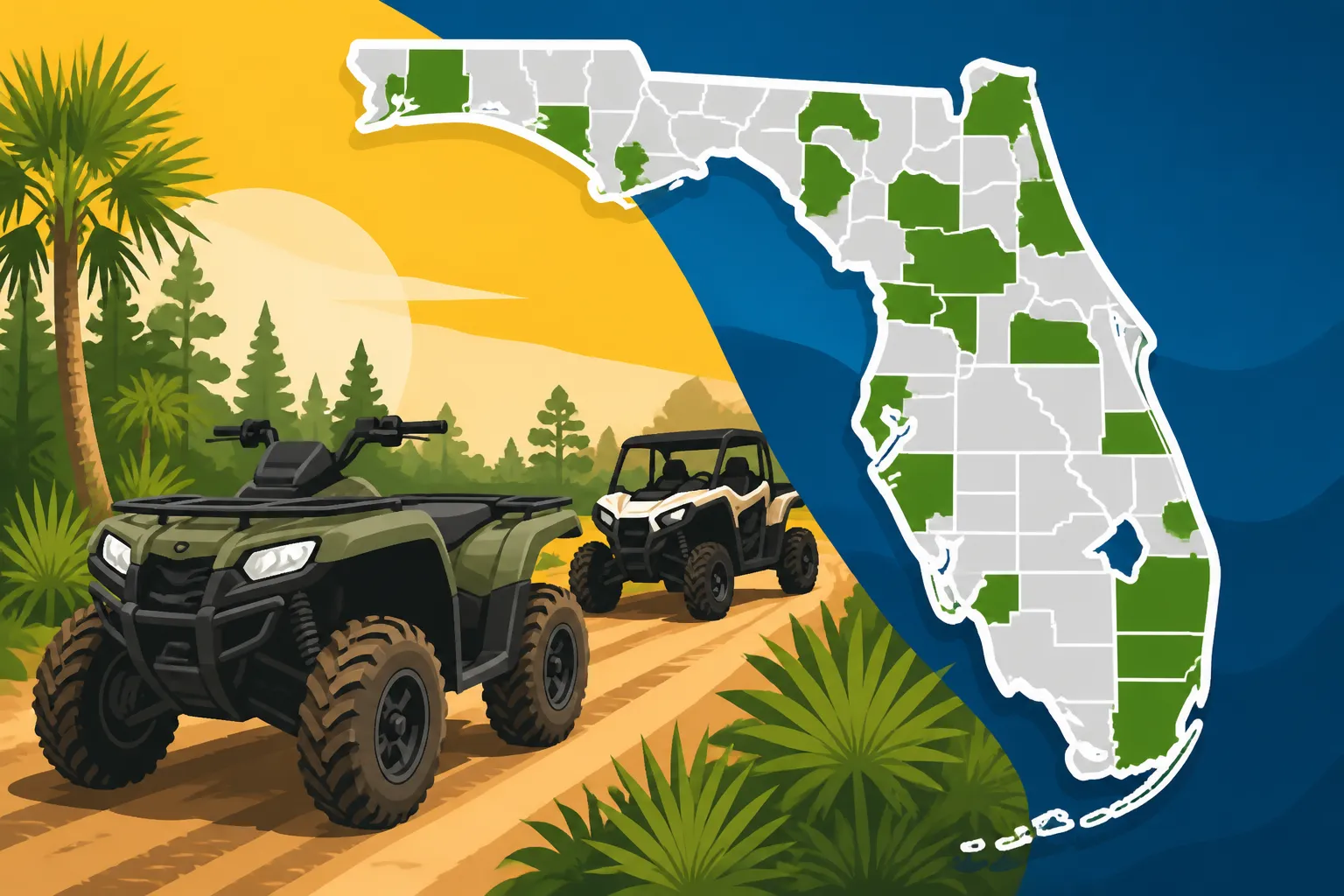
Florida Counties That Designated ATV Roads
It's incredibly frustrating when you just want to take your ATV or UTV for a spin, maybe to get to a trail or a neighbor's property, and you're constantly worried about breaking the law. Florida's general rules for off-highway vehicles (OHVs) on public roads can feel like a tangled mess of "no, no, and definitely no." This guide is here to shed some light on the rare but incredibly valuable instances where Florida counties have actually stepped up and designated specific roads for ATV use, helping you understand where you might legally ride and what it takes to do so.
Understanding Florida's General ATV Road Rules
Before we can even talk about the counties that have opened up roads for ATVs, it's crucial to understand the baseline. Florida, by and large, has a very strict stance on off-highway vehicles on public roads. It's not like other states where you might see quads cruising down main streets. Our state law is designed to keep ATVs and UTVs off paved roads and most public thoroughfares unless very specific conditions are met. This can be a huge headache for riders who live in rural areas and simply want to connect properties or access local businesses.
The "Unpaved Roadway" Definition
The core of Florida's general ATV road law revolves around the definition of an "unpaved roadway." The statute, specifically 316.2123, makes it clear: an all-terrain vehicle can be operated on an unpaved roadway that is not a public road if the county has not closed it to ATV use. This immediately highlights a challenge. Most people think of "public roads" as paved ones, but the law's nuance about "unpaved roadways that are not public roads" indicates a very narrow window. Essentially, it's talking about private dirt roads, logging roads, or perhaps designated access roads within large tracts of private land. The frustration here is palpable: many riders encounter unpaved public roads all the time, but the state's default position is that ATVs are not welcome on them unless explicitly allowed. This is why knowing about [Florida's Unpaved Road Rule for ATVs Explained] is so important.
The state's general rule creates a "guilty until proven innocent" scenario for ATV riders on anything that resembles a road. It assumes that if it’s unpaved, it’s still likely off-limits if it’s considered a public thoroughfare, unless a county has taken specific action. This often leaves riders feeling like they're walking on eggshells, constantly questioning if that dirt path by the orange grove or the gravel road leading to a fishing spot is truly legal for their machine. It’s a significant barrier to enjoying the vast natural landscapes Florida offers, pushing many riders towards dedicated [Florida ATV Trails: Every Public Riding Area] instead.
General Restrictions on Public Roads
Beyond the unpaved roadway issue, Florida imposes several other blanket restrictions that impact ATV use on any public road, paved or unpaved. These include limitations on the time of day you can ride, minimum age requirements for drivers, and passenger rules. For instance, ATVs are generally restricted to daytime operation, which means no cruising around after dusk, even if you have a full set of lights. Riders under the age of 16 often need to wear a helmet and complete an ATV safety course, even on private land, but these rules become even more stringent on any public access point. You also need to consider [Florida ATV Lights and Equipment for Road Use] if you ever plan to be near or on any designated road.
The state also requires that anyone operating an ATV on a designated roadway or within 1 mile of their home for emergency access must possess a valid driver's license. This means that younger riders, even if they meet the safety course requirements, still can't just hop on and ride to a friend's house down a designated dirt road. This adds another layer of complexity and often excludes a significant portion of the ATV riding community, particularly families with younger enthusiasts. It underscores the general state philosophy: ATVs are primarily for off-road recreational use, not for general transportation.
How Counties Gain Authority to Designate Roads
Given Florida's restrictive state laws, a county can't just wake up one day and decide to open all its roads to ATVs. There's a formal process involved, rooted in local governance and often spurred by community input. It's a testament to local advocacy when a county goes through the effort to create these specific designations. These are not broad, sweeping changes, but rather carefully considered exceptions to the general rule.
The Public Hearing Process
For a Florida county to designate specific roads for ATV use, it typically involves a county commission or local government body holding public hearings. This isn't a quick rubber-stamp process; it requires public input, discussions about safety, environmental impact, and community concerns. Residents, landowners, law enforcement, and ATV enthusiasts all get a chance to voice their opinions. This ensures that any decision made reflects the unique needs and concerns of that specific community. Think about the debates around [Florida Public Hearing Process for County ATV Rules] – it’s a robust system designed to balance various interests.
During these hearings, factors like road type (dirt, gravel, shell), proximity to residential areas, traffic volume, and potential noise concerns are all weighed heavily. Often, these discussions revolve around very specific sections of road, perhaps linking rural properties, providing access to fishing camps, or facilitating agricultural operations. It's rarely about opening up long stretches of county roads for general recreation. The process can be lengthy, with multiple meetings and revisions, reflecting the significant impact such decisions can have on local communities.
What "Designated" Actually Means
When a county "designates" a road for ATV use, it doesn't usually mean it's now street legal in the same way a car is. Instead, it means that this specific road, or section of road, has been granted an exception to the general state prohibition on ATV operation on public roads. The designation will almost always come with its own set of very specific rules and limitations that go above and beyond the state's general OHV laws. This often includes restrictions on speed, helmet requirements for all riders (not just minors), specific hours of operation, and sometimes even requirements for the machines themselves, such as mirrors or turn signals—accessories that SuperATV is well-known for providing to help riders equip their machines for varied conditions.
These designations are often highly localized. You might find that one county has opened a few miles of dirt road near a state forest, while a neighboring county has opted to keep all its roads closed. It’s a patchwork system, which can be incredibly confusing for riders. The key takeaway is that "designated" doesn't mean "free rein"; it means "conditional access with specific local rules." Riders must actively seek out and understand these local ordinances, as ignoring them can lead to tickets and fines. It's a far cry from the free-wheeling image often associated with off-road riding, demanding a responsible and informed approach from anyone planning to use these limited access points.
Exploring Florida Counties with Designated ATV Roads
While Florida's general stance on ATVs on roads is restrictive, some counties have indeed recognized the need for limited, designated access, particularly in rural or agricultural areas. These aren't widespread networks, but rather specific pockets where local ordinances have carved out exceptions.
North Florida: Panhandle Riding Opportunities
In the more rural reaches of Florida's Panhandle, particularly counties with vast tracts of state forests or agricultural land, you might find some of the clearest examples of designated ATV roads. Counties like Santa Rosa, Walton, or even parts of Liberty and Franklin, often have unpaved county roads that run adjacent to or through areas like Blackwater River State Forest or Apalachicola National Forest. While the national and state forests have their own permit systems and designated trails like [Clear Creek OHV Area at Blackwater River State Forest], some connecting county roads might be designated for limited ATV use, especially for residents to access their property or hunting leases. This is often driven by the practical needs of residents who rely on ATVs for farm work or simply to get around vast properties that are separated by short stretches of county-maintained dirt roads.
These designated roads in North Florida are typically unpaved, low-traffic, and often crucial for local residents. They are rarely intended for joyriding tourists but serve as essential access points. For example, a farmer might use an ATV on a designated county dirt road to get from one pasture to another, especially if their property is bisected by such a road. Riders might also use these roads as connector trails to get to designated OHV areas, allowing them to avoid trailering their machines for short distances. It's paramount to remember that these are exceptions, and riders should always confirm the exact status with the county commission or sheriff's office for any specific road before riding.
Central Florida: Ranch and Rural Roads
Central Florida, despite its booming population centers, still boasts significant rural and agricultural areas, especially in counties like Polk, Osceola, Okeechobee, and Marion. These counties are characterized by large cattle ranches, citrus groves, and horse farms, where ATVs and UTVs are tools of the trade. In these regions, local governments might designate certain unpaved county roads for ATV use, primarily to support agricultural activities or allow residents to access properties that are off the main paved grid. You might find these designations around areas near Lake Okeechobee or the expansive ranches of Osceola County.
For example, a rancher in Polk County might have designated access on a short stretch of gravel county road that connects two parts of their property, allowing them to move cattle or equipment without having to load their SuperATV UTV onto a trailer. These roads are typically very specific and usually have clear signage indicating their special status, along with any particular rules about speed limits or hours of operation. It's less about recreation and more about necessity. If you're exploring riding in areas like these, checking with the [Polk County ATV Title Walk-In Wait] office or the local county clerk's office would be a smart first step to inquire about specific road designations. It's a very different scenario from dedicated trail parks like Croom or Ocala National Forest, focusing instead on practical, local access.
South Florida: Glades and Agricultural Access
Even in the southernmost reaches of Florida, away from the coastal glitz, there are vast expanses of agricultural land, wetlands, and conservation areas where ATVs play a vital role. Counties like Collier, Hendry, and Palm Beach (in their western, more rural sections) might have designated roads, again, primarily for agricultural, hunting, or land management purposes. Think about the access roads into the Everglades Agricultural Area or specific levee roads managed by water management districts. These are not recreational trails but rather functional pathways.
In these areas, the designation of certain roads for ATV use is often tied to the specific needs of the farming community or those with permits for hunting or land management in sensitive ecosystems. For instance, a game warden or a permitted hunter might use an ATV on a designated access road within a wildlife management area in Collier County. These roads are almost exclusively unpaved and subject to strict rules to protect the environment and maintain safety for other users. The legal framework around [Florida's ROV Definition: 80 Inches and 3,500 Pounds] also comes into play here, as many larger UTVs are used in these agricultural and glades environments, and their use on any designated road would be governed by specific weight and width restrictions in addition to the road use rules. Always, always verify with local authorities, as the rules in these environmentally sensitive areas can be particularly stringent.
Rules and Responsibilities on Designated ATV Roads
Finding a designated ATV road is only half the battle. Once you're on one, you're not just "off-roading" anymore; you're operating your machine within a legal framework that often carries more rules than you might initially expect. This is where responsible riding truly comes into play, ensuring that these limited access points remain open for everyone.
Driver Requirements and Machine Standards
Even on a designated county road, there are specific requirements for both the driver and the ATV itself. As mentioned, the operator typically needs a valid driver's license. This isn't just a suggestion; it's often a legal mandate from the county ordinance that designated the road. Furthermore, counties might impose their own rules regarding helmets for all riders, regardless of age, going beyond the state's under-16 rule. This is a common safety measure when ATVs share even low-traffic roads with other vehicles or pedestrians.
Machine standards can also be a factor. While a stock ATV might be perfectly fine for off-road trails, a county designating a road for use might require certain equipment like headlights, taillights, brake lights, and sometimes even turn signals or a rearview mirror. These aren't just for show; they're for safety and visibility, especially if the road might see occasional car traffic. Many riders rely on aftermarket parts from companies like SuperATV to ensure their machines meet these potential requirements, upgrading their lights, adding mirrors, or even installing full turn signal kits to be compliant. Knowing [Florida ATV Road Use Needs a Licensed Driver] is critical for planning your ride.
| Requirement/Feature | General Florida ATV Law (Off-Road/Private Land) | Potential County-Designated Road Rules |
|---|---|---|
| Driver's License | Not generally required | Often required for road use |
| Helmet | Required for riders under 16 | May be required for all riders |
| Headlights/Taillights | Generally required for night riding | Often required for all road use |
| Turn Signals | Not generally required | May be required for visibility |
| Rearview Mirror | Not generally required | May be required for situational awareness |
| Speed Limit | No state limit (safe speed) | Specific posted limits often apply |
| Time of Day | Daytime only on public lands | May be restricted to specific hours |
| Insurance | Not required for titling | May be required by local ordinance |
This table illustrates how local ordinances can significantly add to or modify state rules when it comes to designated roads. It's never safe to assume the same rules apply everywhere.
Respecting Local Ordinances and Property Rights
The most important responsibility on a designated ATV road is to respect the local ordinances that made its use possible in the first place. These rules are put in place for a reason – often to mitigate concerns from residents or to protect sensitive areas. Speed limits, noise restrictions, and hours of operation are not arbitrary; they are usually a compromise reached during the public hearing process. Ignoring these rules jeopardizes the continued designation of the road for ATV use and can lead to increased enforcement and potential closures.
Furthermore, always be acutely aware of private property boundaries. Just because a county road runs alongside or through private land doesn't give you the right to venture off the designated road onto someone's property. Trespassing is a serious offense, and it creates animosity between riders and landowners, which can ultimately harm the entire ATV community's access efforts. Stick strictly to the designated path, observe all signage, and be a good neighbor. This proactive respect for rules and property helps maintain the privilege of using these rare designated roads and avoids costly issues like a [Florida ATV Ticket Cost for Illegal Road Riding].
Navigating the Landscape: Finding and Verifying Designated Roads
It’s one thing to know that designated ATV roads can exist in Florida, but it's another entirely to actually find them and be confident you're riding legally. This is where a little investigative work and local engagement become your best friends. Don't rely on old forum posts or hearsay; always go straight to the source.
Resources for County-Specific Information
The absolute best place to find information about designated ATV roads in a specific Florida county is the county's official website or by directly contacting the county clerk's office or county commission. Many counties will have their ordinances and codes available online, where you can search for terms like "all-terrain vehicle," "off-highway vehicle," or "designated roads." This will typically lead you to specific resolutions or ordinances that detail which roads (if any) are open to ATVs, along with any conditions or restrictions. This is far more reliable than a casual internet search, which might pull up outdated or incorrect information.
Another valuable resource is your local sheriff's office or Florida Fish and Wildlife Conservation Commission (FWC) office. While they are primarily enforcement agencies, they are also knowledgeable about local regulations and can often point you to the correct department or ordinance. They are on the ground and can provide real-world insights into where riders can and cannot legally operate. Additionally, local ATV clubs or enthusiast groups can be a wealth of information, as they are often involved in the advocacy and public hearing processes that lead to road designations. They might have maps or shared knowledge that can help you navigate the often-confusing local landscape.
The Importance of Local Engagement
Beyond just finding the rules, active local engagement is crucial for maintaining and potentially expanding ATV access on designated roads. Attending county commission meetings, participating in public hearings, or joining local ATV advocacy groups can make a significant difference. When riders demonstrate responsibility, a willingness to follow rules, and a desire to work with local governments, it builds goodwill and trust. This can be particularly important when a county is reviewing its ordinances or considering new designations. It’s also important to understand that [Florida Counties That Banned ATVs From Roads] exist, and understanding why can help in advocating for designated roads.
Being a proactive and positive voice for the ATV community helps counteract negative stereotypes and demonstrates that riders are invested in safe and legal recreation. If you care about having more places to ride your ATV or UTV, especially for practical purposes on designated roads, becoming involved in your local community's discussions about OHV use is perhaps the most powerful tool you have. Whether it's advocating for a specific section of road or simply being a visible example of a responsible rider, your actions contribute to the broader perception of the sport.
Disclaimer
This article is for general informational purposes only and does not constitute professional advice. Laws, prices and regulations vary by location and change over time. Consult a qualified professional for guidance on your specific situation.