Florida Riding Areas That Ban Pets
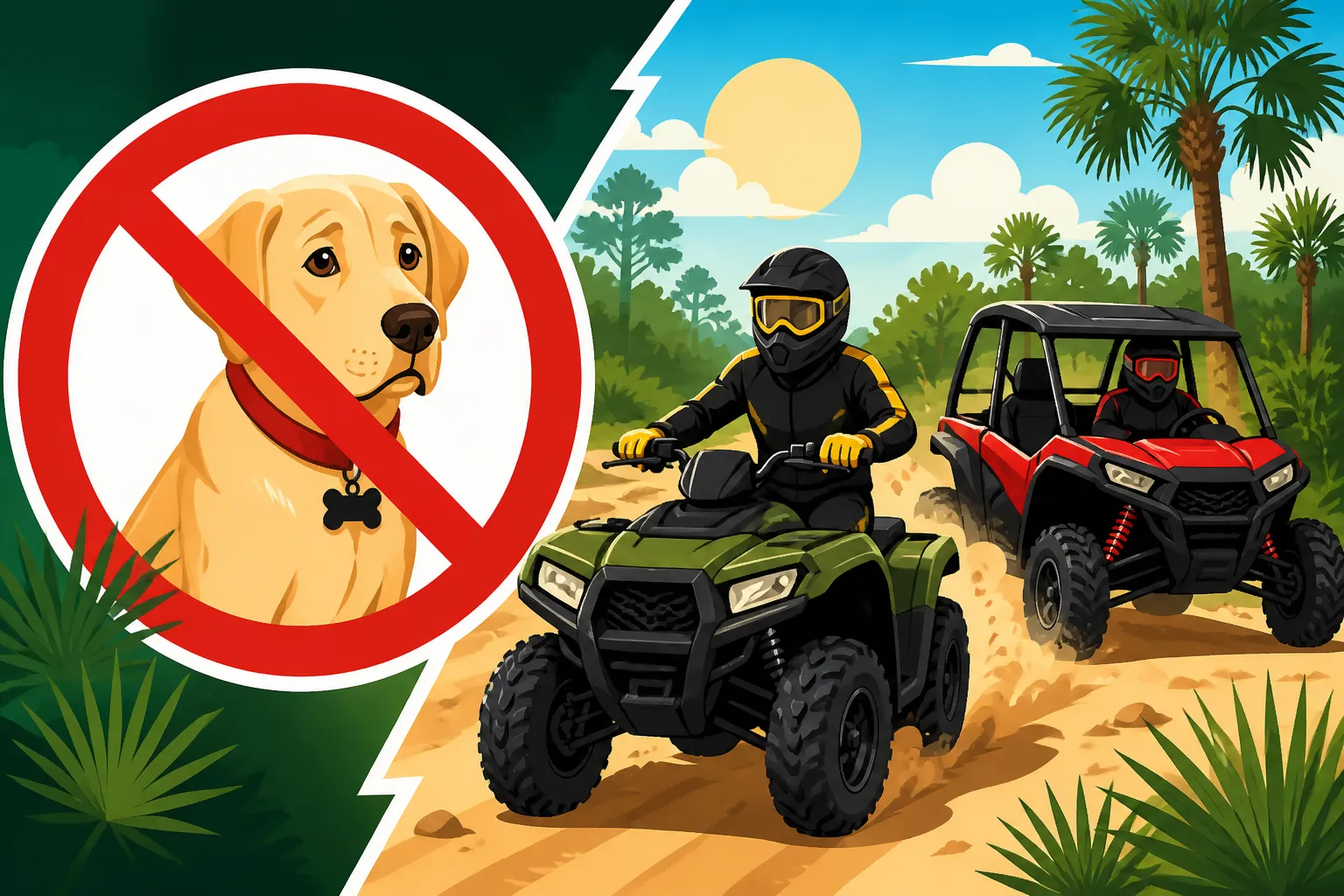
A dog-friendly campground does not necessarily mean pets can join you on the trails. In Florida, rules can differ between a riding area, its day-use grounds, and its campground—even within the same property. This guide explains how to check pet restrictions, what to ask before you go, and how to plan a ride without a frustrating turn-around at the gate.
Florida riding areas and pet rules
There is no single pet rule for every riding area
Florida does not have one blanket pet policy that applies to every ATV and UTV riding area. A forest, public trail system, private mud park, and campground may each set their own rules. Even when an area allows dogs on some parts of the property, it may restrict them from active riding trails, staging areas, buildings, or events.
That distinction can be easy to miss when you are planning a weekend. A campground listing might say pets are allowed, for example, while the OHV area has separate rules. Or a pet may be permitted on a leash at a trailhead but not on the trails themselves. Before loading the dog into the truck, look for the policy that applies specifically to the riding area you plan to use.
For a broad starting point, compare the kinds of destinations covered in [Florida ATV Trails: Every Public Riding Area] and [Florida Mud Parks: Where Riders Actually Go]. These are different types of places, and you should not assume that a rule at one will apply at another.
“Pets allowed” can mean different things
When a venue says pets are allowed, check what that permission actually covers. It might apply only to a campground or picnic area, require a leash, or exclude certain trails and event spaces. A rule that allows pets on the property does not necessarily mean a dog can accompany riders through an OHV trail system.
It also helps to distinguish a pet restriction from a service-animal accommodation. If you need information about access for a service animal, contact the facility directly and explain what part of the property you plan to visit. Do not assume the policy for ordinary pets answers that question.
| Policy wording or situation | What it may mean for your visit | What to confirm |
|---|---|---|
| Pets prohibited | Pets may not be permitted in the relevant facility or area | Whether the restriction applies to the whole property or only riding zones |
| Pets allowed on leash | Dogs may be permitted in designated areas under control | Whether trails, staging areas, and events are included |
| Pets allowed at the campground | The campground may accept pets, but riding areas may have separate rules | Whether dogs can leave the campsite and enter trail facilities |
| Policy not stated | The venue has not clearly explained its pet rule online | Call or message the operator before you leave |
| Service-animal question | The standard pet policy may not address your circumstances | Ask the venue about access for the specific areas you need |
A table or a general trail listing can help you narrow down where to ride, but it cannot replace the facility’s own current policy. This is especially important at private parks, where entry rules may differ from public forest rules and may change for special events.
Public forests and private parks need separate checks
Florida state forests and national forests manage public land differently from private riding parks. Their rules may also distinguish between general recreation areas and designated OHV facilities. Start with the specific forest or park page, then check the rules for the named trail system, campground, or recreation area you intend to visit.
For example, [Florida State Forest OHV Areas Explained] and [Ocala National Forest ATV Trails in Florida] can help you understand the kinds of public riding areas available. Use them as planning references, then verify pet access with the relevant forest office or facility before traveling.
Private parks may set additional conditions for pets, including restrictions during events or in busy riding zones. Do not rely on a comment from an old forum post or a friend’s visit from several seasons ago. Ask the operator directly, and get the answer for the exact date and area you have in mind.
How to check whether a Florida riding area bans pets
Check the riding area’s own rules, not just its campground listing
Search for the official rules or FAQ for the specific facility—not only its general home page, campground page, or booking listing. Look for terms such as “pets,” “animals,” “leash,” “campground,” “OHV area,” and “trail.” If the rule mentions pets but does not say where they are allowed, treat that as a question to resolve before your trip.
This extra step matters at popular destinations such as [Croom Motorcycle Area: Florida's Biggest OHV Park]. The riding area, campground, and nearby recreation facilities may not all share the same conditions. If your visit depends on bringing a pet, check the rules for the exact area you plan to use rather than assuming the whole destination has one policy.
You can also use [Florida ATV Camping With Trail Access] to think through the campground-versus-trail distinction. A campsite that welcomes dogs may still be unsuitable if your plan requires taking the dog into a restricted riding area or leaving it unattended for a long stretch.
Ask specific questions before you pack
A quick call can save a long drive and a difficult conversation at the entrance. Instead of asking only, “Are dogs allowed?”, describe your plan. For example: “We’re visiting for the day to ride the OHV trails. Can our leashed dog stay with us at the staging area, or are pets prohibited throughout the riding facility?”
Ask whether the rule changes between the campground, day-use area, trailhead, and trails. If you are attending an event, ask whether event-day rules are different. Also confirm whether dogs may be left at a campsite or in a vehicle while you ride; do not assume that is acceptable or safe.
If you use onX Offroad to plan routes and locate trailheads, treat it as a navigation aid, not as confirmation of a venue’s pet rules. A map can help you identify where you intend to ride, but the operator or land manager is the right place to confirm whether pets are allowed there.
Keep a record of the answer
If you receive a clear answer by email, save it with your reservation or trip notes. If you speak with someone by phone, note the date, the facility or office you called, and what they said. That record can help if there is confusion at check-in, though staff may still apply the facility’s posted rules.
Recheck before the trip if a lot of time has passed since you first asked. Rules may change for seasonal operations, maintenance, special events, or wildlife and land-management concerns. It is also worth checking [Florida Trail Closures You Should Check First] before heading out, since an open campground does not guarantee the riding area is open.
Plan a ride when pets are not allowed
Decide whether the dog is coming before booking
If the riding area prohibits pets, choose between leaving the dog with a trusted caregiver, arranging suitable pet care near home, or selecting a different destination with a confirmed pet policy. Do not make the decision after arriving at the gate. That is when options are limited, everyone is tired, and the rest of the group may already be eager to ride.
A nearby dog-friendly campground is not necessarily a solution if your pet cannot safely remain there while you are out riding. Consider how long you will be away, the weather, shade, water, and whether the campsite rules allow a dog to be left unattended. Florida heat can make a vehicle an unsafe place for an animal, even when the outing seems short.
If you are choosing another destination, compare the area’s riding rules, pet policy, and facilities together. [Florida ATV Camping With Trail Access] may help you identify the kind of setup you need, while [Florida OHV Trail Etiquette Locals Expect] offers useful reminders for sharing busy riding spaces responsibly.
Choose a location that fits both the ride and the dog
A pet-friendly policy does not automatically make a riding area a good place for a dog. Noise, moving machines, dust, heat, crowds, and unfamiliar animals can be stressful or dangerous. Some dogs are comfortable relaxing at a campsite but become anxious around engines; others may be tempted to run toward machines or wildlife.
If a facility confirms that dogs are allowed in a specific area, ask what conditions apply. A leash requirement, designated pet area, or restriction near active trails can shape the whole day. Bring water, a secure leash, waste bags, and a way to keep your dog out of vehicle and machine traffic. If there is no safe place for the dog during the ride, it may be kinder to leave the pet with a caregiver.
Route-planning tools such as onX Offroad can help you organize trail information and identify access points, but they cannot tell you whether a dog will be safe or welcome at a particular site. Pair navigation planning with a direct conversation with the land manager or park operator.
Build a backup plan for arrival day
Even careful planning can run into a closed gate, a special-event restriction, or a misunderstanding about where pets are allowed. Before driving, save the facility’s phone number and identify a backup activity or destination. If the pet policy is unclear, treat it as unresolved rather than assuming the most convenient answer.
For a trip centered on Croom, [Calling the Croom Gatehouse Before You Drive] is a useful reminder to confirm important details directly. The same approach works for other destinations: contact the specific office or operator responsible for the riding area, not just a general tourism listing.
A backup plan also helps keep the group calm. If pets are not permitted, you can decide in advance whether to change the destination, adjust the itinerary, or have one person stay with the dog. That is much easier than trying to improvise in a parking lot after a long drive.
A simple pre-trip pet-policy checklist
Verify the details for the exact area
Before leaving, confirm the rules for the riding area—not merely the campground or property as a whole. Check whether pets may enter the trail system, staging area, day-use facilities, and any event space you intend to visit. If the answer is unclear, ask the operator to specify where pets are and are not allowed.
Then check practical conditions: leash requirements, unattended-pet rules, waste disposal, and whether the policy changes on event days. If your group is splitting up, make sure someone has a safe, lawful plan for the dog while others ride. Never assume a pet can stay in a vehicle during a Florida riding day.
Use a repeatable checklist
Keep this short checklist with your trip planning notes:
- Identify the exact trail system, park, or forest area you will use.
- Find the facility’s own pet policy and check when it was last updated.
- Confirm whether pets are allowed on trails, at staging areas, and in the campground.
- Ask about leash rules, event-day restrictions, and unattended-pet policies.
- Save the operator’s contact details and any written response.
- Plan a backup if pets are prohibited or the rules remain unclear.
- Recheck closures and access conditions before you drive.
onX Offroad can be useful for organizing trail and access information, but keep the roles separate: use mapping tools to plan where you intend to go, and use the land manager or park operator to confirm pet access. That small check can prevent a disappointing arrival and help you choose a ride that works for everyone in your group.
Disclaimer
This article is for general informational purposes only and does not constitute professional advice. Laws, prices and regulations vary by location and change over time. Consult a qualified professional for guidance on your specific situation.