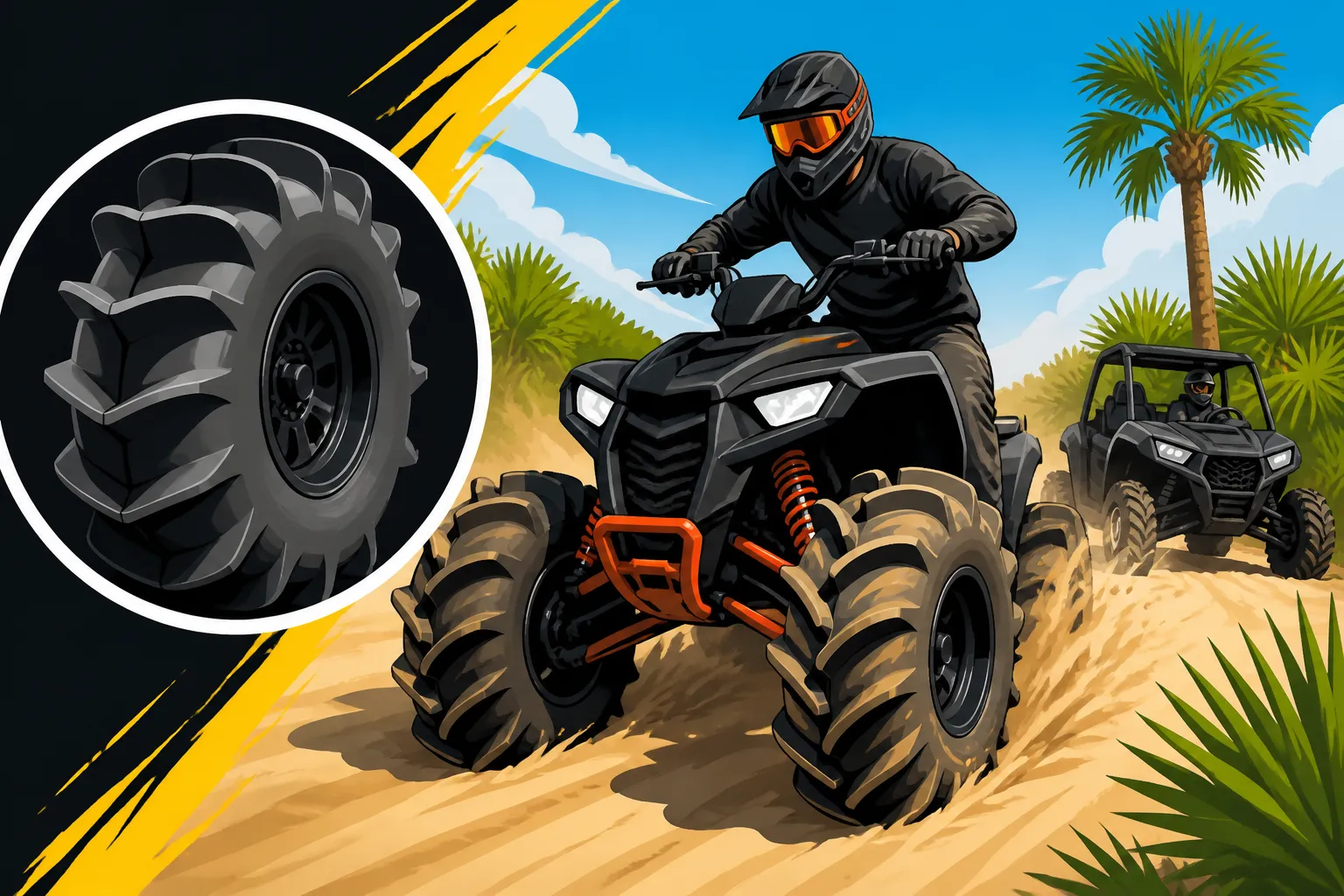
Deep Sand Tires for Scrub Riding
Deep Florida scrub can turn a fun ride into a tiring one when your tires dig in, the machine loses momentum, and steering starts to feel unpredictable. The right setup helps an ATV or UTV float over loose sand without sacrificing all its grip on roots and firmer trail sections. This guide explains what to look for, how to set up your tires, and how to ride more smoothly.
Why Florida scrub riding is hard on tires
Loose sand rewards flotation and momentum
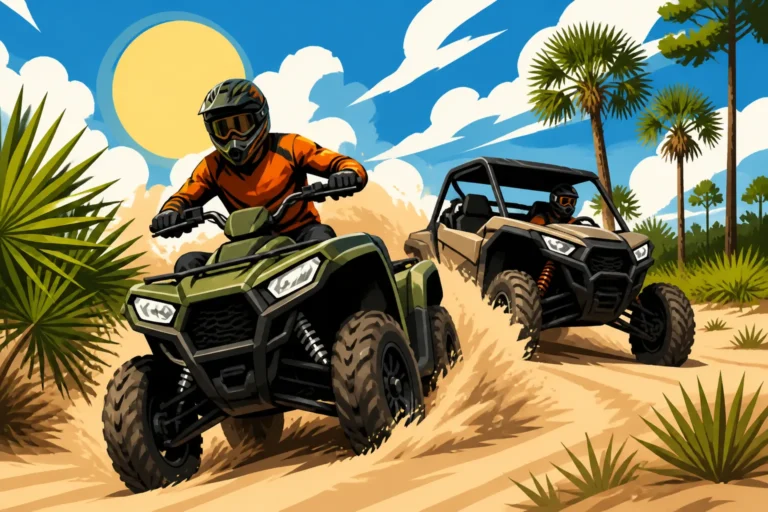
In areas such as the Ocala National Forest and Croom, sand can be loose enough to make a machine sink and drag instead of rolling forward. A tire that bites aggressively but has a narrow footprint may dig a trench, especially if the rider accelerates sharply or slows down in a soft patch. The result is familiar to many riders: the engine is working, the tires are spinning, and the machine is barely moving.
A tire with a broader footprint can spread the machine’s weight over more ground. That helps it ride higher in soft sand, though tire width is only one part of the equation. Vehicle weight, tire diameter, tread pattern, pressure, and riding style all affect how the machine behaves. A heavy side-by-side and a light youth ATV can need very different setups, even on the same trail.
Momentum matters, but it does not mean charging blindly through every sandy stretch. A steady pace helps keep the tires rolling instead of digging, while abrupt throttle changes can break traction. When the trail bends, narrows, or crosses roots, slowing down and choosing a line carefully is more useful than relying on speed to pull you through.
Scrub trails are not the same as open dunes
A paddle tire designed for open sand may look like an obvious choice, but Florida scrub trails are often mixed terrain. You may move from deep sugar sand to packed dirt, roots, leaf litter, or a wet patch within a short distance. A highly specialized sand tire can perform well in one condition and feel awkward in another.
On a mixed trail, you generally want a tread that moves loose sand without giving up too much steering control or durability. The goal is balanced traction, not the most dramatic-looking tread. A tire that works beautifully in a straight sandy stretch may still slide, resist turning, or wear quickly on firmer ground.
Before choosing a tire, think about where you actually ride. If your typical outing is a marked forest trail with varied surfaces, a versatile all-terrain pattern may be more practical than a dedicated sand paddle. If you spend most of your time in consistently loose sand, a sand-focused design may make more sense. Trail descriptions in Florida ATV Trails: Every Public Riding Area and Best Florida ATV Trails for Beginners can help you think about the kinds of riding environments you are preparing for, but check the land manager’s current information before heading out.
Your machine’s weight and layout change the answer
A tire that works well on a light ATV may not be the right match for a heavier UTV. More weight can increase how much the machine sinks into soft ground, while a larger vehicle may also need a tire that stays predictable under load and through turns. Passenger weight, cargo, tools, and recovery gear all affect the total load.
On a two-wheel-drive ATV, rear traction can be especially important for moving forward, but the front tires still need enough grip to steer. On a four-wheel-drive machine, all four tires help propel the vehicle, yet aggressive throttle can still dig the tires in. A side-by-side may have more mass and a different weight distribution, so simply copying an ATV setup can lead to poor handling or excessive strain.
Check the machine maker’s tire-size and load guidance before changing sizes. Larger or wider tires can affect clearance, gearing, braking, and handling. If you are unsure whether a proposed tire fits your machine safely, ask a qualified dealer or tire professional to check the fit rather than guessing from appearance alone.
Choosing deep-sand tires for a Florida ATV or UTV
Compare tread style, footprint, and versatility
Tread shape affects how a tire grips, clears sand, and behaves when the trail firms up. Broad, open tread blocks can help move loose material, while closely spaced patterns may provide a more controlled feel on mixed surfaces. A specialized paddle pattern is designed to push through loose sand, but its handling and durability on a varied trail may not suit every rider.
The following comparison is a starting point, not a substitute for checking fitment and machine specifications.
| Tire approach | Where it can make sense | Trade-offs to consider |
|---|---|---|
| Versatile all-terrain tread | Mixed scrub trails with sand, roots, and firmer sections | May not float as well as a sand-specific design in very loose sand |
| Sand-focused tread | Routes dominated by soft, loose sand | Can feel less composed on roots, hard ground, and tight turns |
| Paddle-style tire | Specialized riding in consistently loose sand | Often a poor all-around choice for mixed trails and frequent firm surfaces |
| Wider tire in a compatible size | Riders seeking more footprint and flotation | May affect steering, clearance, load, or machine behavior if poorly matched |
For many Florida trail riders, a versatile tire that manages sand without giving up trail manners is the sensible middle ground. You want enough traction to keep the machine moving but not so much bite that the tires dig aggressively whenever you touch the throttle.
Do not choose solely by the word “sand” in a product description. Look at the intended use, construction, load suitability, and fitment for your vehicle. A tire marketed for sand can still be a poor choice if it is too large, too heavy, or not appropriate for the machine’s wheel and suspension setup.
Radial and bias construction have different trade-offs
Tire construction can affect ride feel and how the tire flexes over uneven ground. Radial and bias tires are built differently, so their behavior under load and across rough surfaces can vary. Neither construction is automatically best for every ATV or UTV, and a tire that feels comfortable on one machine may feel less predictable on another.
When comparing options, consider your typical route, how much pavement or firm ground you travel on before reaching the trail, and whether you regularly carry passengers or cargo. Also consider puncture resistance and the kind of repair support available for your riding routine. A deep-sand setup that feels good for a short recreational loop may not be the best choice for a long day where the trail surface changes repeatedly.
If your riding group includes both ATVs and side-by-sides, compare setups by vehicle rather than assuming everyone should run the same tire. The routes themselves may also have vehicle restrictions, so check resources such as Florida ATV Trails That Allow Side-by-Sides before planning a trip with a larger machine.
Match tire size to the machine, not just the trail
A taller tire may help with ground clearance, and a wider tire may increase the contact area, but changes can bring side effects. A tire that is too large can rub at full steering lock or when the suspension compresses. It may also change how the machine accelerates, brakes, and responds to steering input.
A tire that is too wide can make steering heavier or affect clearance around suspension components. On some machines, a size change can also alter the effective gearing, which may make it harder to maintain smooth momentum in sand. These are not merely comfort issues: unpredictable steering or rubbing can create problems when the trail is narrow or uneven.
Start by confirming the original tire size and the vehicle manufacturer’s fitment guidance. If considering an alternate size, verify wheel compatibility, clearance through the suspension’s full movement, and load suitability. If the change is substantial, have a knowledgeable shop inspect it before relying on the setup for a remote ride.
Setting up tire pressure and riding technique
Adjust pressure cautiously and stay within equipment limits
Tire pressure influences how much the tire flexes and how it meets the ground. On soft sand, some riders lower pressure within the limits specified for the tire and vehicle to increase the contact patch. But reducing pressure too far can increase the risk of a tire coming off the bead, damaging a sidewall, or handling poorly—especially when turning hard or carrying extra weight.
There is no single pressure that works for every ATV, UTV, tire, load, and trail. Use the vehicle and tire manufacturers’ guidance as your starting point, and do not exceed any stated minimum or maximum. Make small, measured adjustments rather than dropping pressure dramatically because someone else’s setup worked on a different machine.
A practical approach is to record the pressure that works on your usual terrain, along with the tire model, vehicle load, and conditions. If you change pressure for a sandy section, recheck it before moving onto firmer or rougher ground. Carry a reliable gauge and a way to reinflate the tires when your ride involves changing conditions.
Use smooth throttle and avoid digging holes
When a tire spins faster than the vehicle moves, it often excavates sand instead of carrying the machine forward. If you feel the tires digging, ease off the throttle, keep the wheels as straight as the terrain allows, and look for a firmer line or a safer way to regain momentum. Repeatedly flooring the throttle can bury the vehicle and make recovery harder.
Try to enter soft patches at a controlled, steady pace. Look ahead for turns, ruts, and changes in surface so you can adjust before the machine bogs down. In a turn, avoid sudden steering inputs that make the tires scrub sideways through the sand. Smooth movements are easier on the machine and usually feel more controlled.
If you do get stuck, stop before the tires dig deeply. Ask passengers to get out if it is safe to do so, clear loose sand from around the tires, and use a suitable recovery method. Avoid standing near a tensioned strap or cable, and follow the recovery equipment maker’s instructions. Planning a ride with a partner and carrying appropriate recovery gear can make a short delay much less stressful.
Let maps and trail information inform the setup
Tire choice should follow the trail you intend to ride, not just a general idea of “Florida sand.” Look at the route length, terrain notes, access rules, and recent closures before leaving home. onX Offroad can help riders review mapped routes and plan where to ride, but map information is not a substitute for posted signs, land-manager directions, or current closure notices.
Before relying on a route, cross-check it with the agency or property manager responsible for that land. A path shown on a map may not mean that all vehicle types are permitted there, and local restrictions can change. This is especially important when a route connects forest roads, trail systems, and private property.
Keep an eye on trail conditions too. Heavy rain, maintenance, or seasonal closures can change what a route feels like under your tires. Florida ATV Trail Conditions After Heavy Rain and Florida Trail Closures You Should Check First are useful topics to review when planning. If you ride in extreme heat, tire performance is only one part of preparation; Florida Trail Riding in Summer Heat covers the broader demands of riding in hot conditions.
Maintaining tires after a scrub ride
Inspect for cuts, embedded debris, and uneven wear
After a ride, check each tire while the machine is clean enough to see the tread and sidewalls. Look for cuts, punctures, missing tread chunks, bulges, and objects lodged between tread blocks. Sand can conceal damage, so a quick glance while the tires are still coated in grit may miss a small problem.
Compare the tires with one another. Uneven wear can point to pressure differences, alignment concerns, a mechanical issue, or a riding pattern that puts more stress on one tire. If a tire repeatedly loses pressure or shows sidewall damage, have it assessed rather than assuming another pressure adjustment will solve the problem.
Clean sand and mud from the tire area, but avoid directing high-pressure water at seals, bearings, or electrical components. Rinse carefully and follow the machine’s maintenance guidance. More cleaning and inspection advice is available in Washing Sand Out After a Big Scrub Ride.
Check pressure and wheel condition before the next trip
Before the next ride, inspect pressure when the tires are cool and compare it with your notes and the manufacturer’s guidance. A slow leak can be easy to miss between rides, especially if the machine sits for several days. Look over the wheels for dents or other damage that could affect the tire seal.
If you have changed tire size, pressure, or tread style, pay attention to how the machine feels in a controlled area before taking it onto a long or remote route. Notice whether it tracks straight, turns predictably, and maintains traction without excessive wheelspin. If the steering feels heavy, the tire rubs, or the machine behaves differently under braking, stop and address the cause.
Riding areas also differ in width restrictions, surface, and permitted vehicle types. Check the specific area’s rules and access information before you go. A tire setup cannot make an unsuitable machine legal or appropriate for a trail, and preparation is easier than turning around at a closed gate.
Disclaimer
This article is for general informational purposes only and does not constitute professional advice. Laws, prices and regulations vary by location and change over time. Consult a qualified professional for guidance on your specific situation.