Best Florida ATV Trails for Beginners
Florida’s soft sand, sudden rain, and trail rules can make a first ATV ride feel more stressful than fun. The best beginner trails are not simply the flattest ones: they’re places where you can choose manageable routes, understand the access rules, and turn back without getting stranded. This guide compares approachable Florida riding areas and explains how to prepare for your first trip.
Best Florida ATV trails for beginners
“Beginner-friendly” doesn’t mean every trail is easy. A route that feels comfortable on a small, light ATV may be tiring on a heavier machine, and Florida’s loose sand can challenge new riders even when the trail looks level. Start with a marked route, ride at a pace that lets you react, and leave the mud holes and steep, rutted sections for another day.
Croom Motorcycle Area near Brooksville
Croom Motorcycle Area in Withlacoochee State Forest is a familiar starting point for many Central Florida riders. The sandy terrain gives new riders a chance to practice steering and throttle control, and the trail system provides options for building confidence gradually. However, sand can be physically demanding: the front end may wander, and a tired rider can make poor decisions. Take breaks before you feel worn out.
Croom is not a place to assume that every route will suit every machine. Check the area’s current map and access rules before loading up, particularly if you’re bringing a side-by-side. Vehicle-width restrictions can matter at the entrance and on trails. A quad that fits doesn’t mean a UTV will be accepted. For a closer look at access and vehicle limits, read [Croom's 55-Inch Width Check at the Gate] and [Why Croom Turns Away Side-by-Sides].
If it’s your first visit, keep the ride short and stay on signed routes that match your ability. Don’t follow a faster group onto an unfamiliar trail just because it looks manageable from behind them. At a sandy turn, slow down before steering, keep your eyes up, and avoid abrupt braking. Those small habits make a bigger difference than trying to keep pace.
Ocala National Forest OHV trails
Ocala National Forest offers a range of off-highway riding opportunities, but it’s best approached as a collection of routes rather than one uniform beginner trail. The Centennial Trail and areas around Big Scrub are names riders may encounter while planning a trip. Conditions, route designations, and access can vary, so use an official forest map to choose a route that fits your vehicle and comfort level. [Ocala National Forest ATV Trails in Florida] and [Florida ATV Trails Near Ocala] are useful starting points for planning.
A newer rider may find the forest’s open stretches less intimidating than tight, unfamiliar turns, but sand, roots, changing trail conditions, and other riders still require attention. Don’t assume that a route is easy because it appears straight on a map. Check the trail’s rating and permitted vehicle type, then ask at the access point if signage or recent closures are unclear.
Public-forest riding also involves preparation beyond choosing a route. Confirm what pass or permit applies, whether your machine is allowed, and whether the trail is open before you leave. Forest conditions can change, and a route that worked on a dry weekend may feel very different after rain. The guide [Florida National Forest OHV Pass: 3-Day, 7-Day or Annual] explains the pass options to investigate before your trip.
Clear Creek OHV Area in the Panhandle
Clear Creek OHV Area, within Blackwater River State Forest, can be a practical choice for riders exploring the Panhandle. As with any OHV area, the key for a beginner is to select a suitable marked route rather than treating the entire trail network as one difficulty level. Check the current trail map, closures, vehicle restrictions, and riding requirements before setting off.
For a first ride there, give yourself time to get familiar with the surface. A short loop is a better test of your skills and your machine than a long route that leaves you far from the staging area when you discover the sand is tiring. Ride with someone experienced if possible, but agree in advance that the group will stay together and that nobody will pressure a new rider into harder terrain.
Comparing beginner options
| Riding area | Why a beginner might choose it | What to watch for | A sensible first-ride plan |
|---|---|---|---|
| Croom Motorcycle Area | Well-known riding area in Central Florida with sandy routes | Loose sand, fatigue, and vehicle-width restrictions | Ride a short signed route and confirm your machine is permitted |
| Ocala National Forest | Multiple OHV areas and route choices to research | Changing conditions, route designations, and pass requirements | Pick a clearly permitted route and check closures before leaving |
| Clear Creek OHV Area | A Panhandle option with designated OHV riding | Trail conditions and vehicle-specific access rules | Start near the staging area and choose a route suitable for your experience |
These are starting points, not guarantees that a trail will be easy on a particular day. A beginner on a small ATV may have a different experience from someone on a heavier machine, and wet or churned-up sand can change the feel of a route quickly.
How to choose a trail that fits your skill level
Match the trail to your machine and your group
Before you choose a riding area, confirm that your machine is allowed on the trails you plan to use. Width, vehicle type, and area-specific rules can all affect access. A side-by-side should not be treated as interchangeable with a quad, and a trail that allows one type may restrict another. If you’re unsure about your vehicle’s classification, start with [Florida ATV Trails That Allow Side-by-Sides] and confirm details with the land manager.
Your group’s least experienced rider should help set the pace and route. This can feel awkward when friends are eager to cover more ground, but it prevents a common first-trip problem: a new rider getting separated or pushed into terrain they aren’t ready for. Agree on a turnaround point before you start. If the route becomes more difficult than expected, turning back is a sound decision, not a failure.
If you’re riding with children, check the rules that apply to their age and the riding area. Public-land safety course and supervision requirements may apply, and private parks can set their own rules. [Florida ATV Safety Course Requirements for Riders Under 16] is a useful place to begin checking the requirements for young riders.
Use maps, signs, and local information together
A phone map can help you orient yourself, but it should not replace the riding area’s official map or posted signs. Tools such as onX Offroad can help riders review routes and plan around a trail network before arriving. Download or save information in advance in case mobile service is unreliable. Still, follow the land manager’s current signs if they differ from what you expected from a map.
Before leaving the staging area, identify the route you intend to ride, the likely turnaround point, and the way back. Share that plan with your group. If you use onX Offroad to look at route options, treat it as a planning aid—not permission to ride a road, trail, or shortcut that is closed or not designated for your machine.
A map is most useful when it’s paired with practical judgment. If a route sign is missing, a trail appears newly blocked, or the terrain changes sharply, stop somewhere safe and reassess rather than pressing on. Apps like onX Offroad can help you understand where you are, but they cannot tell you whether a trail is currently open unless the information is specifically updated. Confirm access with the managing agency before your trip.
Prepare for a safer first ride
Check permits, access rules, and closures
Florida riding areas do not all use the same access system. Some public areas require a pass or permit, and a pass for one type of land may not cover another. Review the official requirements for the exact area you plan to visit, including whether the pass is tied to the machine, whether a separate entry fee applies, and whether there are seasonal closures. [Florida OHV Permits: What You Need Before You Ride] provides an overview of the questions to ask.
Title rules can also matter when you ride public land. Don’t assume that a title, registration, or pass are the same thing; they serve different purposes, and requirements depend on the situation. Check [Florida ATV Title vs Registration: The Difference] if you’re uncertain about the paperwork connected to your machine.
Make a quick pre-trip checklist: confirm the riding area is open, verify the machine is allowed, check the pass requirements, and review any rules for helmets, passengers, or youth riders. This small amount of planning can prevent a long drive ending at a closed gate or an access point where your vehicle isn’t permitted.
Pack for heat, sand, and a change of plans
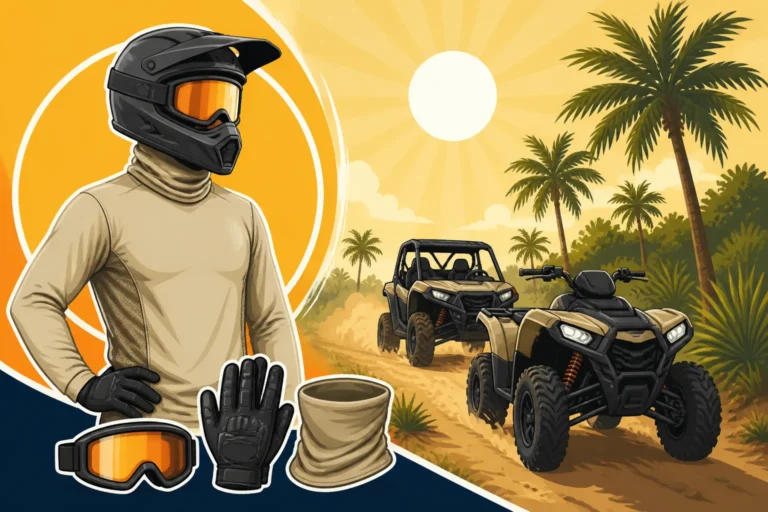
Florida heat can wear you down faster than the trail itself. Bring drinking water, protective clothing, eye protection, and a basic first-aid kit. Closed-toe footwear and gloves make it easier to manage controls and reduce scrapes if you need to stop and move around. Wear a helmet appropriate for off-road riding and follow the requirements of the area you’re visiting.
Carry the basics needed to handle a minor delay: a charged phone, a way to contact your group, and any tools or recovery equipment appropriate for your machine and experience. Don’t attempt a recovery beyond your skill level. If a quad is stuck in deep sand, spinning the tires aggressively can dig it in further and leave the rider exhausted. Stop, assess the situation, and ask for help when needed.
A beginner’s first outing should leave room for rest and adjustment. Give yourself time to practice starting, stopping, turning, and riding over small changes in terrain before tackling longer routes. If the surface becomes rougher or your concentration starts slipping, shorten the ride. Being able to load up with energy still in reserve is a much better first-day memory than pushing until everyone is worn out.
Common first-ride mistakes to avoid
Riding too fast or following the most confident rider
New riders often feel they need to keep up with the fastest person in the group. That pressure can lead to rushed turns, sudden braking, and poor line choices. Set a pace where you can look ahead and respond to the trail, and ask experienced riders to stay close enough to help without crowding you.
Loose sand rewards smooth inputs. Accelerating hard while turning or grabbing the brakes suddenly can make the machine feel less stable. Practice on an easy stretch first, and let your confidence come from repetition rather than speed. If a section looks beyond your comfort level, pause and decide whether to continue or turn around.
Treating an open-looking route as public access
Florida has private land, public land, easements, and managed recreation areas close together. A dirt road or visible trail is not automatically open to ATV riding. Stay on designated routes, respect gates and signs, and don’t assume that land is available because other tire tracks are visible.
This applies to connecting routes as well as the trail itself. Plan how you’ll get from the parking area to the riding area without using a road or property where your machine isn’t allowed. For broader guidance on legal access, see [Florida ATV Road Rules: Where You Can Legally Ride] and [Florida Public Land Riding: Permits and Proof].
Skipping the final check before loading up
Before you leave, look over the machine for loose straps, obvious leaks, damaged tires, and anything that may have shifted during the ride. Clear sand and debris from areas that need attention, and make sure everyone is accounted for. A quick check can help catch a problem before the next ride—or before the trailer is back on the road.
A good beginner trail is one that lets you learn without feeling rushed. Choose an area that permits your machine, check the route and rules, ride within your ability, and leave room in the day to turn back. With that approach, Florida’s sandy trails can be a rewarding place to build confidence one manageable ride at a time.
Disclaimer
This article is for general informational purposes only and does not constitute professional advice. Laws, prices and regulations vary by location and change over time. Consult a qualified professional for guidance on your specific situation.