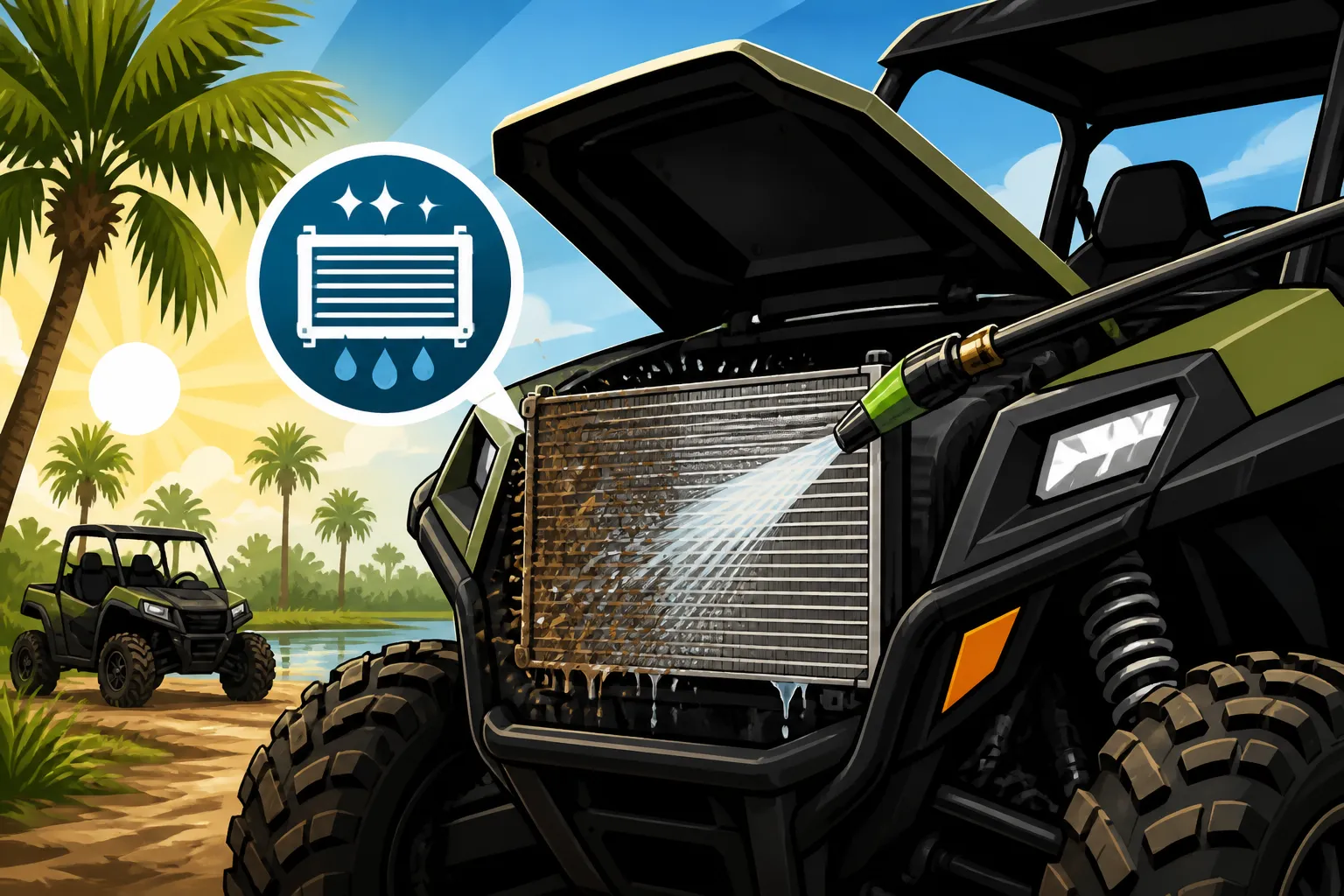
Keeping a Radiator Clean in Palmetto Country
A radiator can clog surprisingly quickly on Florida trails: palmetto fronds, seed fluff, grass, mud and fine sand can pack against the cooling fins before a ride feels difficult. Once airflow drops, an ATV or UTV may run hot at low speed or while working through soft terrain. This guide explains how to spot buildup, clean the radiator safely and reduce the chance of overheating on your next ride.
Why Florida riding conditions clog radiators
Palmetto, grass and trail debris restrict airflow
A radiator needs air to pass through its fins so it can shed heat from the coolant. In Florida’s scrub and palmetto country, loose vegetation can collect on the front of the radiator, especially when a machine moves slowly through brush or follows another rider. Palmetto fragments, leaves, seed fluff and long grass may form a loose mat that looks harmless at first but blocks a surprising amount of airflow.
Sand and mud create a different kind of problem. Fine sand can settle between fins, while wet mud may stick to the radiator face and dry into a stubborn layer. On a ride with repeated water crossings or soft, churned-up trails, debris can build up gradually. You may not notice it until the machine is crawling uphill, pushing through mud or idling in hot weather—conditions that make cooling harder at the same time that airflow is limited.
The route and the day can make a difference. A dry ride through palmetto scrub may leave plant matter; a wet ride may splash mud onto the radiator; and a dusty group ride can send a steady stream of fine debris toward the machine behind. Before heading out, check Florida Trail Riding in the Rainy Season and Florida ATV Trail Conditions After Heavy Rain for the kinds of conditions that can affect your ride plan. The goal is not to avoid every challenging trail, but to expect that some conditions call for more frequent inspection.
Low-speed riding can make a partial blockage feel worse
A radiator can be partly obstructed without causing immediate symptoms. At higher speeds, moving air may still help carry heat away. At low speeds, there is less natural airflow, and the cooling fan may have to do more of the work. If the radiator face is already packed with vegetation, that combination can push the system toward overheating.
This is why a machine may seem fine on a fast, open section and begin running hot while crawling through a tight trail, waiting behind a group or negotiating a deep muddy stretch. An ATV or UTV that spends a lot of time at low speed may be more sensitive to a dirty radiator than one ridden mostly on open paths. Long idling breaks can also add heat without adding much airflow.
Pay attention to the pattern, not just one temperature warning. If the machine repeatedly runs hotter in slow, brushy sections and cools down after stopping or moving into open air, restricted airflow is one possibility. It is not the only one: low coolant, a damaged fan, a leak or a mechanical problem can produce similar symptoms. Treat recurring overheating as a reason to inspect the cooling system rather than simply riding through it.
Signs that call for a stop and inspection
A temperature warning, an overheating indicator or steam from the radiator area should not be ignored. Stop somewhere safe, turn off the engine and let the machine cool. Do not remove a radiator cap or pressurized coolant-system cap while the engine is hot. Hot coolant can cause severe burns, even if the machine has been switched off.
You may also notice an unusually frequent fan cycle, reduced performance or a hot smell. Those clues do not prove that the radiator is clogged, but they are useful prompts to check for debris once the engine is cool. Look for plant material pressed against the radiator face, mud bridging the fins, bent sections or signs of coolant leaking.
If the warning returns soon after cleaning, or if you see coolant escaping, avoid continuing the ride as though the issue is minor. A cooling problem can worsen under load, and an overheated engine can suffer serious damage. For advice specific to a machine, use its owner’s manual or have a qualified technician inspect it.
How to inspect and clean an ATV or UTV radiator
Let the machine cool and make access safe
Park on stable ground, shut the engine off and give the radiator enough time to cool fully. Keep hands, clothing and tools away from the fan. Electric fans can start unexpectedly on some machines, so follow the manufacturer’s instructions before reaching near the fan or working around electrical components. If your manual recommends disconnecting the battery for this kind of work, follow that guidance.
Access differs by machine. Some radiators are easy to reach behind a grille; others sit behind body panels, a winch, a bumper or an aftermarket accessory. Remove only the covers you know how to reinstall. If a panel resists or you are unsure how to reach the radiator without damaging wiring or clips, stop and check the service instructions rather than forcing it.
Before cleaning, look at the whole cooling area. Check for a loose grille, damaged hoses, wet spots that could indicate a leak, or debris trapped between the radiator and another component. A glance at the radiator face alone may miss a compacted layer hidden behind a guard. When a route is unfamiliar, planning ahead with onX Offroad can help you think through access and terrain before heading out; still verify that a trail is open and that you have permission to ride there.
Remove loose debris before rinsing
Start with a gentle inspection and remove leaves, grass and palmetto pieces by hand when they come away easily. Wear gloves if the vegetation is sharp or the radiator area is dirty. Work carefully around the fins: they are thin metal, and bending them can reduce airflow even after the visible debris is gone.
For fine dust and dry material, low-pressure compressed air can help. Aim from the engine side toward the front when you can safely reach that side, so the debris is pushed back out in the direction it entered. Keep the nozzle far enough away to avoid bending fins, and use short, controlled bursts. If you cannot access the back of the radiator, do not push hard against the fins trying to reach through the front.
For stuck mud, use a gentle flow of water and let it soften before rinsing. A garden hose is usually easier to control than a pressure washer. Direct the water through the radiator face without holding the stream close to the fins. High-pressure water can flatten fins, force debris deeper or damage nearby seals and electrical parts. Avoid scraping with screwdrivers, picks or other hard tools; a radiator fin comb is a more appropriate option for carefully straightening minor fin damage, if the machine’s manual permits it.
Check the result and the cooling system
After rinsing, inspect the radiator again from a few angles. Make sure the fins look clear enough for air to pass through and that loose vegetation is not wedged between the radiator and a protective screen. If the machine has a removable screen, clean it too. A screen that is covered in grass or mud can restrict airflow even when the radiator behind it looks clean.
Let the area drain and dry as appropriate before starting the machine. Reinstall any covers or guards you removed, and check that wiring, hoses and clamps are back in place. Once the machine is ready, start it according to the manual and watch for normal cooling-system behavior. Do not put your hands near a running fan to check whether it is turning.
If you find a leak, badly bent fins, a damaged hose or repeated overheating, cleaning is not a complete repair. Check coolant level only as directed by the manufacturer and only when the system is cool. Coolant type and filling procedures vary by machine, so do not mix products or guess at a top-up. Used coolant should be handled and disposed of according to local requirements, not poured onto the ground.
Preventing radiator buildup on Florida trails
Make quick checks part of your ride routine
A short inspection before and after a ride can save time later. Before leaving, check that the radiator face and screen are clear, the grille is secure and nothing is covering the airflow opening. After a dusty, brushy or muddy section, stop somewhere safe and take a look. A few seconds spent pulling away loose grass can prevent a larger mat from forming.
During longer rides, consider checking more often if you are crawling through vegetation, riding behind a group in dusty conditions or working through mud. The right interval depends on the machine and the terrain; there is no universal schedule that suits every ride. If the temperature warning appears, treat it as a signal to stop and assess the situation rather than assuming the radiator can wait until you get home.
Keep a few sensible items in your ride kit: gloves, a soft brush and a cloth can help with simple cleanup. Do not carry tools you are not comfortable using near delicate fins or hot components. For route planning, onX Offroad can be one way to review mapped routes and terrain in advance, but map information is not a substitute for landowner permission, current closure information or posted rules.
Choose routes and riding habits with cooling in mind
Dense brush, deep mud and long low-speed stretches can mean more debris and less cooling airflow. If your machine has been running warm, consider choosing a more open route while you investigate the cause. On group rides, leaving enough distance to reduce the amount of dust and debris thrown up by the vehicle ahead can help, although spacing does not eliminate the need to inspect your radiator.
Weather changes the work your cooling system has to do. Hot conditions, slow riding and heavy engine load can combine to raise temperatures. During a hot day, plan breaks where you can stop safely, check the machine and let it cool when needed. Florida Trail Riding in Summer Heat offers useful context for planning around heat, while Florida Trail Closures You Should Check First is a reminder to confirm access before setting out.
A mapped route is only part of responsible planning. Check official land-management notices and posted signs, and do not assume a line on a map means a trail is open to your machine. If you use onX Offroad to help organize a ride, pair it with current access checks and local rules. Respecting closures and trail conditions helps protect both the riding area and the people who use it.
Be especially careful after storms or heavy rain
After heavy rain, a trail can hold more standing water and sticky mud than it did on a previous visit. Mud splashed onto the radiator may dry in layers, while debris can become lodged behind a grille. After a storm, inspect the machine before the next ride and clean it promptly rather than letting wet material harden.
A route that has been affected by a storm may also have fallen branches, washouts or new hazards. Check for closures and changing conditions before towing to a trailhead. Florida Trail Riding After a Hurricane covers the broader importance of reassessing conditions after severe weather. If a trail is closed or unsafe, choose another legal riding area instead of trying to bypass a barrier.
At the trailhead, follow local instructions and avoid washing mud or coolant residue into a storm drain or waterway. Use a suitable wash area where available, and take care not to spray electrical parts or sensitive components. For more on considerate riding behavior, see Florida OHV Trail Etiquette Locals Expect.
Quick radiator checks by condition
| Riding condition | What may collect on the radiator | Useful response |
|---|---|---|
| Dry palmetto scrub | Fronds, grass and seed fluff | Inspect the grille and radiator face during breaks; remove loose vegetation gently |
| Dusty group ride | Fine dust and dry debris | Leave space where practical and check airflow openings after the ride |
| Muddy trail | Wet mud and plant matter | Stop if the machine runs hot; let the engine cool before gentle rinsing |
| Slow technical riding | Debris plus reduced airflow | Watch temperature indicators and take safe breaks to inspect |
| Ride after heavy rain | Sticky mud, branches and debris | Check trail access and clean the radiator before material dries |
A clean radiator cannot fix every cooling issue, but it is one of the easiest checks to make after riding in Florida’s scrub, sand and mud. Stop when the machine signals trouble, let it cool before working near the radiator and use gentle cleaning methods that protect the fins. If overheating continues after a careful inspection, have the cooling system checked before returning to the trail.
Disclaimer
This article is for general informational purposes only and does not constitute professional advice. Laws, prices and regulations vary by location and change over time. Consult a qualified professional for guidance on your specific situation.