Florida Trail Riding After a Hurricane
A Florida trail can look rideable after a hurricane and still hide a washed-out crossing, unstable sand, or a downed power line around the next bend. This guide explains how to check whether an area is open, judge trail conditions, prepare your ATV or UTV, and decide when it is safer to postpone a ride.
Check that the riding area is officially open
Confirm access before you load the machine
A trail being visible on a map—or reachable by truck—does not mean it is open to riding. After a hurricane, land managers may close trails, roads, campgrounds, or entire recreation areas while they assess damage and clear hazards. County emergency orders, forest restrictions, and temporary closures can also change where you may travel.
Start with the agency or property manager responsible for the area. For a national forest, check the relevant U.S. Forest Service notices. For a state forest, look for updates from the Florida Forest Service. Private parks and riding areas set their own reopening rules, so contact the operator directly. Check the status again on the day you leave: a road or trail that was open earlier in the week may close after new rain or a safety inspection.
Make sure you are checking the exact place you plan to ride. Florida has very different types of OHV areas, and a closure at one trail system does not tell you the status of another. For example, do not assume that [Croom Motorcycle Area: Florida's Biggest OHV Park] and an Ocala National Forest trailhead will have the same conditions or reopening schedule. Their managers, terrain, and access routes differ.
A practical pre-trip check includes:
- Confirm the riding area is open to your type of machine.
- Check whether the specific trail system, staging area, and access road are open.
- Look for notices about storm damage, cleanup work, or restricted access.
- Confirm current pass, permit, and operating requirements.
- Call the land manager or park operator if the notice is unclear.
- Recheck before driving, especially if rain or new advisories are expected.
The same caution applies to routes shown in mapping apps. onX Offroad can help you review mapped trails and plan a route, but a map layer is not confirmation that a road is open after a storm. Compare your route with the land manager’s latest notices and obey signs at the entrance and along the trail.
Treat a closure as a safety boundary
A closed trail is not an invitation to find another way around a gate or barrier. Closure areas may contain hazards that are hard to see from a vehicle, and crews may be working beyond the sign. Riding around a barricade can also put you on private property, a restricted work site, or land where OHV use is not permitted.
Pay attention to temporary signs as well as permanent trail markers. A familiar route may have been rerouted, narrowed, or closed because a culvert failed or a tree is leaning over the trail. If a route is blocked, turn around rather than creating a new path through vegetation or around a damaged section. That protects both riders and the trail system.
Before setting out, review [Florida Trail Closures You Should Check First] and [Florida State Forest OHV Areas Explained] for the broader closure and access questions that matter when planning a Florida ride. If your chosen area is closed, choose a different place that has been confirmed open instead of assuming nearby roads or informal trails are acceptable alternatives.
Read post-hurricane trail conditions carefully
Look for damage that may not be obvious
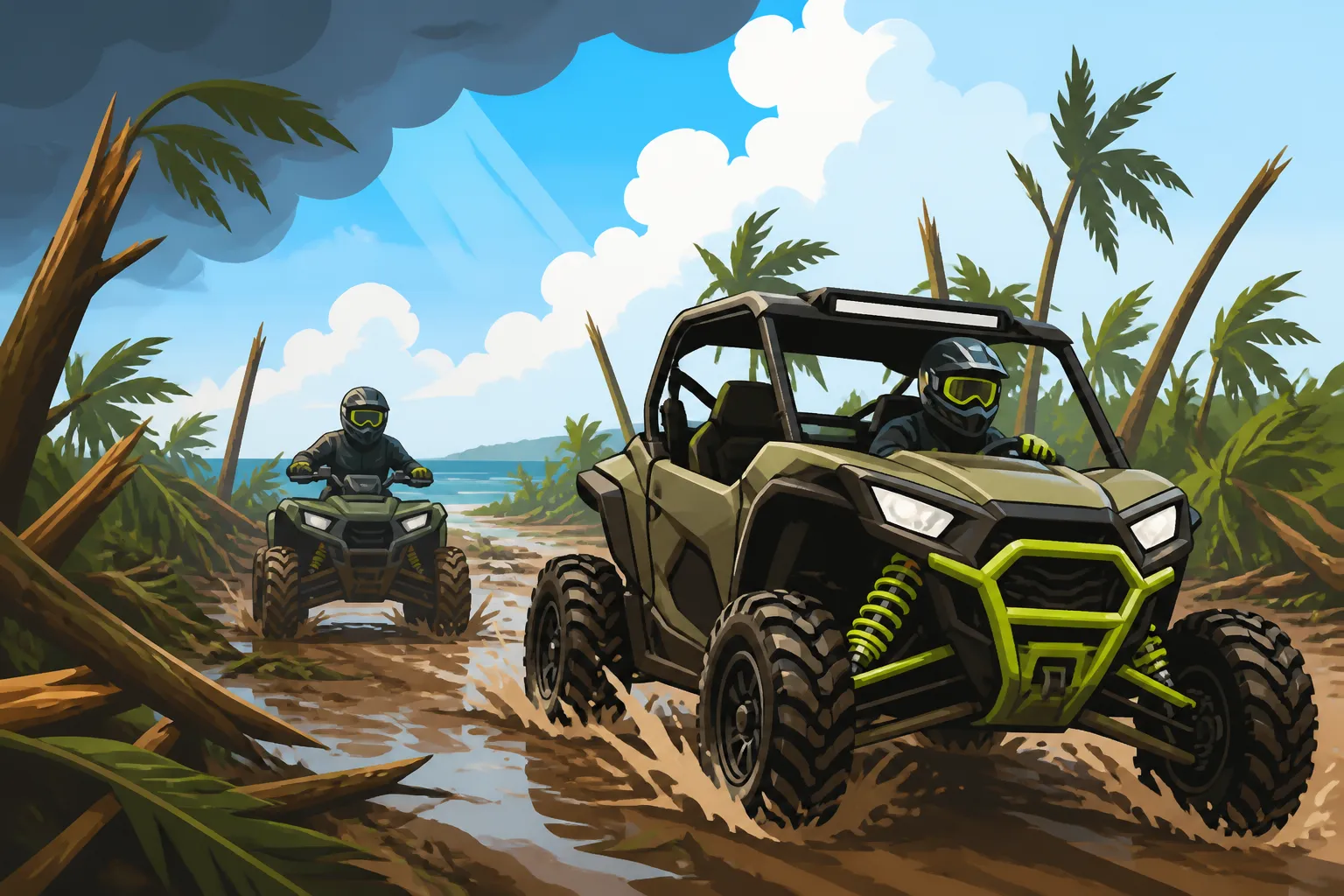
A hurricane can change a trail even when the surface looks mostly familiar. Heavy rain may wash sand away from a crossing, soften the shoulder, expose roots, undermine a road edge, or leave a hole beneath shallow water. In sandy areas, water can cut channels that are difficult to spot until a tire drops into them. In low-lying forest, a route may remain wet or unstable after the surrounding area looks dry.
Watch for:
- Washed-out sections, missing soil, or abrupt drop-offs
- Standing water that obscures the bottom of a crossing
- Fresh ruts, soft shoulders, and deep mud
- Leaning trees, hanging limbs, and broken branches
- Debris that may conceal wire, fencing, or sharp objects
- Damaged bridges, culverts, gates, or trail markers
- Erosion that has narrowed the usable trail
Do not use a UTV’s weight or an ATV’s momentum to “test” uncertain ground. If the surface gives way, a machine can slide, tip, become stuck, or damage the trail further. Stop on firm ground and assess the route on foot only when it is safe to do so. Never walk into water where the depth, current, or footing is unknown.
Trail conditions can vary dramatically within one riding area. A sandy section may drain while a nearby low spot remains flooded. One entrance road may be clear while another has been damaged. For a closer look at how rain affects Florida riding surfaces, see [Florida ATV Trail Conditions After Heavy Rain] and [Florida Trail Riding in the Rainy Season].
Give water, trees, and utility hazards extra space
Floodwater is particularly difficult to judge. It can hide washouts, submerged branches, damaged culverts, or a strong current. Do not ride through water simply because another machine has left tracks or because the crossing looks shallow from the edge. If you cannot see a safe, firm route through it, turn around.
Downed or sagging power lines are an emergency hazard. Stay well away from them and do not touch a line, a tree, a fence, or a vehicle that may be in contact with one. Report the hazard to the appropriate utility or emergency service from a safe location. Do not assume a line is harmless because it is quiet or appears disconnected.
Trees and limbs can remain unstable after the storm has passed. A branch caught overhead can fall without warning, and a damaged tree may shift when wind returns. Avoid stopping under broken limbs or riding beneath a tree that appears split, leaning, or partly uprooted. If cleanup crews are present, give them room and follow their directions.
It is also wise to avoid riding in areas with active debris removal, road repair, or emergency response. Heavy equipment operators may not be able to see a recreational machine, and work crews need clear space to do their jobs. If you encounter a crew or a new barrier, turn around and use only a route that has been confirmed open.
Prepare your ATV or UTV for a safer return
Check the machine before the ride
Post-storm conditions can put extra strain on a vehicle. Mud, sand, branches, and water may clog cooling areas, damage tires, or hide a loose component. Before you leave home, inspect the machine rather than assuming it is ready because it ran well on the previous ride.
Check tire pressure and look for cuts, embedded debris, or damaged sidewalls. Inspect the brakes, throttle, steering, lights, and controls. Make sure the radiator area is clear, especially if your route includes mud or leaf litter that could restrict airflow. Confirm that your winch and recovery points are in good condition if your machine has them, and carry only recovery gear you know how to use safely.
Bring basic supplies suited to the route and group. Depending on the ride, that may include drinking water, a first-aid kit, a tire repair kit, a charged phone, a paper map, a flashlight, and a tool kit for minor adjustments. Secure cargo so it cannot shift during a sudden stop. If your planned area has poor cell service, tell someone where you are going and when you expect to be back.
Use onX Offroad or another mapping tool to prepare a route and save useful map information before you enter an area with weak reception. Treat the app as a planning aid, not as a substitute for official closure notices, posted signs, or sound judgment on the trail. A route line cannot show you that last night’s rain undermined a crossing.
Choose a conservative route and riding pace
After a hurricane, it is sensible to ride below your usual pace and leave more distance between machines. Wet sand, mud, debris, and sudden surface changes can make stopping and steering less predictable. On a group ride, establish a lead rider and a sweep rider, agree on a turnaround point, and make sure nobody is pressured to cross an obstacle they are uncomfortable with.
A helpful decision table can keep the group from letting excitement take over:
| What you find | Safer response |
|---|---|
| The area is officially closed | Do not enter; choose a confirmed open location |
| A trail is blocked by a gate or storm barrier | Turn around and do not ride around it |
| Water hides the trail surface or crossing depth | Do not enter the water |
| A tree is leaning or limbs are hanging overhead | Keep clear and report the hazard |
| The route is open but badly rutted or unstable | Slow down, assess from firm ground, and turn back if uncertain |
| Cleanup crews or heavy equipment are working | Give them space and follow directions |
| Your group loses the mapped route or trail markers | Stop safely, regroup, and retrace your route |
The right choice is not always the route that gets you back to the truck fastest. If the trail is changing beneath the tires, or a rider in the group feels unsure, turn around while everyone and every machine are still in a safe place. A short ride cut off early is much better than a recovery that puts people at risk.
For area-specific planning, [Ocala National Forest ATV Trails in Florida] can help you think through trail access in the Ocala region, while [Florida Trailhead Cell Service and Getting Help] is useful when planning around limited communications. Check both the intended trail and the roads needed to reach its staging area.
Decide whether to ride, reroute, or postpone
Use a go-or-no-go checklist
It can be frustrating to cancel a ride after arranging time off, loading the trailer, and getting everyone excited. Still, a simple checklist helps separate a disappointing change of plans from a genuinely unsafe decision.
Before leaving, ask:
- Have I confirmed that this exact riding area is open?
- Are the access roads and staging area usable?
- Do I understand the current trail restrictions and permit requirements?
- Is the forecast likely to create new flooding or unsafe conditions?
- Does everyone have suitable gear, water, and a way to communicate?
- Can the group turn around without splitting up if conditions worsen?
- Is there a clear alternative if the primary route is blocked?
If you cannot confirm access, postpone or choose another verified destination. If the area is open but conditions are uncertain, reduce the route and ride only sections that are clearly safe and permitted. Do not turn a short exploratory ride into a mission to reach a particular destination.
Consider the full trip, not just the trail. A bridge or low-water crossing on the road to the riding area may be damaged even when the trail itself has reopened. Do not drive around road barricades, and do not assume a route on your phone is passable because it was passable before the storm. For a different type of ride, [Florida ATV Trails Open Year-Round] may help you consider alternatives, but always confirm conditions directly before traveling.
Respect the land during recovery
Post-hurricane trails can be especially vulnerable to damage. Riding around a muddy spot widens the trail and can push vehicles into vegetation or sensitive ground. Spinning tires through a soft section can deepen ruts and make the route harder to repair. Stay on designated routes, keep to posted speed and access rules, and avoid creating shortcuts around blocked trails.
Pack out everything you bring in, including broken straps, food packaging, and damaged gear. Do not move storm debris unless a land manager has asked riders to help through an organized effort. A branch can be under tension, and debris may conceal wire, sharp metal, or other hazards. Report serious damage to the land manager rather than trying to repair a trail yourself.
Good post-storm riding etiquette means yielding to cleanup crews, keeping the group together, and leaving room for other users. If the area has reopened, that does not mean every part of it is ready for unrestricted use. Follow temporary signs and stay within the routes approved for your vehicle. [Florida OHV Trail Etiquette Locals Expect] offers additional guidance for sharing riding areas responsibly.
A hurricane does not make every Florida trail unsafe, but it does make assumptions riskier. Confirm the area’s status, assess conditions conservatively, and be willing to turn around. If access, surface conditions, or hazards are unclear, waiting for a clear reopening notice is the most responsible way to protect your group and the place you came to ride.
Disclaimer
This article is for general informational purposes only and does not constitute professional advice. Laws, prices and regulations vary by location and change over time. Consult a qualified professional for guidance on your specific situation.