Florida Trail Volunteer Days and Cleanups
A ride can turn frustrating fast when a familiar trail is blocked by storm debris, litter, or a damaged sign. Florida ATV and UTV riders can help keep riding areas safer, but cleanup work needs to respect land-manager rules and wildlife. This guide explains how to find organized volunteer days, prepare for the work, and help without accidentally damaging a trail.
How Florida trail volunteer days work
Who organizes trail cleanups
Volunteer workdays may be organized by public land managers, ATV clubs, riding-area operators, or local conservation groups. The organizer determines what work is allowed, where volunteers should meet, and whether equipment or training is provided. A cleanup at a developed riding area may focus on litter and trailhead upkeep; work in a forest may involve clearing approved drainage features or repairing signs under staff direction.
The details matter because public riding land is not all managed the same way. Croom Motorcycle Area, Ocala National Forest, and state forest OHV areas each have their own rules, access arrangements, and maintenance needs. A helpful-looking shortcut—such as moving a fallen branch or cutting around a muddy section—could damage habitat or create a new route that the land manager does not permit.
Start by checking the recreation area’s official notices or contacting its land manager. Local clubs can also be useful for hearing about workdays and meeting other riders. If you are new to the local scene, [Florida ATV Clubs Worth Joining] can help you think about where to look for riding communities that share trail information and organize group activities.
What volunteers may be asked to do
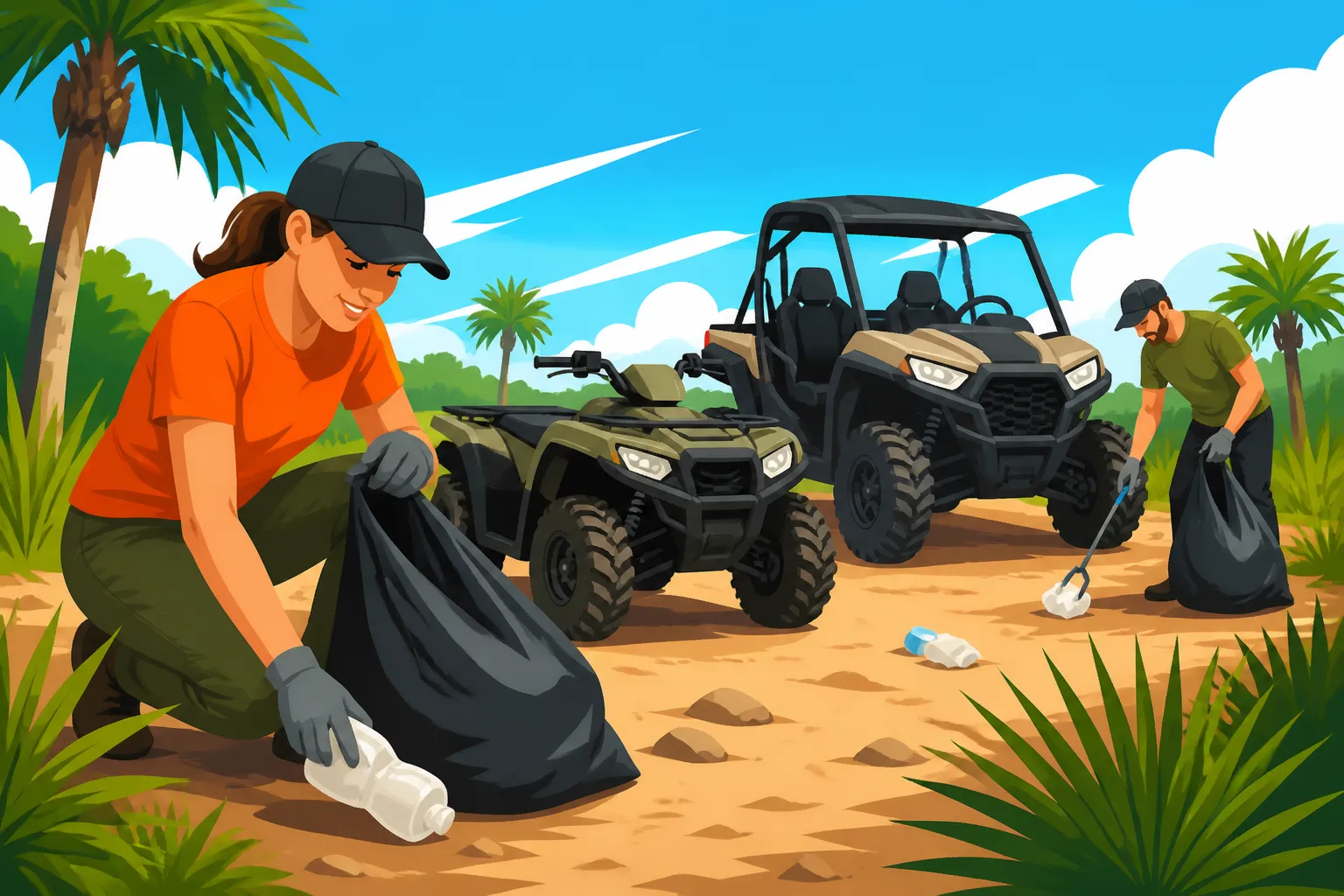
Tasks depend on the site and the condition of the trails. Common jobs include picking up litter, cleaning a staging area, repainting or replacing approved signs, removing small debris under supervision, and helping with a designated maintenance project. Some events are more like a group litter sweep, while others require tools, physical effort, or a longer commitment.
Do not assume you should bring a chainsaw, winch, or power tool. The organizer may have equipment and may restrict who can use it. Even apparently simple work can create risks: a branch may be under tension, a damaged sign may mark a hazard, or a trash pile may contain sharp metal or unknown chemicals. Ask what the task involves before starting and follow the crew lead’s instructions.
A volunteer day is also a good time to learn how a riding area is managed. You may hear why a trail is closed, how rain affects access, or where riders are expected to stay. That context can help you make better decisions on future trips, especially when conditions change.
How to find a legitimate workday
Look for announcements from the land manager, the riding area, or a club that has permission to work at that location. Confirm the exact meeting point, check-in process, start time, expected duration, and whether the event is open to first-time volunteers. Ask if children can participate and whether they need to remain with an adult.
Be cautious about informal online invitations that encourage riders to clear, widen, or reroute trails without identifying who approved the work. A well-intentioned cleanup is not automatically authorized. If the organizer is unclear about land access or says volunteers can make trail changes as they see fit, contact the land manager before joining.
Trail access can change because of maintenance, weather, fire conditions, or wildlife concerns. Check [Florida Trail Closures You Should Check First] before planning a visit around a workday or ride. For a broader look at places and types of riding areas, [Florida OHV Trails: Every Public Riding Area] can help you identify which managed area you want to learn more about.
Before you volunteer
Confirm the work, access, and expectations
Before leaving home, get clear answers to a few practical questions:
- Where is the meeting point, and is it at the main entrance or a specific trailhead?
- Do volunteers need to register or sign a waiver?
- Is the event open to riders who have not joined the organizing club?
- What tools and protective equipment should you bring?
- Will work take place near active riding trails?
- Is your ATV or UTV permitted at the work site, or should you arrive in a separate vehicle?
- What is the plan if weather or trail conditions change?
Do not assume that a vehicle pass, riding permit, or event registration is included just because you are volunteering. Rules vary by land manager and activity. Ask the organizer what you need for the volunteer work itself and for any riding before or after it. [Florida OHV Permits: What You Need Before You Ride] is a useful starting point for understanding that public-land riding requirements may be separate from volunteer arrangements.
It is also worth checking whether the organizer expects volunteers to work for a set block of time or stay for the full event. If you have limited mobility, a health concern, or a physical restriction, say so ahead of time. Organizers may have a lighter task available, but it is better to ask than to get halfway through a job that is not safe for you.
Pack for Florida conditions
Florida trail work can mean heat, humidity, sudden rain, insects, and uneven ground. Wear sturdy closed-toe shoes or boots, work gloves, and clothing that protects your arms and legs. Bring drinking water, sun protection, and any personal medication you may need. A hat and a change of clothes can make the trip home much more comfortable after working in wet or dusty conditions.
Bring only the tools the organizer has approved. If you are asked to bring a rake, shovel, or hand pruners, check that it is in good condition and suitable for the assigned task. Leave fuel containers, powered cutting tools, and heavy equipment at home unless the work leader specifically requests them and confirms you are qualified to use them.
If you plan to ride as part of the day, treat that as a separate activity. Confirm whether riding is allowed, what access requirements apply, and whether the volunteer work area overlaps with open trails. The map features in onX Offroad can help you review a route and orient yourself before a trip, but always follow posted signs and current instructions from the land manager.
Make a plan for navigation and communication
Meeting points can be easy to miss, especially if cell service is weak or several access roads look alike. Save the location and directions before you leave, tell someone where you are going, and agree on a plan if your group gets separated. Carry a charged phone, but do not rely on it as your only navigation or emergency tool.
A mapping app such as onX Offroad can help you understand the area and plan how to reach a trailhead. Use it as a planning aid rather than permission to enter a road, trail, or parcel. Land boundaries, gates, temporary closures, and signed restrictions take priority over a route shown on a screen. For forest visits, [What to Carry Into a Florida State Forest] offers another useful checklist mindset for preparing before you head out.
If the work takes place away from a trailhead, ask the organizer how volunteers will travel to the work site and whether there is a designated check-in contact. Do not follow an unfamiliar vehicle onto a closed road simply because it appears to be heading toward the same location.
Volunteer safely and leave the trail better
Work only within the assigned area
Stay with the group and work only where the crew lead directs you. Avoid widening a trail, creating a bypass around a muddy spot, filling a rut, or moving barriers without approval. Those changes can redirect water, damage plants, or encourage riders to use an unauthorized route. Even a short detour made to help a stuck rider can become a permanent track if people keep following it.
Keep an eye out for other trail users. If a route remains open during the work, pause when riders approach and follow the organizer’s instructions for keeping everyone clear. Do not leave tools, bags, or debris where they could become obstacles. If you spot a hazard beyond the project boundary, report it to the work leader rather than trying to fix it on your own.
Good trail behavior matters during volunteer events just as it does during a regular ride. Stay on designated routes, respect signs, and give other users room. [Florida OHV Trail Etiquette Locals Expect] covers the kind of considerate habits that help prevent conflict and unnecessary damage.
Handle litter and debris carefully
Pick up only what the organizer has identified as safe to handle. Use gloves and avoid reaching into brush, holes, or piles where you cannot see what is underneath. Broken glass, needles, chemical containers, batteries, and leaking fluids should be reported to the crew leader or land manager. Do not put hazardous or unidentified material into a regular trash bag.
Separate recycling or bulky items only if the event has a clear system for doing so. Ask where filled bags should go, how to report large debris, and whether there is a designated collection point. A well-intentioned volunteer can create a new problem by leaving full bags beside a trailhead or moving discarded items to a place where wildlife can reach them.
Never handle injured wildlife or disturb nests, burrows, or other sensitive habitat. Florida’s forests and scrub areas can be home to snakes, insects, and protected wildlife. If you find an animal or a sensitive site, step back and notify the event lead. For debris after a major storm, do not assume that every downed tree should be removed. Some obstructions require equipment and an assessment by trained staff.
Know when not to ride or enter
A trail may be closed even when the gate is open or the route appears passable. Closures can protect a repair project, prevent erosion, or give wildlife and land managers time to respond to changing conditions. Follow signs and instructions even if other riders have made tracks around a barrier.
After a hurricane or heavy rain, water can hide washouts, unstable ground, and damaged culverts. A trail that looked familiar before the storm may no longer be safe. Check [Florida Trail Riding After a Hurricane] before planning a post-storm trip, and do not use a volunteer cleanup as a reason to enter a closed area.
If you are unsure whether a route is open or whether a cleanup task is authorized, pause and ask. A few minutes of checking can prevent a damaged trail from becoming worse or a volunteer from being injured. For general comparisons between public land types and their riding arrangements, [Florida National Forest Riding vs State Forest Riding] can help clarify why rules and access may differ from one place to another.
Choosing an event and making your help count
Match the event to your experience
You do not need to be an experienced trail builder to contribute. A first-time volunteer may be most comfortable with litter pickup, staging-area cleanup, or another clearly supervised task. More technical work—such as drainage improvements or work involving cutting tools—should be handled only with suitable instruction and authorization.
Think about your time, fitness, and comfort before signing up. A short event near a developed trailhead may be a better first step than a full day in remote terrain. If you are volunteering with family, ask whether the tasks and setting are appropriate for children and whether direct adult supervision is required. Do not bring a child to a work area with active equipment unless the organizer has confirmed it is suitable.
You can also contribute without doing physical trail work. Clubs and land managers may need help with event check-in, sorting supplies, sharing official closure notices, or documenting a problem for the responsible agency. Ask what is genuinely useful rather than assuming that every event needs more hands for the same task.
Help without organizing an unofficial cleanup
If you notice litter or damage during a ride, make a note of the location and report it through the land manager’s preferred channel. A clear description, nearby trail marker, or saved map location is more useful than a vague report such as “the north trail is blocked.” Photos can help explain the issue, provided you take them safely and do not enter a closed or hazardous area to get a better view.
Do not post sensitive access details publicly if they could direct people into a restricted area. Likewise, avoid encouraging riders to remove signs, cut through vegetation, or drive around a closure. Sharing accurate information about a problem is helpful; circulating a workaround can make it worse.
If you want to organize a group cleanup, contact the land manager first. Explain the location, the type of work you have in mind, the approximate group size, and whether tools or vehicles would be involved. Ask what approvals, safety measures, and disposal arrangements are required. An authorized, well-planned event is more useful than a large group arriving without a defined task.
Keep supporting the area after the workday
A volunteer day is only one part of responsible riding. Continue using designated routes, carry out your own trash, and report damage rather than making unapproved repairs. If a trail is muddy or crowded, consider choosing another open route instead of forcing your machine through a section that may be vulnerable.
Before future trips, check the area’s latest notices and plan around seasonal conditions. onX Offroad can be handy for organizing a route and keeping track of where you intend to go, but it should sit alongside official maps, signs, and land-manager guidance—not replace them. When riders combine good preparation with respect for closures, their volunteer work is less likely to be undone by avoidable trail damage.
A cleanup does not need to be dramatic to matter. Clearing litter from a staging area, reporting a broken sign, or showing up for an authorized workday can make a riding area more pleasant for the next family, club, or solo rider who comes through.
Disclaimer
This article is for general informational purposes only and does not constitute professional advice. Laws, prices and regulations vary by location and change over time. Consult a qualified professional for guidance on your specific situation.