Hog Waller’s 1,100 Acres
Hog Waller’s 1,100 acres can make for a full day of off-road riding near Palatka, but a large riding area is not automatically easy to navigate. Trail conditions, machine access, weather, and park rules all affect the experience. This guide explains how to plan your visit, choose a suitable ride, and prepare for a safer day at Hog Waller.
What to know about Hog Waller’s riding area
A large property is not one uniform trail
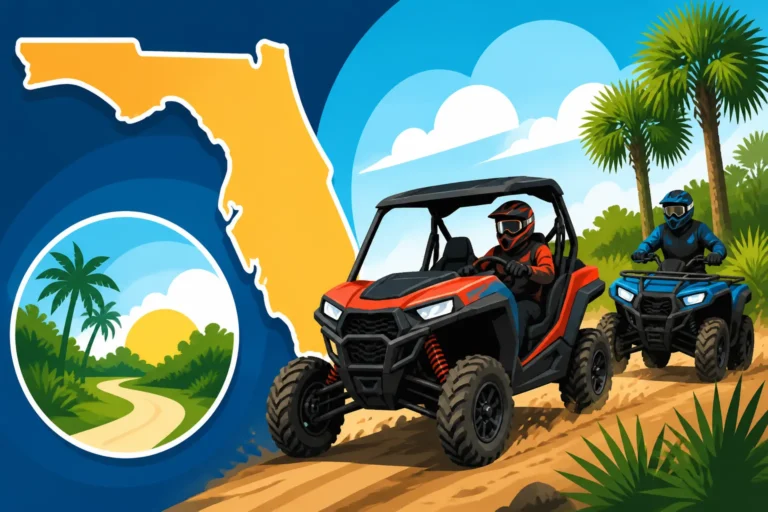
Hog Waller is an off-road riding destination in the Palatka area of Putnam County. Its 1,100 acres give riders plenty of ground to explore, but acreage alone does not tell you what a particular route will feel like. Different sections can vary in surface, difficulty, width, and exposure to mud or standing water. Conditions can also change after heavy rain or a busy riding weekend.
That matters when you are choosing a machine or bringing a group with mixed experience. A route that feels manageable to a confident rider on a suitably equipped ATV may be tiring or uncomfortable for someone new to uneven ground. A side-by-side may suit some rides and groups, but its width can limit where it can safely go. Check the park’s current guidance before assuming every route is open to every type of machine.
If you are comparing destinations, Hog Waller’s 1,100 Acres is a useful starting point for understanding the size of the property, while Florida ATV Trails That Allow Side-by-Sides can help you think through how machine size affects trail access more generally. Treat a map as a planning aid, not a promise that every marked route will be open or suitable on the day you arrive.
Expect conditions to shape your ride
Florida weather can change a ride quickly. Rain may turn low spots soft and muddy, while dry stretches can bring loose sand, dust, and ruts. Even within one outing, the surface may change from a firm section to a slick or uneven one. The right pace is the one that gives you room to stop, assess the ground, and avoid pushing through a section you cannot read clearly.
Before setting out, check the park’s current notices and ask about recent conditions if that information is available. Pay particular attention to closures, standing water, and any limits on where particular machines may travel. A trail that looked straightforward on a previous visit may feel very different after a storm or repeated traffic.
Riders seeking a muddy outing can read Florida ATV Trails With Mud Holes for broader context about mud riding, but avoid treating mud as a challenge to conquer at any cost. Deep or unknown water can hide holes, debris, or soft ground. If you cannot see what is beneath the surface, choosing another route is often the safer call.
Check the rules before loading up
A frustrating trip can start before you reach the trail: driving out with the wrong paperwork, missing required safety gear, or assuming a particular machine is allowed. Confirm the park’s current rules before departure, including its requirements for vehicle types, riders, helmets, children, passengers, and access to different areas. Rules at a private riding park can differ from those on public forest land.
Also confirm the basics that can change between visits: operating hours, entry procedures, whether reservations or waivers are needed, and which facilities are available. Keep confirmation details and park contact information accessible, especially if several adults are coordinating a group.
For more planning context, Hog Waller Camping and Cabins is relevant if you are considering an overnight stay, while Florida ATV Trails That Allow Side-by-Sides can help you frame questions about machine access. Confirm the answer directly with the park rather than relying on a general description of Florida riding areas.
Plan a ride that fits your group
Match the route to experience and machine
Before anyone starts the engine, agree on what kind of day the group wants. A first-time rider may prefer a slower, shorter outing with frequent stops, while experienced riders may want to cover more ground. Those goals can coexist, but only if the group chooses a pace and route that do not leave less-experienced riders feeling pressured to keep up.
Think about more than engine size. Consider tire condition, ground clearance, steering comfort, passenger load, and how easily the rider can control the machine at low speed. A large or powerful ATV is not automatically the best choice for a novice. Likewise, a side-by-side’s extra seating can be helpful for some groups, but its dimensions may make narrow routes unsuitable.
If your group has new riders, review Florida ATV Trails for Beginners before your visit for practical ways to think about beginner-friendly riding. At Hog Waller, ask staff which areas are appropriate for your group’s skill level and machine type. Let the least experienced rider help set the pace; a relaxed group ride is generally more enjoyable than one built around constant catch-up.
| Planning question | Why it matters | What to do |
|---|---|---|
| What machines are allowed? | Access may vary by vehicle type or dimensions. | Confirm with the park before leaving home. |
| How experienced is the least experienced rider? | Skill affects pace, route choice, and fatigue. | Choose a conservative starting route and regroup often. |
| Has it rained recently? | Wet ground can change traction and visibility. | Check conditions and avoid water you cannot assess. |
| Are children or passengers riding? | Age, supervision, and passenger rules may apply. | Review current park requirements before arrival. |
| Is there reliable cell service? | Coverage may vary across a large property. | Share a plan and carry essential information offline. |
Decide how you will navigate
On a sizable property, it is easy to take a turn, lose sight of your group, or become unsure how to return to the staging area. Pick a meeting point before riding and agree on what everyone should do if separated. For example, riders might stop at the next safe, visible junction rather than continuing in different directions. Keep the plan simple enough for every rider to remember.
A mapping tool such as onX Offroad may help you review routes and organize your trip, but do not assume that an app map shows current park access or closures. Compare any map you use with the park’s own directions and instructions. If you use onX Offroad, check what mapping details are available for your area and download what you need ahead of time if the app supports offline access for your setup.
Cell reception can be unreliable in some riding areas, so do not make a working phone signal the only part of your safety plan. Florida Trailhead Cell Service and Getting Help offers useful general planning context. Keep your phone protected, carry the park’s contact information, and tell someone outside the riding group where you will be and when you expect to check in.
Build in breaks and a turnaround point
People often plan around ride time and forget the time needed to unload, complete entry steps, prepare equipment, and take breaks. Heat, humidity, dust, and vibration can wear riders down sooner than expected. A group that starts late or skips water breaks may be tempted to rush back, which can lead to avoidable mistakes.
Set a practical turnaround point before you leave the staging area. That could be a time, a particular trail junction, or a point in the day when the group checks fuel, water, and energy levels. If someone is tired, overheated, or uncomfortable, shorten the ride instead of treating the original plan as an obligation.
Leave room for a slower pace than you expect. A new rider may need to stop to learn the controls, and a muddy or rutted section can take longer than it looks from a distance. A flexible plan is especially useful when riders have different machines, varying levels of experience, or children in the group.
Prepare for a safer, more comfortable day
Pack for Florida weather and trail conditions
Choose clothing and gear for the conditions rather than the parking lot temperature. Long sleeves, sturdy gloves, eye protection, and closed-toe footwear can help protect against brush, debris, dust, and sun. A properly fitted helmet is an essential part of riding preparation; confirm the park’s requirements and make sure every rider has the right equipment before arriving.
Bring enough drinking water for the group, along with snacks and sun protection. If rain is possible, pack a dry layer and a way to protect phones and important documents. A small first-aid kit and basic tools suited to your machine can be useful, but do not carry gear in a way that interferes with safe control or visibility.
For a broader sense of riding etiquette and practical preparation, see Florida OHV Trail Etiquette Locals Expect. Keep the group’s equipment consistent with the day’s plan: a short, easy ride may not need the same supplies as a longer outing, but everyone should know who is carrying essentials and how to reach them.
Ride within your limits around mud and water
Mud can look shallow and inviting while concealing ruts, holes, or a sudden drop in firmness. Approach unfamiliar ground slowly, maintain enough space from other machines, and avoid following another rider into a section simply because they made it through. Their vehicle, tires, line, and experience may be different from yours.
If a machine becomes stuck, pause and make a plan before attempting a recovery. Keep bystanders clear of tensioned straps and moving vehicles, and use recovery equipment only if the people involved know how to use it safely. A rushed pull can cause injury or damage. If the situation is beyond your experience or equipment, seek help from park staff rather than improvising.
Water crossings deserve particular caution. Do not enter water if you cannot judge its depth, bottom, or current conditions. Water can conceal obstacles and affect a machine’s ability to move or restart. Turning around is not a failed ride; it is a sound decision when the route is uncertain.
Keep the group together without crowding
Agree on spacing and signals before riding. Riders should leave enough room to react to sudden stops, loose surfaces, or debris kicked up by the machine ahead. At junctions, use a clear regrouping routine so the last rider is not left guessing which way the group went. Avoid stopping in a blind spot or where another rider may not have room to pass safely.
Keep noise, speed, and riding behavior considerate of others. Stay on routes the park allows, follow posted instructions, and do not assume a closed or blocked route is safe to enter. A courteous group is easier for other visitors and staff to share the property with, and it helps preserve a better experience for the next visit.
If you want to ride beyond Hog Waller during a longer trip, check each destination separately. Florida Trail Closures You Should Check First is a helpful reminder that access can change, while Palatka as a Riding Base can help with broader trip planning around the area. Do not assume that a pass, permission, or rule from one riding location applies at another.
Make the most of a visit near Palatka
Sort out logistics before the day of the ride
A smooth ride begins with the details that are easy to overlook. Confirm directions, entry steps, operating information, and any equipment or documentation requirements directly with the park. If you are bringing multiple machines, check that each is ready to travel and that your trailer, tie-downs, and towing vehicle are suitable for the load.
Plan for parking and unloading without blocking other visitors. Keep keys, phones, water, and safety gear organized so you are not searching through a packed vehicle at the staging area. If the group is meeting from different locations, choose a clear meeting point and agree on what happens if someone is delayed.
For visitors who are staying nearby, Hog Waller Camping and Cabins may help you explore accommodation options connected with the riding area. Check the current details before making plans, especially if you are travelling with a large group or need particular facilities. Leave room in the schedule for unloading, check-in, meals, and a calm return trip.
Use maps as one part of the plan
A trail map can help you understand direction and distance, but it is only one source of information. Park staff and posted signs are more relevant for current restrictions and closures. If a map and a sign disagree, stop and follow the park’s instructions while checking with staff if needed.
You can use onX Offroad to help organize a route or review mapping information, but avoid treating any third-party map as confirmation that a trail is open. Before riding, identify the staging area, main junctions, and a simple route back. Share that plan with everyone, including passengers and newer riders.
Save important details in more than one way. A screenshot or offline map can help if phone service drops, while a written meeting point and park contact information can still be useful if a phone battery fails. Navigation tools work best when paired with common-sense decisions and clear group communication.
Leave the property ready for the next visit
At the end of the ride, take a moment to check that everyone and every machine is accounted for. Look over vehicles for obvious damage or problems before loading them, and secure machines carefully for the drive home. Keep muddy gear separate from clean clothing and protect the vehicle interior where practical.
Follow the park’s instructions for waste, washing, and vehicle movement. Do not leave trash, dump fluids, or ride through areas that are closed or marked off. Respecting the property and other visitors helps keep the riding experience enjoyable and supports responsible access.
A good Hog Waller day is not measured only by how many trails you cover. It is also a day when the group rides within its ability, adapts to conditions, and gets home safely. A little planning before leaving for Palatka can save a lot of stress once the machines are unloaded.
Disclaimer
This article is for general informational purposes only and does not constitute professional advice. Laws, prices and regulations vary by location and change over time. Consult a qualified professional for guidance on your specific situation.