Croom’s Technical Riding Area Day Pass
A Croom ride can go sideways before you unload if you arrive without the right pass, assume every riding area follows the same rules, or discover a closure at the gate. This guide explains how to plan for a day at Croom’s Technical Riding Area, what to check before leaving, and how to avoid common pass and access mix-ups.
What the Croom Technical Riding Area day pass is for
Understand the riding area and its access rules
Croom Motorcycle Area is part of Withlacoochee State Forest near Brooksville in Hernando County. It is a large off-highway riding destination, but it isn’t one unrestricted patch of land where every machine can go anywhere. Access depends on designated riding areas, posted rules, trail conditions, and the type of vehicle you bring.
The Technical Riding Area is intended for riders looking for a more demanding experience than a basic trail loop. That may mean tighter turns, uneven ground, obstacles, or terrain that rewards careful throttle control. It also means a route that feels manageable to one experienced rider may feel intimidating to someone who is still learning. Take a moment to assess the terrain before committing, and don’t follow another rider onto a feature just because they make it look easy.
A day pass is generally the practical choice when you’re visiting for a single outing and need the required access permission for your ride. Before purchasing, confirm that the pass you select applies to your intended riding area and machine. Forest access fees, OHV passes, parking arrangements, and area-specific rules can be easy to confuse, especially if you haven’t visited before. The overview of [Florida State Forest OHV Day Use and Annual Passes] can help you understand the broader pass options.
Don’t assume every Croom pass covers every activity
A common planning mistake is treating a day-use payment, a forest recreation fee, and an OHV pass as interchangeable. They may serve different purposes. The right choice depends on whether you’re riding an OHV, where you’re riding, and what the current Croom rules require for that area. Check the official information for the specific pass before you pay, and keep any receipt, permit, or confirmation available for inspection.
It also helps to separate admission from machine eligibility. Having a valid pass does not automatically mean that every ATV or UTV can enter every part of Croom. Width limits, vehicle types, safety requirements, and route designations can all matter. If you’re bringing a side-by-side, a modified machine, or a vehicle you haven’t ridden at Croom before, verify those details instead of relying on an old trip report or a friend’s recollection.
If you’re comparing a single visit with several planned outings, review the pass terms carefully. An annual option may make sense for a regular rider, while a day pass can be simpler for a first visit or a one-day trip. Check whether the permit applies per vehicle, whether it can be transferred, and whether it covers the specific riding area you plan to use. The general guide to [Florida OHV Annual Passes Are Per Vehicle] is useful if you’re weighing how a pass is assigned.
How to choose and prepare for your visit
Confirm the pass before you leave home
Before setting out, look up the current pass instructions and make sure you’re choosing the option for OHV riding rather than assuming a general forest fee will do. Confirm where a pass can be purchased, whether a digital confirmation is accepted, and whether you need to display or carry anything. These small details matter when you arrive at a trailhead with limited signal or when the person handling the purchase is not the same person driving the machine.
If your group has multiple machines, check whether each one needs its own pass. A single purchase may not cover the whole group. This is worth sorting out before you arrive, particularly when friends are traveling separately or someone plans to switch machines during the day. Avoid assuming that a passenger’s pass, a tow vehicle’s permit, or another rider’s annual pass covers your ATV.
Plan for the possibility that a pass purchase or check-in process may take longer than expected. Save any confirmation where you can find it without relying on a strong mobile connection. If the purchase involves a printed permit, bring it along and follow the posted display instructions. For a first-time visit, the related guide [Florida OHV Pass Payment Methods] offers useful context on preparing to pay.
Check conditions, hours, and closures
A pass doesn’t guarantee that a particular trail or technical section will be open on the day you arrive. Weather, maintenance, seasonal restrictions, and land-management decisions can affect access. Florida’s sandy terrain may become especially challenging after heavy rain, while dry conditions can bring dust and reduced visibility. Check for alerts close to your departure date and again before you start riding.
Croom is a destination people may travel a long way to reach, so a quick check can save a frustrating drive. Confirm the current opening information, entry instructions, and whether the area you want to ride is operating. Don’t treat a map, a social-media post, or a saved route as proof that the route is open today. For a broader checklist, see [Florida Trail Closures You Should Check First].
A mapping app can help with orientation, but it should not replace official signs or current land-manager information. Riders sometimes use onX Offroad to plan routes and keep track of their location, especially when they’re unfamiliar with an area. Before you go, download or save the information you’ll need in case reception drops. Use posted signs and official notices to make decisions about access; a line shown on a map is not permission to ride across a closed or restricted area.
| Planning question | What to check before you go |
|---|---|
| Which pass do I need? | Confirm the current OHV pass requirement for the specific Croom riding area |
| Is the Technical Riding Area open? | Check current alerts, closures, and posted instructions |
| Does my machine qualify? | Verify machine type, width, and any area-specific restrictions |
| How many passes are needed? | Check whether the pass applies per vehicle or has other limits |
| What should I bring? | Carry proof of purchase, required safety gear, water, and a backup navigation plan |
Choosing a machine and riding within your limits
Check vehicle size and area restrictions
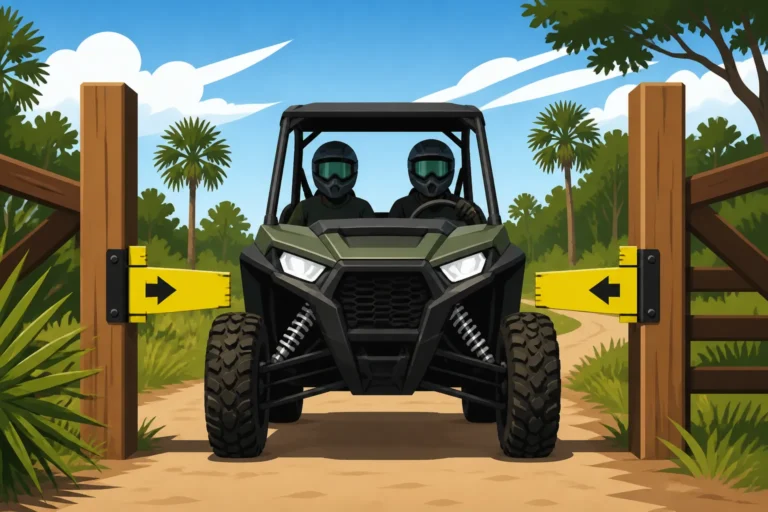
Machine dimensions can decide whether a vehicle is allowed through a gate or on a particular trail. This is particularly important for side-by-sides, which may be wider than a traditional ATV. Don’t rely on the model name or a dealer’s description alone: accessories, wheels, tires, and other modifications can change a machine’s overall width.
Before hauling to Croom, measure your vehicle the way the relevant rules require and compare that measurement with the current restriction. Pay attention to what counts as the machine’s widest point. A small difference between the listed width and the actual width can become a real problem at check-in. The Croom-specific guide [Croom's 55-Inch Width Check at the Gate] explains why it pays to check before you travel.
Make a separate check for the Technical Riding Area rather than assuming its access rules match every other Croom loop. A machine that can ride in one designated area may not be appropriate or permitted in another. Confirm the type of vehicle the area is designed for, follow signs at junctions, and don’t attempt to squeeze a wider machine onto a route intended for narrower equipment. If access is unclear, ask before unloading.
Match the terrain to your experience
Technical riding is more enjoyable when you choose obstacles that fit your current skill and comfort level. If you’re new to off-road riding, start with terrain that lets you practice smooth acceleration, controlled braking, and turning without feeling rushed. Give yourself permission to walk away from a feature that looks too steep, narrow, or unpredictable. There is no prize for getting stuck or taking a fall to prove you can do it.
For a more experienced rider, a technical area can still demand patience. Sand can shift beneath the tires, roots and ruts can change how a machine tracks, and a line that worked for the rider ahead may not suit your vehicle. Keep enough space between machines to react safely, and pause in a place where you’re visible and out of the way if you need to reassess a section.
If you’re riding with children or a mixed-skill group, agree on a simple plan before leaving the staging area. Choose a meeting point, make sure everyone understands how to stop safely, and don’t let the fastest rider set the pace for the whole group. A route that keeps the group together is often a better day than a harder route that leaves newer riders anxious or separated.
What to bring for a safer day at Croom
Carry essentials for an off-road outing
Bring the safety gear required by the current rules and appropriate to your machine and the conditions. A properly fitted helmet is a basic part of responsible riding, and goggles or other suitable eye protection can help with dust, debris, and flying sand. Gloves, sturdy clothing, and closed-toe footwear also make a difference when you’re handling a machine or walking around a rough trail.
Florida heat can turn a short ride into a tiring one faster than many visitors expect. Pack drinking water, sun protection, and clothing that works for hot weather without leaving you unprotected from brush and debris. If rain is in the forecast, plan for slippery footing and wet equipment. Keep snacks and any personal essentials where they won’t fall out during the ride, and don’t assume you’ll be able to buy what you forgot once you’re on site.
Carry proof of your pass and any other information the area requires. A phone with a saved map can be helpful, but it can also lose service, run low on battery, or become difficult to use in wet or muddy conditions. A portable charger and a simple plan for finding your way back are sensible backups. The checklist in [What to Carry Into a Florida State Forest] can help you think beyond the obvious riding gear.
Make a practical plan for navigation and group riding
Agree on the route and regrouping points before starting. In a group, riders should know who is leading and who is bringing up the rear, and the group should wait at safe junctions instead of assuming everyone can keep up. If someone needs to stop, make sure the rest of the group knows where to wait without blocking a trail or creating a hazard.
A navigation tool such as onX Offroad can be useful for reviewing your intended route and checking your position, but use it as a planning aid rather than a substitute for local rules. A digital track may be outdated, incomplete, or inconsistent with a closure notice. Keep your group within marked riding areas, and turn around when signage or conditions make access uncertain.
Set a conservative turnaround time so you’re not trying to find your way back in a hurry. Leave enough time to ride at a comfortable pace, take breaks, and load your machines before the end of the day. If you’re visiting with someone who has never ridden technical terrain, plan a shorter first session and check in often. A relaxed outing is more likely to bring everyone back for another visit.
Making the most of the Technical Riding Area
Ride with respect for other visitors and the trails
Croom can bring together riders with very different machines and experience levels. Keep your speed appropriate for visibility and trail conditions, especially near intersections, staging areas, and places where riders may be stopped. Give other people room to maneuver, and avoid roosting or tearing up the ground in ways that make a difficult section less safe for the next person.
Follow posted signs and stay on designated routes. Cutting around an obstacle or riding past a closure can damage the land and create problems for everyone who wants to keep using the area. Pack out what you bring in, secure loose items before riding, and leave gates, barriers, and markers as you find them. The local expectations in [Florida OHV Trail Etiquette Locals Expect] are a helpful reminder that responsible behavior is part of sharing public riding areas.
If your machine becomes stuck or needs attention, move it out of the active riding line if you can do so safely. Ask for help rather than creating a second hazard by attempting a risky recovery. Riders nearby may be willing to assist, but don’t assume another person can safely tow or lift a machine without the right equipment. A basic recovery plan is especially useful if you’re taking a route with deep sand or uneven obstacles.
Build a day around the ride you actually want
The Technical Riding Area may be the focus of your visit, but you can plan a day that gives everyone in your group a comfortable option. Some riders may want a technical challenge, while others would rather warm up on a more approachable loop. Croom includes different kinds of riding experiences, so review the area descriptions before choosing a plan. You can compare the broader setting in [Croom's 2,600 Acres and What They Hold] and learn about other designated routes through [Croom's Sand Hill Day-Use Loop] and [Croom's Hammock Day-Use Loop].
For a first visit, it can help to ride conservatively at the beginning and reassess after the group has seen the terrain. If the Technical Riding Area feels more demanding than expected, switching to an easier option is a sensible choice, not a failed plan. Likewise, experienced riders can enjoy a technical session without trying to cover every feature in one visit. Leave time for breaks and for checking that everyone is comfortable before moving on.
Keep a flexible approach to the day. A closure, weather change, or machine issue may mean changing your route. The best preparation is to know the pass rules, confirm access, understand your machine’s limits, and have a backup plan that doesn’t depend on entering a restricted area. With those pieces in place, you can spend less time sorting out avoidable surprises and more time enjoying the ride.
Disclaimer
This article is for general informational purposes only and does not constitute professional advice. Laws, prices and regulations vary by location and change over time. Consult a qualified professional for guidance on your specific situation.